
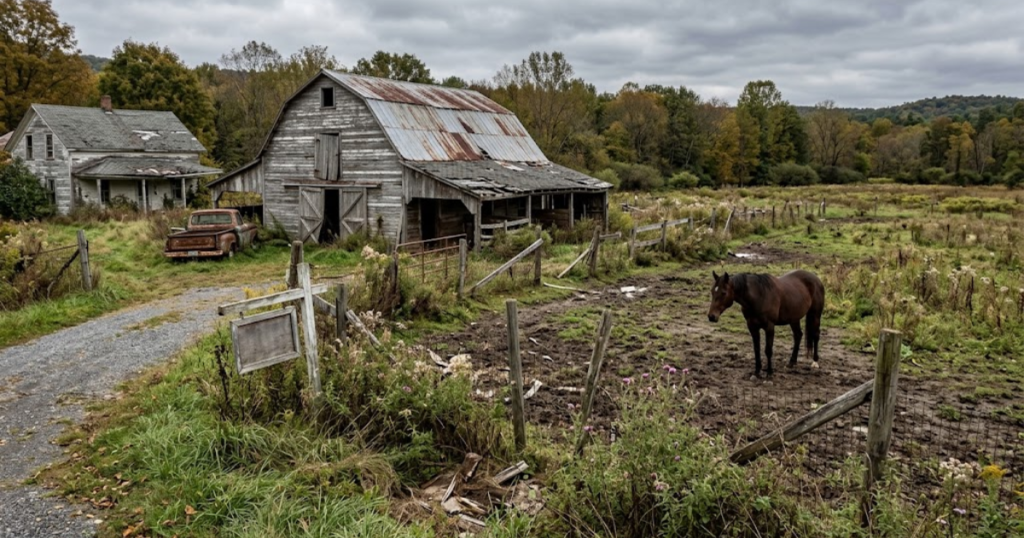
You are browsing active listings across the Front Range or the foothills, and you stumble across an intriguing property. The photos look decent, the acreage is generous, and the price has been slashed three times over the past eight months. While normal residential properties in the area sell within weeks, this horse property has languished on the market for over two hundred days.
Your initial instinct might be to view it as a massive bargain opportunity. You might assume the seller is simply dealing with bad luck, poor staging, or an unmotivated listing agent.
In the equestrian real estate world, however, properties rarely sit on the market for months without a serious, underlying defect. Selling a horse property isn’t like selling a suburban home, where fresh paint and updated staging can disguise flaws. An equestrian facility is an operating agricultural ecosystem. When a horse property fails to sell, it almost always points to a structural, legal, or environmental flaw that scares away experienced horse owners and mortgage underwriters alike.
If you’re shopping for horse properties in Colorado, you need to learn how to spot these red flags from a distance. Buying someone else’s unsellable mistake can trap you with unusable land, massive code enforcement fines, or a property you can’t resell later.
Here is an in-depth breakdown of the primary reasons horse properties fail to sell in Colorado, and the exact steps you need to take to avoid buying one.
Why Some Horse Properties Don't Sell and How to Avoid Buying One
Quick Summary: The Stigmatized Listing Warning Signs
- The Water Permit Death Sentence: Properties with "Household Use Only" wells or dry domestic supplies often sit on the market indefinitely once buyers discover they cannot legally or physically water a herd.
- The Unpermitted Infrastructure Liability: Massive barns or indoor arenas built without county structural permits or proper agricultural zoning setbacks become unsellable nightmares when lenders refuse to finance them.
- Hyper-Specialization and Flawed Layout: Properties built with bizarre layouts, dangerous barn designs, or zero trailer turnaround radius alienate the broad equestrian market.
- The Appraisal Financing Chasm: Sellers who over-improve a property with niche luxury amenities often price themselves out of the market, creating massive valuation gaps that standard mortgage underwriting will not approve.
1. The Fatal Water Rights Defect
Water is the lifeblood of rural property, and in Colorado, it is the single most common reason transactions collapse during the inspection period. When a listing sits on the market for hundreds of days, water issues are frequently the hidden culprit.
The Restricted Well Permit
A property might have a functioning well pump and clear running water at the kitchen sink, but the paperwork at the Colorado Division of Water Resources tells a completely different story.
Many rural parcels carry an exempt well permit classified strictly as "Household Use Only." Under Colorado water law, pumping water from this well to hydrate a horse, fill a stock tank, or hose down an arena is a direct legal violation.
Savvy buyers walk away the moment their agent pulls the permit, leaving the uninformed seller stranded.
Inadequate Flow Rate and Depleted Aquifers
Even if the well permit legally allows for livestock watering, the physical aquifer may be failing. A domestic well producing less than three gallons per minute might support a modest family of two. Still, it cannot sustain a four-stall barn, automatic waterers, and routine pasture management.
If an inspection reveals a low-producing well that requires a thirty-thousand-dollar cistern installation or a completely new well drilled hundreds of feet deeper into bedrock, prospective buyers will cancel their contracts.
2. Unpermitted Outbuildings and Zoning Setback Violations
Equestrian properties are defined by their outbuildings, but when those structures are built outside the law, they become massive liabilities that stall real estate sales.
The Unpermitted Indoor Arena
Building a large clear-span indoor arena or a multi-stall timber frame barn requires significant engineering, county grading permits, and structural inspections.
To save money or avoid higher property taxes, some rural owners build these structures without pulling permits from the county building department. When a prospective buyer arrives with a traditional mortgage lender, the lender's appraiser or title underwriter will request permit verification.
If the massive barn does not legally exist on county records, banks will refuse to issue a loan against the structure.
Setback and Easement Encroachments
County land use codes enforce strict setback requirements for agricultural structures. For instance, a county might require any building housing livestock to be situated at least fifty or one hundred feet away from all property lines, drainage easements, and neighboring residences.
If a seller built a six-stall barn ten feet from a neighbor's fence line, that building directly violates local land use laws. The county code enforcement division can order you to stop equine operations, levy daily fines, or even require demolition of the building.
Buyers who discover these non-conforming issues will promptly withdraw their offers.
3. Fatal Topography, Severe Mud, and Land Degradation
You can remodel a kitchen or repaint a barn, but you cannot easily rebuild a parcel's natural topography and soil profile. Land that is physically unsafe or functionally unusable for horses will cause a listing to linger endlessly.
The Chronic Mud Basin
Properties situated in low-lying drainage basins or built over deep, swelling Bentonite clay become absolute swamps during spring snowmelt.
If an equestrian property lacks engineered swales, French drains, and elevated sub-bases, the paddocks and barn stalls will sit in chronic standing water. Constant exposure to deep mud leads to thrush, cellulitis, and hoof abscesses.
Experienced equestrians can spot inadequate drainage within minutes of stepping onto a property, and few are willing to take on the massive excavation costs required to correct systemic soil flooding.
Steep, Unusable Mountain Slopes
A listing might proudly advertise twenty acres in the foothills, but if eighteen of those acres consist of a forty-degree rocky cliff covered in dense timber, the usable acreage is essentially zero.
Horses need flat or gently rolling ground for safe turnout. Running horses on dangerously steep, rocky terrain creates a constant risk of tendon, stifle, and soft-tissue injuries.
When buyers realize that the property cannot accommodate a flat riding pad or a basic sacrifice lot, they pass on the listing.
4. Bizarre Barn Architecture and Dysfunctional Layouts
Equestrian efficiency relies on sensible operational flow. When an owner builds a facility customized strictly to their own unusual personal preferences, ignoring basic equine safety and labor efficiency, the property becomes nearly impossible to market.
The Trailer Access Nightmare
If a property features a long, winding driveway that ends at a barn with no turnaround space, it represents an immediate operational hazard.
A standard truck pulling a four-horse gooseneck trailer needs at least a sixty-foot turning radius to maneuver safely. If a driver has to back a fifty-foot rig down a steep, icy, quarter-mile driveway in the middle of a snowstorm, the property is functionally flawed.
Dangerous Barn Mechanics
Properties with narrow eight-foot barn aisles, dangerously low eight-foot ceilings in stalls, solid metal doors that eliminate ventilation, or stalls placed directly over buried utility lines sit on the market because buyers know they will have to spend tens of thousands of dollars demolishing the interior to make it safe for their herd.
5. The Over-Improvement and Cost-to-Value Disconnect
One of the most common reasons high-end equestrian properties sit on the market is the gap between what an owner spent to build the facility and what the open market actually values.
The Appraisal Gap
A homeowner might spend five hundred thousand dollars constructing a hyper-specialized European-style dressage barn, imported rubber paver aisles, custom wrought-iron stall fronts, and an Olympic-spec arena in a rural county dominated by western trail riders or production cattle ranches.
When they decide to sell, they tack that entire five hundred thousand dollar construction bill onto their listing price.
Appraisers, however, evaluate properties based on comparable sales in the surrounding market. If no other property in the county has ever sold for that price point, the appraisal will come in hundreds of thousands of dollars below the contract price.
Unless a buyer has massive piles of discretionary cash to bridge the appraisal shortfall, traditional residential financing will collapse, forcing the listing to sit untouched until the seller accepts a massive price reduction.
6. Hidden HOA Covenants and Incompatible Zoning
Sometimes a property looks like a horse farm, acts like a horse farm, but is legally barred from functioning as one.
The Subdivided Acreage Trap
As large Colorado ranches were carved into rural residential subdivisions over the decades, developers frequently implemented Homeowners Associations with restrictive covenants.
A seller might have kept two horses on the property for twenty years without issue because the neighbors never complained. However, when the property goes up for sale, a thorough title search may reveal covenants that strictly prohibit livestock, limit ownership to one horse per five acres, or completely ban exterior trailer parking.
Commercial Operation Prohibitions
Many buyers shopping for horse properties want the flexibility to board a few outside horses, teach occasional riding lessons, or host weekend clinics to offset their mortgage costs.
If a property is zoned strictly as Rural Residential rather than true Agricultural, or if the covenants prohibit any business-related traffic, that entire segment of the buyer pool disappears, leaving the listing to stagnate.
7. How to Protect Yourself and Avoid Buying a Stigmatized Property
If you want to ensure you never purchase a property that will trap your finances or endanger your horses, you must execute a comprehensive, structured due diligence plan before you close the deal.
Demand the Water History First
Never make an offer without requiring the seller to provide the well permit number. Cross-reference that permit directly with the Colorado Division of Water Resources database to verify that it is designated for Domestic and Livestock use.
Hire a licensed well technician to perform a sustained four-hour flow test to confirm the true gallons-per-minute yield.
Pull County Permit Records
Visit the county building and planning department during your inspection contingency window. Confirm that every outbuilding, arena, barn electrical panel, and plumbing line was fully permitted and received a final certificate of occupancy.
Calculate True Usable Space
Disregard the gross acreage figure on the marketing flyer. Map out the property boundaries, subtract steep slopes, wetlands, required zoning setbacks, and the septic leach field footprint to determine how much flat, functional land remains for pastures and arenas.
Interrogate the Title Commitment
Scrutinize every line of the title commitment for recorded covenants, deed restrictions, and private road maintenance agreements. Confirm that equine use, trailer parking, and agricultural outbuilding construction are permitted by right.
We Protect You from Unsellable Real Estate
Navigating the rural market requires an objective, experienced eye that looks far past cosmetic updates and pretty mountain backdrops.
When Mark Eibner's team represents you, we actively look for the structural, legal, and environmental flaws that keep properties on the market. We pull well records, dissect county zoning codes, inspect structural permits, and evaluate the operational safety of barns before you ever submit an offer.
We ensure that the property you buy is safe for your herd, legally protected, and positioned for strong long-term appreciation and future resale value.
Contact us today at coloradohorseproperty.com to find premium horse properties Colorado buyers trust.
Browse active Colorado horse ranches for sale or ask our team about finding a functional horse property for rent in Colorado while you conduct your search.
Frequently Asked Questions (FAQ) About Problematic Horse Properties
Why do lenders refuse to finance certain equestrian properties?
Traditional mortgage lenders like Fannie Mae require the primary residence to represent the primary value of the real estate. If the barns, riding arenas, and land account for significantly more value than the house itself, or if unpermitted outbuildings are present, standard lenders will classify the property as a commercial farm and deny residential financing.
Can an unpermitted barn or arena be legalized after purchase?
Sometimes, but it is an expensive gamble. You must hire structural engineers to inspect the foundation, framing, and electrical systems, and then apply for retroactive permits from the county. If the structure fails to meet modern building codes, wind load standards, or required property-line setbacks, the county can order costly structural modifications or demolition.
How can I tell if a low-producing well can be fixed?
You must consult a licensed Colorado well contractor and pump installation technician. While some wells can be rehabilitated through hydrofracturing, deepening the shaft, or installing large underground cistern storage systems to collect slow flow overnight, others sit in depleted aquifers where drilling a replacement well is the only viable, and expensive, solution.
Does a property sitting on the market for over a year always mean it has a major defect?
Not always, but it is a massive signal that something is fundamentally wrong. Highly unique, luxury horse properties naturally have a smaller pool of qualified buyers. Still, prolonged market time usually points to an unrealistic asking price, poor layout, severe zoning limitations, or unresolvable water rights issues.