
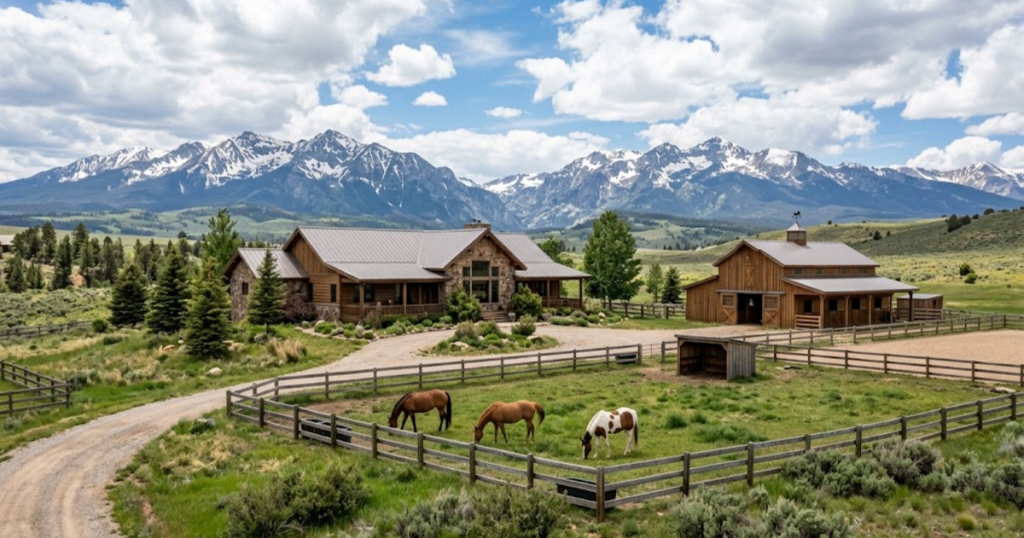
You decide it is time to relocate your herd to the beautiful state of Colorado. You open a real estate app, draw a massive circle around the entire Denver metro area, and search for any house with a barn and five acres. Within minutes, you are completely overwhelmed by the varying prices, landscapes, and zoning codes.
You might see a million-dollar estate tucked into a steep mountain canyon, a sprawling property on the eastern plains surrounded by commercial agriculture, and a beautiful suburban home where the local homeowners association strictly bans hooved animals. Without understanding the distinct geographic and legal zones of Colorado, you risk buying a property where the climate, the soil, or the local laws do not match your equestrian lifestyle.
When searching for horse properties in Colorado, location dictates exactly how you will manage your farm, what you will pay for hay, and where you can ride. Different regions require different winterizing strategies, feed budgets, and land management techniques.
Here is a comprehensive breakdown of the best regions to buy horse-friendly homes across Colorado.
Where Can I Buy Horse-Friendly Homes in Colorado?
Quick Summary: Mapping the Equestrian Dream
- The Southern Suburbs: Douglas and Elbert counties remain the undisputed champions for equestrian buyers, offering a perfect blend of high-plains acreage, protected agricultural zoning, and dedicated trail networks.
- The Foothills Lifestyle: Jefferson County towns like Morrison and Evergreen offer stunning mountain views and direct access to national forests. However, buyers must navigate steep terrain and strict snow removal requirements.
- The Northern Agricultural Hub: Larimer and Weld counties provide fantastic irrigated pasture opportunities, strong farming communities, and flat, usable acreage at a more accessible price point than the immediate Denver suburbs.
- The Western Mountain Retreat: Archuleta County and the Western Slope offer massive acreage and unparalleled solitude, ideal for buyers willing to manage true rural living and complex surface water rights.
1. Douglas and Elbert Counties, The Equestrian Heartland
Located south and southeast of Denver, this region is arguably the most popular destination for horse owners in the entire state.
The Douglas County Advantage
Towns like Parker, Franktown, and Sedalia are famous for their deeply rooted horse-friendly culture. Zoning here heavily favors livestock owners, and many properties sit within master-planned equestrian communities. You will find incredible local trail systems, large equestrian centers like the Colorado Horse Park, and rolling hills with mountain views. The Cherry Creek Trail system provides a massive, safe corridor for non-motorized riding away from busy highways.
The Elbert County Expansion
Just east of Douglas County, towns like Elizabeth and Kiowa offer what many real estate experts call the true acreage play. If you need 35 to 40 acres to run a larger herd or start a specialized breeding operation, Elbert County provides wide-open, high-plains grasslands at a more accessible price point per acre. While you will have a longer commute to the city, the freedom from strict community covenants makes it a highly desirable location for independent horse owners.
2. Jefferson County, The Foothills Premium
For buyers who want to trade the open prairie for ponderosa pines, the western edge of the metro area is stunning, but complex.
Mountain Terrain and Trails
Areas like Morrison, Evergreen, and Conifer offer a true mountain lifestyle. Properties here often border national forests or Denver Mountain Parks, providing virtually limitless trail riding right from your barn door. You can saddle up and ride through shaded, wooded trails that are heavily protected from commercial development.
The Foothills Trade-Off
Buying a horse-friendly home in the foothills requires serious compromise. The terrain is inherently steep, making it difficult to find flat, usable land for grazing or building a full-sized riding arena. Furthermore, buyers must carefully evaluate winter access. A steep, winding driveway might be beautiful in July, but it can become impassable for a heavy gooseneck horse trailer during a January snowstorm.
3. Boulder and Larimer Counties, Northern Front Range Luxury
If you prefer a strong farming community, irrigated pastures, and proximity to top-tier veterinary care, the northern Front Range is your target destination.
Boulder County Exclusivity
Boulder is famously protective of its open space, making it a highly desirable destination for luxury horse owners. Towns like Longmont and rural Boulder offer incredible estates with quick access to equestrian-friendly trails. However, Boulder County is exceptionally expensive, and the local zoning regulations regarding animal density and barn construction are notoriously strict.
Larimer County Appeal
Surrounding Fort Collins, Loveland, and Berthoud, Larimer County provides a more accessible entry point to northern Colorado living. This area offers incredible access to foothills trails and is highly desirable for buyers who want proximity to the Colorado State University Veterinary Teaching Hospital. The agricultural community here is strong, and buyers can often find properties with highly productive, irrigated pasture land.
4. Weld County, The Eastern Plains and Agricultural Freedom
Moving slightly east toward Brighton, Greeley, and Eaton, Weld County is the destination for buyers who prioritize massive acreage and unrestricted agricultural freedom over manicured county parks.
Flat Usable Land
Weld County offers flat, highly usable land, making it ideal for large-scale training operations, commercial boarding facilities, or private owners who want maximum space. Because the land is relatively flat, you avoid the massive grading and excavation costs required to build large indoor riding arenas in the foothills.
Fewer Restrictions
Weld County is deeply rooted in production agriculture. Buyers here generally face far fewer restrictions on boarding operations, arena construction, and herd size. It is an excellent region for buyers who want minimal homeowners association interference and the potential for producing their own grass hay.
5. Archuleta County and The Southwest, The Mountain Escape
If you want to escape the crowded Front Range entirely, you have to look toward the southern and western regions of the state.
Space and Solitude
Archuleta County, specifically the area surrounding Pagosa Springs, has become a major hotspot for buyers seeking a mountain retreat. These properties often border the San Juan National Forest, offering breathtaking alpine views and absolute solitude. Similarly, areas around Durango or the Western Slope offer large ranches with direct access to millions of acres of Bureau of Land Management land.
The Operational Reality
Buyers in these remote regions must be prepared for true rural living. You will deal with more extreme winter weather, longer distances to specialized equine veterinarians, and a heavy reliance on winter hay storage. You must strictly evaluate your water rights, as these areas rely heavily on mountain snowpack for summer irrigation.
6. Essential Criteria for Evaluating Horse-Friendly Homes
Finding a house in the right town is only the first step. You must verify that the specific property can legally and safely support your horses.
The Water Rights Check
In Colorado, water dictates property value. You must pull the well permit from the Division of Water Resources to verify that the property has a "Domestic and Livestock" well permit. If the well is classified as "Household Use Only", it is illegal to use that water for your horses.
Zoning and Animal Density
Never assume that acreage guarantees permission. Every county dictates how many horses are allowed based on specific zoning districts. You must cross-reference your herd size with the local animal density limits, and aggressively check the property for any hidden homeowners association covenants that might ban livestock.
Fencing and Infrastructure
Evaluate the land from the horse's perspective. Look for safe containment, such as pipe rail or no-climb wire, and immediately red-flag properties that rely on dangerous barbed wire. Ensure there is a dedicated dry lot where you can safely confine your horses when the pastures need time to rest and recover.
We Find the Perfect Colorado Horse Property
We do not just look at a map; we understand the dirt, the zoning, and the lifestyle of each county.
When Mark Eibner's team represents you, we help you narrow down your search based on how you actually want to live with your horses. We evaluate the regional water rights, commute times, and trail access to ensure you are looking in the right part of the state before you ever book a flight. We navigate the complex zoning codes across the Front Range and the mountain communities, ensuring your investment is safe, legal, and highly functional.
Contact us today at coloradohorseproperty.com to find premium horse properties Colorado buyers trust for exceptional rural living.
Browse active Colorado horse ranches for sale or ask our team about finding a functional horse property for rent in Colorado in the perfect region.
Frequently Asked Questions (FAQ) About Buying Horse Properties
Which Colorado county has the most affordable land for horses?
Generally, the further east you go onto the plains, the more affordable the land becomes. Counties like Elbert, El Paso, and Weld offer more accessible acreage compared to the premium prices found in Boulder, Douglas, or Jefferson counties. However, you must factor in the cost of installing wells and fencing on raw prairie land.
Can I keep horses on a property that does not have a barn?
Yes, provided the local zoning allows for horses. However, you will need to construct at least a three-sided run-in shed to provide your horses with essential protection from Colorado's harsh sun, wind, and winter snowstorms.
What is the most important feature to look for in a Colorado horse property?
Legal, usable water is the absolute most critical feature. Without a proper livestock well permit or deeded irrigation rights, even the most beautiful barn and green pastures are completely non-functional for an equestrian buyer.
Do I need special winter gear for my horses if I buy in the mountains?
Absolutely. Properties in Jefferson County, Archuleta County, or the Western Slope experience significantly more snow and colder temperatures than the plains. You will need heated water troughs, heavier winter blankets, and a reliable snow-removal plan so delivery trucks can access your hay storage.