
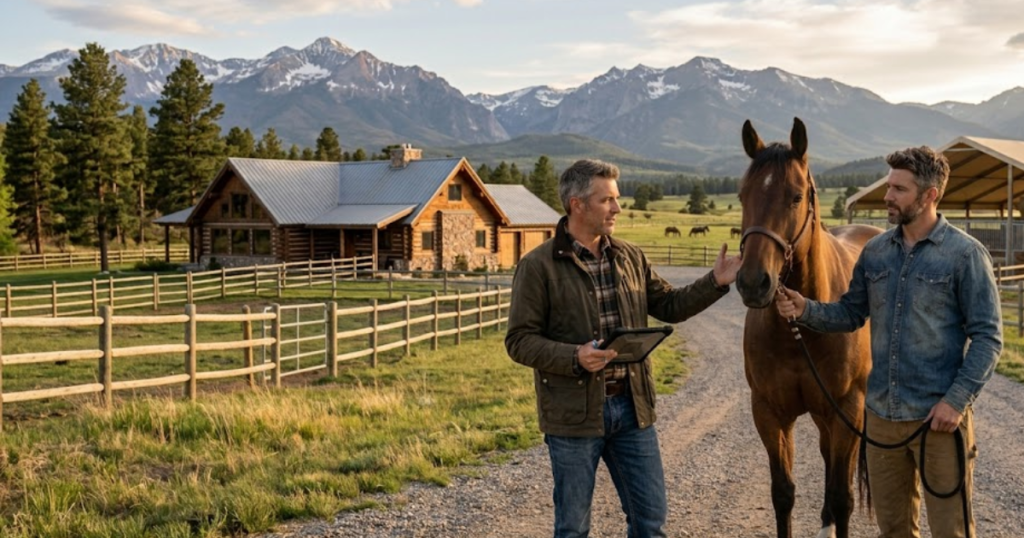
You decide to buy a horse property and hire your friend, a highly successful real estate agent who specializes in selling luxury suburban homes in Denver. They find you a gorgeous 5-acre property with a brand-new barn. The agent points out the stunning views and the beautifully remodeled main bathroom. You make a full-price offer, thrilled with the purchase.
Two months after closing, you discover the well permit explicitly prohibits outdoor livestock watering, meaning you have to haul water in by truck. Then, you receive a cease-and-desist letter from the HOA stating that horse trailers cannot be parked anywhere on the property. Finally, your horse sustains a severe puncture wound because the agent didn’t realize the beautiful perimeter fencing was actually backed by hidden, rusty barbed wire. Your friend was a great house salesperson, but their lack of agricultural knowledge just cost you tens of thousands of dollars.
When searching for horse properties in Colorado, the professional you hire to represent you is the only thing standing between you and a massive financial liability.
Here is what you must look for when vetting a real estate agent to handle an equestrian property transaction.
What Should I Look For in a Real Estate Agent Who Specializes in Colorado Horse Properties?
Quick Summary: The "Big Backyard" Mistake
- The Suburban Disconnect: A standard residential agent views a 10-acre property as a house with a very big backyard. A specialized equestrian agent views it as a complex agricultural facility governed by strict land, water, and zoning laws.
- Water Law Fluency: Your agent must know how to pull and interpret Colorado Division of Water Resources well permits, differentiate between "Household Use" and "Livestock" decrees, and understand surface ditch shares.
- The Structural Eye: A great equestrian agent does not just look at the kitchen countertops. They inspect the barn ventilation, evaluate the arena footing drainage, and spot toxic weed infestations in the pastures before you ever make an offer.
- The Appraisal Defense: Standard bank appraisers frequently undervalue specialized horse infrastructure, such as indoor arenas. Your agent must have the niche expertise to provide agricultural comparable sales and successfully challenge low bank appraisals to save your deal.
1. Fluency in Colorado Water and Zoning Law
The legalities of the dirt are far more important than the aesthetics of the house.
- The Well Permit Audit: An equestrian agent will never take a listing's description of water at face value. They must proactively pull the state well logs and permits to guarantee you have the legal right to water a herd.
- Animal Unit Calculations: Every county and every HOA has different rules for how many animals you can keep per acre. Your agent must know how to calculate "Animal Units," distinguish between private and commercial agricultural zoning, and read complex HOA covenants specifically looking for livestock restrictions.
2. An Eye for Infrastructure and Safety
Your agent must be able to evaluate the property through the eyes of a horse and a farm manager.
- Footing and Drainage: A standard agent sees a flat patch of sand. An equestrian agent sees a 1% crowned sub-base with angular concrete sand designed to drain monsoon rain. They should be looking for interceptor swales and checking the hay shed for roof leaks.
- Fencing and Predators: They should immediately identify the safety of the containment system. Is it V-mesh no-climb wire, or dangerous high-tensile smooth wire? Are the wooden posts properly treated, UC4A, to survive irrigated soil? They should also map out natural wildlife corridors to assess the risk of predators to your herd.
3. Expertise in Agricultural Valuations
Pricing a horse property is completely different from pricing a subdivision home.
- ROI on Outbuildings: A residential agent will often overprice a property because a seller spent $200,000 building a custom barn. An equestrian expert knows the actual "contributory market value" of that barn and will prevent you from overpaying for someone else's over-improvement.
- Guarding the Appraisal: When the bank sends a residential appraiser who does not understand the value of an indoor arena or senior ditch rights, your agent must be prepared to meet that appraiser with a specialized packet of agricultural "comps," comparable sales, to ensure the loan actually funds.
4. A Deep Roster of Specialized Vendors
A true equestrian agent's job does not end at the closing table.
- The Farm Network: If you buy a suburban house, you need a plumber. If you buy a horse farm, you need an arena grader, a custom fence builder, a local hay broker, and a large-animal veterinarian. A specialized agent acts as your gateway to the local agricultural community, providing a trusted network of specialized contractors to keep your farm running.
We Evaluate the Farm Before You Buy
We do not just sell houses; we audit agricultural operations.
When Mark Eibner and Belinda Seville represent you in buying or selling a rural estate, you get decades of specialized equine and land management expertise. We pull the well permits, walk the fence lines to check for rot and toxic weeds, evaluate the arena's engineering, and fight for your property's true valuation. We protect you from the hidden liabilities that standard residential agents do not know exist.
Contact Us Today to partner with the experts in horse properties Colorado buyers and sellers trust for flawless, protected transactions.
Browse Active Colorado Horse Properties: Browse active Colorado horse ranches for sale, or ask our team about finding a functional horse property for rent in Colorado while you search for your permanent equestrian estate
Frequently Asked Questions (FAQ) About Equestrian Real Estate Agents
Does my real estate agent need to be an active horseback rider?
Not necessarily, but they absolutely must have a background in farm ownership, land management, or agricultural real estate. Being able to ride a horse does not automatically mean an agent understands water rights, septic percolation, soil carrying capacities, or county zoning codes. You need a land expert, not just a riding buddy.
Why do standard real estate agents struggle to price horse properties accurately?
Because there are rarely identical "comps." In a suburb, you can easily find three identical houses that sold recently. In equestrian real estate, you might have to compare a 10-acre property with an indoor arena and a small house to a 35-acre property with no arena and a massive luxury home. It requires specialized financial adjustments that standard residential agents are never trained to perform.
Can I use two different agents, one for selling my suburban home and one for buying the horse property?
Yes, and this is often the smartest strategy. Let a residential expert maximize the sale of your city home, and hire a dedicated equestrian specialist to navigate the complex purchase of your rural acreage. A good equestrian agent will seamlessly coordinate the closing timelines with your selling agent.