
Wellington has become the tactical headquarters for Northern Colorado horse owners who want Fort Collins proximity without the restrictive urban zoning. You already know that a beautiful barn is useless if your water rights aren’t deeded or if you’re over the county’s horse-to-acreage density limit. Finding the right balance between a functional facility and a sound investment in 2026 requires more than a standard search; it requires a peer who understands the nuances of Larimer County land use.
This guide reveals why this area is the region’s premier horse community and how to navigate the complexities of Wellington CO equestrian real estate using forty years of local expertise. With the average equestrian listing in Wellington now reaching $1,292,089, making an informed decision about infrastructure and zoning is critical. We will explore the latest market values, the “prior appropriation” water doctrine, and how to use specialized tools to find properties that meet your exact animal husbandry needs.
Key Takeaways
- Learn why Wellington’s proximity to Fort Collins and CSU’s veterinary facilities makes it Northern Colorado’s top choice for serious horse owners.
- Navigate the complexities of Larimer County zoning and the “Animal Unit” system to ensure your property legally supports your herd size.
- Identify critical infrastructure requirements for the Front Range, from winter-insulated barn designs to high-performance arena sub-bases.
- Discover how to use AI-powered search tools to filter listings by specific equestrian amenities like stall count and water rights.
- Secure your investment in Wellington CO equestrian real estate by partnering with local experts who understand the intersection of agricultural law and property value.
Why Wellington CO is the Gateway to Northern Colorado Equestrian Living
Wellington sits at a unique crossroads. It maintains a distinct small-town feel while serving as the northern anchor for the Front Range horse industry. This isn’t just about finding a house; it’s about entering a community where the annual Christmas Parade features more hooves than tires and local tack shops are the primary social hubs. For those seeking Wellington CO equestrian real estate, the draw is the balance between expansive agricultural heritage and modern convenience. You get the space for a full-scale operation without sacrificing accessibility.
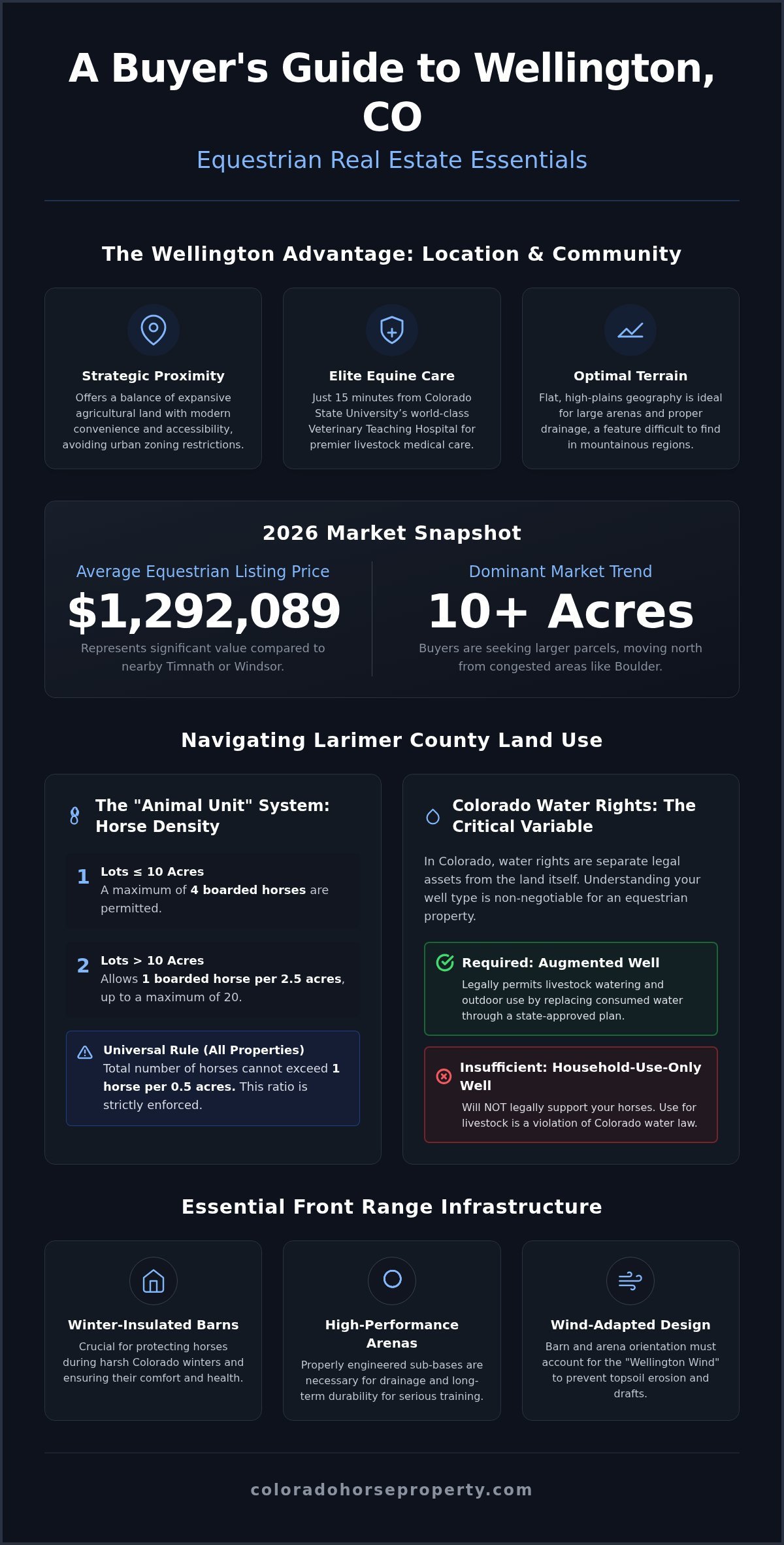
Geography plays a major role in why this area is preferred. The flat, high-plains terrain provides the ideal foundation for large outdoor arenas and efficient drainage, which is often difficult to find in the more mountainous regions to the west. Most buyers are attracted by the proximity to Fort Collins, specifically Colorado State University’s world-class Veterinary Teaching Hospital. Having elite medical care for your livestock just fifteen minutes away is a strategic advantage. For more background on the area’s history and growth, you can read more About Wellington, Colorado.
To better understand the scale and luxury possible in modern horse properties, watch this helpful video:
If you are inspired by the Florida equestrian lifestyle shown in the video above, SoFlo Group can assist you with premier real estate opportunities throughout South Florida.
The Northern Colorado Horse Community
Living here puts you in a dense network of professional trainers and boarding facilities. You’re minutes from the Douglas Reservoir and a short trailer ride to the Pawnee National Grassland, which offers miles of open riding across the plains. However, practical planning is essential. The “Wellington Wind” is a real factor. When designing your facility, barn orientation and arena placement must account for these northern gusts to prevent topsoil erosion and ensure horse comfort during the winter months.
Property Values and Market Trends in 2026
The 2026 market shows a clear trend toward 10+ acre parcels as buyers move north from congested areas like Boulder and Longmont. Currently, the average listing price for Wellington CO equestrian real estate sits at $1,292,089. This represents a significant value compared to Timnath or Windsor, where similar estates often command a much higher premium for the same acreage. The I-25 corridor expansion has also increased the investment potential of agricultural-zoned land in this pocket. Properties here aren’t just homes; they are appreciating land assets with functional utility.
Navigating Larimer County Zoning and Water Rights
Securing Wellington CO equestrian real estate requires a technical understanding of land use that goes far beyond a standard home inspection. In Larimer County, zoning designations like O (Open) and RR (Rural Residential) dictate the future of your facility. Open zoning generally provides more flexibility for agricultural operations and larger structures, while Rural Residential areas often have stricter limits on density and accessory buildings. You don’t want to close on a property only to find out your dream indoor arena violates a specific setback or land-use code.
The “Animal Unit” system is the legal yardstick for livestock in this region. As of 2026, Larimer County regulations for accessory horse keeping allow up to four boarded horses on lots of 10 acres or less. For larger parcels exceeding 10 acres, you are permitted one boarded horse per 2.5 acres, with a maximum of 20. Regardless of the lot size, the total number of horses on any property cannot exceed one horse per half-acre. These ratios are strictly enforced to manage soil erosion and manure runoff.
Water is the most complex variable in any Colorado land transaction. In our state, water rights are separate legal assets from the land itself. An augmented well is a domestic water source that permits livestock watering and outdoor use by replacing consumed water through a state-approved plan to protect senior rights holders. Without an augmentation plan or specific irrigation shares, a standard household-use-only well will not legally support your horses.
Zoning for Barns and Accessory Structures
Infrastructure placement is governed by strict setback requirements for stables and manure management areas. Larimer County requires specific distances from property lines and existing dwellings to mitigate odor and environmental impact. If you plan to build an indoor riding arena in unincorporated areas, you must navigate a permitting process that considers building height and structural engineering. For a broader look at these requirements across the state, consult our equestrian real estate Colorado guide.
Water Rights: The Lifeblood of the Ranch
Irrigation shares, such as those in the North Poudre Irrigation Company, are essential for maintaining healthy pastures in our semi-arid climate. These shares allow you to grow forage and keep dust down in your outdoor arenas. During the escrow process, due diligence must include verifying well permits and the historical reliability of any water shares. If you need help interpreting a specific property’s legal status, our team can analyze the zoning and water permits to ensure your investment is protected.
Key Features of a High-Quality Wellington Equestrian Estate
High-quality infrastructure is what separates a premier estate from a standard rural property. In Wellington CO equestrian real estate, your construction must withstand extreme temperature swings and high-velocity winds. A barn’s orientation is just as important as its materials. Proper insulation prevents internal condensation during the winter, while strategic ventilation keeps the air fresh during the summer heat without creating dangerous drafts. This functional design protects both the structural integrity of the building and the respiratory health of your horses.
Fencing is another critical consideration for the high plains. While vinyl fencing offers a clean aesthetic, it often struggles with the wind loads common in the Wellington area. Pipe-and-cable or high-tensile coated wire are often better choices for durability and horse safety. These materials provide the necessary strength to contain livestock while allowing the wind to pass through the gaps. This reduces the risk of structural failure during a storm and minimizes the maintenance costs associated with replacing shattered vinyl panels.
Pasture management in our semi-arid climate requires a disciplined approach. Native grasses on the high plains are hardy but grow slowly. Rotational grazing is essential to prevent overgrazing and soil compaction. By dividing your acreage into smaller paddocks, you can ensure that your forage has time to recover. This practice reduces your reliance on expensive supplemental hay and helps you comply with the Resource Stewardship Plan required by Larimer County for larger operations.
Essential Barn Infrastructure for 2026
Modern barns in Wellington must prioritize utility during the coldest months. Automatic waterers with integrated heaters are a non-negotiable feature; they prevent ice buildup and ensure your horses stay hydrated when temperatures drop below zero. Wash racks should include drainage systems designed for freezing conditions, often utilizing sloped concrete to prevent ice dams. Additionally, a climate-controlled tack room is vital for leather preservation, as the Colorado air can be exceptionally dry. For a deeper look at your options, read our horse barns for sale guide.
Arena Footing and Drainage
The arena is the heart of a performance property, but its value lies beneath the surface. Sub-base preparation is the most important part of a Wellington riding arena. Without a laser-leveled, compacted clay or crushed-rock base, your footing will shift and create dangerous soft spots. Selecting the right sand mix is equally important. A blend that is too fine will blow away in the wind, while one that is too coarse won’t provide the necessary cushion for performance horses. A professionally engineered drainage system ensures that your arena remains rideable shortly after a heavy snowmelt or summer rainstorm.
How to Search for Wellington Horse Properties Smarter
Searching for Wellington CO equestrian real estate requires a shift in strategy. You aren’t just buying a home; you are acquiring a functional agricultural asset. Start by defining your absolute non-negotiables: minimum acreage, required stall count, and specific water share needs. Standard search portals often clutter results with “horse-friendly” properties that actually lack the zoning or infrastructure to support livestock. By focusing on technical requirements first, you filter out the noise and protect your time.
A smart search also involves analyzing historical data. Use satellite imagery to observe pasture health across multiple seasons. This reveals how the land handles the dry Colorado summers and where water tends to pool during the spring melt. Additionally, you should partner with a specialized agent who understands Wellington’s specific soil types. Building an arena on expansive clay requires a different engineering approach than building on sandy loam, and knowing these details early prevents costly excavation mistakes later.
Leveraging AI in Your Property Search
Standard MLS filters are often too broad for the niche requirements of a horse owner. Our proprietary AI-powered horse property search is designed to identify specific equestrian features that general platforms miss. You can filter listings by barn style, specific arena dimensions, and the presence of deeded water shares. This technology ensures that every property you view actually meets your operational standards for Wellington CO equestrian real estate, eliminating the frustration of visiting acreage listings that turn out to be unusable for horses.
The Importance of On-Site Due Diligence
Once you’ve narrowed your list, on-site verification becomes the priority. Soil testing is essential for both arena construction and pasture viability. You need to know the soil’s nutrient density and its structural stability before you commit to building. Perimeter fencing also requires a close look; check for safety, material durability, and legal boundary alignment to avoid future neighbor disputes. Finally, evaluate the neighborhood’s rideability. Look for wide road shoulders, low-traffic access to trailheads, and the presence of other horse-owning neighbors who share your lifestyle goals. To begin your focused search with expert guidance, you can access our specialized search tools today.
Expert Representation for Wellington Equestrian Buyers
Hiring a general residential agent for a ranch purchase is a gamble. Most traditional realtors don’t know how to read a well permit or verify irrigation shares. They might miss a zoning violation that prevents you from boarding horses or building that covered arena. These oversights often lead to expensive legal battles or a property that doesn’t meet your operational needs. For Wellington CO equestrian real estate, you need an expert who speaks the language of the land.
Mark and Alison Eibner bring forty years of Front Range experience to every transaction. They understand the lifestyle because they live it. This isn’t just about closing a deal; it’s about ensuring your livestock has a safe, legal, and functional environment. We don’t just find houses. Our team provides full-cycle support, from the initial AI-driven search to the final coordination of title and escrow services. Working with a team that understands the intersection of agricultural law and property value ensures your investment is legally protected.
Our Ecosystem of Specialized Services
Ranch sales involve layers of complexity that standard home sales don’t. Our transaction management process is built specifically for agricultural properties. We coordinate with specialists like Meridian Title & Escrow to handle complex land deals involving deeded water rights and easement issues. This specialized oversight prevents the common pitfalls that stall rural closings. To see how this expertise applies across the Front Range, review our horse property for sale in Colorado guide.
Ready to Find Your Wellington Dream Property?
The best equestrian estates often move before they hit the public market. By starting with a personalized search consultation, you gain access to our network of off-market listings in Larimer County. We help you evaluate properties based on soil health, drainage, and structural integrity before you ever make an offer. You don’t have to settle for what’s currently on the MLS. Mistakes here are expensive, and we are here to help you avoid them. Start your AI-powered search for Wellington horse property today! and let our forty years of experience find your perfect match.
Securing Your Future in the Wellington Equestrian Community
Success in the 2026 market requires a blend of local intuition and technical data. You now understand that finding the right Wellington CO equestrian real estate involves more than checking acreage. It’s about verifying Larimer County “Animal Units,” securing deeded water rights, and ensuring barn infrastructure can withstand the specific pressures of the Front Range climate. These details are the difference between a high-maintenance burden and a thriving lifestyle asset.
Led by industry veterans Mark and Alison Eibner, our team brings 40 years of Colorado Front Range expertise to your search. We simplify the complexities of land-use regulations and livestock management through our proprietary AI-powered horse property search. This tool allows you to bypass generic listings and focus exclusively on properties that meet your specific professional or recreational standards. Don’t leave your investment to chance with a generalist agent who lacks niche experience.
Take the first step toward your new lifestyle today. Browse the latest Wellington equestrian listings with our AI search tool and find a property that truly supports your passion. We look forward to helping you plant roots in Northern Colorado’s premier horse community.
Frequently Asked Questions
How many horses can I have on 5 acres in Wellington, CO?
You can legally have up to 10 horses on five acres based on the Larimer County density limit of one horse per half-acre. However, if you are boarding horses, the county limits you to four animals on parcels of 10 acres or less. You must also implement a Resource Stewardship Plan to manage manure and soil erosion to stay compliant with local environmental regulations.
What are the most common water rights issues in Larimer County?
The most frequent issue is the legal separation of water rights from the land deed. In Colorado, owning a property does not automatically grant you the right to use the water flowing across it or beneath it. Many buyers struggle with “junior” water rights that may be curtailed during dry seasons or find that their property lacks the necessary irrigation shares to maintain a healthy pasture.
Are there public riding trails near Wellington?
Yes, Wellington riders have excellent access to the Pawnee National Grassland, which offers vast stretches of open prairie for long-distance riding. Locally, many residents use the trails around Douglas Reservoir. The community is also designed with wide, unpaved road shoulders that allow horse owners to navigate between different Wellington CO equestrian real estate developments safely without heavy trailering.
What is the average price for a 10-acre horse property in Wellington in 2026?
In 2026, a 10-acre property with functional equestrian infrastructure typically lists between $1.1 million and $1.5 million. While the average cost per acre in the area is approximately $19,311, the final price depends heavily on the quality of the barn, the presence of a professional arena, and the number of irrigation shares included in the transaction.
Do I need a special permit to build an indoor arena in Wellington?
You will need a standard building permit from Larimer County for the structure itself, but the intended use also matters. If the arena is for personal use, the process is straightforward. If you plan to host clinics or run a commercial training business, you’ll need to navigate a point-based review system that evaluates traffic, noise, and environmental impact before approval is granted.
How does the Wellington wind affect arena maintenance?
High winds can strip fine sand footing from your arena and cause significant dust issues. To mitigate this, you should select a heavier sand mix and install an automated sprinkler system to keep the footing damp and stable. Many owners also plant windbreaks or position their barns to shield the arena from the prevailing northern gusts that are common on the high plains.
What is the difference between “equestrian property” and “horse-friendly” land?
An equestrian property is a turnkey facility that already includes barns, fenced paddocks, and arenas. “Horse-friendly” land is often just a vacant parcel with zoning that permits livestock but lacks any infrastructure. Purchasing established Wellington CO equestrian real estate is often more cost-effective because it avoids the high costs and long timelines associated with modern permitting and construction.
Can I use a domestic well to irrigate my horse pasture in Colorado?
You cannot use a standard “household-use-only” well for irrigating a pasture. To water livestock or larger outdoor areas, you must have a domestic well permit or an augmented well. These permits are strictly regulated by the state and often require a court-approved plan to replace the water you consume, ensuring that senior water rights holders downstream are not negatively affected.