
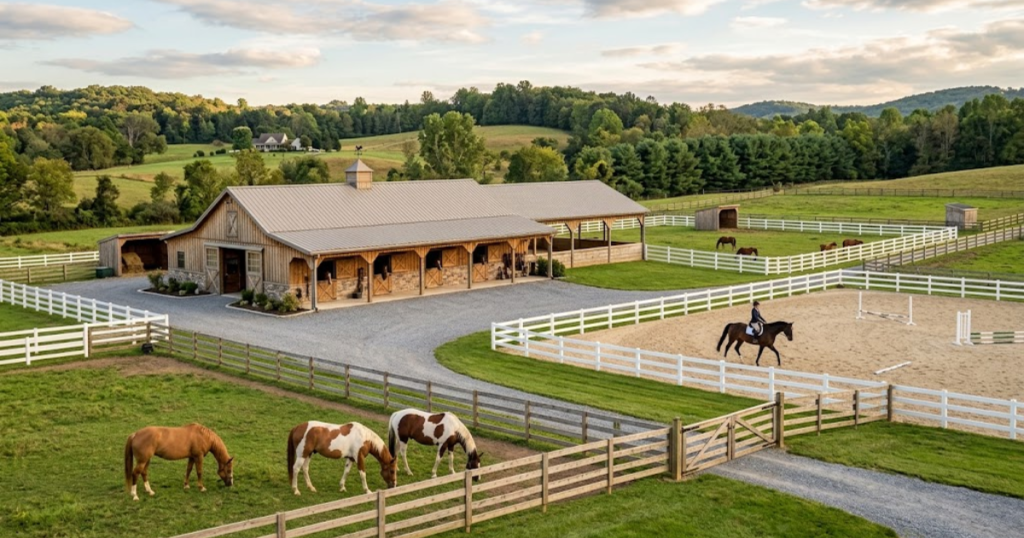
You browse a real estate portal and find a stunning listing for twenty acres of vacant land. The property features rolling hills, mature pine trees, and a beautiful seasonal creek. To a standard homebuyer, this looks like the ultimate Rocky Mountain paradise. To a specialized equestrian real estate agent, this same property might be completely useless for horses.
A massive difference exists between owning a large plot of land and owning a functional, safe, and legally compliant horse property. When searching for horse properties in Colorado, buyers often fall into the trap of equating acreage with equestrian suitability. They assume that if they have enough space, the horses will naturally thrive.
In reality, converting raw land or a standard residential acreage property into a working horse farm requires specialized topography, distinct legal rights, and a massive capital investment in infrastructure. If you buy the wrong piece of land, you could spend hundreds of thousands of dollars trying to force it to accommodate your herd, or worse, you could be legally barred from keeping horses there entirely.
Here’s a comprehensive guide to what separates a premium horse property from just any piece of land in Colorado.
What Makes a Good Horse Property vs. Just Any Land?
Quick Summary: The Equestrian Standard
- Usable Terrain Over Total Size: Ten acres of flat, well-draining pasture is infinitely more valuable to a horse owner than fifty acres of steep, rocky, unusable mountain canyons.
- The Water and Zoning Mandate: Standard acreage might prohibit livestock entirely or restrict well water to indoor household use only. A true horse property has the legal zoning and livestock-well permits needed to sustain a herd.
- Safe Equestrian Containment: Former cattle land relies on barbed wire, which is a massive safety hazard for horses. A premium equestrian property features high visibility and safe fencing like pipe rail, vinyl, or no-climb wire mesh.
- Infrastructure and Workflow: An equestrian property is designed for operational efficiency, featuring wide driveways for heavy trucks, massive turnaround circles for gooseneck trailers, and strategic separation between barns and hay storage.
1. Usable Topography and Soil Drainage
The biggest physical difference between a good horse property and standard acreage is terrain usability.
Evaluating the Grade: You can buy a fifty-acre parcel in the foothills, but if forty acres consist of steep, rocky canyons, you are essentially buying a ten-acre property. Horses require flat or gently rolling terrain for safe turnout and riding. Steep slopes are prone to severe erosion, and navigating them daily increases the risk of tendon and ligament injuries for your herd. A true horse property offers a high percentage of usable, gently sloping land.
The Mud Factor and Drainage: Proper drainage is the unsung hero of a successful horse farm. Colorado experiences heavy spring snowmelt and intense summer thunderstorms. If the land sits in a low basin or has heavy clay soil that doesn't drain, your paddocks will turn into a massive mud pit. Chronic mud leads to serious health issues like thrush and pastern dermatitis, commonly known as scratches. A premium horse property sits on elevated, well-draining soil, often using engineered swales or French drains to direct water safely away from barns and high-traffic areas.
2. The Legal Foundation, Zoning and Water Rights
A beautiful piece of land is worthless to an equestrian buyer if the county or the state prohibits agricultural use.
The Zoning Reality: Standard rural land might be zoned for residential use, meaning local codes may strictly limit or entirely ban livestock. A dedicated horse property is typically situated in Agricultural or Large Rural Residential zoning districts. These zoning codes dictate your legal carrying capacity and determine exactly how many animal units you can keep per acre. If you buy standard land without checking the zoning, you might discover you can only legally keep two horses on your twenty-acre parcel.
The Water Rights Requirement: As we have discussed in previous guides, water is the ultimate deciding factor in Colorado real estate. A standard piece of land might have a residential well permit classified as Household Use Only. This means you cannot legally pump a single drop of water for your livestock outside the home. A true horse property possesses a Domestic and Livestock well permit or holds deeded surface water rights and ditch company shares that allow for pasture irrigation and herd hydration.
3. Safe and Functional Fencing
Containment is a primary concern, and the type of fencing on a property immediately reveals whether it was built for cattle or designed for horses.
The Danger of Barbed Wire: Many large parcels of land in Colorado are former working cattle ranches. They are almost exclusively fenced with four or five strands of barbed wire. While cattle respect barbed wire, a panicked horse can easily run through it, resulting in catastrophic and often fatal lacerations.
Equestrian Grade Containment: A true horse property features highly visible, safe barriers. You will find perimeter and cross fencing made of pipe rail, three-rail vinyl, heavy-duty wood, or no-climb wire mesh topped with a rigid sight line. Fencing is incredibly expensive. Buying a property where the seller has already invested in premium equestrian fencing saves you tens of thousands of dollars and months of labor compared to buying a standard cattle ranch and retrofitting the containment lines.
4. Infrastructure Layout and Daily Workflow
A horse property is an operational facility. The building layout dictates how much time you spend on daily chores and how safe your property is during an emergency.
Trailer Access and Parking: Standard land often features a narrow driveway winding through the trees. A true horse property requires a driveway at least twenty-four feet wide to accommodate heavy hay delivery trucks and veterinary vehicles. More importantly, it requires a massive turnaround circle, typically at least sixty feet in diameter, so you can easily maneuver a multi-horse gooseneck trailer without reversing blindly into oncoming traffic.
Barn and Hay Storage Placement: On a well-designed horse property, the layout is highly intentional. The barn is built on high ground to prevent flooding. The hay storage building is located a safe distance from the primary stabling area, often at least 100 feet, to reduce fire risk while remaining accessible for deliveries. Manure composting areas are placed downwind from the primary residence and located at least 100 feet from any water wells or natural creeks to prevent environmental contamination.
Septic System Awareness: A standard residential buyer rarely thinks about the location of the septic leach field as long as the toilets flush. An equestrian buyer must know exactly where the leach field is buried. Heavy hooves and heavy equipment will completely crush the delicate underground pipes of a septic system. A true horse property is designed so that grazing pastures, riding arenas, and heavy equipment paths are routed far away from the home's critical waste infrastructure.
5. Pasture Management and Sacrifice Areas
Forage quality separates a sustainable farm from a dirt lot.
The Colorado Climate Challenge: In Colorado's semi-arid climate, the old rule of one horse per acre is a myth. Because of high altitude, intense sun, and unpredictable precipitation, standard land degrades quickly if overgrazed. A good horse property offers enough usable acreage to support rotational grazing, typically requiring two to three acres of dryland pasture per horse.
The Necessity of a Sacrifice Lot: Every highly functional horse property features a dedicated sacrifice area. This is a small, heavily fenced dry lot where horses are confined when the main pastures need time to rest, recover, and grow. During the wet spring thaw or a late summer drought, locking the herd in the sacrifice lot prevents them from destroying the root systems of your pasture grass. If a property lacks dry, high ground for a sacrifice paddock, the land will deteriorate quickly.
6. Specialized Equestrian Amenities
Finally, a true horse property features the premium amenities required to train, ride, and care for your animals year-round.
The Riding Arena: Constructing a riding arena on raw land is a massive undertaking. It requires stripping the topsoil, leveling the sub-base, importing crushed rock for drainage, and installing specialized footing like washed sand or synthetic blends. A property that already features an engineered outdoor arena, or a fully enclosed indoor arena, offers immense, immediate value to the buyer.
Winterized Utilities: Colorado winters are brutal. A standard barn on a standard piece of land means hauling heavy buckets of water and chopping ice twice a day. A premium horse property features insulated tack rooms, frost-free hydrants, and automatic heated waterers in every stall and pasture, saving you countless hours of freezing labor.
We Know Colorado Equestrian Real Estate
We don't just look at total acreage; we evaluate the land's usability, safety, and operational flow.
When Mark Eibner's team represents you, we help you spot the crucial differences between raw acreage and a highly functional equestrian facility. We verify the water rights, map the zoning, evaluate the soil drainage, and inspect the fencing. We protect you from the hidden costs of converting standard land, ensuring the property you buy is safe, legal, and ready for your herd on day one.
Contact us today at coloradohorseproperty.com to find premium horse properties Colorado buyers trust.
Browse active Colorado horse ranches for sale or ask our team about finding a functional horse property for rent in Colorado while you search for your permanent estate.
Frequently Asked Questions (FAQ) About Horse Properties Versus Regular Land
Is it cheaper to buy raw land and build my own horse property?
Rarely. Developing raw land requires paying for well drilling, septic installation, bringing in electrical power, grading the earth, and installing thousands of feet of safe fencing. Because rural construction and materials are so expensive, buying an established, functional horse property is almost always more cost-effective than building from scratch.
Can I build an arena over my septic leach field to save space?
No, you should never build any structures, park heavy vehicles, or allow livestock to graze over a septic leach field. The weight will crush the underground distribution pipes and destroy the system, leading to a repair bill that can easily exceed $15,000.
Why is barbed wire bad for a horse property?
Cattle have thick hides and generally respect the physical barrier of barbed wire. Horses are flight animals with thin skin. If a horse spooks and runs into a barbed wire fence, or if it becomes tangled while reaching for grass, the wire will cause catastrophic, deep lacerations that can be career-ending or fatal.