
A working ranch shouldn’t be staged to look like a home that never works. The best staging a working ranch for sale tips help buyers understand how the operation functions, from the condition of fences and barns to the routes connecting different parts of the acreage. The key is deciding what to clean or repair and what needs to stay in place for daily work and livestock.
You can present the ranch’s land, improvements, and lifestyle clearly without disrupting operations or disguising how the property functions. A practical plan also makes showings easier to follow and helps buyers picture how they might use the property.
This guide covers what to tidy, what to address, and what to leave operational, along with ways to explain acreage, access, and important features. It also looks at how a clear route and thoughtful virtual tour can help buyers review a Colorado ranch remotely. Colorado Horse Property brings nearly four decades of Colorado real-estate experience to the details that matter in a ranch listing.
Key Takeaways
- Use staging a working ranch for sale tips to make the property easier to evaluate, not to disguise its condition or operation.
- Clear loose debris from entrances and viewing areas while preserving useful vegetation and the land’s character.
- Present barns, fences, gates, and work areas in an orderly way so buyers can understand their role and visible condition.
- Prepare the house with a focused clean-and-declutter routine, keeping it in context with the wider ranch.
- Plan a clear buyer walkthrough and use accurate listing details, strong photography, and a virtual tour for remote viewers.
What staging a working ranch for sale should accomplish
Staging a working ranch isn’t about making an active property look untouched or turning it into a conventional home. It’s about helping buyers understand the land, improvements, and daily operation. A tidy entrance, a clear route to key areas, and an orderly work space can make a ranch easier to evaluate without changing what it is. The definition of a ranch reflects the range of activities and land uses that can shape a property, so presentation should make this ranch’s function understandable.
Working-ranch staging is the clear, honest presentation of a property’s land, improvements, and working function so buyers can evaluate it as it is. That principle keeps preparation focused on clarity and upkeep rather than speculative upgrades. A new feature or major renovation may not match a buyer’s plans or the property’s current use. Address visible distractions, but don’t imply that staging changes acreage, boundaries, or condition.
What ranch buyers need to understand at a glance
Buyers need to see how the pieces relate: where access routes lead, how pasture areas connect to working spaces, and which improvements support the operation. Their intended use will vary, so present the property’s features accurately rather than assuming every buyer has the same livestock, management plan, or priorities. A simple walkthrough route helps visitors follow the layout without interrupting everyday ranch work.
- Make the route between the entrance, main improvements, and viewing areas easy to follow.
- Identify which spaces are part of everyday operations and which are included in the buyer walkthrough.
- Keep useful equipment in context, while moving unrelated clutter away from key sightlines.
Staging without disguising the property
Honest presentation supports informed interest. If a fence, building, or access area has a visible limitation, staging shouldn’t hide it or suggest a repair has been completed. Clear the view and describe what buyers are seeing accurately. The goal is to reduce avoidable confusion, not create expectations the property can’t meet.
Use staging a working ranch for sale tips to decide what helps a buyer understand the operation and what merely distracts. Keep equipment that demonstrates how a space is used, but arrange it so the area remains visible and easy to assess. When practical, separate active work zones from the planned tour, and distinguish the ranch’s current use from the features being presented for sale. This balance respects daily operations while giving buyers a more useful first look.
Prepare Colorado ranch land so buyers can read the property
On a working ranch, the land itself is a major part of the showing. Buyers need more than a clean entrance: they need to understand how to reach the property’s main areas and what the terrain, access, and existing improvements look like. Use these staging a working ranch for sale tips to make the outdoor tour easier to follow while preserving the land’s working character.
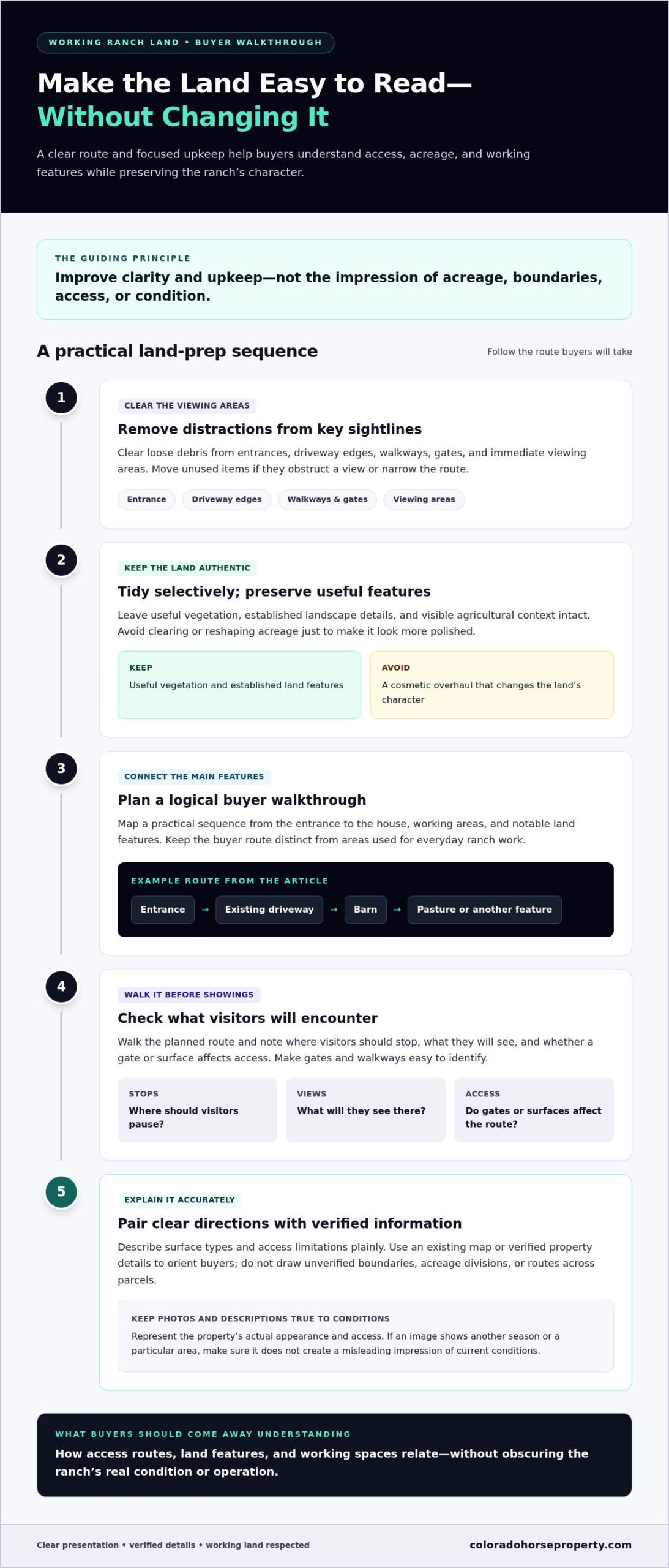
Start with practical upkeep, not a cosmetic overhaul. Clear loose debris from the entrance, driveway edges, walkways, gates, and immediate viewing areas. Move unused items that obstruct a view or narrow a route, but leave useful vegetation and established land features intact. Avoid clearing or reshaping acreage just to create a more polished impression.
Make access and acreage easier to follow
Plan a logical route from the entrance to the house, working areas, and notable land features. For example, a route might follow an existing driveway to a barn, then continue to a pasture or another feature buyers should see. Keep the route practical for current property conditions, and distinguish the buyer walkthrough from areas used for everyday ranch work.
A planned route helps buyers understand a large property one connected feature at a time. Before showings, walk the route and note where visitors should stop, what they’ll see, and whether a gate or surface affects access. Describe those details accurately in showing materials rather than implying every area is equally accessible.
Use an existing map or verified property information to orient buyers. Don’t sketch in boundary lines, label acreage divisions, or suggest a route crosses a particular parcel unless that information is verified. A clear route description explains the sequence of stops, while a reliable map helps buyers understand how those stops relate to the overall property.
- Clear loose debris and obvious clutter from entrances and viewing areas.
- Check that gates and walkways on the planned route are easy to identify.
- Describe surface types and access limitations plainly.
- Use verified maps and property details to explain acreage and orientation.
Show the land’s character without over-staging it
Tidy the places where buyers will pause, but don’t remove the natural and agricultural features that give the property its character. Preserve useful vegetation, established landscape details, and visible context that helps buyers understand the land. The goal is a readable view, not a manufactured one.
Choose photographs and descriptions that represent the property’s actual conditions. If an image shows a different season or a particular area, make sure it doesn’t create a misleading impression of current access or appearance. For broader purchase context, readers can explore this Colorado ranch buyer’s guide. Colorado Horse Property’s ranch listings and property search can also help buyers compare available properties as they consider what fits their plans.
Show barns, fencing, and ranch work areas as useful infrastructure
Barns, outbuildings, fences, and gates show buyers how a ranch is set up to function. Present them as connected parts of the property, not isolated features. A clear view of a barn entrance, nearby work area, and the route between them helps buyers understand how the space is used. Keep descriptions tied to what’s visible and to accurate property information.
Before a showing, walk the areas buyers will see. Put away unrelated clutter, clear access to doors and gates, and arrange relevant equipment so it explains the space without blocking it. Don’t suggest that an item, building, or system has a particular capacity or specification unless that detail is verified. Buyers comparing an existing structure with other options may find this overview of horse barns for sale and buying versus building useful context.
Present barns and outbuildings clearly
Show how each structure relates to adjacent working areas. Capture the entrance, usable circulation space, and its connection to nearby lanes, pens, or other improvements where those features exist. Remove items that obscure the building’s layout, but leave relevant supplies or equipment in place if they help explain its current use. Describe the structure using accurate available information, and let its visible condition speak for itself.
Make fencing, gates, and work areas easy to assess
Fencing and gates can help buyers understand how different areas connect or are separated. Keep the planned viewing route clear, and maintain separation from active work areas and livestock. As you walk the route, note visible maintenance concerns for your own planning. Staging can improve visibility, but it shouldn’t imply that a repair has been made or is included in the sale.
Use this distinction to prioritize preparation: presentation tasks improve visibility, while potential improvements require a separate decision based on the property and your plans.
| Presentation task | Potential improvement for owner review |
|---|---|
| Move loose items away from a gate or fence line. | Assess a visibly damaged section before making claims about its condition. |
| Open the view of a barn entrance and nearby work space. | Decide whether a building issue calls for repair or accurate disclosure. |
| Keep equipment orderly and walkways accessible. | Review whether a proposed upgrade suits the ranch’s use and sale plans. |
Don’t confuse a tidy presentation with a promise of new improvements. A clear listing can describe what buyers can see, include relevant documented details, and avoid unsupported claims. Colorado Horse Property provides real estate listing services and seller representation informed by nearly four decades of Colorado real-estate experience. For buyers exploring ranch properties, its ranch listings and property search offer a way to review available opportunities.
Prepare the house and plan safe ranch showings
The house is part of the ranch story, but it shouldn’t overshadow the land and operation. Prepare it so buyers can understand the home’s everyday function and move through it comfortably, while keeping its condition representative. While residential specialists such as The Kombrink Team often focus staging heavily on interior aesthetics, a working ranch calls for a simpler approach: a focused tidy-up usually serves this purpose better than decorative changes that distract from the property itself.
Stage the home as part of the ranch
Start with shared living spaces and high-use rooms. Clear personal clutter from counters and walkways, clean surfaces, open curtains where appropriate, and check that working lights make rooms easy to see. Arrange furniture to open sightlines and circulation, not to make rooms seem larger than they are. Keep the home comfortable and honest: buyers are evaluating a real residence connected to a working property.
- Declutter surfaces and clear paths through the entry and shared rooms.
- Clean the kitchen, bathrooms, and other frequently used spaces.
- Open curtains or blinds where practical, and check that lights work.
- Keep furniture placement simple so buyers can move through rooms easily.
Keep the presentation consistent with rural living. The house should help buyers picture daily routines, whether they’re coming in from outdoor work or using the home as a base for time on the property. Avoid turning rooms into spaces that don’t reflect their actual use or condition.
Coordinate a clear and safe buyer walkthrough
A showing plan needs to account for the household and the ranch’s ongoing work. Set a route that separates visitor areas from active work zones, and don’t direct buyers through spaces where work or livestock activity could make access unsuitable. Don’t assume animals should be moved or livestock must be present for a showing. Tailor arrangements to the property’s normal operations and safe access.
Before each appointment, use this sequence to prepare the home and tour:
- Declutter and clean the rooms included in the showing.
- Check lighting, open sightlines, and make interior walkways easy to use.
- Review the planned route and keep its access points clear.
- Identify active work areas that visitors should avoid.
- Prepare accurate instructions about the route and any access limitations.
Share relevant showing instructions so visitors know where the tour begins and which areas are excluded. If work is underway, coordinate the route and timing around the activity rather than asking the ranch operation to conform to a generic home showing. These staging a working ranch for sale tips help keep the home welcoming while respecting privacy, livestock, and daily work.
For a listing that presents both the residence and the working property clearly, explore Colorado Horse Property’s ranch listings.
Turn ranch staging into a clear listing and next step
Preparation delivers its full value when the listing carries the same clear, accurate story into photos, property details, and showings. Buyers should be able to connect what they see online with the ranch they visit. Keep descriptions grounded in verified information, and make the order of presentation easy to follow, from the approach and land to buildings and the home.
Carry staging choices into photos and virtual tours
Plan photography as a walkthrough rather than a collection of disconnected views. Start with an image that orients buyers, then show access, land features, buildings, and the residence in a sequence that reflects how the property relates. Include useful context around improvements instead of cropping out the areas that help explain their location or function.
Keep images consistent with current conditions and listing details. Avoid relying on a photograph that suggests a route or feature is available if the showing information says otherwise. If images represent a different season, use descriptions that help viewers understand what they’re seeing. Accuracy builds a more useful first impression than polished but confusing visuals.
Virtual tours are another way to present listed properties to remote viewers. A well-ordered tour can help buyers review available views and get oriented before deciding whether to visit. It should complement, not replace, clear property information. Use the same sequence and terminology across the tour and listing so viewers can follow the ranch’s layout without guessing.
Choose a next step for selling your ranch
Before the property goes to market, assemble a concise buyer-facing summary. Focus on the features that help explain this ranch: its land and access, buildings and work areas, home, and documented property details. Keep each statement specific and supportable. Don’t turn a visible feature into an assumption about capacity, condition, or future use.
This is where a ranch-focused listing presentation matters. Colorado Horse Property provides real estate listing services and seller representation, bringing nearly four decades of Colorado real-estate experience to the details buyers need to assess a property. Clear listing information can carry your preparation choices into a presentation buyers can understand, whether they review it online or in person.
If you’re considering a sale, explore Colorado Horse Property and take the next step toward selling your ranch. Your selling goals and the ranch’s strongest verified details are a practical starting point. These staging a working ranch for sale tips are most useful when they support an honest listing, a clear buyer walkthrough, and a presentation that shows how the ranch really functions.
Set your ranch up for its next chapter
A sale plan can respect the way your ranch operates while making it easier for buyers to understand what the property offers. Use staging a working ranch for sale tips as a practical filter: each preparation choice should make the ranch clearer to assess, not create a picture that doesn’t match daily life on the land.
Bring your priorities into focus before the sale. Consider what matters most, which property details buyers need to understand, and how you want the ranch’s working value and lifestyle represented. A specialist perspective can help connect those goals to a clear listing presentation.
Explore Colorado Horse Property’s ranch listing resources and start shaping a plan around your selling goals. With an honest presentation and a thoughtful next step, you can move toward the sale with confidence.
Frequently Asked Questions
Is staging a working ranch different from staging a regular home?
Yes. While residential real estate specialists such as DeFeo Luxury Properties typically focus staging on interior design and living spaces, a ranch showing also needs to help buyers understand acreage, access, and operational improvements. For example, a tidy mudroom may show how the home connects to outdoor work, while an organized equipment area can clarify how a building is used. The aim is to make the property understandable without making it look like a different operation.
Can I stage a ranch while continuing normal operations?
Yes, with a showing plan that works around the ranch’s actual schedule and safe access. Decide which areas visitors can enter, and keep them separate from tasks or spaces that need to remain active. If a delivery, livestock movement, or another routine task affects the route, adjust the walkthrough rather than interrupting necessary work. Clear instructions help visitors know where to go and which areas to avoid.
Should I remove equipment before showing my ranch?
No, not all of it. Keep equipment that helps explain how a work area functions, but move unrelated or unused items that block access or obscure important features. For instance, a clear path through a shop may help buyers see its layout, while neatly arranged tools can show its working context. Don’t move equipment in a way that disrupts operations or suggests it’s included in the sale if it isn’t.
How do I make a large ranch easier for buyers to view?
Orient buyers before the tour begins. Share a verified map or simple route overview, identify the planned stops, and explain how the house, working areas, and notable land features connect. If the route doesn’t cover every part of the property, say so plainly. Describe access limitations and surfaces accurately, and avoid marking boundary lines unless they come from reliable property information.
What should I do before taking ranch listing photos?
Choose views that explain the property, then prepare each area without changing its character. Move loose clutter from the frame, open doors or gates when appropriate, and check that the image shows enough surrounding context to locate the feature. Photograph buildings with their access and nearby work areas in view. Keep captions accurate, especially if seasonal conditions differ from what a buyer will see now.
Are virtual tours useful when selling a Colorado ranch?
Yes. A virtual tour can help remote buyers review available views of a listed property and decide which features they want to examine more closely in person. It works best when the sequence is easy to follow and the accompanying details explain what each view shows. Colorado Horse Property offers virtual tours of many listed properties, giving remote viewers another way to explore a ranch before arranging a visit.