
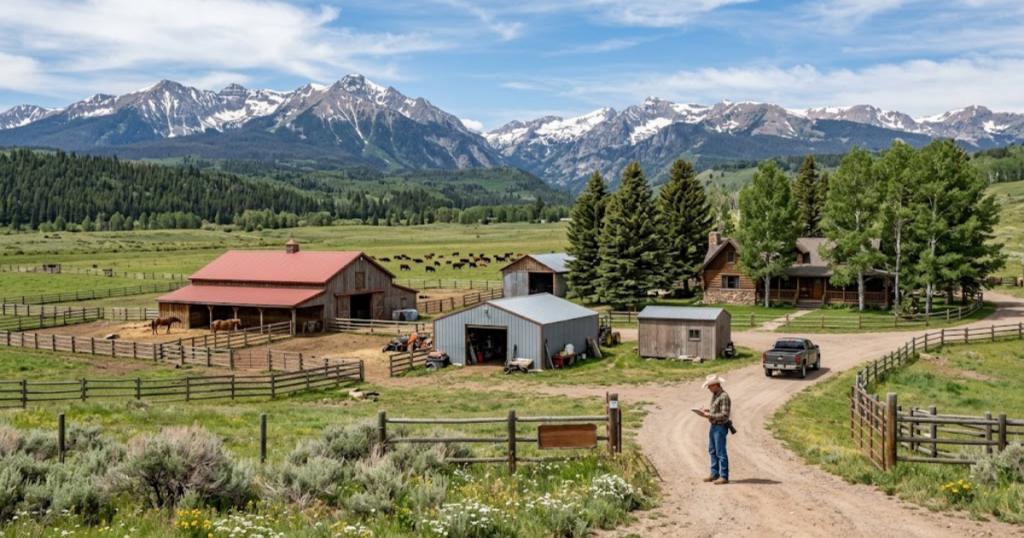
You have spent the last fifteen years building the ultimate equestrian estate. Beyond the primary residence, you have constructed a heated six-stall barn, a massive indoor riding arena with premium footing, a dedicated hay storage building, and an insulated workshop for your tractors. You decide it is time to downsize, and you invite a standard residential real estate agent to evaluate your property.
The agent walks around your property, looks at the main house, briefly glances at the arenas and barns, and gives you a suggested listing price. You are immediately shocked. The price they suggest barely covers the value of the dirt and the primary residence. The agent completely failed to account for the hundreds of thousands of dollars you invested into your agricultural outbuildings.
When searching for horse properties in Colorado, buyers and sellers constantly run into this exact problem. Valuing a ranch property with multiple outbuildings is one of the most complex challenges in rural real estate. Standard valuation models are designed for suburban subdivisions, where value is contained entirely within the primary house’s square footage. In equestrian real estate, the value is spread across multiple structures, specialized infrastructure, and the functionality of the land itself.
If you are preparing to sell your farm, or if you are a buyer trying to determine if a listing is overpriced, you must understand exactly how multiple outbuildings are evaluated, appraised, and priced in the Colorado market. Here is the comprehensive guide to valuing your ranch infrastructure.
How to Value a Colorado Ranch Property with Multiple Outbuildings
Quick Summary: The Complexities of Agricultural Valuation
- The Appraisal Gap: There is often a massive disconnect between what a custom barn costs to build and what the open market is actually willing to pay for it.
- The Infrastructure Breakdown: Not all outbuildings hold the same value. A climate-controlled center aisle barn with custom stalls will appraise completely differently than an open pole barn used for equipment storage.
- The Comparable Challenge: Standard real estate appraisers often fail to accurately price equestrian facilities because they cannot find exact comparable sales in the immediate neighborhood.
- The Permitting Reality: Unpermitted outbuildings can severely damage a property valuation, sometimes adding zero value or even negative value if the county requires demolition.
1. Understanding the Cost Versus Value Trap
The most difficult reality for any ranch owner to accept is the principle of depreciation and market demand. Simply put, construction cost does not equal appraised market value.
If you spend $250,000 building a state-of-the-art indoor arena today, it will not automatically add $250,000 to your property's resale value tomorrow. This is known as the appraisal gap. Real estate value is dictated by what the average buyer in the current market is willing to pay.
Equestrian properties are highly specialized. A buyer who breeds cutting horses might look at your beautiful dressage arena and see a building they have to remodel to suit their specific discipline completely. Because the buyer pool for a heavily specialized property is smaller than the buyer pool for a standard home, outbuildings often suffer from functional obsolescence. Outbuildings depreciate over time, and a specialized rural appraiser will discount the original construction cost based on age, wear, and broad market appeal.
1. Categorizing and Valuing Specific Outbuildings
To accurately price a ranch, an equestrian real estate specialist must break down the property and assign independent value to each specific structure. Lumping everything together under a generic "outbuilding" category is a guaranteed way to lose money.
The Primary Horse Barn
The main barn is usually the most valuable outbuilding on the property, but its value depends heavily on the construction materials and the interior finish. A metal pole barn with dirt floors and portable panel stalls will appraise at a fraction of the value of a custom timber frame barn.
When evaluating a barn, experts look for specific value-adding features. A concrete center aisle, Nelson automatic waterers, a wash rack with dedicated water heaters, and a climate-controlled tack room add massive premium value. Structural integrity matters immensely. Barns built with proper ventilation systems, insulated roofs to prevent condensation, and heavy-duty kick walls will appraise significantly higher than basic loafing sheds.
The Indoor Riding Arena
An indoor arena is the ultimate luxury item for a Colorado equestrian property, allowing riders to train through the harsh winter months. However, arenas are notoriously difficult to value.
An appraiser will evaluate the building's clear span width, ceiling clearance height, and the quality of the base construction. The footing itself is a major factor. A standard sand footing holds less value than premium synthetic blends like GGT footing, which require specialized base grading and extensive moisture management systems. Lighting packages, angled kick walls, and integrated viewing rooms also increase valuation.
Equipment Shops and Hay Storage
Not every building is meant for horses, but agricultural support buildings are vital to ranch operations. Dedicated hay storage buildings add distinct value because they keep heavy delivery trucks away from the main barn and reduce the risk of fire near the livestock.
Insulated workshops with concrete floors, heavy-duty electrical panels, and oversized roll-up doors are highly desirable. Even buyers without horses will pay a premium for a high-quality shop to store classic cars, RVs, or heavy machinery. Because workshops appeal to a broader demographic than horse barns, they often retain a higher percentage of their original construction value.
Detached Living Quarters and ADUs
Many large ranch properties feature secondary living spaces, such as an apartment built over the barn for a groom, a detached guest house, or a modular caretaker home. These Accessory Dwelling Units (ADUs) can add incredible value, but only if they are legally permitted. A fully permitted ADU with its own septic system and water supply can drastically increase the property valuation, as it offers the buyer potential rental income or multi-generational living options.
1. The Specialized Agricultural Appraisal Process
When a buyer requires a mortgage to purchase a ranch, the bank will send an appraiser. If the bank sends a standard residential appraiser who usually works in urban neighborhoods, the valuation will almost certainly fail.
You must demand a certified rural or agricultural appraiser. These specialists use a complex methodology to determine the fair market value of a property with multiple outbuildings.
The Sales Comparison Approach
This is the most common method, but it is incredibly difficult for rural properties. The appraiser must find recent sales of comparable properties. In a suburban neighborhood, an appraiser can find three identical homes sold within the last month within a one-mile radius.
For a horse property, finding a comparable sale is a massive challenge. The appraiser might have to look at properties sold six months ago, located three counties away, to find another ranch that has a similar indoor arena and custom barn. A skilled equestrian real estate agent will proactively provide the appraiser with a curated list of niche agricultural comparable sales to ensure the outbuildings are fully recognized.
The Cost Approach
When no comparable sales are available, an appraiser will use the cost approach. They calculate exactly how much it would cost to buy the raw land today and construct all the existing outbuildings from scratch. Then, they aggressively subtract value for depreciation based on the age and condition of your specific barns and arenas.
The Income Approach
If the ranch is zoned commercially and operates as a profitable boarding facility or training center, the appraiser might use the income approach. They will evaluate gross revenue from stall rentals, subtract operating expenses, and apply a capitalization rate to determine the property's value as a functioning business.
1. The Critical Role of Zoning and County Permits
The fastest way to destroy an outbuilding's value is to build it illegally.
When evaluating a property, an equestrian real estate expert will immediately pull the permit history from the county building department. If you or a previous owner constructed a massive hay shed, a detached garage, or an arena without pulling the proper structural, electrical, and grading permits, those buildings are a massive liability.
An appraiser cannot assign positive value to an unpermitted structure. In fact, if the county discovers the unpermitted building during the transaction process, they can force the new owner to tear the structure down or pay massive retroactive fines. Therefore, unpermitted outbuildings often detract from overall property value, as the buyer assumes the legal risk of dealing with the county code enforcement office.
Furthermore, the property's overall zoning dictates the value of the outbuildings. If you have a beautiful ten-stall barn, but your county zoning only legally allows for two horses on your specific parcel of land, eight of those stalls are functionally useless. To achieve maximum market value, outbuildings must match the land's legal carrying capacity.
1. Preparing Your Outbuildings for the Market
If you want to get the highest possible valuation for your ranch infrastructure, you must present the buildings properly before the appraiser arrives.
Deferred maintenance destroys value. If the barn roof leaks, the arena footing is deep and uneven, or the workshop has exposed, dangerous wiring, the appraiser will heavily penalize the property. You should invest in minor repairs, power wash the barn aisles, grade the arena base, and ensure every single stall door operates smoothly. You must prove to the buyer and the bank that these outbuildings are turnkey, functional assets, not expensive renovation projects.
We Know How to Price Colorado Farms
Valuing a ranch with extensive infrastructure is part art and part exact science. You cannot rely on automated online estimates or residential real estate agents to price your life's work.
When Mark Eibner's team represents you, we tear apart the property data. We calculate the replacement cost of your arenas, verify your permits, and pull the exact rural comparable sales needed to defend your asking price. We know how to explain the value of a custom tack room and premium arena footing to buyers, ensuring you get paid for the specialized infrastructure you built.
Contact us today at coloradohorseproperty.com to find premium horse properties Colorado buyers trust.
Browse active Colorado horse ranches for sale or ask our team about finding a functional horse property for rent in Colorado while you explore different regions of the state.
Frequently Asked Questions (FAQ) About Ranch Valuation
Does a pole barn increase my property taxes?
Yes, generally any permanent structure with a foundation or concrete footings will trigger a reassessment by the county assessor, which will increase your annual property taxes. However, agricultural outbuildings are sometimes taxed at a different rate than residential living spaces depending on your county.
Can an appraiser value my tractor and farm equipment along with the property?
No. Real estate appraisals cover only real property, meaning things permanently attached to the land. Tractors, portable panels, and heavy equipment are considered personal property. If you want to sell the equipment with the farm, you must negotiate it on a separate bill of sale outside the main real estate contract.
What happens if the bank appraisal comes in lower than the purchase price?
This is a common issue with highly specialized horse properties. If the appraisal comes in low, the buyer can make up the difference in cash, the seller can lower the price, or the buyer and seller can meet in the middle. Having an expert equestrian agent is critical in this scenario, as they can challenge the appraisal by providing better agricultural comparable sales.
Is it worth building a new barn right before I sell my property?
Rarely. Because of the appraisal gap, you will rarely recoup the full cost of new construction in a short-term sale. It is much more profitable to repair and update your existing outbuildings than to break ground on completely new structures right before listing the property.