
A ranch can look affordable on paper and still carry risks that change the deal: unclear water interests, shared roads, aging improvements, or a large balloon payment at the end. Knowing how to structure a seller-financed ranch deal means looking beyond the purchase price and matching the collateral, payment plan, and payoff terms to the property and the parties’ financial capacity.
Flexible financing can work for both buyer and seller, but only when the obligations and protections are clear. Before negotiating, identify the land and improvements included in the sale, review access and water-related interests, and discuss how the payment schedule fits the buyer’s ability to pay and the seller’s goals. Ranch details such as barns, arenas, acreage, leases, and equipment should be addressed rather than left to assumption.
This guide compares common seller-financing structures and lays out the terms to organize before moving toward closing. You’ll learn how to review ranch-specific details, assess payment and collateral concerns, and coordinate the documents and professionals involved. Colorado Horse Property provides buyer and seller representation, transaction management, and title and escrow coordination to help organize the real estate process.
Key Takeaways
- Understand how the purchase contract, repayment promise, and security instrument work together in a seller-financed sale.
- Use a term sheet to organize the down payment, interest, payment schedule, maturity date, and late-payment terms.
- Compare seller carryback financing, land contracts, and wraparounds by title transfer, payment route, and existing debt.
- Review acreage, improvements, access, water interests, leases, and liens before negotiating how to structure a seller-financed ranch deal.
- Match the property details and repayment plan to the buyer’s capacity, with representation and transaction management helping organize the sale.
How seller-financed ranch deals work in Colorado
Seller financing means the seller agrees to receive payments over time under terms negotiated with the buyer and set out in transaction documents. Rather than receiving the full purchase price from a lender at closing, the seller receives a down payment and repayment over an agreed period. The arrangement can offer flexibility, but both parties need to review the property, repayment plan, and documents before committing.
Three documents often serve different purposes. The purchase contract describes the sale and the property being transferred. A repayment promise, often documented in a promissory note, sets out the buyer’s obligation to repay principal and interest. A separate security instrument may give the seller a claim against the property if the buyer doesn’t meet that obligation. Document names and legal effects depend on the structure, so Colorado counsel should review the terms and documents.
What the buyer and seller are agreeing to
The parties negotiate the purchase price, down payment, principal balance, interest rate, payment schedule, and maturity date. They should also define how payments are applied, when they are due, and what happens if a payment is late. The note sets out the repayment promise; the security instrument addresses the seller’s interest in the property. These documents should align with the purchase contract so that key terms are clear across the transaction.
A monthly payment schedule and a maturity date are not the same. The schedule states when regular payments are due, while maturity identifies when the remaining balance must be paid. If the agreement includes a balloon payment, the parties should discuss its amount and payoff plan rather than assume the buyer can refinance or sell before it comes due. The property, the parties’ goals, and the buyer’s repayment capacity all affect which terms make sense.
Why ranch property needs a property-first review
A ranch is more than a parcel boundary. Start an inventory that separates the land from residences, barns, arenas, fencing, and other improvements. Identify what is included in the sale and gather the records that describe the acreage and how the property is used. That gives both parties a specific basis for discussing what the financing is tied to, rather than relying on a general description of “the ranch.”
Access and property interests can matter as much as visible improvements. Flag easements, water-related interests, mineral interests, leases, and existing liens for transaction-specific review. A shared access route, leased acreage, or water interest that differs from a buyer’s expectations can affect how the property may be used and how the parties assess the proposed security. Resolve questions about these details before finalizing the structure.
This property-first review is central to how to structure a seller-financed ranch deal. A clear inventory helps the parties compare the land and improvements with the proposed repayment terms. If ownership records, access, water interests, or leases are unclear, pause to address them before proceeding. Colorado Horse Property’s ranch-focused representation and transaction management can help organize property details and coordinate the real estate process. Legal review remains essential for the financing documents and their effects.
Which seller-financing terms should a ranch deal define?
A clear term sheet turns a broad agreement into details both parties can evaluate. Record the purchase price, down payment, financed principal, interest rate, payment amount and frequency, due dates, maturity date, and how late payments are handled. For a ranch, also spell out who pays property taxes and insurance, handles upkeep, and may occupy or use the property during the financing period. Carry those agreed terms into the transaction documents rather than relying on assumptions or informal discussions.
Set payments and a realistic payoff plan
Match payment timing and amount to the buyer’s repayment capacity and the seller’s objectives. The schedule should state how much is due and when; the maturity date should identify when any remaining balance must be paid. Review both together to see whether regular payments steadily reduce the balance or leave a larger amount due later.
Amortization describes how principal is repaid over time. With a longer amortization schedule, each payment is calculated over a longer repayment period. A balloon payment is a remaining balance due on a set date, even if regular payments have been smaller. Neither approach suits every buyer or seller. If a buyer expects to refinance or sell before maturity, treat that as a possible payoff route, not a guaranteed outcome. When conventional refinancing is not immediately accessible, private bridge and hard-money lending resources like ahlhardmoney.com provide practical examples of how short-term financing is structured to bridge payoff gaps. Base the plan on the buyer’s financial capacity and consider what happens if the expected payoff route doesn’t work.
- Record the payment amount, frequency, first due date, and payment method.
- Show how the balance is expected to change and what may be due at maturity.
- Discuss prepayment and any balloon balance in the written terms.
Define protections, responsibilities, and the exit
State who will maintain insurance, pay property taxes, handle routine upkeep, and occupy or use the ranch. These responsibilities affect the property’s condition and set expectations during the financing term. Write down the proposed requirements, then have counsel review how they should be documented alongside the repayment terms.
Default provisions need careful, transaction-specific drafting. The documents should address what counts as a missed or late payment, whether a cure period applies, and what remedies may follow. Don’t rely on informal conversations to resolve these issues. The Colorado Real Estate Commission Guidelines provide official state information, while a qualified Colorado real estate attorney can review the transaction documents and explain their legal effect.
Before signing, make the payoff path specific: when the balance comes due, whether prepayment is allowed, and what happens if the buyer cannot meet a balloon payment as planned. These are core decisions in how to structure a seller-financed ranch deal. Colorado Horse Property supports ranch buyers and sellers with representation and transaction management. Explore Colorado ranch properties as you consider which property fits your plans.
Seller carryback, land contract, or wraparound: how to compare structures
These structures differ in when title transfers, how payments move, and whether an existing loan remains involved. Start by reviewing the ranch’s ownership and debt records, then compare the terms against what each party needs. No structure is automatically safest. The documents, property details, and allocation of risk all matter, so Colorado counsel should review the proposed terms and explain their legal effect.
| Structure | Title transfer | Payment route | Existing debt and documentation |
|---|---|---|---|
| Seller carryback | Typically transfers to the buyer at closing, subject to the documents. | Buyer pays the seller under the note. | Seller’s repayment interest is secured against the property. Review existing liens and document the note and security instrument. |
| Land contract | Transfer may be deferred until the contract’s conditions are met. | Buyer pays the seller under the contract. | Terms govern possession, payment, and eventual title transfer. Counsel should review the contract and its effect. |
| Wraparound | Depends on the transaction documents and existing loan. | Buyer pays the seller, who uses funds to pay the underlying lender. | An existing loan remains central. Review lender terms, payment handling, and the wraparound documents. |
Compare title transfer and security
With a seller carryback, the seller provides financing and holds a loan secured against the property under the agreed documents. In a land contract, the parties may agree that the seller retains title until specified conditions are met. Those arrangements are not interchangeable: title timing can affect each party’s position if payments stop or the transaction changes. For a general overview of contract mechanics, see Understanding Land Contracts; it isn’t a substitute for Colorado-specific legal review.
Ask what the buyer receives at closing, what interest the seller retains, and which documents establish those rights. A ranch sale may involve multiple parcels, improvements, or recorded interests, so the structure should match the property being conveyed and secured. The names of documents alone don’t establish their legal effect. Have Colorado counsel review the final instruments and explain how title and security work together.
Account for existing debt and layered financing
Before considering a wraparound, identify every existing loan or lien and review the relevant lender documents. A due-on-sale provision or another lender agreement may affect whether the proposed arrangement can proceed. Its effect depends on the specific loan and transaction, so don’t assume an existing mortgage can remain in place without consequences. Counsel should assess the documents.
Layered financing also creates a payment-handling issue: the seller receives the buyer’s payment while an underlying lender still expects payment from the seller. The parties need to understand how those obligations, records, and risks will be managed. When deciding how to structure a seller-financed ranch deal, compare title timing, existing debt, payment flow, and the ranch interests involved. Then choose a structure after the documents have been reviewed.
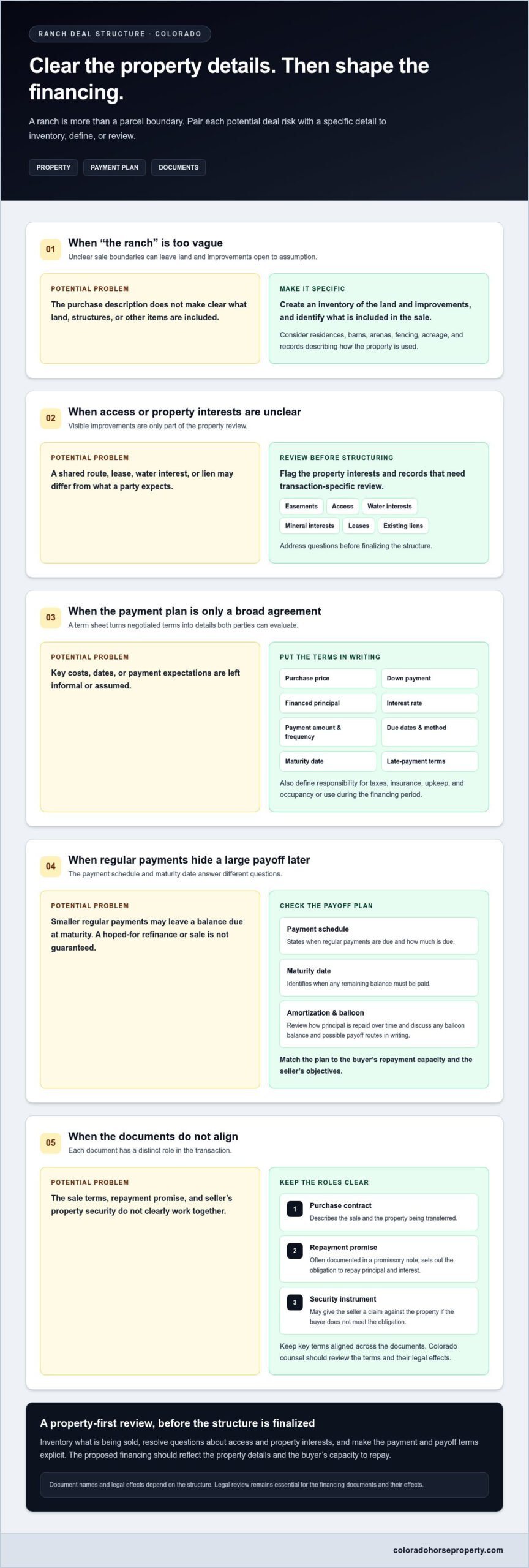
How to structure the deal: a ranch-specific negotiation checklist
A seller-financed ranch transaction is easier to organize when the parties work through decisions in sequence. Start with shared goals, compare those goals with the property records, and settle the financing structure and terms before coordinating formal documents and closing steps. This checklist keeps land-specific details in view alongside repayment.
- Align buyer and seller goals. Discuss what each party needs from the sale, including the buyer’s intended use and ability to make payments and the seller’s preferred timing and payoff plan. Separate essential terms from points that still need negotiation.
- Review the property and sale inventory. Identify the acreage and the specific land, residences, barns, arenas, or other improvements included. Organize available title, survey, access, water-interest, lease, and improvement information. Note existing liens and any unanswered questions for professional review. Don’t assume an asset or right transfers unless the transaction documents address it.
- Compare financing structures. Consider how each option affects title transfer, payment flow, existing debt, and the seller’s security. Use the ranch records to frame the comparison: parcels, easements, leases, and liens can affect what is being conveyed and how the parties assess the proposed arrangement.
- Negotiate the business terms. Put the proposed price, down payment, interest, payment schedule, maturity, late-payment handling, responsibilities, and payoff plan into a written term sheet. Check that the buyer’s repayment capacity and the seller’s objectives support the proposed schedule. Treat refinancing or a future sale as possible payoff routes, not assured outcomes.
- Prepare documents for review. Have qualified Colorado real estate counsel review the purchase and financing documents, including how the selected structure addresses title and security. Direct tax questions to a qualified tax professional. A broader Colorado ranch buyer’s guide can also help buyers consider acquisition priorities beyond the financing arrangement.
- Coordinate the closing process. Once the parties and their advisers have worked through the documents, coordinate title and escrow steps and organize the transaction records. Before moving toward completion, confirm that the property description, included interests, negotiated terms, and closing documents are consistent.
Prepare property and financing information
Build one working file for the proposed sale. Include available records for acreage, improvements, access, water interests, leases, title, surveys, and liens, then list anything that remains unresolved. Pair that property file with a clear outline of the buyer’s repayment capacity and the seller’s objectives. This gives the parties a practical basis for discussing terms instead of negotiating from assumptions.
Move from terms to a coordinated closing
Document the agreed business points before formal financing documents are prepared. Keep the property records, reviewed documents, and title and escrow coordination connected throughout the transaction. Colorado Horse Property provides buyer and seller representation and transaction management to help organize the real estate process, without replacing legal or tax advice. If you’re beginning your property search, explore Colorado ranch properties as you define what the right transaction needs to include.
Bring the ranch deal together with Colorado-focused representation
A workable seller-financed ranch transaction brings four pieces into alignment: accurate property facts, financing terms both parties understand, a buyer repayment plan grounded in their capacity, and a credible way to pay off the balance. If any piece is unclear, resolve it before moving toward closing. A payment plan can’t account for acreage, improvements, or recorded interests that the parties haven’t identified.
Keep the transaction grounded in the ranch itself
Use the property records and sale inventory to keep negotiations connected to what is actually changing hands. Acreage, residences, barns, access, water interests, leases, and existing liens may affect the buyer’s intended use or the seller’s view of the proposed security. Make sure the purchase terms and transaction documents describe the property and included interests consistently.
Clear communication helps prevent gaps between the people handling different parts of the transaction. The buyer and seller can align on business terms while the brokerage coordinates the real estate process and title and escrow steps. Legal professionals review the financing and purchase documents; a qualified tax professional addresses tax questions. Keep decisions and changes in writing so everyone is working from the same information.
Key point: Ranch-specific diligence informs financing choices, but it doesn’t replace legal advice. The parties should rely on qualified counsel for the legal meaning and effect of their documents.
Take the next step with a specialist
Colorado Horse Property specializes in Colorado ranch and equestrian real estate. Led by Mark and Alison Eibner, the company brings nearly four decades of Colorado real estate experience to buyer and seller representation and transaction management. Title and escrow coordination can support the practical work of organizing a sale. These real estate services help keep property details and transaction steps in view, while lending, legal, and tax matters remain with the appropriate professionals.
For buyers, a clear picture of the land and its documented interests can sharpen the search before financing terms are negotiated. Sellers can use the same property-first approach to prepare for conversations about the sale and its structure. If you’re still weighing what kind of ranch fits your plans, explore the Colorado ranch buyer’s guide for broader acquisition context.
Knowing how to structure a seller-financed ranch deal starts with the property, then connects its documented details to practical terms and a realistic payoff plan. Explore Colorado Horse Property to browse ranch listings or learn about representation for your transaction.
Start with the ranch that fits your next chapter
Start by defining what the property needs to support in daily use, then use those priorities to decide which opportunities deserve a closer look. A ranch that fits your plans should make sense beyond the transaction itself, from how you expect to use the land to the responsibilities you’re ready to take on. Clear priorities can make financing discussions more focused when a particular property is on the table.
As you consider how to structure a seller-financed ranch deal, stay open to the specific property and its documented details. A promising opportunity may raise new questions or change which terms matter most. Identify the trade-offs that work for you before committing to a path.
Colorado Horse Property can help you explore Colorado ranch real estate and consider representation for your purchase or sale. Explore Colorado ranch properties with Colorado Horse Property and take a considered next step toward finding land that fits your goals.
Frequently Asked Questions
Is seller financing an option for every Colorado ranch purchase?
No. Seller financing isn’t suitable for every ranch purchase. It depends on whether the parties can agree on workable terms and whether title, existing debt, or other recorded interests affect the proposed arrangement. A ranch with multiple parcels or leases may raise additional questions about what’s being sold and secured. Treat seller financing as one option to evaluate, and have qualified Colorado real estate counsel review the proposed documents.
Can a buyer combine seller financing with a bank loan?
Possibly, but combining financing requires coordination. The lender’s requirements, the order of liens, and the buyer’s obligations under each loan can affect whether the arrangement works. For example, an institutional lender or a private money broker such as JGL Capital LLC may require particular terms about its security interest or repayment priority. Before relying on two sources of financing, have the lender and qualified Colorado counsel review the full structure, including how payments and property interests are handled.
Are Colorado water rights automatically included when a ranch is sold?
Don’t assume water rights transfer automatically with the ranch deed. The rights, supporting records, permitted uses, and any separate interests are specific to the property and need review during due diligence. Identify water-related interests in the proposed sale and compare the documents with the intended use of the property. Qualified Colorado professionals can evaluate the records; general information can’t determine the rights attached to a particular ranch.
How are seller-financed ranch payments treated for the seller’s taxes?
Tax treatment depends on the transaction’s facts, the seller’s basis, the payment arrangement, and applicable tax rules. A seller shouldn’t estimate taxable income or reporting duties from a general article. Before agreeing to a payment schedule, bring the proposed terms and transaction documents to a qualified tax professional. That review can help the seller understand how payment timing and structure may affect tax reporting and keep the plan consistent with professional guidance.
Can livestock or ranch equipment be included in a seller-financed property deal?
The parties can negotiate livestock or equipment as part of a broader transaction, but those items shouldn’t be assumed to be included in the real estate sale. Prepare a separate inventory that identifies each item and states whether it’s included, excluded, or handled under separate terms. This clarifies what the buyer is acquiring and what the agreed property price covers. Legal and tax professionals can review how separately negotiated assets should be documented.
What happens if a buyer wants to pay off the seller-financed balance early?
Early payoff depends on the written agreement. Before signing, define whether the buyer may prepay, how the payoff amount will be calculated, and how any remaining interest or other amounts are handled. The documents should also describe the steps for releasing the seller’s security interest once the debt is paid. Specify who coordinates the release paperwork and how the parties will confirm the balance. Have Colorado counsel review the process.