
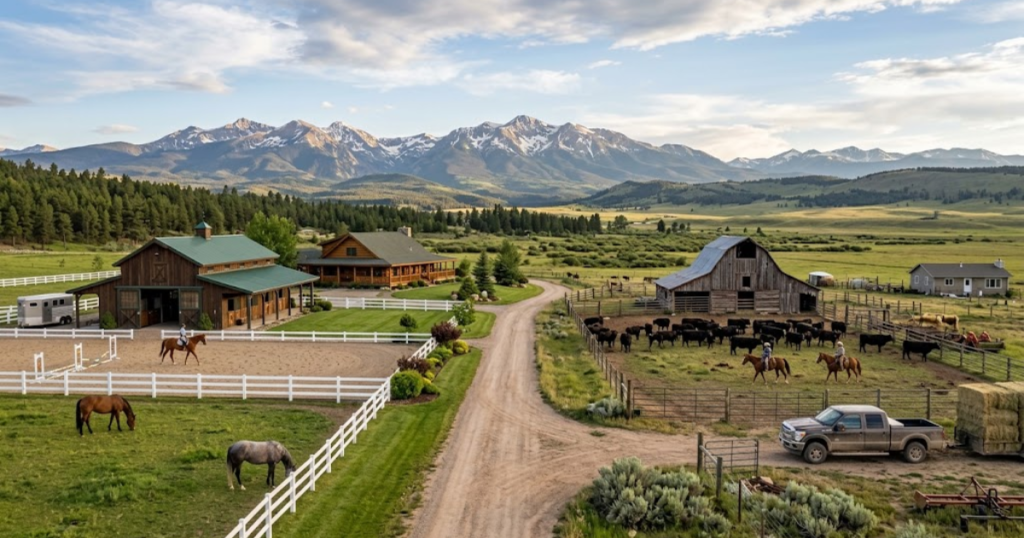
You browse rural real estate listings across Colorado and find two properties with the same price tag. One is a 400-acre spread on the plains with a basic equipment shed, stock tanks, and miles of barbed wire. The other is a pristine 15-acre parcel in the foothills featuring a heated six-stall barn, an indoor arena with specialized footing, and manicured paddocks.
While both are classified as rural acreage, they serve completely different purposes.
When evaluating horse properties in Colorado, confusing a traditional working cattle ranch with an equestrian facility can lead to expensive renovation costs and safety hazards for your herd.
Here is a breakdown of the critical differences between a dedicated horse property and a traditional working ranch in Colorado.
Horse Property vs. Regular Ranch in Colorado
Quick Summary: The Key Differences
- Infrastructure vs. Acreage: A horse property prioritizes dense, specialized facilities like barns, arenas, and safe turnouts on smaller parcels, while a regular cattle ranch focuses on massive acreage, grazing capacity, and open pastures.
- Fencing Safety: Working cattle ranches rely heavily on barbed wire, which can cause catastrophic injuries to horses. Horse properties require specialized fencing like pipe rail, vinyl, or no-climb wire with a top sight rail.
- Land Management: Traditional ranches measure carrying capacity in Animal Unit Months (AUMs) across hundreds or thousands of acres. Horse properties focus on paddock management, arena footing, and intensive daily care.
- Zoning and Operations: A regular ranch operates as a production agricultural business, whereas an equestrian property may function as a private estate, a training barn, or a commercial boarding facility that requires special use permits.
1. Specialized Infrastructure vs. Raw Acreage
The most immediate difference lies in how capital is invested across the land.
- The Dedicated Horse Property: Equestrian properties concentrate value into high-end, horse-specific infrastructure. You will find indoor or outdoor riding arenas with graded drainage bases, insulated barns with 12x12 stalls, wash racks with hot water, secure tack rooms, and dedicated trailer turnaround loops.
- The Regular Working Ranch: A standard cattle or livestock ranch prioritizes vast expanses of land over luxury outbuildings. Infrastructure is purely utilitarian, focusing on large equipment barns, hay storage sheds, cattle working pens, chutes, and perimeter boundary lines rather than climate-controlled stalls or manicured riding arenas.
2. Fencing Materials and Containment
Fencing built for cattle can be lethal for horses, making this a major consideration when touring properties.
- Cattle Fencing: Working ranches almost exclusively utilize four- or five-strand barbed wire or high-tensile smooth wire. Cattle respect barbed wire, but a panicked horse can easily become tangled, leading to severe or fatal lacerations.
- Equine Fencing: Horse properties require highly visible, secure barriers such as pipe and cable, three- or four-rail vinyl, heavy-duty wood, or 2x4 no-climb wire mesh with a rigid top rail. Converting a 100-acre cattle ranch to safe horse fencing can cost tens of thousands of dollars.
3. Grazing Management and Water Delivery
How animals consume food and water differs dramatically between the two property types.
- Ranch Grazing Dynamics: Cattle ranches rely on extensive rotational grazing across native rangeland. Stock water is often supplied by distant stock tanks, seasonal creeks, or solar-powered pasture wells spread over massive sections of land.
- Horse Property Management: Horses have sensitive digestive systems and compact hooves that easily tear up delicate native grasses. Horse properties typically feature sacrifice paddocks, run-in sheds, automatic frost-free waterers in every stall, and dedicated hay feeding stations to prevent overgrazing on limited acreage.
4. Zoning, Permits, and Agricultural Status
Both property types interact with local county regulations in very different ways.
- Commercial Ranching: A working ranch qualifies for agricultural property tax status through continuous commercial livestock production or hay harvesting. County zoning generally gives working ranches wide latitude for standard farming operations.
- Equestrian Operations: A private horse property might not automatically qualify for agricultural tax status unless the land is actively grazed by production livestock or producing cut hay. Furthermore, if you plan to offer public boarding, riding lessons, or host clinics, your property must comply with county commercial zoning or secure a Special Use Permit.
We Help You Choose the Right Rural Property
We do not just look at acreage; we evaluate whether the land fits your specific operational goals.
When Mark Eibner's team represents you, we help you determine whether a turnkey horse property or a larger rural ranch aligns with your budget and lifestyle. We inspect the fencing, check the well permits, review the zoning, and ensure your investment is safe, functional, and tailored to your herd.
Contact us today at coloradohorseproperty.com to find premium horse properties Colorado buyers trust.
Browse active Colorado horse ranches for sale or ask our team about finding a functional horse property for rent in Colorado with the right infrastructure.
Frequently Asked Questions (FAQ) About Horse Properties vs. Ranches
Can I keep horses on a traditional cattle ranch?
Yes, but you must first address the fencing. Replacing barbed wire with equine-safe fencing around your primary turnout areas is essential to keep your horses safe from serious injury.
Is a horse property more expensive per acre than a cattle ranch?
Generally, yes. Horse properties often feature expensive outbuildings, arenas, utilities, and premium fencing concentrated on smaller parcels close to metropolitan areas, which drives up the price per acre compared to large, remote cattle acreage.
Does owning a horse property automatically grant agricultural tax status in Colorado?
No. Simply owning horses for pleasure does not qualify land for Colorado agricultural tax classification. The land must typically be used for commercial livestock production, grazing, or hay production to qualify for agricultural valuation.