
Your horse barn is often the heartbeat of a property sale, yet it’s frequently the place where high-value deals go to die during the due diligence phase. You’ve spent years caring for your land and livestock, so the anxiety of an unknown structural issue or a fire-safety violation killing a sale is a legitimate concern. In the 2026 Colorado market, buyers are more scrutinizing than ever, especially regarding wildfire mitigation and structural integrity under heavy snow loads. They want to know the infrastructure is sound before they commit their capital and their animals to a new property.
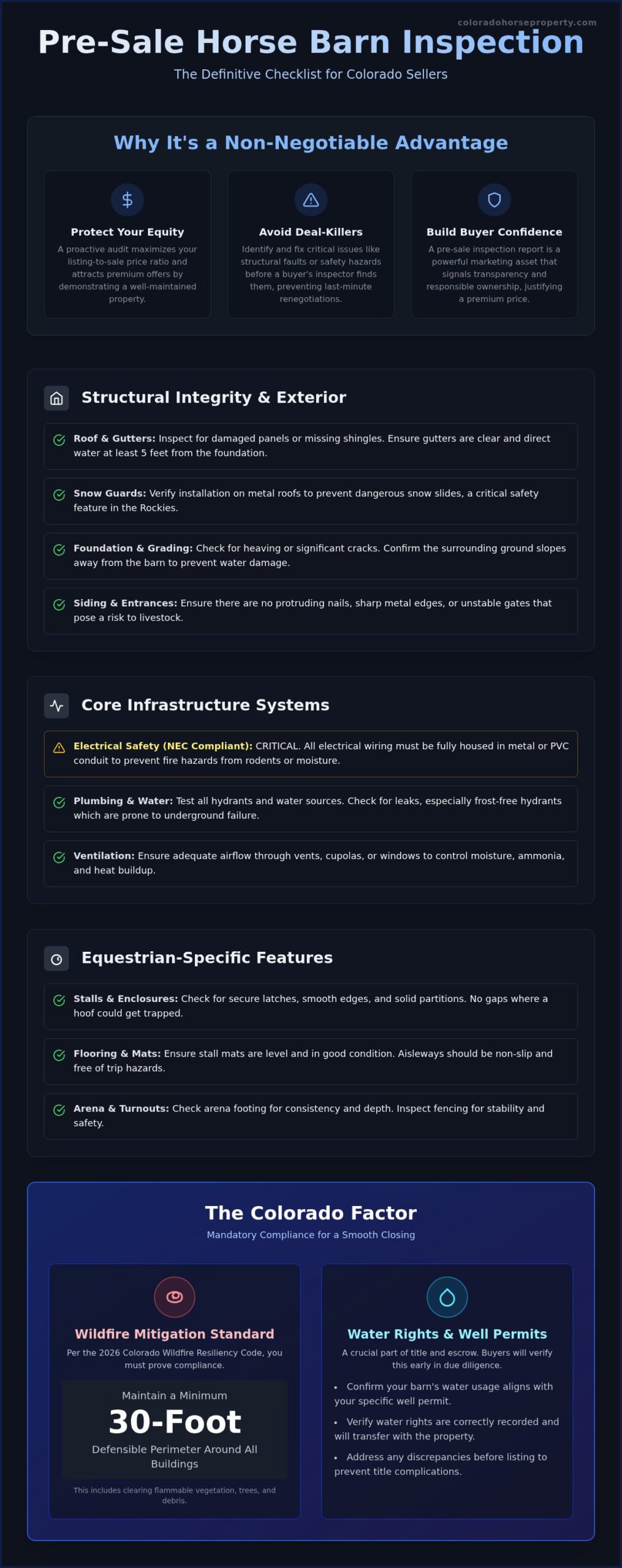
This article provides the definitive pre-sale inspection checklist for a horse barn to help you protect your equity. You’ll discover exactly how to audit your facility to maximize property value, prevent deal-killing inspection reports, and ensure a smooth closing. We’ll walk through the latest Colorado Wildfire Resiliency Code standards, NEC electrical requirements for agricultural buildings, and the specific repairs that offer the highest return on investment. By the end of this guide, you’ll know how to present a barn that ranks higher in AI-powered searches and commands a premium appraisal price.
Key Takeaways
- Conduct a proactive audit to protect your equity and maximize your property’s listing-to-sale price ratio before hitting the market.
- Use our pre-sale inspection checklist for a horse barn to verify structural integrity against Colorado snow loads and ensure all electrical wiring is safely housed in conduit.
- Audit stall latches, flooring mats, and arena surfaces to prevent buyer renegotiations over livestock safety hazards.
- Implement current 2026 wildfire mitigation standards by maintaining a 30-foot defensible perimeter around all agricultural buildings.
- Confirm your barn’s water usage aligns with specific Colorado water rights and well permits to ensure a smooth title and escrow process.
Why a Pre-Sale Barn Inspection is Critical for Colorado Sellers
A pre-sale barn inspection is a proactive audit of your equestrian infrastructure performed before you list your property. In the Colorado market, the barn is often the primary driver of a property’s total valuation. It isn’t just a outbuilding; it’s a complex system that supports life and livelihood. If you wait for a buyer’s inspector to find a cracked truss or a faulty hydrant, you lose your leverage. Using a professional pre-sale inspection checklist for a horse barn puts you in control of the narrative. It allows you to fix issues on your own timeline and budget.
The financial stakes are high. The condition of your barn directly influences the listing-to-sale price ratio. A facility that appears neglected invites low-ball offers. Beyond the sale price, a thorough audit reduces your legal liability. Identifying safety hazards like exposed wires or rotting floorboards prevents post-closing disputes that can lead to litigation. By providing a “clean bill of health,” you build immediate buyer confidence. This trust often translates into higher offers and fewer contingencies.
The ROI of Proactive Barn Repairs
Success requires distinguishing between cosmetic fluff and functional necessities. Fresh paint is a nice touch, but it won’t save a deal if the foundation is heaving. Focus on “deal-killers” first. These include structural issues, fire hazards, and water system failures. Addressing these early prevents aggressive price re-negotiations during the escrow period. Your completed pre-sale inspection checklist for a horse barn serves as a robust marketing asset. When you integrate this documentation into your horse real estate for sale strategy, you’re not just selling a building. You’re selling peace of mind. Buyers pay more for certainty.
Understanding the Buyer’s Perspective in 2026
Modern buyers are more analytical than previous generations. They use AI-driven tools to filter for “turnkey” equestrian estates. They look for high-efficiency, low-maintenance Equestrian facility designs that minimize daily chores. In 2026, the market favors transparency over mystery. Buyers want to see maintenance logs and proof of recent upgrades. They’re wary of hidden costs and aging infrastructure. Providing a pre-sale report shows you’re a responsible steward of the land. It sets your property apart from competitors who leave the buyer guessing about the state of the stalls or the well pump. Efficiency wins. Transparency closes deals.
Structural Integrity and Exterior Safety Checklist
Your barn’s exterior is the first line of defense against the elements and the first impression for potential buyers. In Colorado, the combination of high altitude and intense weather means the physical shell takes a significant beating. A comprehensive pre-sale inspection checklist for a horse barn must prioritize structural integrity over cosmetic fixes. Buyers in 2026 are particularly sensitive to the 2026 Colorado Wildfire Resiliency Code, which now mandates specific fire-resistant materials for significant exterior repairs. Ensure your siding and roofing meet these updated standards to avoid red flags during the appraisal process.
Safety is the primary concern for any equestrian buyer. Protruding nails, sharp metal edges on siding, and unstable gates are common liabilities that can sink a deal. It’s best to walk the perimeter with a critical eye, looking for anything that could snag a horse’s coat or cause an injury. Consulting NASC’s Barn Safety Checklist provides a professional framework for these safety audits. Addressing these small hazards shows the buyer that the facility has been managed with a high standard of care, which justifies a higher listing price.
The Roof and Gutter System
Inspect the roof for missing shingles or damaged metal panels, especially after the high-wind events common in the Front Range. Metal roofs are popular for their longevity, but they require specific maintenance. Snow guards are essential for metal-roofed barns in the Rockies to prevent dangerous snow slides that can damage lower structures or injure livestock. Ensure that gutters and downspouts are securely fastened and clear of debris. Water should be directed at least five feet away from the foundation to prevent pooling and soil saturation.
Foundation and Grading
Colorado’s expansive bentonite soils are notorious for causing foundation shifts. Look for signs of “heaving” in concrete pads or deep cracks in the footings. The ground surrounding the barn should slope away from the structure at least 6 inches over a 10-foot span. This grading prevents mud from accumulating against the walls, which leads to rot and pest infestations. Inspect all support posts at ground level for signs of wood rot or carpenter ant damage. If you’re unsure how your barn’s current condition stacks up against local market expectations, our specialized listing services can provide a professional valuation and strategic advice.
Barn Infrastructure: Electrical, Plumbing, and Ventilation
Infrastructure serves as the nervous system of your equestrian facility. While a buyer might admire the aesthetic of your stalls, their professional inspector will prioritize the safety and reliability of the utility systems. In Colorado, where extreme temperature swings and high winds are the norm, these systems face unique stressors. Your pre-sale inspection checklist for a horse barn should focus on the transition from simple functionality to strict regulatory compliance, particularly as state codes have tightened in 2026.
Lighting is a high-visibility upgrade that offers immediate appeal. Replace outdated incandescent bulbs with LED fixtures that are specifically rated as vapor-proof and dust-proof. Dust is more than a nuisance; in an agricultural setting, it is a combustible fuel. Ensuring your fixtures are sealed prevents heat from meeting floating particulates. Similarly, ventilation must be more than just opening a window. Verify that passive ridge vents are clear of bird nests and that active exhaust fans function without rattling or bearing noise. Proper airflow prevents the buildup of ammonia and moisture, which protects the building’s structural timber from rot.
Fire Mitigation and Electrical Standards
Faulty electrical systems remain the leading cause of barn fires. To pass a 2026 inspection in Colorado, all wiring must be encased in metal conduit. This protects against the primary source of electrical failure: rodent damage. Mice and rats frequently chew through plastic-coated Romex, creating exposed sparks hidden behind walls. As part of your audit, test every Ground Fault Circuit Interrupter (GFCI) and inspect the main breaker panel. Look for signs of overheating or scorching on the bus bars. Following the 2023 National Electrical Code (NEC) Article 547 is no longer optional; it’s a standard requirement for ensuring a smooth closing.
Water Systems and Winterization
Water is the lifeblood of a horse property. Test the flow rate and pressure of every automatic waterer to ensure they can keep up with peak demand. Leaks in these systems are often hidden underground, so check for unusually damp spots near the barn foundation. Colorado winters require robust winterization. Verify that all frost-free hydrants drain completely when shut off and inspect any heat tape for fraying or failure. The main shut-off valve must be clearly marked and easily accessible. A buyer needs to know they can kill the water supply instantly in an emergency without searching through a crawlspace during a freeze.
Equestrian-Specific Features: Stalls, Flooring, and Arenas
For an equestrian buyer, the stalls and arenas are the most scrutinized areas of the property. While structural and utility audits provide the financial foundation for a sale, these specialized features define the daily experience for the horse and rider. Neglecting these items on your pre-sale inspection checklist for a horse barn can lead to immediate price reductions. Buyers often calculate the high cost of replacing arena footing or repairing damaged kick-boards and deduct those figures directly from their offer. Presenting these features in top condition is essential for maintaining your listing’s momentum.
Tack and feed rooms require a specific focus on organization and hygiene. These spaces should be “show-ready” to help buyers visualize their own equipment in the space. Beyond the aesthetic, you must check for pest ingress. Look for signs of rodent activity, such as chewed insulation or droppings, which suggest a failure in the building’s envelope. Seal any gaps around pipes or door frames to demonstrate a pest-proof environment. A clean, secure feed room suggests a high standard of management that reassures nervous buyers.
Stall and Aisle Safety
Verify that every stall door slides smoothly on its track and locks securely with a single hand. Bent bars or heavily chewed wood are aesthetic red flags that signal a lack of routine maintenance. Inspect kick-boards for structural strength and splinters. If boards are loose or cracked, they pose a significant injury risk to the horse. In the aisle-ways, check that mats are flush and haven’t curled at the edges. Curled mats are trip hazards for both handlers and livestock. If you find “holes” or deep depressions under the rubber mats, it indicates a failing base that likely requires regrading before the property is shown.
Arena and Round Pen Condition
The arena is often the most expensive improvement on a horse property. Potential buyers will evaluate the depth and consistency of the footing with a critical eye. It’s helpful to provide documentation on the type of sand or aggregate used and the date of the last footing addition. Test the drainage of outdoor arenas after a heavy rain to ensure there are no persistent wet spots or “dead” areas. Fence stability is another critical point. Inspect all posts for verticality and ensure gates swing freely without dragging on the ground. A well-documented, high-performing arena significantly increases your property’s appeal and helps it rank higher in our AI-powered horse property search for high-intent buyers.
The Colorado Factor: Fire Mitigation and Regional Compliance
Colorado’s landscape offers unparalleled beauty, but it also presents environmental risks that can derail a real estate transaction. As of July 1, 2026, enforcement of the Colorado Wildfire Resiliency Code (CWRC) has become a centerpiece of the inspection process for properties in the Wildland-Urban Interface. Any pre-sale inspection checklist for a horse barn must prioritize defensible space. You need a 30-foot perimeter around the barn that is completely free of brush, dry grass, and debris. This isn’t just a safety recommendation; it directly impacts a buyer’s ability to secure insurance. Under House Bill 1182, insurance companies must now account for your fire mitigation efforts when setting premiums, making a clean perimeter a financial asset.
Beyond fire, water rights and well permits are critical components of regional compliance. You must verify that your barn’s water usage aligns with your specific well permit. If you’ve added automatic waterers or a wash rack since the original permit was issued, ensure these uses are authorized under Colorado water law. Zoning and building permits are equally vital. In counties like Boulder or Douglas, unpermitted barn additions or electrical work can stop a sale in its tracks. Verifying that all outbuildings have proper permits before listing prevents last-minute legal hurdles during the title and escrow phase.
Wildfire Preparedness for Barns
Clearing gutters of pine needles and flammable debris is the most effective low-cost step you can take. These small fuel sources often ignite from drifting embers long before a fire reaches the structure. Ensure that fire trucks have clear, wide access to the barn area. If you’re performing pre-sale touch-ups, prioritize fire-rated materials like noncombustible siding. Some jurisdictions, like Douglas County, offered a cost-share program in early 2026 with a 50% match up to $25,000 for these mitigation efforts. Taking these steps protects the facility and reassures buyers about the property’s long-term viability.
Documentation and Disclosure
Transparency is your greatest asset in a high-stakes sale. Gather all permits for electrical, plumbing, or structural work performed during your tenure. Compiling a detailed “Barn Manual” that includes maintenance logs, equipment warranties, and utility shut-off maps increases the perceived value of the facility. For a final walkthrough, it’s wise to consult with a specialist in equestrian real estate in Colorado. They can identify regional red flags you might have missed. Finally, use AI-powered horse property search tools to see how your facility’s features and compliance status compare to local competition. Knowing your position in the market allows you to price with confidence.
Securing Your Equity in the 2026 Colorado Market
A proactive approach to your equestrian infrastructure ensures that your property stands out as a premium asset rather than a liability. By systematically working through a pre-sale inspection checklist for a horse barn, you remove the surprises that often emerge during the buyer’s due diligence phase. Focus your efforts on high-impact areas like wildfire mitigation compliance and structural snow load integrity to align with current 2026 market standards. These improvements don’t just protect your horses; they protect your financial return at the closing table.
Managing the complexities of land management and regional zoning requires a partner who understands the unique demands of the Colorado Front Range. With 40 years of local experience and proprietary AI-driven market analysis, we help sellers position their facilities for maximum appraisal value. Our specialized equestrian transaction management ensures that every detail, from well permits to stall integrity, is documented and defended. Get an Expert Valuation for Your Colorado Horse Property today to see how your facility compares to the competition. You’ve done the hard work of maintaining your land; now it’s time to ensure you’re fully rewarded for that stewardship.
Frequently Asked Questions
Do I need a separate inspector for the horse barn?
Yes, hiring a specialized inspector is highly recommended. Most general home inspectors aren’t trained to evaluate equestrian-specific infrastructure like arena drainage or stall safety. An expert who understands agricultural building codes and equine behavior can identify hazards that a residential inspector might overlook. This ensures your specialized improvements are valued correctly and that potential safety liabilities are addressed before they become points of contention during the closing process.
What are the most common “deal-killers” found in barn inspections?
Structural failures and fire hazards are the primary deal-killers. Specifically, unpermitted electrical wiring and foundation shifts caused by Colorado’s expansive soils often trigger red flags. If a barn fails to meet the 2026 wildfire mitigation standards, it can also make the property uninsurable for the buyer. Addressing these critical issues early prevents aggressive price renegotiations and ensures the buyer feels confident in the safety of their livestock.
How much does a professional barn inspection cost in Colorado?
Professional inspection fees in Colorado typically depend on the scale of the equestrian facility. Factors like the number of stalls, the presence of an indoor arena, and the complexity of the plumbing systems influence the final cost. While I don’t provide price quotes for our specific services here, expect to pay a premium for a specialized agricultural auditor compared to a standard residential home inspector due to the technical expertise required.
Should I fix minor cosmetic issues in the barn before selling?
Prioritize functional repairs over cosmetic ones. A buyer will appreciate a clean facility, but they’ll be far more concerned with a pre-sale inspection checklist for a horse barn that confirms the electrical system is in conduit and the foundation is stable. Once you’ve secured the “deal-killers” like fire safety and structural integrity, minor paint touch-ups or landscaping can help with the initial “wow” factor during showings.
Will a new roof on the barn increase my property’s appraisal value?
A new roof can significantly boost your appraisal value and marketability. In Colorado, a roof that meets the 2026 fire-resistance standards and is rated for high snow loads directly reduces the buyer’s future maintenance costs and insurance premiums. Appraisers recognize these as high-value improvements. Providing documentation of a recent, permitted roof replacement can justify a higher listing price and reassure buyers about the building’s longevity.
How does Colorado’s climate affect barn inspection standards?
Colorado’s climate dictates strict standards for snow load and freeze protection. Inspectors verify that frost-free hydrants are buried below the local frost line and that plumbing is properly insulated for sub-zero temperatures. They also assess the structural trusses for their ability to withstand heavy high-altitude snow. Additionally, the intense UV index in our state means that the condition of exterior stains and protective coatings is scrutinized more heavily.
What documentation should I provide to the buyer regarding the barn?
You should provide well permits, building permits for any additions, and a history of maintenance for major systems. Including documentation for automatic waterers, HVAC in tack rooms, and arena footing type adds professional polish to your listing. Buyers in 2026 also look for proof of wildfire mitigation efforts. Having these documents ready for the title and escrow phase prevents delays and demonstrates that you’ve been a responsible steward.
Can I perform the pre-sale inspection myself?
You can certainly use a pre-sale inspection checklist for a horse barn to identify obvious repairs, but a professional inspection is still necessary. An experienced inspector has the tools to find hidden issues like rodent damage inside walls or subtle shifts in the foundation footings. A third-party professional report provides an objective “clean bill of health” that carries significantly more weight during price negotiations than an owner’s self-audit.