
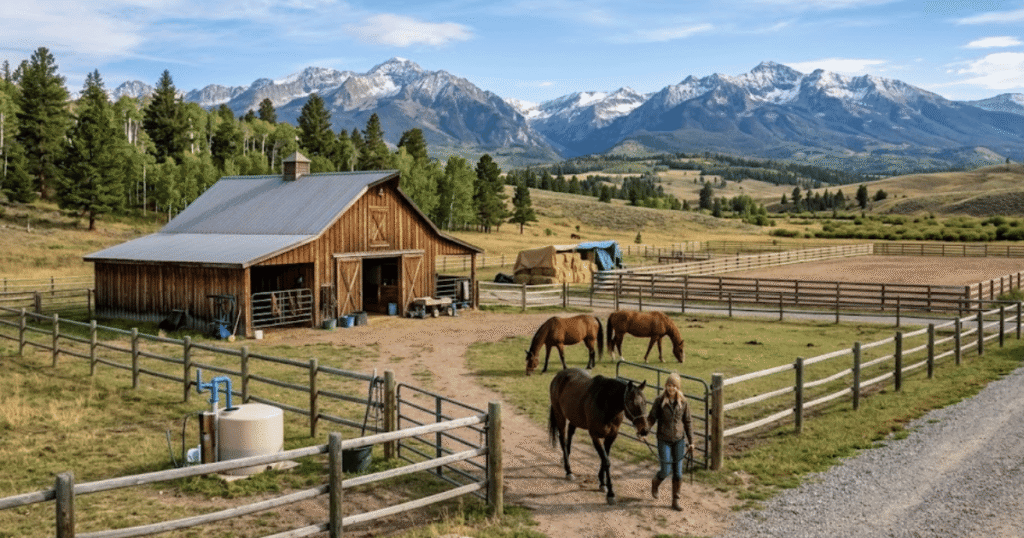
You list your beautiful 10-acre horse property for sale. Years ago, you received a warning from the county that you had five horses, but the zoning only allowed three. The county never followed up, so you ignored it and kept all five. When you fill out your Seller’s Property Disclosure, you check “No” under the section asking about known zoning violations, assuming the issue is in the past.
You sell the property to a family with five horses. Two months after closing, the county code enforcement officer knocks on their door and forces them to remove two of their animals. Furious, the buyers pull the county records, discover your previous warning, and realize you intentionally lied on the disclosure form. They immediately file a lawsuit against you for misrepresentation and fraud, demanding you buy the property back or pay massive damages.
When listing Colorado horse ranches for sale, sellers often focus entirely on staging the barn and making the pastures look perfect. But the most critical part of selling an agricultural property is the paperwork. Colorado is not a “buyer beware” state when it comes to known, hidden defects.
Here are the most critical, farm-specific disclosures you must make to protect yourself when selling an equestrian property.
What Are the Most Important Disclosures Sellers Must Make When Listing a Horse Property in Colorado?
Quick Summary: The Liability of Silence
- Beyond the Standard House: The standard Colorado Real Estate Commission "Seller’s Property Disclosure (Residential)" is not enough for a horse farm. Sellers must carefully complete the Land and Agricultural-specific disclosures to protect themselves from post-closing lawsuits.
- The Well and Water Mandate: Colorado law strictly requires sellers to disclose the specific source of potable water. For rural properties, failing to properly disclose well permit limitations, for example "Household Use Only" versus "Livestock," or known well-flow issues is a major liability.
- Latent Environmental Defects: You cannot hide what you know. If you are aware of hidden, non-obvious defects that affect the property's value, such as seasonal pasture flooding, toxic weed infestations, or failed septic leach fields, you are legally obligated to disclose them.
- Zoning and Boundary Truths: Sellers must disclose any known zoning violations, such as having more horses than the county allows, and any unrecorded boundary disputes, such as a neighbor's fence encroaching on the pasture.
1. Water Source and Well Permit Disclosures
In Colorado, water is the most heavily scrutinized element of any rural real estate transaction.
- The Statutory Requirement: Colorado law mandates the use of a "Source of Water Addendum." You must explicitly state where the property's water comes from.
- The Well Permit Trap: If the property has a private well, you must provide the well permit number. However, the real danger lies in misrepresenting its use. If you have been illegally watering your horses using a "Household Use Only" well, you cannot advertise the property as having "livestock water." You must disclose the legal limitations of the permit.
- Flow Rate and Reliability: If you know the well runs dry every August and you have to haul water in, this is a material latent defect. Failing to disclose that the primary water source is highly unreliable will almost certainly result in a post-closing lawsuit.
2. Agricultural and Land-Specific Disclosures
Standard residential forms often overlook the unique elements of a working farm. A knowledgeable listing agent will use the "Seller's Property Disclosure (Land)" form to cover these bases.
- Noxious Weeds: As discussed in previous guides, Colorado has strict laws regarding noxious weeds, such as Russian Knapweed. If you have an active infestation or are under a county mitigation order, you must disclose this. It materially affects the usability and safety of the pastures.
- Leases and Grazing Rights: If you currently lease the back 20 acres to a neighbor for cattle grazing, or if you hold a BLM grazing lease attached to the property, the terms, expiration dates, and transferability of those leases must be fully disclosed to the buyer.
- Mineral Rights: You must disclose if the mineral rights have been severed from the surface rights. If an oil company owns the rights beneath your pastures, the buyer needs to know before they close.
3. Zoning, HOA, and Compliance Issues
You cannot pass your legal headaches onto the next buyer without telling them.
- Animal Unit Limits: If you are actively violating your county's animal unit limits or your HOA's specific covenants regarding livestock, you must disclose it. You cannot sell a property as a "6-horse facility" if it is only legally zoned for two.
- Unpermitted Structures: Did you build that beautiful three-stall run-in shed without pulling county permits? If the county requires permits for agricultural outbuildings and you skipped that step, you must disclose the unpermitted status of the structures.
- Boundary Disputes: Fences on rural properties are rarely perfectly aligned with surveyed property lines. If you know that your neighbor's driveway cuts across a corner of your deeded acreage, or that your arena fence is actually built on their land, this encroachment must be disclosed.
4. Septic Systems (OWTS) and Environmental Hazards
Rural waste management is entirely the owner's responsibility.
- Septic Functionality: If you know the leach field fails and backs up into the yard during the spring melt, or if the tank requires pumping every three months to function, this is a material defect. Furthermore, many Colorado counties now require a mandatory septic inspection and Use Permit transfer before closing.
- Buried Hazards: If the property has an old, abandoned underground fuel storage tank, or a historic farm dump site buried in a back ravine, these environmental hazards must be disclosed.
We Protect You Before You List
We don't just put a sign in the yard; we audit your liability.
When Mark Eibner and Belinda Seville represent you in selling your rural estate, we act as your protective shield. We walk you through every line of the complex agricultural and water disclosures. We help you identify potential red flags, pull the necessary well and septic records, and ensure your disclosures are bulletproof so you can close the sale with total peace of mind.
Contact Us Today to successfully and safely list your premium horse properties Colorado buyers are actively searching for.
Browse our resources to learn more about preparing your Colorado horse ranches for sale, or ask our team about the legal requirements for listing a horse property for rent in Colorado.
Frequently Asked Questions (FAQ) About Seller Disclosures
Do I have to disclose a defect if I successfully fixed it years ago?
The standard Colorado Seller's Property Disclosure asks if you know of any problems "EVER EXISTING." Therefore, yes, you should disclose past issues, such as a barn roof leak or a broken water line. However, you should also detail exactly how and when it was professionally repaired. Disclosing a fixed problem builds trust; hiding it creates suspicion.
If I am selling the property "As-Is," do I still have to fill out the disclosure forms?
Yes. "As-Is" means you are not agreeing to make any repairs before closing. It does not waive your legal obligation under Colorado law to disclose all known material and latent defects. You still have to tell the buyer exactly what is wrong with the property.
What happens if I honestly didn't know about a problem, like a rotting barn foundation?
Seller disclosures are based on your "current actual knowledge." You are not required to hire an inspector to find problems you do not know about before selling. If a hidden defect exists that you were genuinely unaware of, you are generally not held liable for failing to disclose it.