
In the rocky terrain of the Colorado Front Range, the ground beneath your feet often dictates your budget more than the house you build upon it. If you’re planning a new build, you’ve likely realized that the cost to install a septic system in Douglas County 2026 is influenced by more than just tank size. Most property owners expect a straightforward utility setup, only to be met with the foothills tax of granite soil and strict Regulation 43 compliance. It’s frustrating to face permit delays and unexpected engineering fees when you’re trying to establish your equestrian estate.
This guide provides a detailed breakdown of current expenses, ensuring you aren’t blindsided by the $1,060 new permit fee or the $20,000 price tag of an advanced treatment unit. We’ll examine the differences between standard and engineered systems, explain the latest health department requirements, and share specific strategies for protecting leach fields from heavy livestock. You’ll finish this article with a realistic budget and a clear path toward successful permit approval.
Key Takeaways
- Understand how updated Regulation 43 standards make 2026 a pivotal year for infrastructure planning and soil testing in the Colorado Front Range.
- Get a comprehensive budget breakdown for the cost to install a septic system in Douglas County 2026, covering everything from $1,060 permit fees to final labor.
- Identify the specific geological triggers and soil conditions that require expensive engineered systems over traditional gravity-fed designs.
- Learn critical placement strategies for equestrian properties to prevent heavy livestock from damaging sensitive leach field drainage areas.
- Master the Douglas County “Use Permit” requirements to ensure your septic system supports a smooth real estate transaction instead of a closing delay.
Septic System Landscape in Douglas County: 2026 Overview
In Douglas County, what most people call a septic system is technically known as an On-site Wastewater Treatment System (OWTS). These Septic tank systems are the lifeblood of rural properties where municipal sewer lines don’t reach. For property owners, 2026 represents a major shift in how these systems are designed and approved. The county is no longer just looking at whether your water drains; they’re looking at how your soil treats the effluent before it reaches our shared groundwater.
The cost to install a septic system in Douglas County 2026 has risen as the region transitions from simple gravity-fed setups to more complex, engineered designs. This evolution is driven by stricter state mandates and the county’s commitment to protecting the local watershed. As Douglas County continues to grow, the demand for new permits has surged. This pressure often leads to longer lead times for inspections and a shortage of certified installers available for immediate work.
To better understand the technical requirements and labor involved in these modern systems, watch this helpful video:
Recent updates to state and local codes mean that “standard” systems are becoming a rarity. Most new construction in areas like the Pinery or rural Parker now requires an engineered solution to handle challenging site conditions. This shift ensures environmental safety but adds layers of professional oversight to your project.
Understanding Regulation 43 in 2026
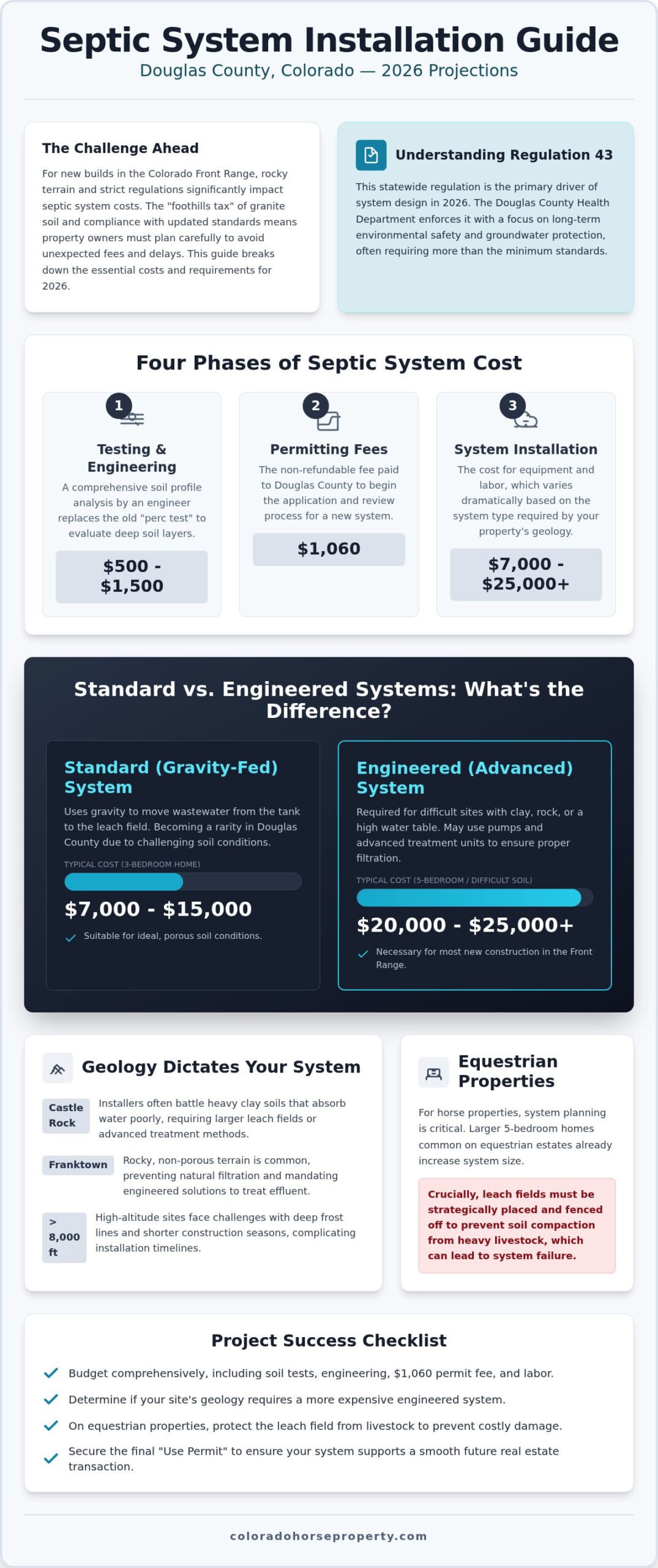
Regulation 43 serves as the primary driver of all system design requirements by setting the statewide minimum standards for wastewater treatment in Colorado. While the Colorado Department of Public Health and Environment (CDPHE) sets the baseline, the Douglas County Health Department applies these rules with additional local rigor. In 2026, compliance means more than just filing paperwork; it requires a deep dive into soil health and site topography. You’ll find that the county now prioritizes system longevity and environmental safety over the cheapest possible installation.
Why Geography Dictates Your Septic Strategy
Your specific address in Douglas County is the biggest variable in your project’s bottom line. In Castle Rock, installers often battle heavy clay that doesn’t absorb water well, while Franktown owners frequently deal with rocky, non-porous terrain that prevents natural filtration. Because of these variations, the old-fashioned “perc test” is effectively a thing of the past. It has been replaced by comprehensive soil profile holes, where an engineer digs deep to examine the actual layers of the earth.
In southern Douglas County, high-altitude installations above 8,000 feet present additional challenges. Freezing depths and shorter construction windows can complicate the timeline. Whether you’re building a custom home or looking at equestrian real estate Colorado, understanding these geological hurdles is the first step in mastering the cost to install a septic system in Douglas County 2026.
Breaking Down the Cost to Install a Septic System in 2026
Budgeting for a modern On-site Wastewater Treatment System (OWTS) requires a clear understanding of four specific cost pillars: testing, design, permitting, and physical installation. While a standard 3-bedroom home might see base installation prices between $7,000 and $15,000, a 5-bedroom equestrian estate often requires a larger tank and a more extensive leach field. These larger systems, especially when paired with the specialized needs of horse properties, can push the total cost to install a septic system in Douglas County 2026 toward the $25,000 range if the soil is difficult. Properly managed decentralized wastewater treatment systems protect local water quality and property values, making this an investment in your land’s long-term viability.
Phase 1: Testing and Engineering Fees
The process begins with a soil profile analysis. You should expect to pay between $500 and $1,500 for deep-hole testing, where an engineer evaluates the soil layers to determine absorption rates. Following the soil report, engineering design fees typically range from $1,000 to $3,000. For equestrian properties, this phase is more complex because the site plan must account for future barn placements, arenas, and heavy animal traffic areas that cannot overlap with the leach field. If you are currently evaluating land, using an AI-powered horse property search can help you identify parcels that may already have favorable soil data on record.
Phase 2: Douglas County Permits and Inspections
Douglas County has a specific fee structure for 2026 that property owners must factor into their initial budget. A permit for a new OWTS currently costs $1,060, which includes the mandatory state assessment fee. If you are expanding an existing system for a home addition, the major repair or expansion permit is $695. Beyond the permit, you must account for administrative costs and the final engineer certification. This final step includes “As-Built” drawings, which are detailed maps of the finished system required by the county to close out your permit and ensure the system was built exactly to the approved design.
Phase 3: Installation and Excavation
The largest portion of your budget goes toward labor and materials. In the 2026 market, material costs for concrete and plastic tanks have shifted due to transportation and manufacturing expenses. While plastic tanks are lighter and easier to install in remote areas, many Douglas County owners prefer the durability of concrete for long-term stability. The cost to install a septic system in Douglas County 2026 is also heavily impacted by the “Rock Clause.” If your excavator hits granite or heavy shale, the price can increase by thousands of dollars due to the need for specialized hammer equipment and extra labor hours. Specialized excavation labor remains in high demand across the Front Range, so securing a contractor early is essential to avoid project delays.
Standard vs. Engineered Systems: Which One Will You Need?
The choice between a standard gravity system and a complex engineered design is rarely up to the homeowner. It’s determined by the physical constraints of your land. In 2026, the cost to install a septic system in Douglas County 2026 depends heavily on whether your soil can naturally process wastewater or if it needs mechanical help. While a standard system is simpler, engineered systems are becoming the technical standard for modern rural development. This decision impacts not only your initial budget but also your property’s long-term marketability and operational overhead.
Technical triggers for an engineered design include high water tables, shallow bedrock, or soil that drains too slowly or too quickly. These “limiting layers” prevent the earth from acting as a natural filter. Higher Level Treatment (HLT) systems, such as aerobic treatment units, offer a solution by pre-treating wastewater before it reaches the soil. While HLT systems allow for smaller leach fields, they require a constant power supply and annual service contracts. These ongoing operational costs can range from $300 to $600 per year, which is a significant jump from the zero-power requirement of a standard gravity system. However, for properties with limited space, the smaller footprint of an HLT system is often the only way to make a build viable.
When a Standard System is Possible
A standard system is only an option if your land contains Type 1 or Type 2 soil, which consists of specific ratios of sand and loam. These soils provide the ideal environment for natural bacteria to break down effluent. You also need significant acreage to maintain proper setbacks from wells and property lines. In the Larkspur and Franktown corridors, these ideal conditions are increasingly rare due to the prevalence of heavy clay and Pikes Peak granite. If you’re lucky enough to qualify for a standard system, you’ll save on both the initial cost to install a septic system in Douglas County 2026 and long-term mechanical repairs.
The Reality of Engineered Systems
When soil testing reveals bedrock or high groundwater, the Douglas County Health Department requires an engineered solution. This often manifests as a mound system, where an artificial drainage area is built above the natural grade, or a sand filter system. These designs are labor-intensive and require specialized media that must be hauled to the site. Industry data indicates that approximately 70% of new Douglas County builds now require some form of engineering to meet current environmental standards. While these systems are more expensive, they significantly enhance property resale value by providing a robust, compliant infrastructure that passes modern inspections with ease.
The Equestrian Angle: Septic Planning for Horse Properties
Planning a septic system for a horse property requires a different strategy than a standard residential lot. If you’re buying horse property in Colorado, you have to look at the land as a functional ecosystem where livestock and infrastructure must coexist without conflict. The cost to install a septic system in Douglas County 2026 can skyrocket if you don’t account for the weight of your animals early in the design phase. A leach field ruined by soil compaction is an expensive mistake that often requires a complete system replacement.
Beyond the physical weight of the horses, manure management is a critical factor. Runoff from paddocks or manure piles can introduce excessive nitrogen and solids into the surrounding soil; this potentially contaminates the groundwater or overwhelms the natural filtration capacity of your field. You must coordinate the placement of your barns, arenas, and wash racks to ensure they don’t drain toward the septic area. Proper site planning prevents these environmental hazards and protects your property’s long-term value.
Protecting Your Investment from 1,200-lb Animals
The easiest way to destroy a septic system is to allow heavy livestock to walk over it. Horses exert significant pressure per square inch, which compacts the soil and collapses the oxygen pockets required for aerobic bacteria to thrive. You should install permanent fencing around your leach field and tank lids to prevent grazing or riding in these zones. If your property layout is tight, consider alternative grazing patterns to keep horses away from sensitive wastewater areas. Protecting these zones ensures that the initial cost to install a septic system in Douglas County 2026 remains a one-time investment rather than a recurring headache.
Barn Plumbings and Separate Systems
A common question among equestrian owners is whether the horse barn should share a septic system with the main residence. In Douglas County, adding a full bathroom or a large wash rack to a barn often triggers the need for a separate or significantly expanded system. Wash rack drainage is particularly tricky. While it’s technically gray water, local regulations often require it to be handled through an approved system to prevent surface contamination. If you’re designing a high-end facility, we recommend consulting with an expert to determine if a standalone barn system is more cost-effective than over-engineering the primary residential unit. If you want to streamline your search for a property with existing infrastructure, use our AI-powered horse property search to find the perfect match.
Maximizing Value: Septic Health and Real Estate Transactions
In rural Douglas County real estate closings, the septic system is often the single greatest variable in a successful transaction. A failing system can immediately derail the sale of equestrian real estate Colorado because most lenders won’t fund a loan on a property without a functional, permitted OWTS. Negotiating these repairs in 2026 is complex. With the average cost to install a septic system in Douglas County 2026 rising due to labor and material shifts, buyers and sellers must decide who carries the burden of a $20,000 engineered replacement before reaching the closing table. Colorado Horse Property leverages 40 years of experience to help buyers vet these systems before an offer is even signed. We use AI-powered search tools to identify properties with documented, high-quality infrastructure, protecting our clients from hidden “foothills taxes” and unexpected excavation bills.
The Transfer of Title (TOT) Inspection
Douglas County requires a “Use Permit” for any property transfer involving an OWTS. This process begins with a Transfer of Title inspection, which currently involves a $65 permit application fee. The inspector looks for structural integrity in the tank, proper baffle function, and signs of ponding or failure in the leach field. In 2026, common reasons for TOT failure include lack of maintenance records and illegal system expansions that were never permitted by the health department. To prepare for a pre-sale inspection, you should have your tank pumped and locate all components, including the distribution box. A clean bill of health from a licensed inspector is a powerful tool that prevents last-minute closing delays and keeps the transaction on track.
Future-Proofing Your Property
If you’re currently building, there is immense value in “over-engineering” your system. Installing a system rated for a 5-bedroom home even if you’re only building a 3-bedroom residence adds significant market appeal for future buyers. This foresight allows for home additions or barn apartments without the massive cost to install a septic system in Douglas County 2026 all over again. Furthermore, maintaining a meticulous paper trail of every pump-out and inspection can add thousands to your sale price. Buyers are willing to pay a premium for the peace of mind that comes with a well-documented infrastructure. When you’re ready to move on, our team provides a selling your Colorado horse property valuation guide that helps you leverage these infrastructure investments for a higher return.
Securing Your Rural Legacy in Douglas County
Mastering the infrastructure of your land is the first step toward building a successful equestrian lifestyle. The cost to install a septic system in Douglas County 2026 is shaped by the intersection of strict Regulation 43 standards and the unique geological challenges of the Front Range. Whether you’re navigating the granite layers of Franktown or protecting a leach field from 1,200 pound animals, your septic system is a foundational investment in your property’s long-term health and market value.
Don’t let technical hurdles or permit delays stand between you and your dream acreage. With 40 years of local real estate experience and specialized knowledge of Colorado land and water rights, our team provides the expert guidance you need to vet properties before you buy. We use specialized equestrian property search tools to ensure your next home has the high-quality infrastructure required for a thriving estate. Find Your Perfect Douglas County Horse Property Today and take the next step toward your life on the land. Your future in the foothills is waiting.
Frequently Asked Questions
How much does a perc test cost in Douglas County in 2026?
Perc tests have been largely replaced by comprehensive soil profile analysis in 2026. You should expect to pay between $500 and $1,500 for this site evaluation. The final price depends on whether your land in Castle Rock or Franktown has easy access or requires a backhoe to dig deep holes for engineer inspection. This testing is the only way to determine if you need a standard or engineered design.
Can I install my own septic system in Douglas County?
You cannot install your own septic system in Douglas County. Local regulations mandate that all systems be installed by a professional who holds a valid county license. Installers pay a $40 annual fee to maintain this certification. This requirement ensures that your system complies with Regulation 43 and protects you from costly errors that could derail a future real estate transaction or lead to environmental contamination.
How long does the septic permitting process take in Castle Rock or Franktown?
The permitting process typically takes between four and eight weeks from the initial application to final approval. High demand in unincorporated Douglas County can sometimes extend these timelines during the peak summer building season. You should submit your $1,060 permit fee early to secure your spot in the queue for plan review. This lead time is essential for coordinating with your excavation and building contractors.
What happens if my septic system fails the Transfer of Title inspection?
If your system fails a Transfer of Title inspection, you must complete the required repairs before the county issues a permanent Use Permit. This could involve a minor repair with a $390 permit fee or a major expansion costing $695 in permit fees alone. In some cases, a conditional permit allows the sale to close if funds for the replacement are held in a verified escrow account.
How often should I pump my septic system on a horse ranch?
You should pump your septic tank every two to three years on a horse ranch to handle the increased load. While the system doesn’t process horse waste, the high activity level and potential for barn wash rack use can lead to faster solids accumulation. Regular maintenance is a small price compared to the high cost to install a septic system in Douglas County 2026 after a total failure.
Will a septic system support a guest house or ADU?
A septic system can support an ADU if it was originally sized for the total bedroom count of both structures. If your current system is only rated for three bedrooms and you add a guest house, you’ll need to pay the $695 major expansion fee and likely increase your tank size. The county calculates capacity based on bedrooms rather than square footage to ensure the leach field survives peak loads.
What is the average lifespan of an engineered septic system in Colorado?
A well-maintained engineered septic system in Colorado typically lasts between 20 and 30 years. Systems using advanced treatment units or mound designs may require mechanical component replacements, such as pumps or blowers, every 5 to 10 years. Keeping accurate maintenance records is essential for proving the system’s health when you eventually sell your property. Proper soil care and avoiding compaction are the keys to reaching that 30-year mark.
Do I need a separate septic system for my horse barn?
You only need a separate septic system if the barn is located too far from the main house for a gravity or pump line. Many owners choose a standalone system for barns with full bathrooms or commercial wash racks to avoid overtaxing the residential unit. This decision often simplifies the cost to install a septic system in Douglas County 2026 by keeping the two utility loads independent and easier to monitor.