
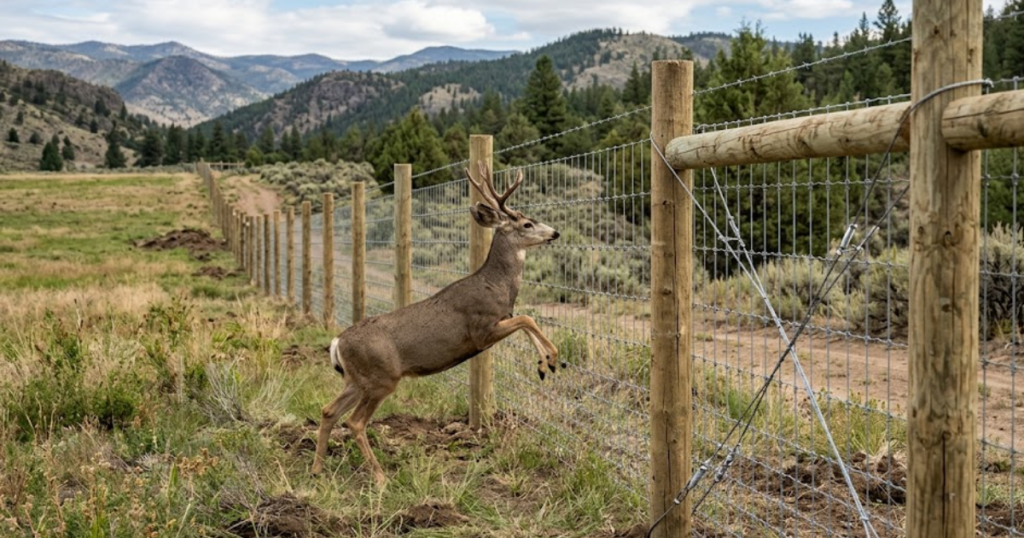
You buy 35 acres of pristine mountain land. You want to give your horses maximum turnout while protecting them from predators, so you hire a contractor to install a stunning, 6-foot-tall woven-wire perimeter fence around the entire property boundary.
A month later, a county code enforcement officer and a ranger from Colorado Parks and Wildlife (CPW) show up at your gate. You inadvertently built a wall directly across a historic elk winter migration corridor. The county issues a massive fine and legally orders you to tear down your brand-new $40,000 fence immediately.
When buying rural acreage in the West, you share the land with the native wildlife. Counties are increasingly aggressive about enforcing fencing regulations to prevent animals from being trapped, starved, or injured.
If you plan to fence open pasture, you must understand the county’s wildlife mitigation requirements before you buy the dirt. Here is how to navigate the intersection of equestrian safety and wildlife law.
Does the County Require a "Wildlife Mitigation Plan" for New Fencing?
Quick Summary: The Migration Highway
- The Migration Mandate: In Colorado, wildlife corridors are fiercely protected. Many rural counties prohibit you from building impenetrable perimeter fencing that blocks the natural movement of elk, deer, and pronghorn.
- The 42-Inch Limit: To comply with state wildlife guidelines, a perimeter fence generally cannot exceed 42 inches in height, allowing adult animals to safely jump over it without catching their back legs.
- The 16-Inch Crawl Space: The bottom wire or rail must typically be at least 16 inches off the ground. This ensures that fawns, calves, and smaller wildlife can easily crawl under the fence without getting trapped.
- The Envelope Compromise: Counties usually will not allow you to put 40 acres behind a 6-foot security fence, but they will allow you to build a smaller, highly secure sacrifice lot or exclusion zone immediately surrounding your barn to safely contain your horses.
On rural acreage, fencing is not just a livestock decision. It can trigger wildlife rules, permit reviews, and redesign requirements that directly affect turnout plans and project cost.
1. The Reality of the Migration Corridor
Colorado wildlife does not recognize property lines.
- The Winter Range: In the late fall, massive herds of elk and mule deer travel miles down from the high country to reach their traditional winter foraging grounds. If a new subdivision or a sprawling horse property suddenly cuts off that route with tall, impassable fencing, the herds become trapped.
- The Exhaustion Factor: When large animals are blocked by a fence in deep snow, they burn critical winter calories pacing the fence line trying to find a way through. This often leads to mass starvation or makes them easy targets for mountain lions and wolves.
- The Wildlife-Friendly Standard: To combat this, many mountain and foothill counties have adopted strict wildlife-friendly fencing codes. They no longer treat fencing as an automatic landowner right. They treat it as an environmental impact.
2. The Strict Geometry of Wildlife Fencing
If the county requires a Wildlife Mitigation Plan for your new perimeter fence, you will be forced to adhere to very specific geometric dimensions.
- The Maximum Height: A wildlife-friendly fence is usually capped at 40 to 42 inches tall. This is the maximum height an adult deer or elk can reliably clear, even when exhausted or jumping off an uneven, snowy slope.
- The Bottom Gap: The lowest wire or rail must be completely smooth and set at least 16 inches above the dirt. Fawns and elk calves cannot jump. They must crawl under. If the fence goes all the way to the ground, the babies will be separated from their mothers and die.
- The 12-Inch Top Gap: If you are using wire, the top two strands must be placed at least 12 inches apart. When deer jump, their back legs often drag. If the top wires are too close together, their hooves can slip between the wires and twist, trapping the animal in a deadly snare.
Wildlife-friendly fencing is not just about material choice. It is about exact height, spacing, and passage dimensions that may conflict with standard horse-containment preferences.
3. The Mitigation Plan Process
In heavily regulated counties, you cannot just start pounding posts.
- The Permit Requirement: When you apply for a building permit for a new house or barn, the county planning department will often trigger a mandatory Wildlife Mitigation review.
- The Map Submission: You must submit a detailed map showing exactly where you intend to place your fencing, what materials you will use, and how it aligns with known wildlife trails crossing your parcel.
- CPW Review: The county will frequently send your fencing plan to Colorado Parks and Wildlife for an official blessing. If CPW determines your fence will cut off a critical corridor, the county will deny your building permit until you redesign the pastures.
4. Balancing Horse Safety With County Code
This creates a massive headache for equestrians. A 42-inch fence with a 16-inch gap at the bottom is terrible for containing horses. They can easily jump it, and foals can roll right under it.
- The Exclusion Zone: The legal workaround is creating a layered defense. Counties will generally allow you to build a highly secure, non-wildlife-friendly fence, like a 5-foot no-climb wire, in a tight envelope immediately surrounding your barn and primary paddocks.
- The Open Perimeter: The trade-off is that the rest of your sprawling acreage must either remain completely unfenced or be enclosed only by code-compliant, wildlife-friendly fencing. You must train your horses to respect the shorter pasture fences while relying on the secure barn envelope for overnight containment.
We Evaluate the Restrictions Before You Buy
We do not just look at the acreage; we look at what you are legally allowed to do with it.
When Mark Eibner and Belinda Seville represent you in a rural purchase, we investigate the county’s specific wildlife and fencing overlays. We help you identify if the property sits in a protected migration corridor and ensure that your plans for pastures, turnout, and herd safety will actually be approved by the local planning department.
Contact Us Today to find a property where your equestrian goals align with county regulations.
Browse Active Colorado Horse Properties: Browse Active Colorado Horse Properties featuring safe and compliant fencing infrastructure
Frequently Asked Questions (FAQ) About Wildlife Fencing
If I buy a property with an existing 6-foot perimeter fence, is it grandfathered in?
Usually, yes. If the non-compliant fence was legally erected before the county enacted the wildlife mitigation codes, you are generally allowed to keep it and maintain it. However, if a wildfire destroys it, or if you decide to replace more than 50% of the fence line, the county will likely force you to rebuild the entire structure to current wildlife-friendly standards.
Do these height and gap rules apply to wooden rail fences, or just wire?
They apply to all fencing materials. Whether you are using steel pipe, split rail wood, or high-tensile wire, the physical barrier must still meet the 42-inch maximum height and the 16-inch bottom gap requirements to allow wildlife to pass.
Can I use a high-tensile electric fence for a wildlife-friendly perimeter?
Yes, and it is actually highly recommended by wildlife agencies. Smooth, high-tensile electric wire has flexibility. If an elk hits it in the dark, the fence will give rather than snapping their legs. However, you must use highly visible white tape or poly-rope for the top strand so the wildlife, and your horses, can clearly see the boundary before they run into it.