
A listing may show a barn, arena, and open pasture, but it can’t tell you whether the recorded easement allows your plans for the land. When evaluating a Colorado horse property with conservation easement, the deed’s specific terms matter more than a broad description of horse-friendly features.
It’s reasonable to ask whether you can keep horses, build or modify facilities, or manage pasture as intended. Easements are property-specific, and restrictions can affect daily use as well as future plans. Before making an offer, find out who holds the easement and what the recorded documents actually permit.
This 2026 buyer’s guide explains how an easement can shape horse ownership and land management, and what to review before you commit. It covers the easement deed, baseline documentation, permitted uses and improvements, and questions to consider about value, financing, and tax treatment. You’ll also learn how to compare a property’s land, facilities, and documented rights with your long-term goals, so you can assess whether it fits the way you plan to live and work with your horses.
Key Takeaways
- The recorded easement deed, not the listing description, sets the property’s permitted uses.
- Compare your plans for horses, facilities, pasture, fencing, and trails with the deed’s specific terms.
- When evaluating a Colorado horse property with conservation easement, review the deed, amendments, boundaries, reserved rights, and baseline documentation.
- An existing barn or arena doesn’t automatically mean you can expand or modify it; check the documented rights before making an offer.
- Use your priorities for location, acreage, water, pasture, and facilities to assess whether a protected property fits your long-term plans.
What a Colorado conservation easement means for a horse property
A conservation easement is a recorded legal restriction on specified property rights, often limiting certain types of development to protect land or its conservation values. The land can remain privately owned; the easement limits particular uses or changes rather than automatically making the property public. For a Colorado horse property with conservation easement, the recorded deed sets the rules for that parcel. There is no single statewide list of horse activities that every easement permits.
An easement is different from zoning, which is a government land-use framework, and from an HOA covenant, which is a private community restriction. It also doesn’t transfer ownership to the public. The Conservation easement overview describes how these restrictions can run with the land. To understand the effect on a specific property, review the recorded instrument, its amendments, and applicable law.
For a plain-language introduction to the concept, watch this overview:
What rights may a Colorado conservation easement restrict?
Some deeds limit subdivision or new development; others set different boundaries on the owner’s rights. These are examples, not universal terms. Read agricultural and equestrian activities against the actual deed language, too. Don’t assume that a property’s current use establishes what will be allowed later. Easements commonly bind future owners, but review the instrument and applicable law to understand how that applies to the parcel.
Can horses, barns, arenas, and riding remain part of the property?
They may, if the deed permits the relevant use. Distinguish existing improvements from future construction: a standing barn or arena doesn’t by itself establish a right to enlarge, replace, or add facilities. Check the language for horse grazing, fencing, riding trails, and manure management, including any limits or approval requirements. Listing copy can describe features, but it isn’t proof of permission.
For buyers, the practical question is whether the recorded rights align with the horse operation they intend to run. A property may support current use while limiting future changes, or its deed may expressly preserve certain activities. Read the deed alongside all amendments and related documentation before treating acreage, pasture, or facilities as suitable for a particular plan.
How easement terms shape horse use, improvements, and land management
Evaluate the property against your current horse setup and the changes you may want to make. Existing use is only a snapshot. A barn, arena, or paddock on the land doesn’t automatically mean you can expand, replace, or relocate it. The deed may distinguish among maintaining existing improvements, constructing new ones, and changing how particular areas are used.
Conservation and horse operations aren’t always incompatible. The La Plata Open Space Conservancy notes that easements can permit working family farm and ranch operations. The practical question is what this property’s recorded terms allow. For a Colorado horse property with conservation easement, check each intended activity and improvement against the deed rather than relying on general descriptions of conservation or equestrian use.
Which horse facilities and improvements need deed-level review?
Review barns, arenas, shelters, corrals, riding trails, and accessory structures individually. Look for language addressing construction, replacement, relocation, size, or expansion. Also examine terms related to access roads, lighting, and utilities. Restrictions on subdivision, additional residences, or commercial activity may affect plans such as adding a residence or operating a riding business. Consider those provisions in the context of the full deed.
Pasture and day-to-day management deserve the same attention. Check whether the instrument addresses grazing, fencing, trail access, manure management, or livestock numbers. A limit on where horses can graze or a requirement affecting fence placement could change how usable the acreage is for your operation. Match each provision to how you expect to manage the land, not just how it is used today.
How pasture, water, and seasonal operations affect the fit
Start by assessing the pasture you can practically use, not acreage alone. Consider your horses’ care and grazing requirements, the layout of usable ground, and access between paddocks and facilities. Terrain and seasonal conditions matter, too. Snow, slope, and maintenance needs can affect whether routes and facilities work throughout the year, and conditions vary across Colorado regions.
Keep water rights and zoning as separate due-diligence tracks. Review water rights, wells, irrigation, and delivery arrangements on their own terms; conservation language doesn’t establish what water can be used or delivered. Likewise, zoning doesn’t replace review of the easement deed. Assess all three: documented easement permissions, applicable land-use rules, and practical water access.
Turn your requirements into search criteria for acreage, pasture, water, and facilities, then compare listing features with the rights documented for the land. Search Colorado horse properties by the features that fit your plans, and use deed-level review to assess whether a property can support them.
Conservation easement property versus unrestricted horse property
Neither option is automatically better for horse ownership. The right fit depends on how you plan to use the land, what improvements you may want later, and whether the property’s documented restrictions align with those goals. Compare the deed and current facilities with your plans, not acreage alone. A large parcel may offer less practical flexibility than a smaller one if usable pasture, facilities, or permitted uses don’t match your needs.
| Consideration | Property with a conservation easement | Property without a conservation easement |
|---|---|---|
| Permitted uses | Defined by the recorded deed, which may allow horse and agricultural activities subject to specific terms. | Not subject to a conservation easement, but still governed by applicable zoning and other requirements. |
| Improvement flexibility | Construction, expansion, replacement, or relocation may be limited or subject to deed terms. | May allow greater flexibility, but proposed work can still require approvals or meet other rules. |
| Stewardship goals | Land protection is part of the property’s restrictions; owners need to understand related obligations. | No conservation easement stewardship terms, though ordinary land-management responsibilities remain. |
| Documentation | Requires close review of the recorded deed, amendments, and related records. | Requires its own due diligence, including applicable land-use, building, and water information. |
When a conservation easement may fit an equestrian buyer
A protected property may suit buyers whose horse operation aligns with existing uses and the deed’s permitted activities. It may also appeal to people who value long-term land protection and a setting less focused on future development. The tradeoff is the need to understand stewardship and compliance obligations, along with any limits affecting planned changes.
When unrestricted land may offer more useful flexibility
Buyers planning substantial construction, subdivision, or a major change in land use may prefer a property without a conservation easement. That doesn’t make the land free of constraints. Zoning, water rights, building requirements, and other applicable rules still matter, so evaluate the specific parcel rather than assuming “unrestricted” means any plan is allowed.
For a Colorado horse property with conservation easement, compare each existing barn, arena, and pasture area with the facilities and land use you want in the future. An easement doesn’t guarantee a higher or lower sale value; outcomes depend on the property, its restrictions, and buyer priorities. Focus on fit: which documented uses support your horse plans, and which future options matter most?
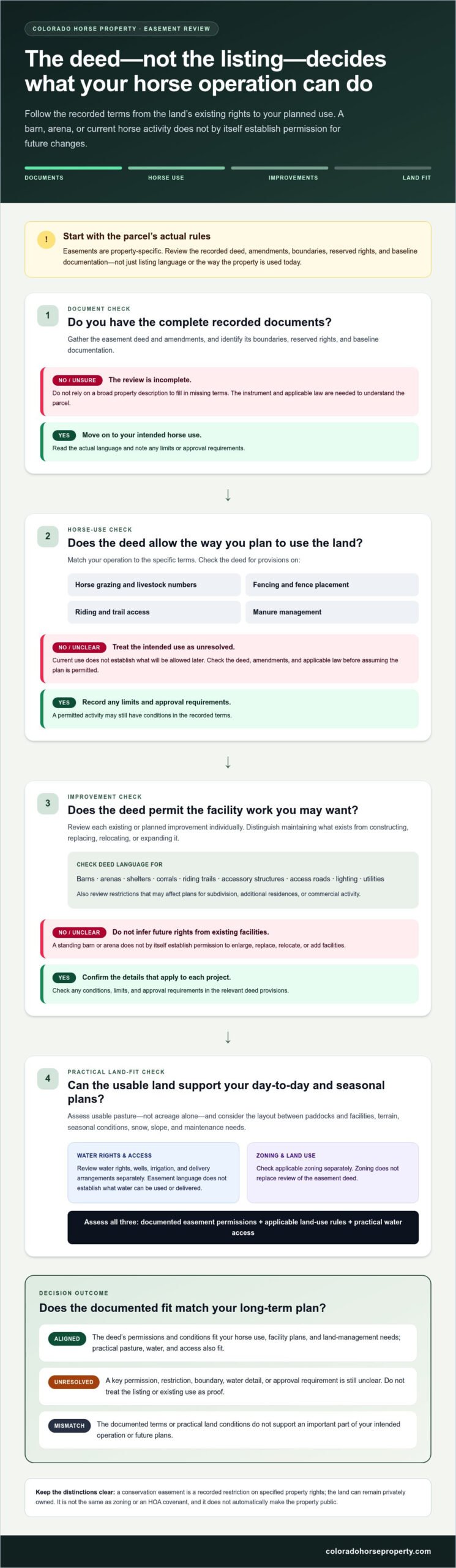
Colorado buyer due diligence: review the deed before making an offer
For a Colorado horse property with conservation easement, start with the recorded documents, not the listing description. Build a clear picture of what the land allows, who holds the easement, and whether your plans fit its terms before you commit. Use this sequence to organize your review:
- Obtain the recorded easement deed and every amendment. Read them together, including attached exhibits and maps. An amendment may change or clarify the original terms.
- Identify the easement holder and property boundaries. Note the holder’s contact information, the land covered, and any stated notice or approval procedures. Compare deed exhibits with title materials and a survey.
- Review the baseline documentation. This report records the property’s condition when the easement was created. Compare its maps and descriptions with current conditions and improvements.
- Locate reserved rights and monitoring provisions. Look for rights retained by the owner, limits on those rights, and language describing monitoring or compliance procedures.
- Match your plans to the written terms. List intended horse uses and improvements, such as grazing, fencing, a new arena, or a barn expansion. Connect each item to relevant deed language.
- Review related property constraints separately. Consider title interests, survey boundaries, zoning, water rights, and legal access. They answer different questions from the easement deed.
Documents and terms to gather for an easement review
Assemble the deed, amendments, exhibits, maps, and available baseline documentation in one review file. Confirm who holds the easement and note any written notice or approval steps that may affect proposed activities. Title materials and surveys can help identify boundaries, encumbrances, and other recorded interests. If a map or description doesn’t appear to match the ground, flag the discrepancy for follow-up rather than making assumptions.
Questions to resolve before comparing or pursuing a property
Write down what you want to do now and later. Include current horse use, pasture management, facility construction or expansion, and any change in land use. For each plan, record the deed language that appears relevant and mark unclear or conflicting provisions. A qualified real estate attorney can interpret ambiguous terms and explain transaction implications. Direct tax questions to a tax professional, and land-management questions to an appropriate specialist.
Keep this review organized alongside buyer representation and transaction due diligence. A property search can surface acreage and equestrian features, while document review helps assess whether those features align with your plans. Explore Colorado horse property listings as you refine your criteria.
Find a Colorado horse property that fits the easement and your plans
Finding the right Colorado horse property with conservation easement means matching the land and facilities to your horse needs, then checking that the deed supports how you plan to use them. Search criteria can narrow the options, but a listing feature doesn’t establish a right to alter, expand, or use it in a particular way. Keep those two parts of the decision separate.
Build a property brief around both horse needs and deed restrictions
Write down your priorities before comparing properties. Rank must-have facilities, horse capacity, usable pasture, acreage, water features, and preferred Colorado locations. Then split your list into current needs and future plans. A barn you need now is different from an arena you hope to add later, especially if the easement deed addresses new construction or expansion.
Use the same brief for each listing. Note which features are present, what land characteristics matter, and which deed provisions relate to your intended uses. This creates a consistent way to compare properties and brings document questions to the surface early, rather than after a property has already become your preferred choice.
Use specialized Colorado search and buyer representation
AI-powered horse property search can help surface listings by equestrian features such as barns and arenas, along with acreage, pasture, and water. These filters make it easier to find properties with relevant characteristics. They don’t establish whether an easement permits a particular use or improvement, so treat search results as a starting point for reviewing the recorded documents.
Colorado Horse Property offers buyer representation to connect your priorities with listing details and transaction steps, helping keep property evaluation and due diligence organized. Representation doesn’t replace legal advice. For more context on evaluating equestrian properties and land, see the Colorado equestrian real estate buyer’s guide and the Colorado land buyer’s guide.
Once you’ve defined your location, acreage, facility, pasture, and water priorities, search Colorado horse properties and compare each listing with your property brief. For any candidate, assess the deed’s documented permissions separately from the features shown in the listing. That approach helps you focus on properties whose land, facilities, and recorded rights align with both your current operation and long-term goals.
Choose land that supports your plans
The recorded easement, not the listing description, determines which uses and improvements are permitted. Before making an offer, compare the deed’s terms with your horse plans, review the relevant property documents, and consider whether the land’s stewardship requirements suit the way you want to manage it.
A Colorado horse property with conservation easement can be a strong fit when its documented rights align with your needs. Focus on practical fit: usable acreage, pasture, water, existing facilities, and the improvements you may want to make. Buyer representation and transaction coordination can help connect property details with due diligence, while legal and tax questions should be addressed with the appropriate professionals.
Start your search with Colorado-focused AI-powered filters for acreage and equestrian features such as barns, arenas, pasture, and water. Search Colorado horse properties and compare promising listings against your priorities and the recorded restrictions. Search Colorado horse properties with Colorado Horse Property and find listings to evaluate against your plans.
Frequently Asked Questions
Can you keep horses on property with a conservation easement in Colorado?
Yes, if the recorded easement deed permits horse-related use. Terms vary by property, so don’t assume grazing, riding, fencing, or a particular number of horses is allowed simply because horses are already there. For a Colorado horse property with conservation easement, review the deed and amendments for permitted agricultural or equestrian activities, any limits, and applicable notice or approval procedures.
Can I build a barn or riding arena on an easement property?
Possibly, but permission depends on the property’s recorded easement terms. A barn or arena already on the land doesn’t automatically give you the right to build another one, expand it, replace it, or move it. Check the deed for provisions on construction, structures, location, and approval requirements. Also review applicable zoning and building requirements, which are separate from the easement.
What documents should I review before buying a horse property with an easement?
Start with the recorded easement deed and all amendments, then review its exhibits, maps, and available baseline documentation. Identify the easement holder, the protected boundaries, reserved owner rights, and any monitoring or notice provisions. Also examine title materials and a survey for boundaries and other recorded interests. Review zoning, access, and water-rights information separately, since these documents address different property questions.
Does a conservation easement reduce the value of a Colorado horse property?
Not necessarily. An easement can limit development or improvements, which may matter to buyers seeking flexibility, while protected land and permitted horse uses may suit other buyers’ priorities. There’s no automatic increase or decrease in sale value. Value depends on the property, its location and facilities, the specific restrictions, and market demand. Compare the deed’s terms with your intended use and future plans.
Can a conservation easement be changed or removed after purchase?
Don’t assume you can change or remove an easement after buying the property. Conservation easements are generally intended to be perpetual, and any proposed change or release requires careful review of the deed, the easement holder’s role, and applicable law. Before making an offer, have qualified real estate counsel assess unclear provisions and explain the legal implications. Treat the recorded terms as binding unless advised otherwise.
Can a conservation easement affect taxes on a Colorado horse property?
Yes, an easement may have tax implications, but the result depends on the transaction, the property, and the buyer’s circumstances. Tax benefits associated with donating an easement generally relate to the donor and shouldn’t be assumed to transfer to a later buyer. Property assessment and any potential federal or Colorado tax treatment are separate questions. Review them with a qualified tax professional; don’t rely on listing language or assumed savings.