
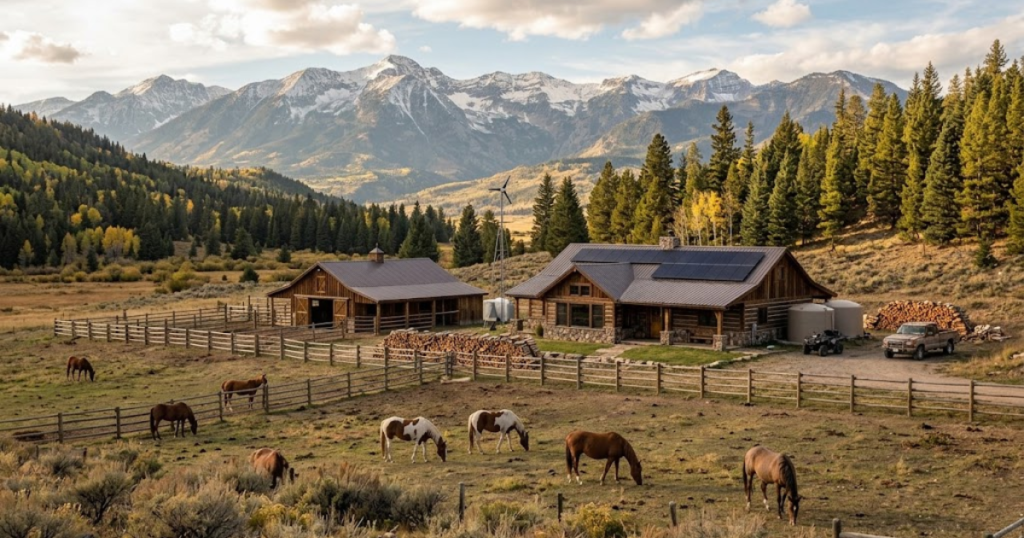
You want to disconnect from the system. You envision buying forty acres of remote Colorado wilderness, installing a massive solar array, drilling a well, and living a completely self-sufficient lifestyle with your horses. No monthly utility bills, no noisy neighbors, and total independence.
This is an incredibly popular dream for buyers moving to the Rocky Mountain region. When searching for horse properties in Colorado, many buyers actively look for properties located miles outside of municipal boundaries.
However, running a horse farm is essentially running a commercial agricultural facility. Doing so without the support of the electrical grid, municipal water, or county road maintenance is one of the most difficult and expensive logistical challenges in real estate. You can absolutely live off-grid with horses in Colorado, but it requires massive upfront capital, highly specialized infrastructure, and a deep understanding of local laws.
Before you buy a remote parcel of raw land, you must understand the brutal realities of high-altitude, off-grid equestrian management.
Can You Live Off-Grid on a Horse Property in Colorado?
Quick Summary: The Realities of Self-Sufficient Ranching
- The Legal Frontier Myth: Colorado is not a lawless wilderness. Even if you are miles away from the nearest power pole, you are still subject to strict county zoning laws, building codes, and environmental regulations.
- The Water Rights Wall: Off-grid does not mean off the record. You cannot legally drill a well or harvest rainwater for livestock without the proper state permits, and water rights dictate everything.
- The Winter Power Problem: Heating water for horses during a sub-zero Colorado winter requires massive amounts of energy. A standard electric tank heater will instantly drain a basic solar battery bank, making heavy-duty propane generators mandatory.
- The Access and Logistics Reality: Living off the grid usually means living off the county maintenance map. If you cannot personally plow a two-mile dirt road after a blizzard, hay delivery trucks and equine veterinarians cannot reach your farm.
1. The Zoning and Building Code Reality
The biggest myth in the off-grid community is that zoning laws and building codes do not exist in remote Colorado counties.
Historically, some rural areas were highly relaxed, but today, virtually every county in Colorado enforces strict land-use codes. Buyers often assume that if they buy forty acres in the middle of nowhere, they can park an RV, build a pole barn out of salvaged materials, and start their farm.
If you attempt this, the county code enforcement division will eventually find you, issue massive fines, and potentially condemn the property.
Permitted Structures
You must pull structural, electrical, and grading permits for your primary residence and your agricultural outbuildings. Your barn roof must be engineered to withstand the specific snow-load requirements of your mountain county.
Minimum Square Footage
Many counties have minimum square-footage requirements for residential homes, which can severely limit your ability to build a tiny home or live in a modular structure while you build your farm.
Animal Density
Just because you are off the grid does not mean you are exempt from agricultural zoning. You must still verify that the county allows your intended herd size based on its specific animal-unit calculations.
2. The Ultimate Hurdle: Water Law and Well Permits
You can generate your own electricity, but you cannot generate your own water. In Colorado, water is governed by the Prior Appropriation Doctrine, meaning water rights are strictly regulated and entirely separate from land ownership.
If you are buying remote, off-grid land, you will not have access to municipal water lines. You have three highly regulated options to hydrate your horses.
The Exempt Well Permit
Drilling a private well is the gold standard, but it is never guaranteed. You must apply for a well permit through the Colorado Division of Water Resources.
For an equestrian property, you must secure a Domestic and Livestock well permit. If the state only grants you a Household Use Only permit, it is a direct legal violation to use that water for your horses.
Off-grid drilling is also incredibly expensive. In remote mountain terrain, drillers may have to go 600 to 1,000 feet deep through solid granite, which can cost tens of thousands of dollars before you even buy the solar well pump.
Hauled Water and Massive Cisterns
If you cannot get a well permit, or if the local aquifer is dry, your only option is to haul water. This requires burying massive, freeze-proof cisterns holding thousands of gallons of water.
You will have to buy a heavy-duty water-hauling trailer and drive to a municipal fill station multiple times a month, or pay a commercial water-delivery service a premium to drive a tanker truck up your remote dirt road.
When a horse drinks ten gallons of water a day, managing a cistern system for a large herd becomes a grueling, expensive logistical nightmare.
The Rainwater Collection Ban
Many off-grid buyers assume they can build massive metal barn roofs and collect rainwater in holding tanks to water their horses.
In Colorado, residential homeowners are strictly limited to collecting a maximum of 110 gallons of rainwater in two specific barrels, and they can use that water only for outdoor residential purposes, not commercial agriculture.
You cannot rely on rainwater harvesting to run a horse farm.
3. The Brutal Math of Winter Power
Generating enough off-grid electricity to run a television and a refrigerator is easy. Generating enough electricity to keep a horse farm operational during a Colorado winter is a massive engineering challenge.
The Livestock Waterer Problem
The biggest power drain on any horse property is preventing the drinking water from freezing. Standard AC electric resistance tank heaters typically require 1,500 watts of continuous power.
If you have two water troughs running these heaters for twelve hours a day during a sub-zero freeze, they will consume 36 kilowatt-hours of electricity.
Pulling 36 kilowatt-hours a day just to heat water would completely drain a standard off-grid solar battery bank in hours. During a three-day winter blizzard, when your solar panels are covered in snow and producing zero energy, your horses will have no drinking water.
Passive and Propane Solutions
To survive off-grid, you must abandon standard electrical heating and use systems designed around conservation, insulation, and reliable backup power.
Geothermal Waterers
You must install specialized, passive geothermal waterers, such as the Bar-Bar-A system, which keeps the water deep underground below the frost line and brings it to the surface only when the horse pushes a paddle.
Super-Insulated Troughs
If you use automatic waterers, they must be heavily insulated models that require minimal wattage, typically under 100 watts, to keep the internal valves from freezing.
The Mandatory Generator
You cannot rely on solar panels alone. Every off-grid horse property must have a massive, commercial-grade propane or diesel generator tied directly into the battery-bank inverter.
When winter storms block the sun, the generator must automatically start to power your well pump and barn infrastructure.
4. Waste Management and Septic Reality
When you are off the grid, you are entirely responsible for managing both human and animal waste.
Onsite Wastewater Treatment Systems
You cannot simply dig a hole for a septic tank or build an outhouse. Colorado law bans traditional outhouses.
You must hire a soil engineer to perform a percolation test on your raw land, and you must install an approved Onsite Wastewater Treatment System (OWTS).
In rocky, high-altitude mountain terrain, standard septic leach fields often fail the engineering tests. You may be forced to install highly complex, engineered mound systems that cost upwards of $30,000.
While self-contained composting toilets are legal in some jurisdictions, you are still legally required to have an approved method for treating the gray water from your showers and sinks, meaning you cannot escape the massive cost of a permitted septic system.
Manure Management Logistics
On a standard farm, you might hire a local farmer to bring heavy equipment and haul away your manure pile twice a year. When you live miles down a steep, off-grid dirt road, commercial removal companies may not service your property.
You must have the acreage, tractors, and fuel storage on site to actively manage, compost, and spread your own manure to prevent toxic runoff from contaminating your fragile groundwater supply.
5. Emergency Access and Isolation Logistics
Living off the grid is deeply romantic until a horse colics at two in the morning during a January snowstorm.
The Snow-Plowing Mandate
Remote properties are typically accessed through private, unpaved roads or private easements. County snowplows will not service your driveway.
If a blizzard drops three feet of snow, you are completely cut off from the world until you clear it yourself. You must own a heavy-duty tractor or commercial plow truck, and you must stockpile enough diesel fuel to run it for days.
If you cannot clear the road, your equine veterinarian cannot reach you during a medical emergency, which can easily result in the loss of a horse.
Hay and Feed Deliveries
Commercial hay brokers drive massive flatbed semi-trucks. They will not risk their equipment navigating heavily rutted, muddy, steep, or icy off-grid roads.
You must either own a heavy-duty truck and flatbed trailer to haul your own hay from the valley, or build a massive, dry hay-storage building that lets you stockpile an entire year's worth of feed during the dry summer months.
We Understand Rural Land Capabilities
Buying off-grid acreage requires extreme due diligence that standard real estate agents don't have. If you make a mistake on the water permit or underestimate winter access, you are buying an unusable piece of land.
When Mark Eibner's team represents you, we investigate the raw dirt before you ever write a check. We verify county zoning laws, check neighboring well depths to estimate drilling costs, and evaluate road grades to ensure heavy horse trailers can reach the building site.
We help you transition into the off-grid lifestyle safely, legally, and without catastrophic financial surprises.
Contact us today at coloradohorseproperty.com to find the premium horse properties Colorado buyers trust.
Browse active Colorado horse ranches for sale or ask our team about finding a functional horse property for rent in Colorado while you plan your off-grid build.
Frequently Asked Questions (FAQ) About Off-Grid Horse Properties
Is it illegal to live off-grid in Colorado?
No, living off-grid is perfectly legal, but bypassing building codes is not. You can generate your own solar power and use a private well, but your home and barns must still be permitted, inspected, and approved by the county building and health departments.
Can I collect rainwater to water my horses off the grid?
No. Rainwater harvesting in Colorado is highly restricted. Residential homeowners may collect up to 110 gallons in two barrels. This water is strictly for residential outdoor use, such as a small garden. You cannot legally harvest rainwater on a massive scale for agricultural livestock watering.
How do you keep water from freezing without grid electricity?
Standard 1,500-watt electric trough heaters will drain a solar battery bank rapidly. Off-grid properties must use passive geothermal waterers that rely on the earth's heat below the frost line, heavily insulated automatic waterers that require less than 100 watts, or commercial propane generators designed to power the barn automatically during freezing weather.
Do I need a permit to build a horse barn on off-grid land?
Yes. Regardless of your grid status, almost every county in Colorado requires structural and grading permits for agricultural outbuildings. The county must verify that your barn meets required property-line setbacks and that the roof is engineered to handle local wind and snow loads. Unpermitted barns can trigger massive fines and forced demolition.