
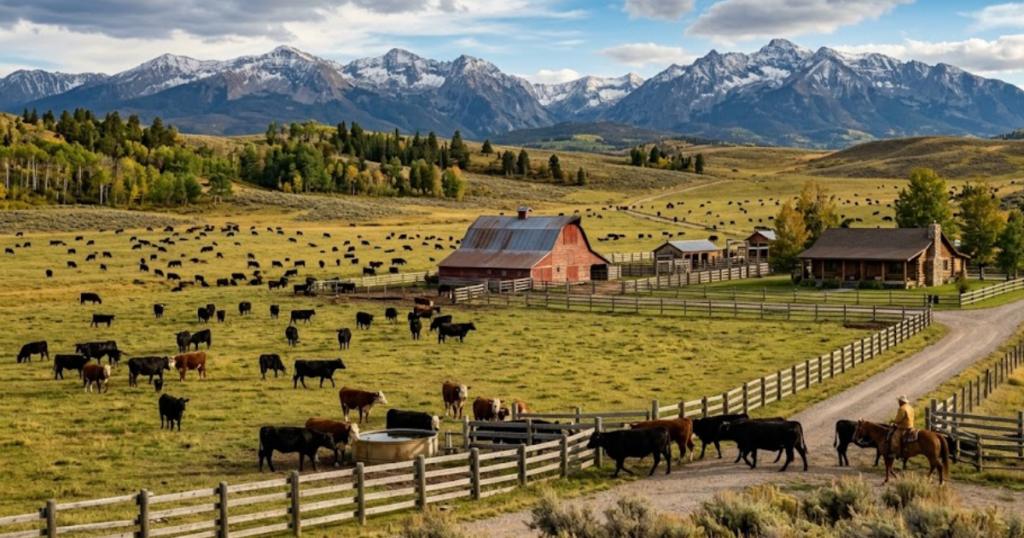
You find a massive, 3,000-acre ranch in the Colorado high country for a seemingly incredible price. You run the basic math in your head, assuming you can easily run 300 cow-calf pairs on that much land. You buy the property, buy the cattle, and turn them out in the spring.
By late July, the native dryland grass is grazed down to the dirt. You realize the soil here requires 30 acres to support one cow. Suddenly, you have 200 cows with no forage left. Worse, the property doesn’t have the senior water rights needed to grow winter hay. To keep the herd alive, you are forced to buy semi-trucks full of alfalfa at retail prices, wiping out operating capital and pushing the ranch into the red during your first year.
When buyers look at cattle ranches in Colorado for sale, they often buy on the romantic vision of vast open spaces and a sprawling fence line. But a commercial cattle ranch is not just a piece of real estate; it is a complex biological factory.
To evaluate the true operational viability of a cattle ranch, review the key factors before you write the offer.
Cattle Ranches for Sale in Colorado
Quick Summary: The Beef Math
- The AUM Reality: Acreage does not equal capacity. In the arid West, a ranch’s value is measured by Animal Unit Months, or AUMs: how much grass the property produces to feed a 1,000-pound cow.
- The Winter Feed Equation: A ranch that looks lush during summer may be buried in snow by January. Determine whether the property has productive irrigated acreage to grow its own winter hay or whether hundreds of tons of feed must be purchased and trucked in every year.
- The Public Lease Variable: Many sprawling Colorado operations rely heavily on adjacent Bureau of Land Management or U.S. Forest Service grazing leases. Confirm whether the permit can transfer and review the applicable agency rules, AUM limits, and expiration dates before buying.
- The Infrastructure Test: A poorly designed working corral may require five cowboys and constant pressure to load a truck. A properly designed facility should allow a small crew to safely sort, treat, weigh, and load cattle efficiently.
The true value of a cattle ranch is determined by what the land and infrastructure can sustainably produce—not simply by the number of deeded acres shown in the listing.
1. Decoding Carrying Capacity (AUMs)
In the West, buying a ranch means buying grass. If you do not understand the grass, the operation can quickly become financially unsustainable.
- What Is an AUM? An Animal Unit Month is the amount of forage required to sustain one 1,000-pound cow, with or without an unweaned calf, for one month.
- The Deceptive Acreage: In a lush environment, one acre might produce one AUM. In Colorado’s arid high plains or high-desert regions, producing one AUM may require 15, 30, or even 45 acres of native dryland pasture.
- The Historical Audit: Never estimate carrying capacity solely from how green the grass appears during May. Request the seller’s historical stocking records and determine how many cattle the ranch actually supported through multiple drought cycles.
Ask for pasture inventories, historical AUM calculations, grazing plans, drought-year stocking adjustments, precipitation records, and several years of livestock production records.
2. The Winter Feed and Water Rights Equation
Summer grazing is only half of the operating equation because Colorado winters often determine the ranch’s true annual overhead.
- The Hay Base: When snow becomes deep, cattle may no longer be able to obtain adequate forage from the range. Confirm whether the ranch contains flat, productive meadows with historic senior water rights or ditch shares that support dependable hay production.
- The Feed Deficit: If the ranch cannot produce enough hay internally, it has a feed deficit. Calculate the current cost of purchasing, hauling, unloading, and storing the missing tonnage. A drought-year hay-price increase can turn that deficit into a major financial liability.
- Stock-Water Reliability: Do not rely solely on seasonal creeks that may dry up during August. Look for deep wells, solar-powered pumps, functioning windmills, developed springs, pipelines, and strategically placed gravity-fed tanks.
- The Distance-to-Water Cost: Cattle that must walk long distances for water expend more energy and may lose condition, negatively affecting calf weaning weights and the ranch’s revenue.
3. Public Land Leases: BLM and Forest Service
Many large Colorado ranches use public-land grazing permits to reach commercial scale. These permits require careful due diligence because the advertised acreage may include land the seller does not own.
- Deeded vs. Leased: A listing may describe a 10,000-acre operation, while the underlying ownership includes only 1,000 deeded acres and 9,000 acres of BLM or U.S. Forest Service grazing land.
- The Transfer Process: Public grazing permits do not necessarily transfer in the same way as deeded real estate. Confirm the applicable agency’s transfer requirements and whether the buyer and base property will qualify.
- Agency Regulations: Public permits include stocking limits, use dates, range-improvement obligations, and land-management requirements. During drought, an agency may reduce authorized AUMs, potentially forcing the operator to relocate or liquidate cattle.
- Relationship History: Review the seller’s compliance history and working relationship with local agency range managers. Existing violations, unpaid fees, or unresolved maintenance obligations can create problems for the incoming operator.
Public permits can add significant operational value, but they do not provide the same ownership, exclusivity, control, or permanence as privately owned land.
4. Inspecting the Working Infrastructure
Time is money, and poorly designed infrastructure drains both. Walk the working areas carefully and evaluate how safely a small crew can handle the herd.
- The Loading and Sorting Hub: Inspect the main working corrals. Determine whether they are constructed from heavy-duty steel pipe or from deteriorated wood and patched wire. Look for curved alleys, solid-sided chutes, correctly positioned gates, and a low-stress flow pattern.
- The Squeeze Chute and Scales: A commercial operation should have a durable, preferably covered squeeze chute for vaccination, branding, pregnancy checking, identification, and veterinary care. Confirm whether certified legal-for-trade livestock scales are available on-site.
- Truck and Trailer Access: Confirm that commercial livestock trailers can enter, turn, load, and exit without difficult backing maneuvers or damage to gates, bridges, culverts, and narrow ranch roads.
- Fencing Integrity: Standard four-strand barbed wire requires ongoing maintenance. Drive the perimeter and inspect H-braces, corner assemblies, wire tension, gates, creek crossings, wildlife damage, and sections exposed to snow drifting or monsoon washouts.
We Audit the Operation Before You Buy
We do not just look at the scenic views; we evaluate the ranch as an agricultural business.
When Mark Eibner and Belinda Seville represent you in purchasing a working cattle operation, we review historic AUMs, examine water-right seniority, inspect public grazing permits, and help evaluate the property’s true operating costs and bottom-line sustainability.
Contact Us Today to find premium cattle ranches in Colorado for sale that align with your operational and financial goals.
Browse Active Colorado Ranch and Acreage Properties: Explore current Colorado ranch, acreage, agricultural, and equestrian-property listings
Frequently Asked Questions (FAQ) About Cattle Ranches
Do I need a barn to keep commercial cattle warm during a Colorado winter?
Generally, no. Commercial beef cattle, such as Angus or Herefords, are hardy and grow thick winter coats. With access to a natural or constructed windbreak and enough forage to maintain body heat, they can thrive outdoors throughout winter. Calving facilities, treatment areas, feed storage, and severe-weather protection may still be important depending on the operation.
What is a cow-calf operation compared with a yearling operation?
A cow-calf operation maintains a permanent herd of mother cows throughout the year, raises their calves, and commonly sells those calves during fall. A yearling or stocker operation buys lightweight cattle during spring, grazes them through the productive summer season to add weight, and sells the entire group during fall, avoiding the cost of carrying them through winter.
If I buy a ranch with a BLM grazing lease, can the public still access that land?
Yes. A BLM or U.S. Forest Service grazing permit grants the permit holder the right to use authorized forage for livestock under agency rules. It does not convert the public land into private property. Members of the public may still retain legal access for activities such as hunting, hiking, camping, and recreation, subject to applicable closures and regulations.