
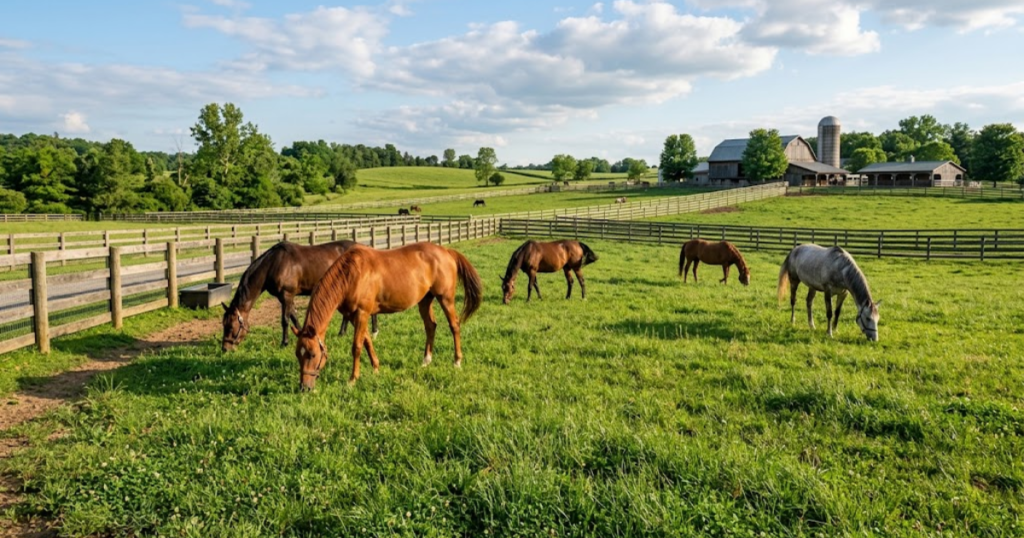
You finally purchase your dream equestrian estate. You look out over five acres of lush, green pasture and immediately turn your horses loose. Fast forward three months, and that beautiful green field has been reduced to compacted dirt, invasive weeds, and a massive dust bowl. Your horses are chewing on toxic plants because all the healthy grass is completely gone, and you are spending thousands of dollars on imported hay to keep them fed.
When searching for horse properties in Colorado, buyers often focus entirely on the purchase price and the size of the barn. They forget that managing the land itself is the most demanding, and often the most expensive, part of rural property ownership.
Unlike cattle, which wrap their tongues around grass to pull it up, horses have upper and lower incisors that allow them to bite plants off right at the soil line. They are notoriously selective grazers, eating the sweetest grasses down to the dirt while completely ignoring weeds. If left unmanaged, a horse will destroy a pasture in a matter of weeks.
To keep your land productive, beautiful, and safe for your herd, you must implement strict pasture management protocols. Here is the comprehensive guide to managing your acreage, preserving your soil, and maximizing your forage in the challenging Colorado climate.
Best Practices for Pasture Management on Colorado Horse Properties
Quick Summary: The Golden Rules of Grazing
- The Grazing Height Rule: You must wait for grass to reach 6 to 8 inches before turning horses out, and you must remove them when the grass is grazed down to 3 inches.
- The Sacrifice Area: Every functional horse property needs a dry lot where horses can be confined with hay and water while the main pastures rest and recover.
- Rotational Grazing: Subdividing your acreage into smaller paddocks lets you move the herd sequentially, giving grazed land 30 to 90 days to recover, depending on the season.
- Manure and Weed Control: Regular harrowing to break up manure, combined with strategic mowing before weeds go to seed, is essential for maintaining healthy forage.
1. The Foundation of Rotational Grazing
The single most destructive practice in equine land management is continuous grazing. If you leave your horses in the same large pasture 365 days a year, they will overgraze their favorite spots until the grass dies, allowing opportunistic weeds to take over.
The solution is rotational grazing. This involves dividing your large pasture into several smaller paddocks using permanent or temporary electric fencing. Instead of having access to the entire property, the herd is restricted to one small section at a time.
The golden rule of rotational grazing is the "Take Half, Leave Half" principle. You should never turn your horses out onto a pasture until the grass is at least 6 to 8 inches tall. Once they graze that section down to an average height of 3 to 4 inches, you must immediately open the gate to the next paddock and move the herd. Grazing grass below 3 inches destroys the plant's root reserves, preventing it from regrowing rapidly and leaving the soil vulnerable to erosion.
2. The Critical Importance of the Sacrifice Area
You cannot implement a successful rotational grazing system without a sacrifice area, which is also commonly referred to as a dry lot.
A sacrifice area is a small, heavily fenced paddock where your horses live when none of your pastures are ready for grazing. It should have secure fencing, a run-in shelter, a water source, and proper drainage. As the name suggests, you are sacrificing this small piece of land to save the rest of your acreage.
In Colorado, there will be long stretches of time when your pastures cannot be grazed. During the early spring, the grass might be too lush and rich, posing a severe risk of laminitis or founder. During late-summer droughts, the grass stops growing entirely. During the winter, the forage goes dormant. Whenever the grass in your rotation drops below that critical 3-inch mark, the horses go into the sacrifice lot and are fed hay until the pastures recover. Furthermore, when it rains heavily or the snow melts, keeping horses in the sacrifice lot prevents their heavy hooves from tearing up wet, muddy pastures and destroying the root systems.
3. Understanding Dryland Recovery Times
One of the biggest mistakes buyers make when moving to Colorado from the Midwest or the East Coast is misunderstanding the climate. Colorado is a semi-arid, high desert environment. Our grass does not bounce back in a week.
If you are managing dryland pastures without irrigation, you must plan for extended recovery periods. During the fast growth months of May and June, a grazed pasture might need 30 to 45 days of complete rest before it reaches the safe 6 to 8 inch height again. However, during the slower growth months from July through October, or during a severe drought, that recovery period can extend to 60 or even 90 days. This makes your sacrifice lot and your hay budget incredibly important, as your land cannot support continuous grazing year-round.
4. Manure Management and Soil Health
A healthy pasture requires active nutrient management. If you leave manure piles in the field, your horses will refuse to graze near them, creating tall patches of unpalatable grass surrounded by overgrazed dirt.
To combat this, you should routinely drag or harrow your resting pastures. Pulling a chain harrow behind a tractor or ATV breaks up manure piles, spreads nutrients evenly across the soil, and exposes internal parasites to the drying sun, which naturally breaks their life cycles.
You must also monitor your soil's chemical composition. Colorado soils are often highly alkaline and lack vital nutrients. Pull soil samples at least once a year and send them to the local agricultural extension office for testing. The laboratory results will tell you exactly what type of chemical fertilizer your pasture needs to thrive. Applying the correct ratio of nitrogen, phosphorus, and potassium right before a spring rain can drastically increase your forage production.
5. Aggressive Weed Control and Mowing
Weeds are the ultimate enemy of a horse pasture. They compete with healthy grasses for water and nutrients, and many weeds common to Colorado are highly toxic to livestock.
The best defense against weeds is a thick, healthy stand of grass, which is why preventing overgrazing is so critical. However, weeds will inevitably appear. Familiarize yourself with local invasive species and eradicate them immediately.
Mowing is your most effective tool. Whenever you move your horses out of a paddock in your rotation, you should immediately mow that field to a uniform height. This prevents any opportunistic weeds from flowering and dropping seeds, effectively stopping them from spreading. For extremely invasive or toxic weeds, you may need to spot treat the pasture with a horse-safe herbicide, being very careful to follow the grazing restriction labels before turning the herd back out.
If your pasture has bare spots from heavy traffic, you must overseed those areas. Overseeding is best done in the early spring or late fall when soil moisture is steady. Covering bare dirt with new grass seed prevents weeds from taking root and expanding into the healthy parts of your field.
6. The Role of Proper Equestrian Fencing
You cannot manage your land if you cannot control where your horses go. Fencing is the infrastructure that makes pasture management possible.
While barbed wire is common on massive cattle ranches, it is incredibly dangerous for horses and should be removed from any grazing areas. To implement rotational grazing on a budget, establish a strong, safe perimeter fence using pipe rail, vinyl, or no-climb wire, then use temporary electric fencing to subdivide the interior space into smaller paddocks. Solar-powered electric tape is inexpensive, easy to move, and lets you adjust the size of your grazing strips based on how fast the grass is growing.
We Evaluate Pasture Potential Before You Buy
Managing land is a massive commitment. Before you close on a property, you need to know if the soil is healthy, if the fencing is functional, and if the acreage can actually support your specific herd.
When Mark Eibner's team represents you, we look beyond the barn. We evaluate the topography, check the irrigation rights, and help you identify where you can safely establish your sacrifice lots. We ensure you buy a property with the agricultural potential to sustain your horses for years to come.
Contact us today at coloradohorseproperty.com to find premium horse properties Colorado buyers trust.
Browse active Colorado horse ranches for sale or ask our team about finding a functional horse property for rent in Colorado while you learn the ropes of pasture management.
Frequently Asked Questions (FAQ) About Pasture Management
How many acres do I need per horse in Colorado?
In lush, rainy environments, you might support one horse per acre. However, in the dry, semi-arid climate of Colorado, you typically need 2 to 3 acres of dryland pasture per mature horse to prevent severe overgrazing. If you have limited acreage, you will rely much more heavily on your sacrifice lot and imported hay.
Is it safe to spread fresh manure back onto the pasture?
You must be very careful when spreading uncomposted manure. Fresh manure can contain the seeds of undesirable weeds that were present in your winter hay, which will then sprout in your pastures. It can also spread internal parasites if the manure is not properly broken up and dried out by the sun. Composting the manure thoroughly before spreading it is the safest agricultural practice.
Should I mow my pastures before a drought?
No. Mowing your fields extremely short right before a long, hot dry spell can permanently damage the root systems. During periods of extreme heat or drought, leave the grass slightly taller to shade the soil and retain whatever moisture is left in the ground.
Can I leave my horses on the pasture all winter?
You can, but you risk destroying the root systems. When the grass goes dormant in the winter, it stops growing. If horses continuously graze dormant grass down to the dirt, or trample wet, muddy fields during the spring thaw, the pasture will struggle to recover the following year. Using a winter sacrifice lot protects the long-term health of the fields.