
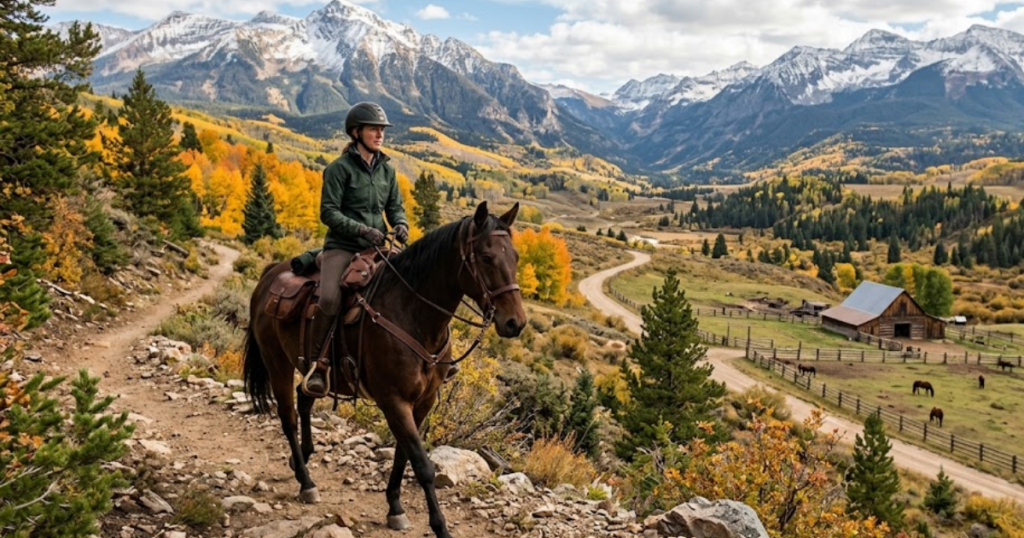
You buy a beautiful 5-acre property in a quiet neighborhood backing up to a sprawling, 1,000-acre county open space. You envision waking up on Saturday mornings, saddling your horse, and riding straight out your back gate into nature.
After moving in, you discover two devastating facts. First, the neighborhood HOA explicitly bans all livestock, overriding the county zoning and forcing you to board your horses off-site. Second, you learn that the beautiful open space behind your house is zoned strictly for pedestrian hikers and mountain bikes, no horses allowed. You bought a property for the trails, but you are legally banned from using them.
When searching for horse properties in Colorado, buyers often look for green patches on a map and assume they represent equestrian freedom. But in Colorado, open space and equestrian zoning vary wildly from county to county.
Here is a breakdown of which counties offer the best combination of legal horse zoning and immediate trail access.
Which Colorado Counties Offer the Best Trails and Equestrian Zoning?
Quick Summary: The Trailhead Reality
- Douglas County Dominance: Castle Rock and Parker are major centers of luxury equestrian living in Colorado, with master-planned communities featuring private horse trails and established equestrian amenities.
- The Northern Premium: Boulder and Larimer counties offer extensive public open-space and trail networks, but buyers face some of the state’s highest real estate prices and strict environmental or land-use requirements.
- The HOA Override: Never rely on county zoning alone. A property may sit in an agricultural or livestock-friendly zoning district while its Homeowners Association covenants prohibit horses entirely.
- The Ride-Out Metric: The true value of a premium horse property is not just acreage. It is whether you can legally and safely saddle at the barn and ride directly onto a trail without loading a trailer.
A green area on a map does not automatically provide equestrian access. Buyers must verify horse allowances, trail rules, easements, road crossings, parking logistics, and HOA restrictions separately.
1. Douglas County: The Equestrian Epicenter
Buyers seeking a master-planned horse lifestyle often focus on Douglas County, particularly the areas surrounding Parker, Castle Rock, and Franktown.
- Dedicated Equestrian Communities: Douglas County includes established developments such as Keene Ranch, Surrey Ridge, and Bell Mountain Ranch. These communities combine large residential parcels with horse-oriented covenants and private trail systems.
- Public Open-Space Access: The county contains equestrian-friendly public destinations such as Dawson Butte Open Space, which includes a wooded loop trail and parking designed to accommodate horse trailers.
- The Zoning Baseline: Douglas County has established livestock and horse-keeping regulations, but the precise acreage requirement and permitted number of horses depend on the parcel’s zoning classification, subdivision, and covenants.
Confirm both the county zoning and the neighborhood covenants. A parcel’s acreage alone does not guarantee that the barn, arena, horse count, or commercial boarding use you want will be permitted.
2. Boulder and Larimer Counties: The Northern Network
Buyers prioritizing large public-land systems, foothill scenery, and access to the Northern Front Range may find Boulder and Larimer counties compelling—provided the higher cost and regulatory complexity fit the budget.
- Boulder County’s Greenbelt: Boulder County has preserved extensive open-space acreage to limit urban sprawl. The resulting trail network is a major lifestyle benefit, but real estate prices, environmental reviews, and building regulations can be demanding.
- Larimer County: The Fort Collins and Loveland areas provide access to foothill parks, mountain trail systems, and Roosevelt National Forest. Locations such as Lory State Park include trails where equestrian use is permitted.
- The Multi-Use Conflict: Many Northern Front Range trails are shared by hikers, runners, dogs, and mountain bikers. Horses using these systems should be comfortable with fast-moving traffic, narrow passing areas, and activity around blind corners.
3. El Paso and Elbert Counties: Space and Freedom
Buyers seeking larger parcels, fewer master-planned restrictions, and more room to develop private riding infrastructure often look east and north of Colorado Springs.
- The Black Forest: The Black Forest area of El Paso County contains heavily timbered parcels ranging from small equestrian acreages to much larger rural estates. The area has a longstanding horse culture and access to local trail systems, including Section 16.
- Elbert County: Towns such as Elizabeth and Kiowa are known for larger rural parcels, including many 35-acre properties. Although these areas may lack the polished private trail networks found in some Castle Rock communities, the larger parcels can provide room for private tracks, arenas, and cross-country riding areas.
Larger acreage can provide greater private riding freedom, but buyers may face longer drives to maintained public trailheads, fewer shared amenities, and more responsibility for building and maintaining their own infrastructure.
4. Evaluating the “Ride-Out” Reality
Before paying a premium for a property advertised as trail-adjacent, investigate the exact legal and physical route from the barn to the trail.
- The Easement Check: Confirm whether the property directly touches the trail or open-space boundary. A narrow strip of privately owned land, drainage property, railroad right-of-way, or utility parcel may block access unless a recorded easement exists.
- The Road-Crossing Test: A trail located across the street may still be functionally inaccessible. Visit during peak traffic and determine whether the crossing involves a quiet gravel road or a high-speed commuter route with limited visibility.
- The Gate and Surface Test: Verify that connecting gates are wide enough for horses, that the surface is safe for shod and barefoot animals, and that seasonal mud, ice, or erosion does not make the route unusable.
- The Trail-Use Rules: Confirm that horses are allowed on the specific trail segment you intend to use. Rules can differ between adjacent parks, municipalities, open-space districts, and federal land-management agencies.
We Map the Trails Before You Buy
We do not just look at the property lines; we trace the trailheads.
When Mark Eibner and Belinda Seville represent you in buying a rural estate, we analyze the local zoning regulations, review the HOA covenants, and physically verify the proposed trail access. The goal is to ensure that a property purchased for the riding lifestyle actually provides the legal right and practical ability to ride directly from the barn.
Contact Us Today to find premium horse properties Colorado buyers trust for equestrian zoning, usable acreage, and exceptional trail access.
Browse Active Colorado Horse Properties: Explore current Colorado horse ranch, acreage, and equestrian-property listings
Frequently Asked Questions (FAQ) About Trails and Zoning
Can I ride my horse on any public hiking trail in Colorado?
No. Many city and county open-space systems restrict horses because of trail width, erosion concerns, habitat protection, or heavy pedestrian traffic. Review the regulations for each park or trail system before riding or unloading a trailer.
What is a designated equestrian community?
A designated equestrian community is a neighborhood whose governing covenants were written to permit and support horse ownership. These communities may include private trail networks, shared arenas, horse-friendly road crossings, and architectural standards for barns, fencing, and agricultural outbuildings.
If I buy a 35-acre property, can the county limit how many horses I keep?
County treatment of 35-acre parcels can differ from the rules applied to smaller residential lots, but buyers should not assume that every large parcel is free from regulation. Zoning, subdivision documents, animal-welfare requirements, nuisance rules, water availability, manure management, building permits, and private covenants may still affect the number of horses and how the property can be used.