
You purchase a beautiful equestrian property in late May. During your due diligence, you ask the seller for their average utility bills. They hand you a stack of electric bills from the summer months averaging a very reasonable $150. You budget accordingly and move in.
Then, January arrives. Colorado temperatures plunge below zero for two weeks straight. You plug in the tank heaters, turn on the barn’s radiant heat, and keep the wash rack warm. Your next electric bill is $600, and the propane company just dropped off an $800 invoice to refill the tank.
Barns are massive, industrial-scale energy consumers disguised as agricultural buildings. If you do not understand the specific utility requirements of keeping a facility running through a harsh Western winter, you can quickly find yourself “house poor” from the barn alone.
Here is how to accurately evaluate the monthly utility burden of a horse property before you buy.
What Is the "Monthly Utility Average" for Barn Heat and Water?
Quick Summary: The Winter Utility Shock
- The Summer Illusion: Looking at a property's utility bills from July will give you a dangerously false sense of security. The true cost of running a horse property hits in January.
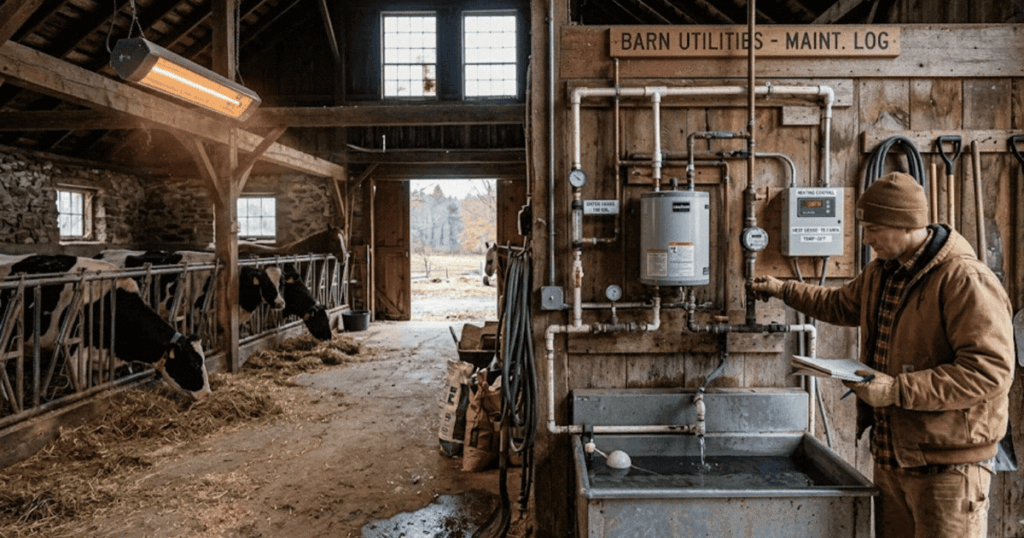
- The Cost of Liquid Water: Keeping water from freezing in sub-zero temperatures requires massive electricity. Running multiple 1,500-watt stock tank heaters 24/7 can easily double or triple your standard residential electric bill.
- The Propane Trap: If the barn features heated tack rooms, a heated wash rack, or overhead radiant heaters for the aisles, it likely runs on a massive rural propane tank. Propane prices fluctuate wildly, and filling a 1,000-gallon tank mid-winter is a major financial event.
- The Insulation Equation: Heating an uninsulated metal barn is the equivalent of burning money. Without proper roof and wall insulation, the heat instantly escapes, forcing your heaters to run constantly.
Utility burden on a horse property is highly seasonal. If you only evaluate the mild-weather bills, you can badly underestimate the true monthly cost of winter operation.
1. The Electrical Burden of Winter Water
Water is the most expensive utility on a horse property, not because of the water itself, but because of the electricity required to keep it liquid.
- The Tank Heater Math: A standard floating or submersible stock tank heater draws about 1,500 watts. If you have three pastures with three water troughs running 24 hours a day during a cold snap, those heaters alone are pulling more constant electricity than central air conditioning.
- Heated Buckets and Tape: Inside the barn, individual heated water buckets draw between 100 and 130 watts each. Add in the electrical heat tape wrapped around the underground wash rack drains and the well house pipes, and the electrical meter spins constantly from November to March.
2. Heating the Humans (The Propane Factor)
A hard truth of the equestrian world is that heated barns are built for the comfort of the humans, not the horses.
- The Tack Room and Lounge: Most premium barns feature a fully finished, climate-controlled tack room to keep expensive leather saddles from molding and to provide a warm place to change. These spaces are typically heated by heavy-duty electric baseboards or propane forced-air furnaces.
- Overhead Radiant Heat: High-end facilities often feature overhead infrared propane tube heaters in the wash racks or down the center aisle. While they are incredibly effective at warming the floor and the horses, they consume massive amounts of liquid propane.
- Delivery Logistics: Rural properties do not have natural gas pipelines. You must rely on commercial propane delivery trucks. The price per gallon spikes in the winter, and if the property is difficult to access after a snowstorm, you may be charged emergency delivery premiums.
The winter utility picture is not just electric. Propane use for heated barn spaces can create large seasonal bills that do not show up in summer averages.
3. The Insulation Deficit
You must look at the structural envelope of the barn to understand the utility bills.
- The Sweating Barn: If a barn has bare metal walls and a bare metal roof, it has zero thermal resistance. Furthermore, the body heat and respiration of the horses will hit the freezing metal roof, causing severe condensation that literally rains back down on the stalls.
- The Required R-Value: To make heating a barn financially viable, it must be fully insulated. Look for thick spray-foam insulation or heavy vinyl-backed fiberglass rolls on the ceiling and walls. If you are buying an uninsulated barn and plan to add heat, you must budget thousands of dollars to insulate it first, or your utility bills will be catastrophic.
4. The Hidden Water Leak
Your utilities can also signal a massive hidden infrastructure failure.
- The Silent Well Pump: If a toilet runs in your house, you hear it. If an automatic waterer gets stuck in the back pasture, or an underground pipe bursts, the water quietly drains into the dirt.
- The Compounding Cost: Because you are on a private well, you do not pay a city water bill. However, you pay the electricity to run the 220-volt well pump. A hidden leak means your well pump is running 24/7. This will result in a shocking electric bill and, worse, it will quickly burn out the pump's motor and potentially drain the aquifer.
We Audit the Utilities Before You Buy
We do not just look at the summer landscaping; we prepare you for the winter realities.
When Mark Eibner and Belinda Seville help you purchase a horse property, we eliminate the utility guesswork. During the inspection period, we formally request a full 12 to 24 months of utility history from the sellers, including electricity, propane delivery receipts, and trash services. We want you to see the January spikes so you can budget for the true operational cost of your equestrian lifestyle.
Contact Us Today to find a property engineered for energy efficiency.
Browse Active Colorado Horse Properties: Browse Active Colorado Horse Properties that offer sustainable, cost-effective winter operations
Frequently Asked Questions (FAQ) About Barn Utilities
Do horses actually need the barn to be heated in the winter?
No. Healthy, unclipped horses with proper winter coats and access to high-quality forage generate their own internal body heat. As long as they are protected from the wind and moisture inside a dry, well-ventilated barn, they are perfectly comfortable in sub-freezing temperatures. Heating the entire barn aisle is a luxury for the rider, not a medical necessity for the horse.
Can I run my barn entirely on solar power to eliminate the electric bill?
It is possible, but it requires a massive, expensive system. Barns have a massive draw in the winter exactly when the days are shortest and the solar panels are covered in snow. A standalone off-grid solar system for a barn requires a massive, heated battery bank to store enough energy to run high-wattage tank heaters through a long, dark, sub-zero night.
Are LED barn lights really worth the investment for utilities?
Yes, absolutely. Traditional metal halide or incandescent barn bulbs draw a massive amount of amperage and create a fire hazard due to the heat they generate. Swapping an entire facility to modern, sealed LED fixtures will drastically reduce the lighting portion of your electric bill and remove a major structural risk.