
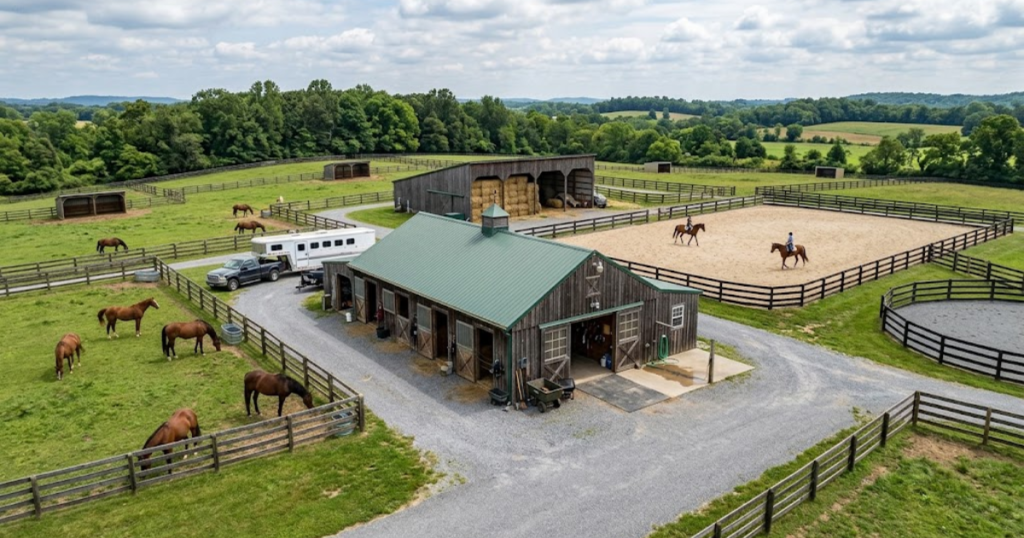
You find a beautiful twenty-acre parcel of raw land nestled against the foothills. The views are incredible, the price is right, and you immediately start sketching out where you will put the pastures. You can throw up some fencing, buy a prefabricated metal shed, and move your horses onto the land in a few months.
That assumption is the most dangerous financial trap in rural real estate.
When searching for horse properties in Colorado, buyers often underestimate the specialized infrastructure required to manage a herd safely. A horse farm is not just a house with a big yard. It is a highly operational, commercial-grade agricultural facility. In the unforgiving climate of the Rocky Mountains, your infrastructure must withstand hurricane-force wind gusts, sub-zero temperature drops, and massive snow accumulation, all while keeping your livestock safe and your daily chores manageable.
Building this infrastructure from scratch can easily cost hundreds of thousands of dollars. Whether you are building on raw land or evaluating an existing property, you must understand exactly what it takes to support an equestrian lifestyle. Here is a comprehensive guide to the essential infrastructure you need for a Colorado horse farm.
What Infrastructure Do You Need for a Horse Farm?
Quick Summary: Essential Farm Infrastructure
- The Water Foundation: Colorado winters will freeze standard plumbing instantly. You need deep-trenched water lines, frost-free hydrants, automatic heated tank waterers, and a legally permitted livestock well.
- The Winterized Barn: A barn in Colorado cannot just be a roof. It must feature trusses engineered for massive snow loads, proper ventilation to prevent respiratory issues, and an orientation that blocks prevailing winter winds.
- Commercial Access and Turnarounds: If you cannot safely pull a multi-horse gooseneck trailer into your driveway and turn it around in a sixty-foot circle, the property is functionally flawed.
- Dedicated Storage Separation: Storing thousands of pounds of highly combustible hay inside the same building as your horses is a massive fire risk. You need dedicated, detached equipment and feed storage located away from the primary stable.
1. The Water Delivery and Drainage Network
Water is the most critical and difficult resource to manage on a rural property. Before you even think about barns or arenas, you must secure the water infrastructure.
The Permitted Source
As we have discussed in other guides, you must have a legally permitted water source. In Colorado, this typically means verifying that the property holds a Domestic and Livestock well permit.
Without this specific permit, you cannot legally pipe water to your barns or pastures to hydrate livestock.
Winterized Delivery Systems
Once you have the legal right to pump water, you have to ensure it flows in January. Standard PVC pipes laid just below the surface will shatter during the first hard freeze.
All water lines running to your barns and pastures must be trenched deep below the local frost line. Install frost-free hydrants, specialized valves that drain water deep underground when shut off, preventing the vertical pipe from freezing solid.
Heated Automatic Waterers
Hauling hoses and smashing ice out of stock tanks every morning is brutal labor. Premium equestrian infrastructure includes automatic heated waterers installed in every stall and turnout paddock.
These insulated units rely on buried electrical lines to keep the water at a comfortable temperature, ensuring your horses stay hydrated and preventing deadly impaction colic during freezing weather.
Engineered Soil Drainage
Infrastructure is also about managing the water you do not want. Colorado experiences heavy spring snowmelt. If your barns and paddocks are built in a low basin, they will flood.
You must grade the earth away from all structures with a minimum two percent slope. Premium properties feature engineered swales and underground French drains that route stormwater and snowmelt safely away from high-traffic livestock areas, preventing chronic mud pits.
2. Equine Safe Fencing and Containment
Fencing is the most visible infrastructure on the property, and it is also one of the most expensive.
The Perimeter and Cross Fencing
You cannot rely on a single boundary fence. A functional farm needs a strong perimeter to keep predators out and horses in, plus extensive cross fencing.
Cross fencing divides your acreage into smaller, manageable paddocks, which is essential for implementing rotational grazing and protecting fragile Colorado dryland grasses from severe overgrazing.
Safe Materials
Standard agricultural land is often fenced with barbed wire, which is a lethal hazard for horses. Upgrading to equestrian-grade infrastructure means installing highly visible, rigid barriers.
The best materials for the Colorado climate include welded pipe rail, sturdy wood board fencing, or no-climb wire mesh featuring a rigid top sight line.
In high-wind areas, solid vinyl fencing can become brittle and shatter during winter storms, making porous materials like pipe rail a safer long-term investment.
The Dedicated Sacrifice Lot
Your fencing infrastructure must include a heavily reinforced dry lot, often called a sacrifice area.
This is a small, specialized paddock where you confine your horses during extreme wet weather or summer droughts, sacrificing a small piece of land to prevent the herd from trampling and destroying the root systems of your larger grazing pastures.
3. The Winterized Barn and Shelter
A barn in Colorado is not just a place to store horses; it is a highly engineered fortress against the elements.
Snow Loads and Roof Engineering
Your barn roof must be engineered to handle local snow loads. In many Colorado counties, the building code requires trusses rated for thirty to forty pounds of snow per square foot, and even higher in mountain communities like Durango.
The roof must also have a steep pitch, typically a 6:12 ratio or steeper, so heavy snow slides off naturally rather than collapsing the structure.
Ventilation and Air Quality
It is tempting to seal a barn completely during a blizzard, but doing so traps ammonia, dust, and moisture inside, which can lead to respiratory problems and mold.
A properly engineered barn features passive ventilation systems, such as ridge vents, cupolas, and vented eaves, that let stale air escape upward while blocking cold drafts at ground level where the horses sleep.
Strategic Barn Orientation
The building's physical placement matters. In Colorado, the prevailing winter winds generally blast in from the west or northwest.
A well-designed barn orients the main aisle doors so they don't face directly into the wind, preventing the building from acting like a massive wind tunnel during winter storms.
4. Commercial Grade Equipment and Feed Storage
A major mistake buyers make is assuming they can store everything inside the main horse barn. Doing so creates massive safety hazards and ruins operational efficiency.
Detached Hay Storage
Hay is highly combustible, and storing thousands of bales in the loft directly above your horses is a catastrophic fire risk.
Proper farm infrastructure includes a dedicated, fully enclosed, weatherproof hay storage building located at least 100 feet from the primary stabling area.
This separation drastically reduces fire danger, keeps rodents away from your horses, and lets heavy delivery trucks drop off hay without navigating narrow barn aisles.
The Equipment Workshop
Maintaining acreage requires heavy machinery. You will need a tractor, a bucket loader, a manure spreader, an arena drag, and snow removal equipment.
These machines cannot sit outside in the harsh Colorado winter without deteriorating. You need an insulated, detached workshop or equipment shed featuring heavy-duty concrete floors and oversized twelve-to-sixteen-foot roll-up doors to store and maintain your capital equipment safely.
5. Training Amenities and Footing
If you want to ride year-round, you'll need specialized training infrastructure.
The Riding Arena Base
Building a riding arena is not as simple as dumping sand on a flat piece of dirt.
A functional outdoor arena requires massive excavation to strip the topsoil, installation of a compacted, crowned sub-base to shed water, and a specialized drainage layer before you even apply the top footing.
If you skip this infrastructure, your arena will hold water, freeze solid in the winter, and become completely unusable until the spring thaw.
Indoor and Covered Facilities
For dedicated equestrians, an indoor arena is the ultimate piece of infrastructure. These massive, clear-span steel buildings allow you to ride regardless of ice, snow, or lightning.
A premium indoor facility will feature angled kick walls for rider safety, specialized dust-suppressing footing like GGT synthetic blends, and massive LED lighting grids.
6. Heavy Vehicle Access and Maneuverability
You must view your property as a commercial shipping depot. The access infrastructure dictates how easily you can live and work on the land.
Driveway Width and Grade
A standard residential driveway is typically ten to twelve feet wide. A horse property requires a heavily compacted gravel or paved driveway that is at least twenty-four feet wide to accommodate dual-wheel trucks pulling massive trailers comfortably.
The driveway grade must be gentle enough that a fully loaded hay delivery truck will not lose traction on an icy winter morning.
The Turnaround Radius
The most critical piece of access infrastructure is the turnaround circle. A standard truck pulling a multi-horse gooseneck trailer needs a massive amount of space to maneuver.
You must have a dedicated, hard-packed turnaround area with a minimum diameter of sixty feet. Without this, you will be forced to unquestioningly back heavy rigs down narrow driveways, which is incredibly dangerous and frustrating.
We Evaluate the Infrastructure for You
Building this level of specialized infrastructure from scratch requires millions of dollars and years of navigating county permitting offices. The smartest financial move is buying a property where the heavy lifting is already done.
When Mark Eibner's team represents you, we look past the residential finishes and hyper-focus on the agricultural infrastructure. We evaluate barn engineering, inspect well and waterer systems, map trailer access, and calculate the true cost of any necessary upgrades.
We ensure the property you buy has the foundational infrastructure required to keep your horses safe and your daily operations running smoothly.
Contact us today at coloradohorseproperty.com to find premium horse properties Colorado buyers trust.
Browse active Colorado horse ranches for sale or ask our team about finding a functional horse property for rent in Colorado while you evaluate exactly what infrastructure your herd needs.
Frequently Asked Questions (FAQ) About Horse Farm Infrastructure
Do I need to heat my horse barn in Colorado?
Generally, no. A healthy horse with a winter coat or a heavy blanket generates massive amounts of body heat. A well-insulated barn that blocks wind will naturally stay 10 to 15 degrees warmer than the outside air, simply from the horses' body heat. Heating a barn is incredibly expensive, increases fire risk, and can cause respiratory issues by preventing proper air circulation.
Can I build a barn without a county permit if I live on large acreage?
No, this is a very common misconception. Almost every county in Colorado requires structural, electrical, and grading permits for agricultural outbuildings, regardless of how much land you own. Building without permits creates a massive legal liability and can prevent you from securing a mortgage or selling the property in the future.
What is the best type of flooring for a horse stall?
Solid concrete is too hard on a horse's joints, and plain dirt becomes uneven and impossible to disinfect. The best setup combines a compacted, crushed-rock base for drainage, covered with heavy-duty interlocking rubber stall mats for cushion and easy cleaning.
How far away should the manure storage be from the barn?
County codes and basic hygiene dictate that manure storage should be located a minimum of one hundred feet away from the barn to reduce flies and fire risk. More importantly, it must be at least 200 feet from any water wellheads or natural streams to prevent nitrogen and bacteria from leaching into groundwater.