
A property suitable for a cross-country course in Colorado needs enough connected, usable land for the route, plus reliable year-round access. Near Colorado Springs, location may also affect how easily the property connects with local equestrian and community events. These practical details matter as much as the parcel’s total acreage.
Choosing land for a course means looking beyond open space. A road that becomes difficult to use after snowfall can affect access to the property, while the surrounding location influences how well it fits your plans. This article explains how to weigh winter road access and a Colorado Springs location when assessing potential properties. It also outlines the land characteristics that help determine whether a property can support your intended course.
Key Takeaways
- Assess winter road access alongside the property itself, since snow and plowing can affect how reliably you reach the land.
- Learn which acreage and terrain considerations help determine whether a property can accommodate your planned course layout.
- See how soil, drainage, and elevation shape the land’s practical suitability for a cross-country course.
- Understand why land costs vary by county and how a Colorado Springs location factors into your search.
1. Winter road access and conditions
Winter access affects whether you can reach a Colorado property for inspections, construction, and regular course use. Evaluate the approach road, steep sections, shade, turning space, and road maintenance after snowfall. A mountain parcel may offer useful terrain yet become difficult to reach when snow limits plowing. Consider access throughout the season, not just during a summer visit.
Coney Flats shows why road conditions matter. The route begins about 2.5 mi. north of Ward, before the turn onto County Road 96. It continues about 2 mi. along the county road to a trailhead and small parking lot. Snowplow limits can change how far winter recreation routes remain accessible. For a horse-course search, use this as a reminder to assess the actual parcel entrance and road, rather than assuming nearby trails mean year-round property access.
Public transit can support access to recreation destinations, but it doesn’t establish transit service to rural land. RTD buses serving Eldora Nordic Center leave Boulder starting at 6:48 a.m. and run every two hours. That schedule may help visitors reach Nordic trails; it won’t solve transport needs for horses, equipment, or course maintenance. In Colorado Springs, evaluate the property’s own road connection separately from nearby outdoor recreation or a resort.
Match the course design to its intended riders and use. Plan obstacle types, footing, approaches, landings, visibility, and spacing around the terrain. Event use may also involve applicable governing-body rules. Treat these design requirements as part of the property assessment, not as a later landscaping decision.
Operating a horse course involves risks such as rider falls, horse-related injuries, obstacle damage, and visitor access. When planning insurance, account for the course activities, events, and fixed obstacles.
A real estate professional can help review listing details and property records for utilities, access, fencing, and barns, as well as identify maintenance factors that affect suitability. These details make it easier to compare parcels before committing to a winter-access plan.
3. What acreage and terrain are suitable for a cross-country horse course in Colorado?
There’s no single acreage figure that makes a Colorado parcel suitable for every cross-country course. The land needed depends on the course’s purpose, obstacle layout, horse access, and room for warm-up and circulation. A private practice course has different requirements from a facility designed to host events. Map the intended course, then compare its footprint with usable, connected land rather than the parcel’s total acreage alone.
Terrain determines how that footprint works. Gentle slopes can create varied approaches and movement, while steep or broken ground may restrict obstacle placement and horse access. A property suitable for a cross-country course near Colorado Springs might combine open ground with changes in elevation. Assess whether those features support your planned layout, including space to approach and leave each obstacle and routes for maintenance equipment and emergency access.
Look beyond the center of the course. Existing barns, fencing, gates, parking, and livestock areas all use space. A large parcel divided by a driveway or drainage corridor may offer less connected course area than its acreage suggests. Map these features alongside the proposed route, and consider how riders, horses, and support vehicles will move between the course and facilities.
Walk the land with its intended use in mind. Mark potential obstacle sites, sightlines, turning areas, and places where the route crosses slopes or existing access paths. Identify areas that may be unsuitable because of dense vegetation, uneven ground, or limited clearance. This layout test helps distinguish open acreage from terrain that can serve the course design.
Choosing property suitable for a cross-country course in Colorado means weighing the usable footprint, access, and equestrian improvements together. Horse-property search tools can help surface listings with acreage and features relevant to your plans. Compare terrain and course needs before deciding whether a parcel fits.
Flying Horse, Colorado Springs: two private 18-hole championship golf courses, one designed by Tom Weiskopf; The Lodge: 94 guest suites, independent villas with 2 bedrooms each. Turin homes: 700s; Madonie homes: millions.
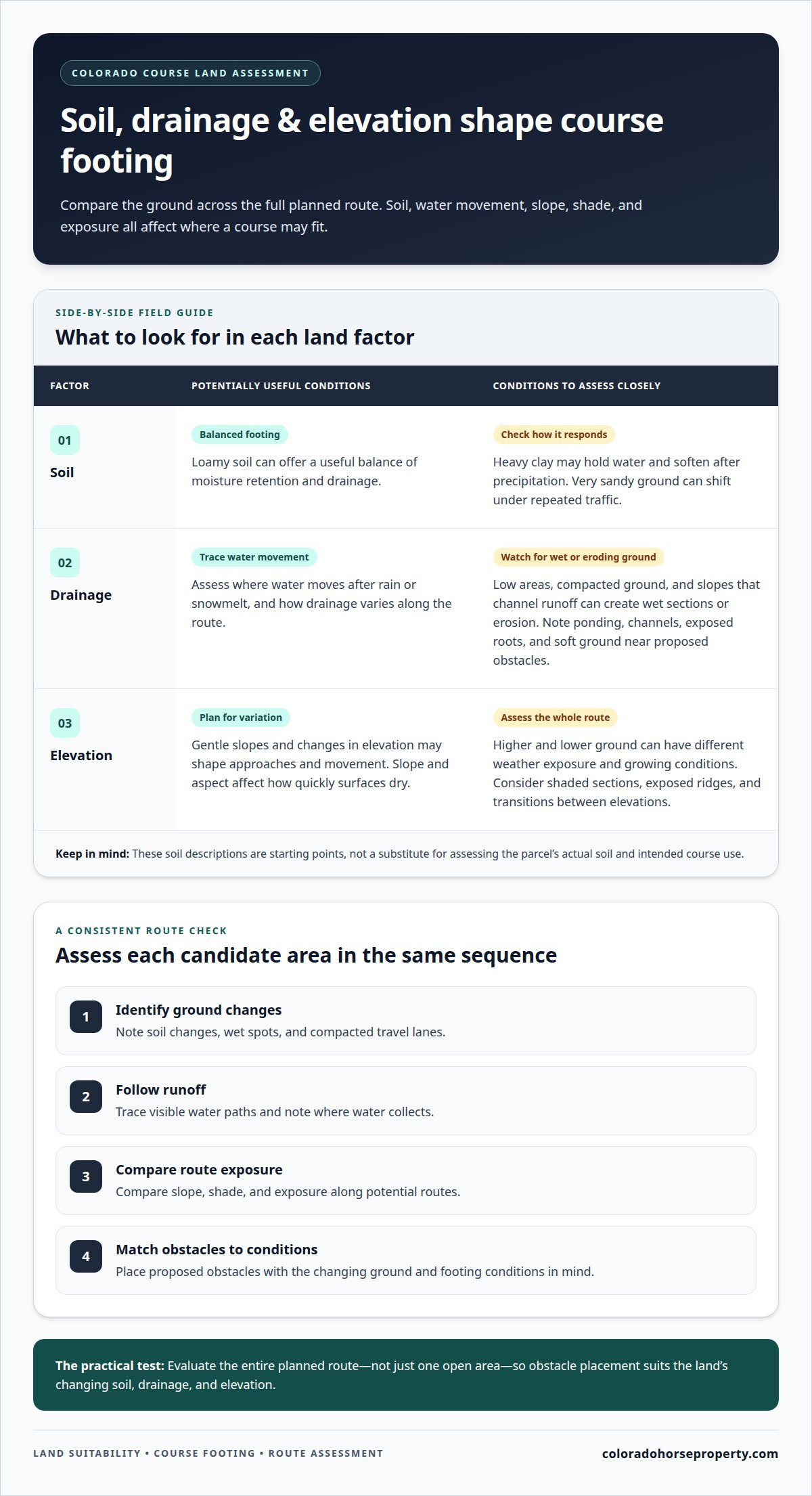
4. What soil types, drainage, and elevation are best for a cross-country course in Colorado?
Course footing starts with soil that stays firm under hooves without becoming hard or slick. Loamy soil can offer a useful balance of moisture retention and drainage. Heavy clay may hold water and soften after precipitation, while very sandy ground can shift under repeated traffic. These are starting points, not a substitute for assessing the parcel’s actual soil and intended course use.
Drainage matters across the full route. Low areas, compacted ground, and slopes that channel runoff can create wet sections or erosion. During a property assessment, trace where water moves after rain or snowmelt. Look for ponding, channels, exposed roots, and soft ground near proposed obstacles. A Colorado Springs-area parcel with open flats and sloped ground may need different routes through each area.
Elevation also shapes how a course fits its setting. Higher ground can bring different weather exposure and growing conditions than lower terrain, while slope and aspect affect how quickly surfaces dry. Evaluate the entire planned route, including shaded sections, exposed ridges, and transitions between elevations. A course across varied ground needs footing and obstacle placement suited to those changing conditions.
For a practical comparison, assess each candidate area using the same sequence:
- Identify soil changes, wet spots, and compacted travel lanes.
- Follow visible runoff paths and note where water collects.
- Compare slope, shade, and exposure along potential routes.
- Match obstacle locations to stable ground and clear approaches.
These observations help distinguish usable course ground from acreage that may need substantial surface work. They also inform maintenance planning, since repeated horse traffic can affect soil structure and drainage. In Colorado, assess the course footprint under different conditions, especially where snowmelt or seasonal moisture may alter the ground. The best fit is land whose soil, drainage, and elevation changes support the intended route without relying on one ideal surface throughout.
These elevation comparisons offer useful context: The Bakerville-Loveland Trail has 1,000 ft. of elevation gain and reaches a maximum elevation of 10,800 ft. at the base of Loveland Ski Area. Boreas Pass Road has 500 ft. of elevation gain. Coney Flats has 600 ft. of elevation gain, and Mayflower Gulch has 700 ft. of elevation gain. The north end of the Brainard Lake Ski and Snowshoe Area in Colorado reaches ~10,700 ft.
4. How much does land suitable for an equestrian course cost in Colorado by county?
There isn’t one reliable price for equestrian-course land across Colorado counties. A parcel in El Paso County can differ substantially from one in Teller, Douglas, or Weld County because location is only one part of a property’s value. Acreage, usable terrain, existing improvements, and access all affect what a listing offers. Compare properties by their features and intended use, not by county name alone.
Start with the land you can actually use. A large parcel may include steep ground, drainage areas, or separated sections that don’t fit your course layout. A smaller property with connected open ground may better match your plan. Compare the proposed course footprint with barns, fencing, gates, and vehicle access before deciding how much of the listed acreage serves your needs.
Existing infrastructure also shapes a property’s value. A Colorado Springs-area listing with a suitable barn or established fencing may meet different needs from vacant land requiring future improvements. Consider utilities, road access, maintenance needs, and the condition of existing structures alongside the asking price. These factors affect how closely a property fits your intended use, even within the same county.
For a county-by-county comparison, organize candidate listings by location, usable acreage, terrain, improvements, and access. Then compare asking prices for properties with similar features. Avoid treating a county-wide average as a reliable guide to a specialized property. The specific parcel and its equestrian features matter, and course suitability depends on how the land works for your planned layout.
Set your priorities before reviewing listings: identify essential features, distinguish them from preferences, and weigh each property against that list. Explore Colorado horse-property listings to compare available properties by their land and equestrian features.
Prices vary by property rather than following a dependable county-wide rate. Compare listings with similar usable acreage, terrain, improvements, and access to assess their asking prices.
Colorado Horse Property
Colorado Horse Property helps buyers match course requirements with the practical realities of buying horse property in Colorado. If you’re weighing winter access, usable terrain, drainage, existing improvements, and location, its AI-Powered Horse Property Search can help narrow listings around your priorities. Buyer Representation can support you as you evaluate properties and move through the purchase process.
Bring a clear outline of your intended course use, preferred location, and must-have property features. This gives the search practical direction, whether you’re considering acreage near Colorado Springs or comparing other parts of the state. Real Estate Listing Services and Transaction Management support buyers and sellers with their real estate needs.
Contact Colorado Horse Property to discuss your search for land suited to your plans.
Turn Your Course Plan Into a Property Brief
Before pursuing a parcel, turn your course vision into a clear property brief. Describe the riding experience you want to create, how you expect to use the course, and which existing features would support that plan. This gives your search direction and helps distinguish essential requirements from preferences.
Finding property suitable for a cross-country course in Colorado is ultimately about matching the land to your intended use, not simply finding acreage. A well-defined brief can focus conversations on location, property features, and the trade-offs you’re willing to make. Keep it flexible enough to consider promising properties, but specific enough to guide a sound decision.
When you’re ready to discuss your plans and begin a focused property search, contact Colorado Horse Property. The right starting point is a clear picture of the course you want to build.
Frequently Asked Questions
Which Colorado regions have properties with enough acreage, horse facilities, and road access?
Search the Colorado Springs area, including listings in El Paso, Teller, Douglas, and Weld counties. Compare usable connected acreage, terrain, horse facilities, and the property’s road access rather than relying on the county or total acreage alone.
How can buyers evaluate utilities, access, fencing, barns, and maintenance costs on a Colorado horse property?
Review listing details and property records for utilities, road access, fencing, and barns, and assess maintenance needs. A real estate professional can help you evaluate these details against the usable course layout and winter access you need.