
That makes it a useful starting point, but the purchase price is only part of the decision. Water, fencing, access, and livestock rules all affect how well a property fits your plans.
It’s understandable to focus first on acreage and asking price. The right fit also depends on existing infrastructure and where you want to live. This guide compares nearby options such as Falcon and Calhan, explains how wells, septic systems, barns, and zoning can shape your search, and considers Colorado Springs’ local appeal. You’ll have a clearer way to assess value and weigh lower-cost land against a property that’s more ready for horses.
Key Takeaways
- Assess wells, septic systems, fencing, barns, and storage together to understand whether a property is ready for your horse-care needs.
- Factor El Paso County zoning, livestock rules, and water rights into your property search, not just acreage and asking price.
- Compare nearby areas by their rural character, land type, and access to the riding experiences you value.
- Use specialized property search and buyer representation to narrow options around your equestrian priorities and purchase plans.
Professional due diligence for wells, septic systems, fencing, and barns
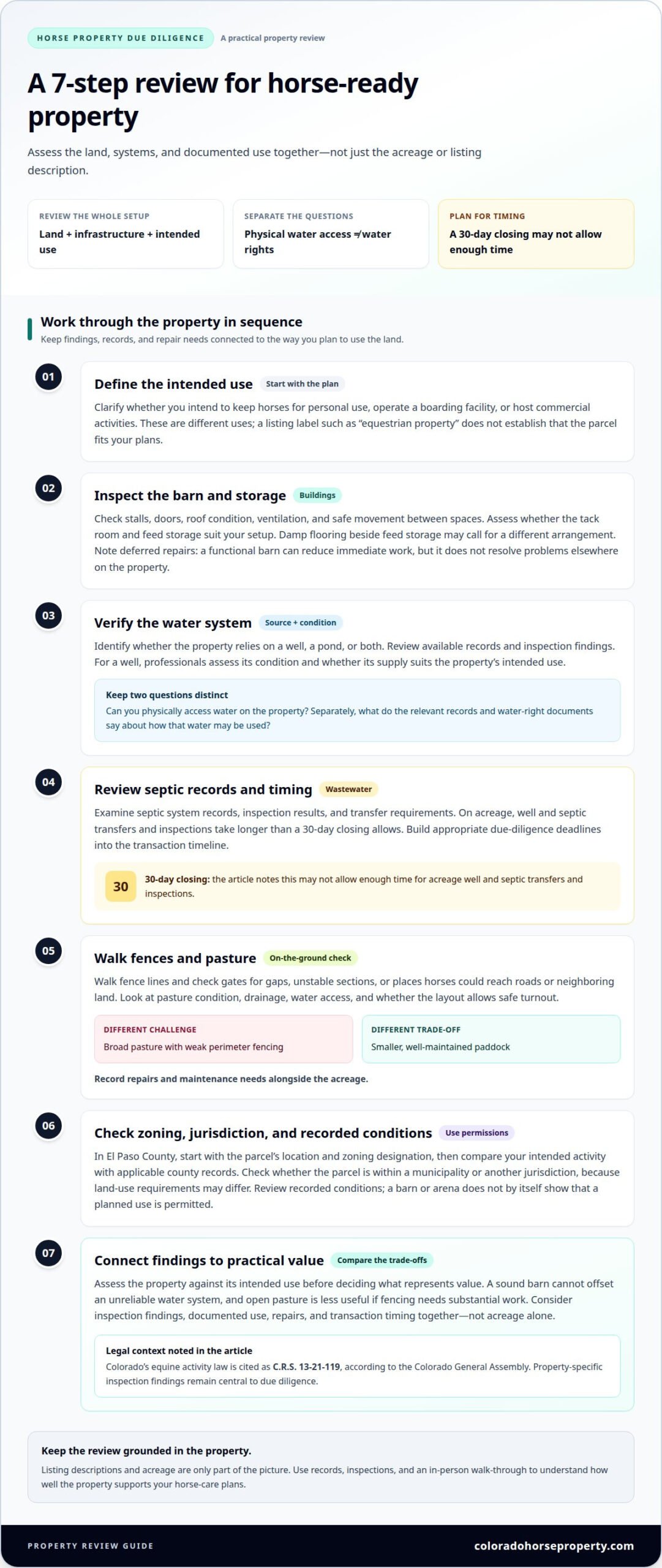
Assess each system against your horses’ daily needs, not just the listing description. When inspecting a barn, look at stalls, doors, roof condition, ventilation, and safe movement between spaces. Check whether the tack room and feed storage suit your setup. For example, damp flooring beside feed storage may call for a different arrangement. A functional barn can reduce immediate work, while deferred repairs affect the property’s practical value.
Water and wastewater deserve separate attention. Identify whether the property relies on a well, pond, or both, then review available records and inspection findings. For a well, professionals assess its condition and whether its supply suits the property’s intended use. For septic, examine system records, inspection results, and transfer requirements. On acreage, well and septic transfers and inspections take longer than a 30-day closing allows. Build appropriate due-diligence deadlines into the transaction timeline.
Assess fencing and pastures in person. Walk the fence lines and check gates for gaps, unstable sections, or spots where horses could reach roads or neighboring land. Look at pasture condition, drainage, water access, and whether the layout allows safe turnout. A broad pasture with weak perimeter fencing presents a different challenge from a smaller, well-maintained paddock. Record repairs and maintenance needs alongside the acreage.
Connect these findings to the property’s intended use before deciding what represents value. A sound barn cannot offset an unreliable water system, and open pasture is less useful if fencing needs substantial work. Review inspection timing alongside transaction deadlines, especially where well and septic processes affect closing. Colorado’s equine activity law is cited as C.R.S. 13-21-119, according to the Colorado General Assembly. That citation is relevant context, while property-specific inspection findings remain central to due diligence.
How professionals verify El Paso County zoning and livestock rules
In El Paso County, acreage alone doesn’t determine whether a property suits horses. Start with the parcel’s location and zoning designation, then compare your intended use with applicable county records. Check whether the parcel is within a municipality or another jurisdiction, since land-use requirements may differ. This can help distinguish a horse-ready candidate from land that needs further review before purchase.
Next, consider how the parcel’s zoning and recorded conditions relate to your plans. Keeping horses for personal use, operating a boarding facility, and hosting commercial activities are different uses. Focus on the activity you intend, not simply a listing label such as “equestrian property.” If the parcel has a barn or arena, assess whether those features suit your intended use and align with documented property conditions.
Water rights require a separate review. A well, pond, or ditch on the property doesn’t by itself establish how the water may be used. Review relevant property records and water-right documents, then consider how documented rights relate to livestock and land use. Connect that review to the property’s water system to distinguish physical access to water from the rights associated with it.
These checks help explain why two similar-looking parcels may differ in practical value. One may fit a private horse setup, while another may carry use conditions that change the buyer’s plans. Professionals can bring zoning, livestock use, and water-right questions into the property review before purchase decisions advance. A targeted look through horse-property listings can help keep the search focused on acreage and features that match the intended use.
3. Colorado Springs horse-property appeal
Colorado Springs combines a regional city setting with room to search for acreage across the Front Range. Situated along the southern stretch of our regional coverage area, this location matters to buyers balancing equestrian land with connections to larger urban centers like Denver. The appeal is personal as well as practical: some buyers prioritize space and a rural setting, while others value access to city amenities. Decide which matters most before comparing properties with Colorado Horse Property.
The area receives over 300 days of sunshine annually. For horse owners, sunny conditions make shade, shelter, and dependable water important parts of evaluating a property. Consider where horses can retreat from direct sun, how pasture areas are exposed, and whether the layout supports regular access to water. A property’s acreage alone won’t show how comfortably its outdoor spaces function through changing conditions.
Colorado Springs offers property types ranging from smaller acreages to larger tracts. The right scale depends on your intended use, available facilities, and pasture-management plans. For example, someone planning a personal horse setup may weigh land and existing improvements differently from someone prioritizing extensive open acreage. Compare usable land and layout, not just the total acreage in a listing.
Let local appeal guide your search, but assess each property on its own merits. Rank your priorities, such as distance to daily destinations, room for horses, existing infrastructure, and preferred landscape. Then compare listings against that shortlist. A property in your preferred setting may still involve trade-offs in facilities or usable land. Clarifying those trade-offs helps you prioritize as you explore the Colorado Springs area.
4. Horse-property areas near Colorado Springs
Falcon, northeast of Colorado Springs, offers larger lots and a rural feel. Calhan, east of the city, is known for prairie land. Both areas can suit buyers prioritizing open space, but their settings differ. Compare the most affordable horse property near Colorado Springs by usable land, access, and existing improvements, not acreage alone. That comparison helps reveal whether a lower-priced parcel aligns with your intended horse setup.
Nearby properties range from five acres to fifty acres. A smaller parcel may suit a focused personal setup, while a larger tract gives you more land to assess for pasture and riding. Size alone doesn’t establish suitability. Consider the layout, whether access works for your routine, and how much of the acreage supports your plans.
Trail access can also influence where you search. Riders who value regular outings may prefer a property near national parks or designated horse trails. Weigh that access against the rural character of Falcon and Calhan. A location farther from a preferred riding route may still suit buyers who place more value on privacy or open prairie.
Financing options depend on the property type. A residence with acreage may be financed differently from vacant land, while improvements and your financial profile can affect available terms. The most affordable horse property near Colorado Springs may therefore depend on how the land, home, and existing facilities fit your financing plan.
Set priorities for land type, riding access, and improvements before comparing areas. Then use those criteria to narrow listings and assess trade-offs. Explore horse-property options to focus your search on locations and features that fit your plans.
Calhan lies east of Colorado Springs and is described as a rural area with prairie land. Weigh that setting against your needs as you decide which nearby area to explore for a horse property.
Colorado Horse Property
Colorado Horse Property can turn your location and property priorities into a focused search. Its AI-powered search helps identify listings by equestrian features, including barns, arenas, water rights, and pasture size. If you’re weighing land-only options against a home with existing facilities, buyer representation can help you assess how each property fits your plans. Real estate listing services and transaction management support the purchase process from search through closing.
This is a useful next step once you’ve identified preferred areas but need help narrowing suitable properties or managing a purchase. Clear priorities, such as acreage, existing improvements, and location, give your search practical direction.
Contact Colorado Horse Property to discuss your horse-property search.
Set Your Search Priorities in Motion
Finding the most affordable horse property near Colorado Springs starts with defining what “affordable” means for your plans. Decide which trade-offs you can accept, such as more work on vacant land or fewer existing facilities. That gives your search a useful framework and helps prevent a lower asking price from overshadowing long-term suitability.
Colorado Horse Property can support your search with AI-Powered Horse Property Search, Real Estate Listing Services, and Buyer Representation. These services connect your criteria with available listings and support the purchase process. Bring your priorities for location, acreage, and equestrian features into the search, then refine them as you compare options.
A clear direction makes the move from researching areas to evaluating individual properties more purposeful. Contact Colorado Horse Property today to discuss your search and take the next step toward finding a property that fits your goals.
Frequently Asked Questions
What is the cheapest horse property for sale near Colorado Springs, Colorado?
Because it’s vacant land, it isn’t equivalent to a home with horse facilities. Compare the land’s cost with the improvements and infrastructure you need before treating the lowest asking price as the most affordable overall option.
How do horse property prices compare in Peyton, Falcon, Fountain, Penrose, and Florissant?
Prices depend on property type, acreage, and existing improvements, so compare similar listings rather than ranking areas by name. Falcon is described as having larger lots and a rural feel. Assess individual properties in Peyton, Penrose, and Florissant against the same criteria before drawing a conclusion about price.
What are the zoning and horse-keeping rules in El Paso County, Colorado?
Horse-keeping rules depend on the parcel and its applicable land-use conditions, so acreage alone doesn’t establish which uses are allowed. Your intended activity matters too: keeping horses privately differs from operating a commercial equestrian use. A property review should connect the parcel’s zoning and recorded conditions with your specific plans, including facilities or activities tied to horse ownership.
What should a buyer’s representative and inspectors assess before purchasing a horse property in Colorado?
A buyer’s representative should connect a property’s documented features and transaction details with your intended use. Inspectors assess relevant systems and structures, while a broader property review can consider access, boundaries, recorded easements, and drainage. For example, an access route crossing another parcel may affect how you reach a barn or pasture. These details add context beyond the listing description.