
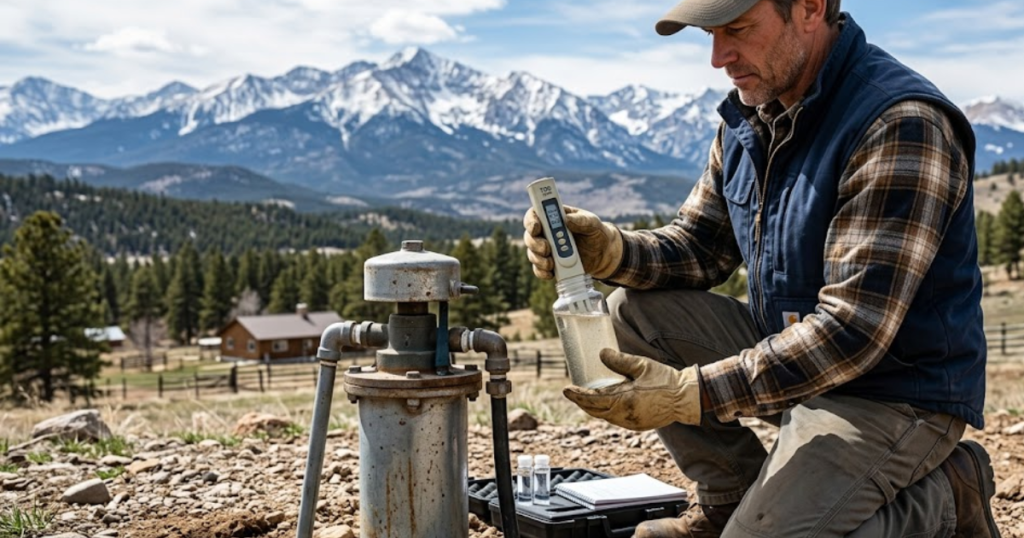
You buy a stunning equestrian property on the Colorado plains. You move your horses in on a hot July afternoon, fill their water troughs, and settle into your new home.
The next morning, you notice the water level in the troughs has barely dropped. Your horses have taken one sip and walked away. By that evening, your most sensitive gelding is pawing the ground, looking at his flanks, and showing severe signs of impaction colic.
You have plenty of water on the property, but your horses would rather dehydrate than drink it.
When buyers test a rural well, they usually only look at two things: the pumping flow rate (gallons per minute) and bacteria levels (E. coli). But in the West, the chemical makeup of the water dictates whether your herd will actually survive on it.
Here is how to evaluate the Total Dissolved Solids in a property’s well water before you close the deal.
Is the Well Water Tested for High "Total Dissolved Solids" (TDS) Common in CO?
Quick Summary: The Invisible Drought
- The Mineral Load: Total Dissolved Solids, TDS, is a measurement of all the inorganic salts and minerals, like calcium, magnesium, sodium, and sulfates, dissolved in the well water. High TDS is notoriously common in Colorado's deep aquifers and eastern plains.
- The Colic Threat: Horses have highly sensitive palates. If well water has a high TDS concentration, it tastes bitter, metallic, or salty. A horse will simply refuse to drink it, leading to sudden and life-threatening impaction colic.
- The Plumbing Toll: Hard, high-TDS water acts like liquid concrete. It aggressively scales and destroys the internal float valves of expensive automatic barn waterers and binds the mechanisms in frost-free hydrants.
- The Softener Trap: Standard residential water softeners do not remove TDS. They just swap calcium for sodium. Pumping softened, high-sodium water to the barn will fix your plumbing but make the water taste even saltier to your herd.
Water that passes a basic flow or bacteria test can still be unsuitable for horses if the mineral chemistry makes it unpalatable or damaging to barn equipment.
1. The Palatability Threshold and Colic
You cannot force a horse to drink bad water.
- The Safe Range: Most human drinking water sits well below 500 parts per million, ppm, of TDS. While horses can technically safely survive on water with a TDS up to 6,500 ppm, problems usually start much lower.
- The Taste Rejection: Once Colorado well water crosses the 3,000 ppm threshold, the concentration of sulfates and salts makes the water taste distinctively bitter or rotten. If a horse is accustomed to fresh mountain runoff or treated municipal water, they will flat-out reject high-TDS well water.
- The Dehydration Domino Effect: A 1,200-pound horse needs to consume 10 to 15 gallons of water a day just to maintain normal digestive function. If high TDS causes them to cut their intake in half, the dry forage in their gut stops moving, creating a massive, often fatal, impaction colic block.
2. The Destruction of Barn Infrastructure
If the water is hard enough to bother the horses, it is hard enough to destroy your equipment.
- The Mineral Scale: High-TDS water leaves behind heavy, white calcium and magnesium deposits when it evaporates.
- The Automatic Waterer Failure: Premium automatic waterers, like Ritchie or Nelson units, rely on sensitive internal float valves. High-TDS water coats these plastic valves in hard scale within months. The valve will either stick closed, leaving your horses with no water, or stick open, flooding your pastures and draining your well.
- The Wash Rack Nightmare: If your barn features an expensive hot-water wash rack, high TDS will rapidly scale the internal heating elements of a commercial tankless water heater, significantly reducing its lifespan and voiding the manufacturer's warranty.
Poor water chemistry does not just affect taste. It can quietly shorten the life of expensive barn systems and add ongoing repair costs after move-in.
3. The "Water Softener" Illusion
When buyers see hard water, they assume a standard water softener is the easy fix. For the house, it is. For the barn, it is a disaster.
- The Ion Exchange: Standard water softeners do not actually remove the dissolved solids from the water. They use an ion-exchange resin to swap the hard calcium and magnesium molecules for sodium, salt, molecules.
- The Sodium Spike: If you plumb your home's water softener directly to your barn hydrants, you are serving your horses a massive daily dose of sodium.
- The Palatability Worsens: While the softened water will stop the scale buildup on your automatic waterers, it tastes incredibly salty. Your horses will likely refuse to drink it, leaving you right back where you started with the colic risk.
4. The Barn-Scale Reverse Osmosis Reality
If you buy a property with dangerously high TDS, there is only one true way to fix it for the herd, and it is expensive.
- The RO Solution: A Reverse Osmosis, RO, system is the only reliable way to physically strip the dissolved solids out of the water, returning it to a pure, fresh-tasting state.
- The Water Waste: Commercial RO systems are notoriously inefficient. To produce one gallon of pure drinking water, the system often has to flush two to three gallons of waste water back down the drain.
- The Well Strain: If your horses drink 50 gallons a day, the RO system might need to pull 200 gallons a day from the well to produce it. If the property has a slow-producing well with a poor recovery rate, adding a barn-scale RO system could easily pump the well completely dry.
We Test the Chemistry Before You Buy
We do not just ensure the water flows; we ensure your horses will actually drink it.
When Mark Eibner and Belinda Seville represent you in a rural purchase, we demand comprehensive agricultural water testing during the inspection period. We do not just look for bacteria. We test for heavy metals, sulfates, and Total Dissolved Solids. If the water quality is poor, we help you calculate the exact cost of the commercial filtration needed before you finalize your offer.
Contact Us Today to find premium horse properties Colorado buyers trust for safe, reliable, and high-quality water sources.
Browse Active Colorado Horse Properties: Browse active Colorado horse ranches for sale or ask our team about finding a horse property for rent Colorado while you search for an estate with perfect equestrian infrastructure
Frequently Asked Questions (FAQ) About Well Water and TDS
Can horses adapt to drinking high-TDS water over time?
Yes, to a degree. If a horse is slowly introduced to water with a TDS of 3,000 to 5,000 ppm, they will usually acclimatize to the taste without long-term health detriments, assuming the specific minerals present are not individually toxic. The extreme danger lies in the sudden transition when moving a horse from clean city water to hard well water on move-in day.
How can I get my horse to drink high-TDS water when we first move in?
You have to mask the taste. Savvy horse owners will flavor the water with apple juice, a splash of apple cider vinegar, or specialized equine electrolyte powders. You must start doing this at your old boarding facility a week before you move, and continue doing it at the new property, slowly reducing the flavoring over several weeks until they accept the raw well water.
Will an inline sediment filter remove TDS from my barn water?
No. Standard inline string or pleated carbon filters, the kind you buy at a hardware store, are only designed to catch large physical particles like sand, dirt, and rust. They cannot trap microscopic dissolved salts and minerals. Only a Reverse Osmosis membrane or a specialized deionization system can lower the TDS score.