
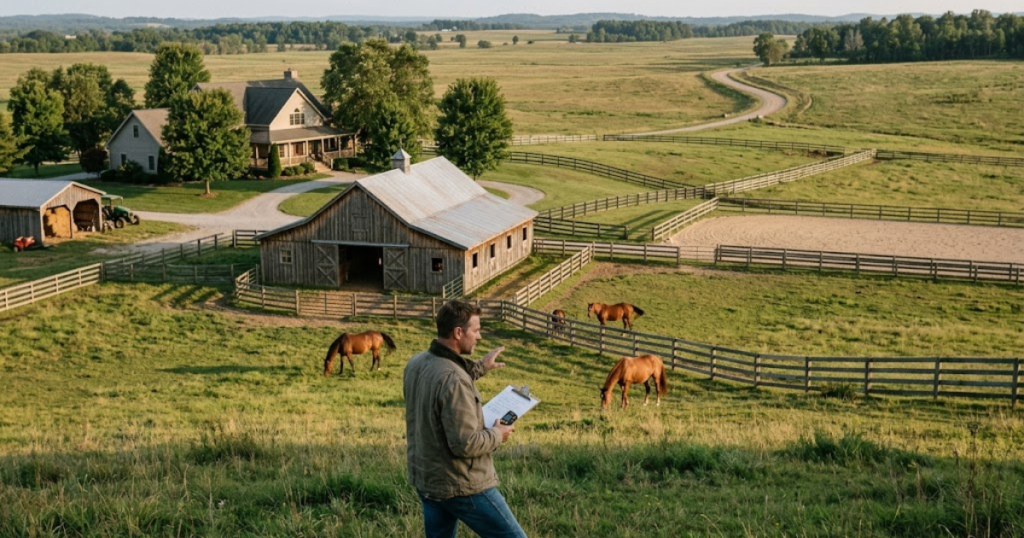
You have decided to sell your custom equestrian estate in Colorado. Over the last decade, you have invested hundreds of thousands of dollars into developing the ultimate horse facility. You have a custom residence, a heated six-stall barn with Nelson automatic waterers, a laser-graded indoor arena with dust-free synthetic footing, two loafing sheds, pipe-rail paddocks, and deeded ditch irrigation rights.
You invite a standard residential real estate agent to evaluate the property. A few days later, they deliver a comparative market analysis that leaves you stunned.
Because your property is unique, the agent pulled three closed sales from the closest residential subdivision, homes on five-acre parcels with no barns, no arenas, and no water rights, and adjusted the numbers by a nominal twenty thousand dollars for your outbuildings. In doing so, they completely erased over half a million dollars of real agricultural and equestrian equity.
When searching for horse properties in Cin Colorado, buyers and sellers hit this exact brick wall every single day.
Valuing standard suburban real estate is simple. An appraiser finds three identical three-bedroom homes sold within the last six months within a half-mile radius, averages the price per square foot, and determines fair market value.
In rural and equestrian real estate, true comparable sales often do not exist. Your ranch might be the only property within forty miles that features an indoor arena and adjudicated water rights.
If you are preparing to list your farm, or if you are a buyer trying to ensure a bank will finance your purchase, you must understand how appraisers value properties when direct comps are impossible to find. Here is a comprehensive, highly technical guide to valuing a horse property when no comparable sales exist.
How to Finance a Horse Property Purchase in Colorado
Quick Summary: Navigating Rural Mortgages
- The Acreage Myth: Fannie Mae doesn't have a strict acreage limit, but it does enforce a strict land-to-home value ratio limit. To qualify for a standard conventional loan, the house must account for most of the property's appraised value.
- Agricultural Lenders Versus Traditional Banks: Standard banks want to finance residential homes in suburban subdivisions. Agricultural lenders want to finance land, barns, and arenas. Knowing which category your property falls into is the first step to securing funding.
- The Commercial Disconnect: If you plan to run a public boarding facility, host riding clinics, or breed horses professionally, you will likely need a commercial agricultural loan, which carries entirely different down payment and income requirements.
- Prepare for Higher Down Payments. While suburban home buyers can sometimes secure loans with a three to five percent down payment, buyers purchasing heavy agricultural land or commercial equine facilities should prepare for a minimum twenty to thirty percent down payment.
- The Appraisal Hurdle: A standard residential appraiser can kill your loan by valuing a custom barn at zero. Make sure your lender hires a certified agricultural appraiser who understands the replacement cost of equestrian infrastructure.
1. The Conventional Loan Trap and the Acreage Myth
Most buyers start by applying for a conventional conforming loan. These are standard residential mortgages that meet the strict underwriting guidelines set by government-sponsored enterprises like Fannie Mae or Freddie Mac.
A persistent, damaging myth in the real estate industry is that Fannie Mae will not finance any property larger than ten acres. This is entirely false. Fannie Mae does not have a strict maximum acreage limit for residential loans. However, it does have a strict rule about the nature of the property: it must be primarily residential in both use and value.
This creates the notorious land-to-home value ratio problem. To qualify for a conventional residential loan, the primary residence must be the most valuable single asset on the property. If you are buying a one-and-a-half-million-dollar equestrian estate, and the house is worth five hundred thousand dollars. At the same time, the forty acres of land, the custom barn, and the indoor arena combined are worth one million dollars, a conventional lender will deny the loan. In their eyes, you are buying an agricultural facility that happens to have a house on it, rather than a house that happens to have a large yard.
Furthermore, conventional lenders will balk at any properties that generate commercial agricultural income. If the property has operated as a commercial boarding stable, public riding school, or professional breeding operation, standard residential lenders will immediately flag it as a commercial enterprise. Even if you do not plan to run a business yourself, the historical commercial use of the infrastructure will likely cause a conventional underwriter to deny the residential loan application.
2. Hobby Farm Loans and Portfolio Lenders
If your property is too agricultural for a conventional Fannie Mae loan, but you do not intend to run a commercial equine business, your purchase falls into the hobby farm category.
A hobby farm is a property used for personal agricultural enjoyment where the owner's primary income comes from outside sources, such as a standard corporate salary or W-2 employment, rather than from farming activities. Financing a hobby farm means looking beyond large national banks and seeking dedicated portfolio lenders.
A portfolio lender is typically a regional bank, local credit union, or private mortgage institution that originates loans and keeps them on its own balance sheet rather than selling them to government-sponsored entities on the secondary market. Because they keep the loans in their own portfolio, they get to make their own underwriting rules.
Portfolio lenders are far more flexible regarding acreage limits, outbuilding valuations, and agricultural zoning. They will often finance a property where the land and barns hold significant value, provided the borrower has an excellent credit score, strong cash reserves, and a reliable off-farm income stream. However, because portfolio lenders assume more internal risk by holding the note, you should expect slightly higher interest rates and potentially higher down payment requirements compared to standard conventional residential loans.
3. Commercial Agricultural Loans and Farm Credit
If you are purchasing a property with heavy equestrian infrastructure, massive acreage, or the direct intent to run a commercial equine business, you must step out of the residential market entirely and work with a dedicated agricultural lender.
In Colorado, institutions like the Farm Credit system, including Premier Farm Credit or Farm Credit of Southern Colorado, specialize exclusively in rural land and agricultural operations. These lenders understand a barn's true market value, can evaluate irrigated pasture, and are comfortable financing properties where land and outbuildings make up the vast majority of the purchase price.
Securing a commercial agricultural loan requires a completely different, highly rigorous underwriting process.
- The Business Plan Requirement: If you plan to generate income from the property through boarding, training, or breeding, an agricultural lender will require a comprehensive business plan. You must provide projected revenue, operating expenses, and a market analysis to show the farm can cover its debt through cash flow.
- Schedule F Tax Returns: If you currently operate an agricultural business, lenders will require at least two years of Schedule F tax returns to verify your farming income. This can complicate your debt-to-income ratio calculations, so you must work closely with a loan officer who understands how to read agricultural tax filings.
- Agricultural Experience: Commercial lenders want to know that you actually understand how to manage the asset you are buying. They will review your resume and prior agricultural experience to ensure you can maintain the property, manage livestock safely, and execute your proposed business plan.
4. Down Payment Realities and Cash Reserves
The biggest shock for suburban buyers transitioning to rural real estate is the amount of liquid capital required to close the loan.
If you are buying a standard suburban house, you might secure a loan with a three to five percent down payment. If you are buying a horse property, you'll need to throw those expectations out the window. Down payment requirements vary significantly by property type and loan program.
- Primarily Residential with Small Acreage: If the property is under ten acres and the home holds most of the value, you might secure a conventional loan with a ten to fifteen percent down payment.
- Equestrian Improvements on Large Acreage: If you are buying 20 to 40 acres with a large barn and an arena, most portfolio lenders will require a strict 20% down payment. If the barn value far exceeds the home value, they may raise that requirement to 25% to reduce their risk.
- Raw Land and Commercial Operations: If you are securing a commercial agricultural loan through Farm Credit, or if you are buying raw land with no primary residence, you must prepare to put down twenty to thirty-five percent of the purchase price.
In addition to the down payment, lenders will require verified cash reserves. After you pay closing costs and the down payment, rural lenders typically want to see enough liquid cash left in your bank accounts to cover two to six months of principal, interest, taxes, and insurance payments.
5. Government-Backed Rural Loans: USDA and FSA Options
For certain buyers, government-backed rural loans offer an alternative path to property ownership, though they come with strict limitations.
The United States Department of Agriculture offers Rural Development loans designed to encourage homeownership in sparsely populated areas. These loans are attractive because they often allow zero-down-payment financing. However, USDA loans have strict geographical boundaries, meaning the property must be located outside city limits in an eligible rural area. They also enforce strict household income limits, meaning high earners are instantly disqualified. Furthermore, USDA loans are primarily designed for modest residential properties, meaning they will absolutely not finance a multi-million-dollar luxury equestrian estate with commercial outbuildings.
For buyers looking to farm or ranch actively, the Farm Service Agency, a branch of the USDA, offers Farm Ownership Loans. These loans help working farmers and ranchers buy land and build agricultural buildings. The FSA offers both direct loans and guaranteed loans, which back loans issued by a local agricultural bank.
The FSA also offers specialized Down Payment Programs for beginning farmers. These programs can drastically reduce the upfront cash required to buy a working farm, sometimes letting buyers secure land with as little as a 5% down payment, provided they meet strict eligibility, income, and agricultural experience requirements.
6. The Specialized Rural Appraisal Process
Regardless of which lender you choose, your loan depends entirely on the appraisal. This is the exact moment where many equestrian transactions fall apart.
Standard residential appraisers evaluate houses based on comparable sales in nearby suburban neighborhoods. If a standard appraiser is sent to value a horse property, they will struggle to assign accurate value to the specialized infrastructure. They might see a $100,000 heated barn and assign it zero value because they cannot find a comparable property in the nearby residential subdivision to justify the structure.
When financing a horse property, you or your real estate agent must aggressively advocate for a certified rural or agricultural appraiser. These specialists know how to pull niche agricultural comparable sales from across county lines. They understand the replacement cost of premium arena footing, the value of specialized pipe fencing, and the massive premium associated with deeded surface water rights. Securing the right appraiser ensures the bank recognizes the true value of the equestrian assets, preventing a massive appraisal gap that could kill your financing.
You must also ensure all outbuildings are fully permitted. If a previous owner built a massive hay shed without pulling county permits, the appraiser cannot assign positive value to it, and the lender may refuse to underwrite the loan due to the unresolved code violation.
We Connect You With the Right Rural Lenders
Never write an offer on a horse property without knowing exactly how a bank views the asset.
When Mark Eibner's team represents you, we do not leave your financing to chance. We evaluate the property upfront to determine whether it qualifies for conventional lending, requires a specialized portfolio bank, or mandates a commercial agricultural loan. We maintain a highly curated network of trusted Colorado agricultural lenders, farm credit specialists, and rural appraisers. We connect you with the right financial partners before you submit a contract, protecting your capital and helping your transaction close smoothly.
Contact us today at coloradohorseproperty.com to find premium horse properties trusted by Colorado buyers. Browse active Colorado horse ranches for sale, or ask our team about renting a functional horse property in Colorado while you organize your agricultural financing and down payment strategy.
Frequently Asked Questions (FAQ) About Horse Property Financing
Can I use an FHA or VA loan to buy a horse property?
Yes, under very specific conditions. Both FHA and VA loans allow properties with agricultural zoning, provided the property is primarily residential, and the home's value far outweighs the land and outbuildings. However, they will not finance commercial farming operations, meaning you cannot use a VA or FHA loan to buy an active boarding or training facility.
Are interest rates higher for agricultural loans compared to standard home loans?
Generally, yes. When most of the property value is tied up in land and specialized agricultural outbuildings, lenders view the loan as riskier than a standard suburban home. You should anticipate interest rates to be roughly half a percent to a full percent higher for a commercial agricultural loan or a portfolio hobby farm loan.
Can I roll the cost of building a new barn into my mortgage?
If you are using a standard residential loan, usually not. However, if you are working with a dedicated agricultural lender like Farm Credit, they offer specific construction and farm improvement loans that can finance the cost of building new arenas or barns alongside the initial land purchase.
Does a property need to have an existing house to get a loan?
No, but buying raw land or a parcel with only a barn requires a dedicated land loan or a commercial agricultural loan. Standard residential lenders will not finance a property unless it has a habitable primary residence. Land loans carry higher risk for the bank and typically require a 25% to 35% down payment.
What is a pre-qualification versus a full pre-approval for a horse property?
A pre-qualification is a meaningless estimate based on unverified information you provide to a lender. A full pre-approval means the underwriter has verified your tax returns, bank statements, and credit score. In a highly competitive rural market, sellers will completely ignore offers backed by a simple pre-qualification. You must secure a full, verified pre-approval from an agricultural lender before touring properties.