
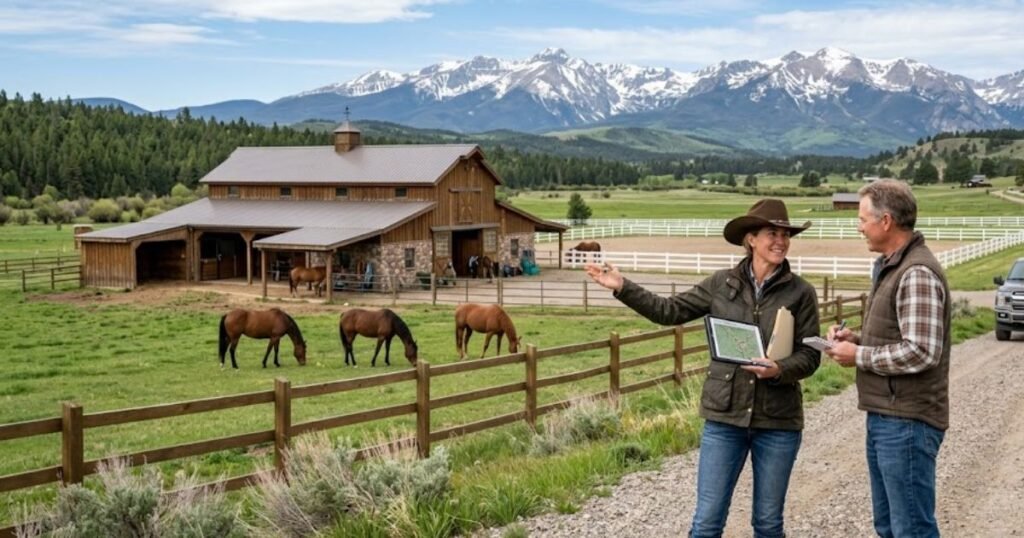
You spend hours scrolling through real estate websites every night, typing “acres” into the keyword box. You find a gorgeous house on five acres with a pole barn and schedule a showing. You drive 45 minutes, walk the property, and immediately realize the barn has a dirt floor, the acreage is entirely on a steep slope, and the neighborhood HOA strictly forbids hooved animals. You just wasted a Saturday afternoon.
When searching for horse properties in Colorado, the public market is filled with dead ends. Standard real estate agents rely on automated email alerts that treat a horse property like a suburban house with a big yard. An equestrian specialist, however, takes a radically different approach to sourcing and vetting your next farm.
Here is how a specialized agent actually finds properties with the right facilities and proper zoning.
How Does an Equestrian Real Estate Agent in Colorado Help Me Find Properties With Horse Facilities and Proper Zoning?
Quick Summary: The Search Strategy
- Decoding the MLS: Standard property search platforms are built for residential homes. An equestrian agent knows how to filter for agricultural markers, water rights, and outbuildings that generic search engines miss.
- The Zoning Filter: Rather than falling in love with a property first, a specialist works backward. They filter by county zoning codes, ensuring a property legally allows the exact number of horses you own before you even tour it.
- Evaluating Facilities on Paper: Before driving an hour to a showing, an expert can spot red flags in listing photos, such as unsafe fencing, undersized arenas, or poor barn placement.
- Accessing the Private Network: The best equestrian properties often trade hands privately. Specialized agents tap into a network of boarding facilities, trainers, and breeders to find pocket listings before they hit the public market.
1. Reverse Engineering the Zoning Codes
The biggest heartbreak in rural real estate is finding the perfect property, only to discover the local laws prohibit your animals.
- The Animal Unit Calculation: Each county in Colorado has its own formulas for animal density. Some counties allow two horses per acre, while others require a minimum of 10 acres to keep one. Your agent will cross-reference your herd size with specific zoning districts, such as Agricultural (A-1) or Large Rural Residential (LRR), thereby filtering out properties that do not meet the legal threshold.
- HOA and Covenant Review: Even if the county zoning allows horses, a local Homeowners Association can ban them. An equestrian agent will proactively pull the neighborhood covenants to verify trailer parking rules, manure removal requirements, and fencing restrictions before you set foot on the property.
2. Translating Water Rights and Well Permits
A horse consumes 10 to 15 gallons of water per day. If a property lacks the legal right to provide that water, the facilities are useless.
- Permit Verification: A specialist will pull the well permit from the Colorado Division of Water Resources before a showing. They will confirm whether the well is coded for "Household Use Only," which makes outside watering illegal, or if it is properly designated for "Domestic and Livestock" use.
- Evaluating Irrigation: If you want grazing pastures, your agent will search for properties with deeded surface water rights or ditch company shares, ensuring you have the legal right to irrigate your land during the dry summer months.
3. Vetting the Equestrian Infrastructure
An agent who understands horses can evaluate a property's potential based solely on the listing details and satellite imagery.
- Fencing and Layout: A specialist will look for safe containment, such as pipe rail, no-climb wire, or vinyl fencing, while immediately red-flagging properties that use barbed wire. They also check the layout to ensure the pastures have proper drainage and avoid steep, unusable terrain.
- Barn and Arena Metrics: They know that a standard stall must be at least 12x12 feet for an average horse. They will verify ceiling heights, ventilation, and whether an arena has proper footing and base drainage, saving you from buying a property that requires immediate, expensive renovations.
4. Tapping Into the Private Equestrian Network
The most highly desired horse properties often never appear on standard real estate websites.
- The Whisper Market: Equestrian real estate operates heavily on relationships. Specialized agents spend their time at boarding stables, local feed stores, and equine events. They talk to trainers, breeders, and farriers to find out who is thinking about selling their farm next season.
- Matchmaking: Because they maintain a curated list of active equestrian buyers and sellers, an expert agent can often match you with an off-market property, allowing you to bypass a bidding war completely.
We Streamline Your Equestrian Search
We do not just set up an automated email search and wait. We actively hunt for the infrastructure your herd needs.
When Mark Eibner's team represents you, we handle the heavy lifting. We pull the well permits, translate the county zoning codes, and verify the facility specs before we ever put you in the car. We utilize our deep connections in the local equine community to find the perfect property, ensuring your next farm is a legal, safe, and functional home for your horses.
Contact us today at coloradohorseproperty.com to find premium horse properties Colorado buyers trust.
Browse active Colorado horse ranches for sale or ask our team about finding a functional horse property for rent in Colorado with the right infrastructure.
Frequently Asked Questions (FAQ) About Finding Horse Properties
Can I use public real estate sites to find a horse property?
You can browse these sites, but their search filters for agricultural properties are notoriously inaccurate. A property might be listed as a "horse property" simply because it has a few acres, even if the zoning strictly forbids livestock.
How do I know if I can build an arena on a property that does not have one?
This is a crucial step in the search process. We will review the property's topography, check the county setback requirements, and review any required grading permits to ensure you have the legal and physical space to build a new arena later.
What is the most important feature to look for in a Colorado horse property?
Legal, usable water. Without a proper livestock well permit or irrigation rights, even the most beautiful barn and pastures are completely non-functional.