
The hidden maintenance costs of an older horse barn don’t come with one reliable budget figure. Costs depend on the condition of the roof, foundation, floors, siding, electrical system, and utilities, so assess each area separately rather than assuming routine upkeep tells the whole story. A leak or worn component can also lead to damage beyond the original repair.
It’s reasonable to expect an older barn to need attention. The challenge is spotting issues that are easy to overlook. This guide covers repair materials and barn components that can add to upkeep, along with electrical hazards and utility systems to factor into your budget.
Use these practical checks to assess likely maintenance needs, prioritize safety and function, and account for recurring expenses such as lighting, fans, and water systems. You’ll get a clearer picture of the work an older horse barn may need before it becomes part of your property plan.
Key Takeaways
- Start your repair assessment at the roof, then look for signs of water damage around the foundation and floors.
- Include recurring work on wood surfaces, hinges, boards, and gutters when planning barn upkeep.
- Have a professional electrician assess aging wiring and fixtures, and account for fire risks such as damaged cables.
- Budget for lighting, fans, and water-system use, and build regular trough cleaning into your routine.
1. Materials for floors, foundations, and repairs
Start with the roof. Inspect it before other repairs, since leaks can compromise the frame and foundation. After storms, look for damaged roofing, gaps, and water marks beneath the roofline. Record each issue and whether it affects nearby framing. Repairing the roof can stop moisture from spreading to other parts of the barn.
Next, check the ground and foundation. Make sure the ground slopes away from the foundation, then look for cracks, soft areas, or standing water. A deteriorating foundation wall may need attention to help maintain its condition. Quick-set cement can fill cracks in cement floors or reinforce load-bearing beams at their bases. For slippery poured-cement aisles, rubber mats or interlocking pavers can improve traction.
Inspect weathered siding gently. Aggressive power washing can damage aged lumber, while loose planks may be reattached with galvanized spiral nails. Afterward, pick up any dropped or loosened nails. Resealing windows with caulking can reduce rattling and create a smoother surface for repainting. Crushed limestone can level stall floors, form ramps over uneven areas, and improve drainage near gates or water sources.
Permit and building-code requirements depend on the local jurisdiction and the scope of the repair. Before changing structural components, doors, flooring, or ventilation, identify the local requirements that apply to the specific work.
Replacement costs depend on the material, extent of damage, access, and whether nearby framing or flooring also needs repair. Separate immediate safety repairs from upgrades, then assess each damaged stall, door, floor area, or ventilation component individually.
To find hidden damage, inspect from roof to ground: note leaks, carefully probe visibly softened wood, check foundation cracks, and look for pest activity or droppings. Climate, location, and local labor rates affect repair budgets through weather exposure, material suitability, transport, and the work required. Include tack-room repairs in your plan too: check door hardware and shelving, and replace damaged components that no longer store equipment securely.
2. Barn hardware, boards, and gutters
Small hardware faults can affect daily barn use before larger repairs become visible. Check stall and exterior door hinges for looseness, rust, sagging, or binding. Open and close each door, noting any movement that strains the frame. Inspect latches and fasteners at the same time, since worn parts can make gates and doors harder to secure.
Walk the barn’s wooden structures and look for boards that have shifted, split, or softened. Pay special attention to edges near rooflines, doors, and areas exposed to moisture. Wood surfaces may need regular resealing or staining to limit exposure to moisture and UV rays. Record which boards need attention, and distinguish loose boards from those that need replacement.
Some older barns use bell-shaped battens measuring 3 ½ inches wide. Check whether they remain secure and whether the wood beneath them shows damage. Match repair materials to the existing structure, and keep notes on the location and type of each repair. That record helps horse owners track frequent small jobs and spot recurring trouble areas.
Inspect gutters along each roof edge. Look for loose brackets, separated joints, blockages, and sections that no longer direct water away from the barn. Clear debris and observe where water flows during rain. A disconnected downspout or overflowing gutter can leave repeated wet patches beside walls and foundations, making that area a priority for future inspections.
There’s no single reliable figure for comparing annual maintenance costs for an older barn with those for a new one. An older barn’s total depends on the condition of its boards, hinges, gutters, and wood finishes. A new barn’s upkeep depends on its materials and maintenance requirements.
To make the comparison useful, record each repair and recurring task by component, then review the list seasonally. If you’re weighing upkeep against a property purchase, horse-property listings can help you compare barns and their features.
3. Electrical inspections and fire hazards
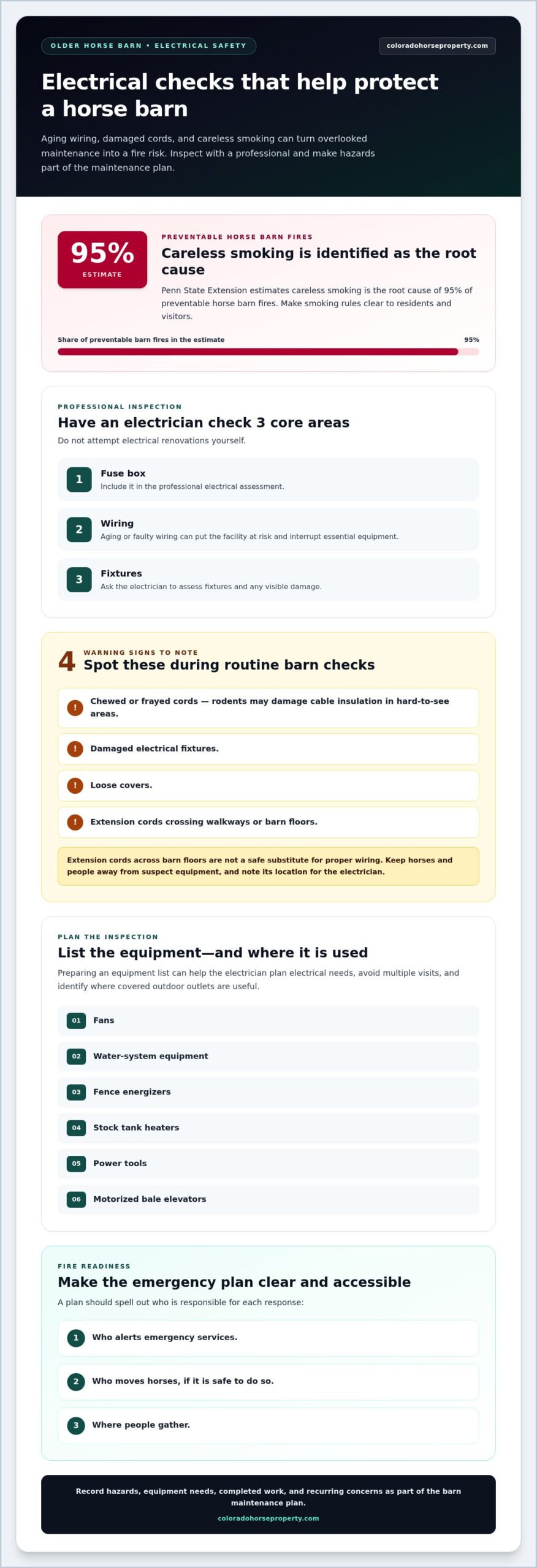
Outdated wiring can turn a maintenance issue into a direct threat to horses and property. Faulty electrical connections are identified as the cause of most barn fires, while damaged wiring can interrupt essential equipment and put an equine facility at risk. Rodents add another hazard by chewing cable insulation, sometimes in hard-to-see areas.
Arrange for a professional electrician to inspect the fuse box, wiring, and fixtures. Don’t attempt electrical renovations yourself. Before the inspection, list the equipment you use and where, including fans, water-system equipment, fence energizers, stock tank heaters, power tools, and motorized bale elevators. Planning electrical needs ahead can help avoid multiple visits and identify where covered outdoor outlets are useful.
Look for visible warning signs during routine barn checks: chewed or frayed cords, damaged fixtures, loose covers, and extension cords crossing walkways. Extension cords across barn floors aren’t a safe substitute for proper wiring. Keep horses and people away from suspect equipment, and note its location for the electrician. Prompt attention can prevent small faults from worsening or disrupting daily barn work.
Fire preparation matters alongside electrical repairs. Penn State Extension estimates careless smoking is the root cause of 95% of preventable horse barn fires. Make smoking rules clear to residents and visitors, and keep an emergency plan accessible so people know how to respond if smoke or flames appear. A plan should identify who alerts emergency services, who moves horses if safe, and where people gather.
These checks can reveal repairs an ordinary visual walk-through might miss. Add an electrical inspection and any needed corrections to your maintenance budget, then record completed work and recurring concerns. A documented list of hazards, equipment needs, and repairs helps you plan future maintenance without treating an aging barn’s electrical system as an afterthought.
4. Lighting, fans, and water-system utilities
Utility bills can conceal recurring costs in an older barn, especially when lighting, fans, and water systems run daily. Track electricity and water use alongside each bill, then note seasonal changes in occupancy, ventilation, and chores. Compare periods with similar use rather than treating every increase as a repair. A leaking trough, faulty control, or light left on in an unused aisle can add avoidable demand.
Walk each aisle and stall to check whether lights work and illuminate the areas used for feeding, cleaning, and handling horses. Record failed fixtures, inconsistent switches, and areas where shadows make routine work harder. Check that each fan runs as intended and that airflow reaches occupied barn spaces. Penn State Extension identifies inadequate ventilation as the most common mistake in modern horse facilities, making fan operation and airflow useful items in a maintenance review.
Give water systems their own routine. Clean horse water troughs weekly, including in winter, and check for leaks around troughs, pipes, and fittings during the same visit. Note whether water reaches stalls and pasture areas as intended. A slow leak can waste water and leave the ground around a barn or trough persistently wet, so record its location and follow up on repairs.
Build a simple utility log with the bill period, meter readings when available, and relevant changes such as a newly used fan or a repaired water line. This helps connect consumption changes to actual barn use instead of guessing. When comparing horse properties, review listing details for utility systems and barn features alongside the land. Explore horse property listings to assess how a property’s facilities fit your needs.
Colorado Horse Property: AI-Powered Horse Property Search
Colorado Horse Property’s AI-Powered Horse Property Search helps buyers find Colorado properties with equestrian features that fit their plans. Use your barn-maintenance assessment to clarify priorities, such as an existing barn, arena, water rights, or pasture. This can help focus your search on properties suited to your intended use.
Turn to Colorado Horse Property when weighing an older barn against other property options or preparing to buy or sell an equestrian property. Real Estate Listing Services and Buyer Representation support the real estate process, while Transaction Management helps coordinate the transaction. A property search can narrow your options, but it doesn’t replace an on-site assessment of a barn’s condition.
Contact Colorado Horse Property to discuss your horse-property search.
Turn your barn assessment into a property plan
Planning for the hidden maintenance costs of an older horse barn starts with deciding what role the property should play in your next chapter. A barn that needs ongoing work may still suit your goals if its layout, acreage, and equestrian features align with your plans. Carry your inspection notes into the buying or selling decision so maintenance needs inform your priorities rather than becoming an afterthought.
If you’re considering a Colorado horse property, use your assessment to define what you need from the land and facilities. Colorado Horse Property can help you explore listings and buyer representation as you weigh your options. Choosing a property that fits your plans is a practical step toward building a horse-centered life.
Contact Colorado Horse Property to discuss your next property move.
Frequently Asked Questions
So how do you budget for the unbudgetable?
Budgeting for the hidden maintenance costs of an older horse barn starts with known annual expenses and a separate reserve for surprises. Add a 20% buffer to known annual costs, then record repairs by component and urgency. A dedicated account makes unexpected expenses easier to track against routine upkeep. Review the plan when property use changes or a major system needs attention, rather than treating one estimate as fixed.
Why do experienced owners say to add 20% to a horse budget?
The 20% buffer gives your budget room for expenses that are difficult to schedule, such as a newly discovered repair or urgent replacement. It’s a planning cushion, not a prediction that spending will rise by exactly that amount. Keep the buffer separate from routine expenses, then review actual bills over time to see whether the reserve matches the property’s needs.
What are the most common hidden maintenance problems in an older horse barn?
The hidden maintenance costs of an older horse barn often begin with problems that are easy to overlook: moisture damage, weakened structural components, worn stall hardware, deteriorating wood, and aging electrical systems. Pests can damage materials or wiring too. Keep a dated inspection log with photos and locations to track changes and distinguish new concerns from existing marks.
How much does it cost to repair or replace an aging barn roof?
Roof repair or replacement costs depend on roof size, material, access, and the extent of damage. The supporting frame matters too: localized roofing damage is different from work that also involves compromised framing. Record visible leaks and affected areas, then separate roof work from related structural repairs in your estimate. Weather exposure and local labor availability also affect the project total.
What does it cost to repair deteriorating barn foundations, posts, and framing?
Costs depend on how much of the foundation, posts, or framing needs repair, which materials suit the structure, and whether nearby components are affected. A localized crack is different from deterioration that has spread to structural supports. Note each problem’s location and visible extent, then group connected damage when planning the work. Access and required labor also affect the total.
How much do electrical upgrades and fire-safety improvements cost in an older horse barn?
Electrical project costs depend on the condition of existing wiring, the number and location of upgrades, and the equipment the barn must support. Repairing a fixture is different from work involving wiring, outdoor outlets, or the fuse box. List equipment needs and affected areas before planning the work. Fire-safety improvements also vary with the barn’s layout and the changes required.