
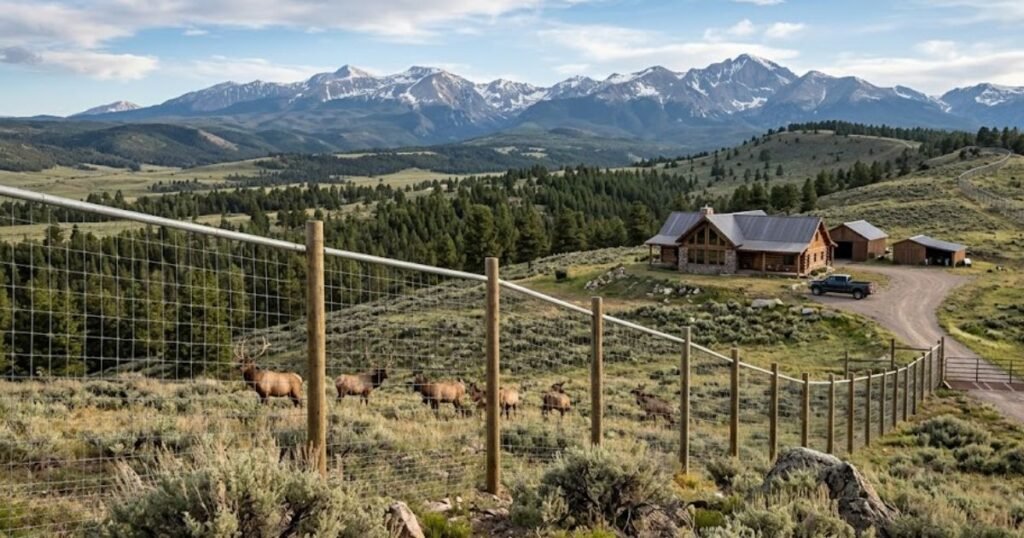
You finally find the ultimate sportsman’s paradise: a stunning 1,500 acre high fence elk ranch in the Colorado high country. The listing photos show 400 inch bull elk grazing in front of a massive log lodge. You buy the property, envisioning endless fall days hunting giant bulls on your own private preserve.
During your first winter, a severe blizzard hits. A massive pine tree snaps under the weight of the snow and crashes across a remote section of the perimeter fence, tearing down 40 feet of heavy wire. You don’t discover the breach for three days. By the time you patch the hole, a dozen of your most expensive trophy bulls have wandered out onto the adjacent National Forest, never to return. In a single weekend, a maintenance failure cost you a small fortune in lost livestock.
When searching for a high fence hunting ranch for sale in Colorado, buyers are often captivated by the size of the antlers and the luxury of the lodge. However, owning an enclosed game preserve is vastly different from owning open acreage. You are not just buying land; you are buying a highly complex, enclosed biological system.
Here is how to evaluate the infrastructure, operations, and true costs of a high fence hunting ranch before you make an offer.
Evaluating High Fence Hunting Ranches for Sale in Colorado
Quick Summary: The Enclosed Empire
- The High Fence Distinction: A high fence ranch completely encloses the property with specialized, 8- to 10-foot-tall game fencing. This creates a captive ecosystem, allowing owners to meticulously manage the genetics, age, and population of trophy elk or deer without losing them to public lands or neighboring properties.
- The Maintenance Mandate: An 8-foot fence is only as strong as its weakest post. Buyers must meticulously inspect miles of fence line for washout damage, falling trees, and compromised wire. A single breach during a winter storm means thousands of dollars of prized livestock can simply walk away.
- The Commercial Potential vs. Private Retreat: Many high fence ranches, such as Trophy Mountain Ranch in North Park, are turnkey commercial hunting preserves with established lodges and outfitting infrastructure. You must decide whether you want to run a demanding hospitality business or return the property to a private, exclusive family sanctuary.
- The Biological Burden: Once you fence wildlife in, they can no longer migrate to find winter forage. You become fully responsible for their survival. You must evaluate the property’s water rights and hay-production capacity to ensure you can afford to feed a massive herd through a harsh Colorado winter.
A high fence ranch is not simply open acreage with trophy animals. It is an enclosed biological system whose value depends on fence integrity, herd health, water, forage, regulatory compliance, and daily operational management.
1. Inspecting the Fortress: The Perimeter Fence
The defining feature of the property is the fence. If the fence fails, the entire value of the ranch can evaporate.
- The 8-Foot Standard: True high fence properties require specialized woven wire at least 8 feet tall, and often 10 feet tall for elk. Standard agricultural fencing is ineffective against these animals.
- Walking the Line: You cannot evaluate miles of fencing from the porch of the lodge. You must travel the entire perimeter in a UTV. Look for deep washouts where summer monsoons have eroded dirt from beneath the bottom wire, allowing predators in or calves out. Check the wire tension and inspect the condition of corner braces, posts, gates, and crossings.
- The Timber Threat: The greatest threat to a high fence is often the adjacent forest. If the fence line runs through dense, mature timber, every dead or leaning tree is a potential failure point. A premium ranch should have a wide, aggressively cleared buffer zone, often 20 to 30 feet wide, free of tall trees on both sides of the fence.
Ask for maintenance records, fence-repair logs, gate maps, access routes, and documentation showing how frequently the remote perimeter is inspected during storms, wildfire season, and heavy snow.
2. The Winter Feed Reality
In an open ecosystem, elk migrate to lower elevations when snow becomes deep. On a high fence ranch, they are confined to the property.
- The Hay Equation: When natural forage is buried beneath two feet of snow, you must feed the herd. An adult bull elk may consume 10 to 15 pounds of high-quality forage per day in winter. If the ranch contains 100 elk, the seasonal feed requirement becomes substantial.
- Evaluating the Water and Soil: Determine whether the ranch can produce its own winter feed. Look for strong senior water rights, productive irrigated meadows, functioning irrigation infrastructure, appropriate harvesting equipment, and large, weather-tight hay barns.
- The Imported-Feed Risk: If the ranch cannot produce enough hay internally, you may need to truck hundreds of tons of expensive forage over mountain passes every year. Fuel costs, winter road closures, freight availability, and hay-market volatility can materially affect the operation’s profitability.
3. Commercial Operations vs. Private Sanctuary
Many existing high fence ranches operate as commercial hunting preserves. Before buying, you must decide what type of owner and operator you intend to become.
- The Turnkey Outfitter: These properties may include multi-bedroom lodges, commercial kitchens, guide quarters, game-processing barns, equipment shops, walk-in coolers, shooting facilities, and established guest operations. For a commercial buyer, this can provide immediate operational value.
- The Transition to Private: If you want only a private family retreat, the commercial infrastructure may be excessive. Maintaining a 10,000-square-foot lodge can require substantial heating, staffing, insurance, repair, and utility expenses even when guest occupancy is low.
- Wildlife Status: You must also decide what happens to the animals if commercial hunting stops. Options may include maintaining the enclosed herd for private use, reducing the population, relocating animals, or eventually decommissioning the preserve under applicable regulations.
Do not pay a premium for commercial infrastructure unless it supports your intended use. A profitable outfitting asset for one buyer can be an expensive maintenance burden for another.
4. Evaluating the Herd Genetics
When you buy a high fence ranch, the animals inside may be included in the real estate transaction or negotiated separately as livestock or business assets.
- The Breeding Program: A premier high fence ranch should have dedicated breeding facilities, handling pens, loading systems, identification records, and a documented history of the herd’s genetics. A substantial portion of the property’s value may be tied directly to the quality of the bulls and breeding stock.
- Ownership and Inventory: Confirm exactly which animals convey with the sale. Request a verified inventory organized by species, sex, age, identification number, breeding status, health status, and estimated value.
- Veterinary and Regulatory Compliance: Colorado has strict requirements governing captive wildlife and alternative livestock, particularly regarding Chronic Wasting Disease. Before closing, the buyer’s team should audit veterinary records, movement records, state licenses, mortality records, testing history, and regulatory correspondence.
We Audit the Operation Before You Buy
We do not just look at the lodge; we evaluate the entire biological, structural, and commercial ecosystem.
When Mark Eibner and Belinda Seville represent you in purchasing a high fence sporting property, we understand the stakes. We help evaluate perimeter integrity, water rights, hay production, operating infrastructure, herd documentation, and the regulatory requirements governing captive wildlife management. The goal is to ensure you are buying a sustainable legacy property rather than inheriting an expensive liability.
Contact Us Today to find a premium high fence hunting ranch for sale in Colorado that aligns with your sporting, operational, and financial goals.
Browse Active Colorado Properties: Explore active Colorado ranch, acreage, equestrian, and sporting-property listings
Frequently Asked Questions (FAQ) About High Fence Ranches
Are specific licenses required to own a high fence elk ranch in Colorado?
Yes. Captive elk operations in Colorado are highly regulated. Depending on the property’s use and operating model, it may require licensing through the Colorado Department of Agriculture as an alternative livestock facility or through Colorado Parks and Wildlife as a commercial wildlife park. These programs can include fencing standards, animal-identification requirements, recordkeeping, inspections, movement controls, and mandatory disease testing.
What is the main advantage of a high fence ranch over a large low-fence hunting property?
The primary advantage is control over herd management. On a low-fence property, a trophy bull monitored throughout the summer may leave the ranch and be harvested on neighboring land. A properly maintained high fence helps retain the animals, breeding program, and trophy genetics within the property’s managed ecosystem.
Can I tear down the high fence if I no longer want an enclosed preserve?
Potentially, but it is a complex process. Captive-bred elk generally cannot simply be released to mix with free-ranging wild herds. The enclosed animals may need to be harvested, sold, or relocated in accordance with applicable state requirements before the fence can be legally decommissioned and the property returned to an open-wildlife configuration.