
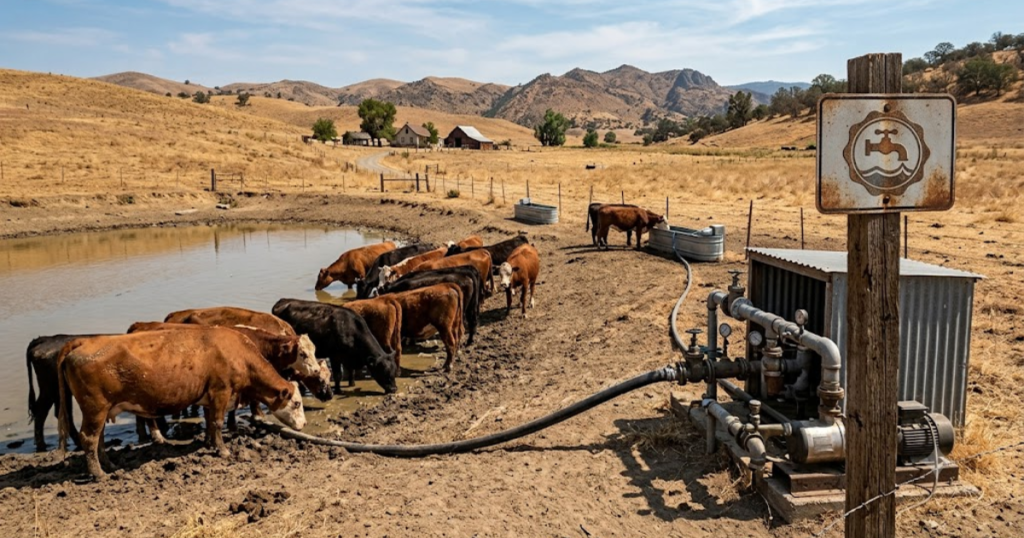
You fall in love with a 10-acre property in early June. A pristine, half-acre pond sits in the front pasture, and a beautiful little creek babbles behind the barn. You buy the property, move your horses in, and install a network of expensive automatic Nelson waterers out in the paddocks, tapping them directly into the house’s well line.
In late August, a historic dry spell hits the Front Range. The creek dries up, and the pond starts to evaporate. You run a hose from your barn to top off the pond. Two days later, a Colorado Division of Water Resources official knocks on your door. They inform you that your well is permitted for indoor household use only, you do not own the surface rights to the creek, and the pond is an illegal, un-decreed water retention structure. You are issued a cease-and-desist order.
Suddenly, your lush oasis is bone dry, and you are forced to pay a commercial water truck to haul hundreds of gallons of drinking water to your horses every single week just to keep them alive.
When out-of-state buyers search for Colorado horse ranches for sale, they assume that if they see water, they can use it. But in the arid West, water is a highly regulated, fiercely contested commodity.
Here is how to evaluate the legal reality of a property’s water rights before you buy the farm.
Is the Hay Storage Area Completely Sealed Against Heavy Summer Rain Leaks That Could Cause Mold or Spontaneous Combustion?
Quick Summary: The Drip Disaster
- The Moisture Multiplier: Even a slow, seemingly harmless roof drip during a summer monsoon can silently ruin hundreds of dollars of premium horse hay. Once water penetrates a tightly packed stack, it spreads outward like a sponge.
- The Mold Explosion: When warm summer rain infiltrates dry hay in a dark, enclosed shed, it creates the perfect incubator for toxic white and black mold. Feeding this dusty, compromised hay causes severe Equine Asthma (heaves) and colic.
- The Secondary Fire Catalyst: Spontaneous combustion is not just a risk for freshly baled hay. If perfectly cured, older hay is suddenly re-wetted by a roof leak, dormant bacteria will violently wake up, restarting the thermal heating cycle and risking a catastrophic barn fire.
- The Tarp Myth: Throwing a blue plastic tarp over a leaking roof or an outdoor hay pile is a desperate measure, not a structural solution. Tarps trap ground moisture, create a greenhouse effect that bakes the hay, and tear easily in high Colorado winds.
Hay storage is not just about square footage. It has to be weather-tight enough to protect feed quality and prevent a hidden moisture problem from becoming a mold or fire disaster.
1. The Biology of the Re-Wetted Bale
You must understand how cured hay reacts to sudden moisture to appreciate the danger of a leaky roof.
- The Safe Zone: Perfectly cured hay should maintain a moisture level below 15%. At this level, microbial activity is dormant, and the hay will last for years.
- The Bacterial Awakening: When a roof leak drips water into a cured bale, it raises the localized moisture level back above 20%. The dormant microbes instantly wake up and begin rapidly consuming the wet plant sugars.
- The Secondary Heat Cycle: Just like fresh hay, these feeding microbes generate intense heat. Because the rewetted bales are buried deep inside a tight stack, the heat cannot escape. The temperature will steadily climb toward the ignition threshold of 190°F, putting you at risk of a spontaneous combustion fire months after the hay was originally harvested.
2. Inspecting the Overhead Envelope
When touring a property, you must look up and scrutinize the roof structure with a highly critical eye.
- The Fastener Failure: The most common point of failure on agricultural pole barns and metal sheds is the fasteners. Over time, the expansion and contraction of the metal panels cause the screws to back out, and their rubber sealing washers dry rot and crack. Every single compromised screw is a potential leak.
- The Condensation Trap: If a metal roof lacks a vapor barrier or spray-foam insulation, it will sweat. On cool Colorado mornings, the humidity inside the shed hits the freezing cold metal roof, condenses into water droplets, and literally rains down onto your hay, even when the sky outside is perfectly clear.
- The Skylight Liability: Old, yellowed fiberglass skylight panels on barn roofs become incredibly brittle when exposed to UV light. They frequently develop micro-cracks or pull away from the metal ridges, creating massive leaks during heavy downpours.
The roof structure needs to be checked for more than visible holes. Fasteners, condensation control, and aging skylight materials can all quietly compromise hay storage.
3. The Ground Assault: Runoff and Flooring
Rain does not just fall from the sky; it rushes across the ground. A watertight roof is useless if the shed's foundation is compromised.
- The Drainage Grade: Look at the exterior perimeter of the hay shed. The dirt should slope aggressively away from the building. If the shed sits in a slight depression, heavy monsoon sheet-flow will rush straight under the walls and soak the entire bottom tier of your hay stack.
- The Capillary Action: Even if rain does not physically flood the shed, a dirt or cracked concrete floor will aggressively wick moisture up from the damp earth below.
- The Pallet Requirement: Regardless of the flooring type, a premium hay storage facility must have enough overhead clearance to allow you to stack your hay on a foundation of thick wooden pallets. This creates an essential air gap that protects the bottom bales from ground moisture and accidental puddle intrusion.
4. The Temporary Storage Warning
If a property lacks a dedicated, watertight hay structure, the seller might suggest storing hay outdoors under heavy tarps. Do not accept this as a viable long-term solution.
- The Greenhouse Effect: Tarps do not breathe. While they stop rain from hitting the top, they trap the natural moisture evaporating from the ground and the hay itself. This creates a hot, humid greenhouse effect that quickly causes the top and outer layers of bales to mold and rot.
- The Wind Factor: Colorado is famous for its fierce, unpredictable wind gusts. No matter how tightly you tie down a tarp, the wind will eventually catch a corner, snap the bungee cords, and rip the plastic to shreds, exposing your expensive feed to the elements just as a storm hits.
We Evaluate the Infrastructure Before You Buy
We do not just admire the square footage; we inspect the farm's structural integrity.
When Mark Eibner and Belinda Seville represent you in your search for the perfect equestrian estate, we look at the outbuildings critically. We check for signs of past water intrusion, evaluate the drainage grade around the storage sheds, and point out deferred roof maintenance before you write an offer. We want to ensure that when you invest thousands of dollars in winter feed, your barn protects that investment flawlessly.
Contact Us Today to find premium horse properties Colorado buyers trust for secure, weather-tight agricultural infrastructure.
Browse Active Colorado Horse Properties: Browse active Colorado horse ranches for sale, or ask our team about finding a functional horse property for rent in Colorado with expertly designed, fully sealed hay storage
Frequently Asked Questions (FAQ) About Hay Storage and Moisture
Can I just pull off the moldy flakes and feed the rest of the bale to my horse?
No, absolutely not. The white or black mold you can see is only a fraction of the problem. Microscopic mold spores and mycotoxins permeate the entire bale long before they become visible. Feeding even slightly moldy hay can cause severe respiratory damage, heaves, or trigger a fatal bout of colic.
Will my homeowner's or farm insurance cover hay ruined by a roof leak?
Generally, no. Insurance policies typically cover sudden, catastrophic events, like wind tearing the roof completely off. Slow, progressive leaks caused by worn-out screws, old caulking, or general wear and tear are classified as deferred maintenance and are almost universally excluded from coverage.
What is the best way to fix a sweating metal roof in an existing hay barn?
The most effective retrofit is to hire a professional to apply two inches of closed-cell spray foam insulation directly to the underside of the metal roof panels. This seals all the minor pinhole leaks, stops the thermal transfer that causes condensation, and prevents the roof from sweating onto your hay.