
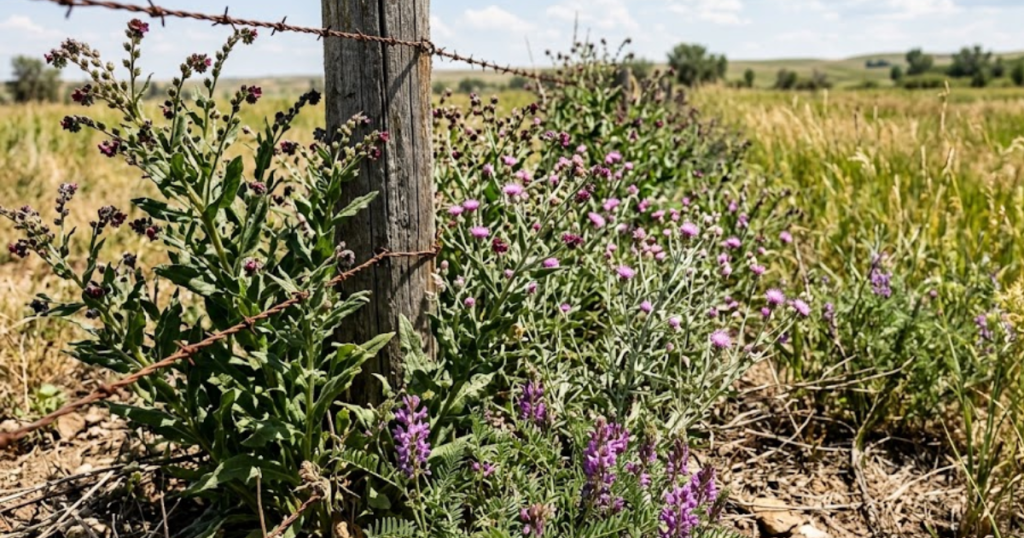
You tour a beautiful equestrian property in early August. The center of the pastures have been grazed down nicely, but the fence lines are bursting with tall, leafy, bright green plants featuring pretty purple and white flowers. It looks rustic and natural, so you buy the farm and turn your horses out.
By September, your oldest gelding starts acting strangely. He drops grain from his mouth, seems unable to coordinate his chewing, and wanders aimlessly around the paddock. You call the vet, who takes one look at the horse and then walks straight out to your fence line. The vet points to the pretty purple flowers and delivers a devastating diagnosis: Equine Nigropallidal Encephalomalacia, commonly known as “chewing disease,” caused by eating Russian Knapweed. The neurological damage is permanent and fatal.
When buyers look at colorado horse ranches for sale, they often gaze right past the weeds to admire the fencing itself. But the botanical health of those fence lines dictates the biological safety of your entire herd.
Here is how to evaluate the weed burden of a property before you buy the farm.
Are Toxic Summer Weeds Like Houndstongue, Russian Knapweed, or Locoweed Actively Flaring Up in the Ungrazed Fence Lines?
Quick Summary: The Perimeter Poison Trap
- The Fence-Line Refuge: Tractors and pasture mowers cannot easily reach the 18 inches of dirt directly beneath a fence. This creates a safe haven for aggressive, deep-rooted toxic weeds to thrive, go to seed, and slowly march into your grazing areas.
- The Drought Desperation: Under normal conditions, horses will naturally avoid bitter toxic weeds. However, during the severe heat of August when the native pasture grass goes dormant and turns brown, deep-rooted toxic weeds stay bright green and juicy, tempting hungry or bored horses into making a fatal mistake.
- The Neurological Toll: Colorado's big three toxic summer weeds do not just cause an upset stomach. Russian Knapweed causes irreversible brain damage, Locoweed is highly addictive and destroys the nervous system, and Houndstongue causes cumulative, fatal liver failure.
- The Remediation Reality: If a property has a severe, established infestation of noxious weeds, you cannot simply mow them away. Eradication requires a multi-year, expensive commitment to targeted chemical herbicides and intense soil management.
Fence lines are easy to ignore during a showing, but they often hide the most dangerous botanical problems on the entire property. The weed burden there can determine whether the farm is safe or a long-term remediation project.
1. Identifying the "Big Three" Colorado Killers
A premium equestrian property requires a buyer to have a sharp eye for noxious, invasive species.
- Russian Knapweed: This deep-rooted perennial features thistle-like purple flowers and a bitter taste. While horses usually avoid it, drought desperation will cause them to eat it. It contains a neurotoxin that destroys the part of the horse's brain that controls chewing and swallowing. Once symptoms appear, there is no cure, and the horse will literally starve to death.
- Locoweed: Prevalent on the high plains and foothills, locoweeds contain the toxin swainsonine. The terrifying reality of locoweed is that it is highly palatable and physically addictive. Once a horse gets a taste, they will actively hunt the pasture for more, leading to severe neurological dysfunction, unpredictable spooking, and blindness.
- Houndstongue: Often found in disturbed soils and along fence lines, this weed produces tiny reddish-purple flowers and velcro-like burrs that stick to your horse's mane and tail. The leaves contain pyrrolizidine alkaloids, PAs. The poison is cumulative, meaning a horse can eat a little bit every day over a summer, silently destroying their liver until it suddenly and fatally fails.
2. The Mechanics of the "Safe" Pasture Illusion
A pasture that looks clean in the middle can still be a massive biological hazard.
- The Mower's Blind Spot: Property sellers will often run a massive rotary mower over the center of the pastures right before a showing to make the land look pristine. But standard tractors cannot mow directly under the heavy wooden or wire fence lines.
- The Seed Bank: These un-mowed perimeters act as a nursery for toxic weeds. The weeds mature, drop thousands of seeds into the soil, the seed bank, and get blown across the freshly mowed pasture, ensuring an even heavier toxic flare-up the following spring.
- The Overgrazing Push: If the property is too small for the number of horses on it, the center of the pasture will be grazed down to bare dirt. This massive lack of forage physically forces the horses to the edges of the fences, pushing their noses directly into the toxic weed zones just to fill their stomachs.
A freshly mowed center pasture can disguise a major toxicity problem around the edges. The fence line condition often tells you more than the middle of the field.
3. The Cured Hay Contamination Risk
Toxic weeds do not just pose a threat when they are actively growing in the ground.
- The Toxicity Retention: Many toxic weeds, specifically Houndstongue and Russian Knapweed, remain highly toxic even after they are cut, dried, and baled into hay.
- The Palatability Shift: When a bitter weed like Houndstongue is dried and mixed into a bale of sweet grass hay, it loses its bitter warning taste. A horse will happily consume the toxic, dried leaves hidden in their winter feed, leading to silent, deadly poisoning months after the growing season has ended.
- The Pasture Harvest: If the seller advertises that the property produces its own hay, you must intensely scrutinize the fields for these weeds before you trust that the on-site forage is safe to bale and feed to your herd.
4. Evaluating the Cost of Chemical Warfare
If a property has a serious noxious weed infestation, you are buying a multi-year agricultural battle.
- The Taproot Tenacity: You cannot simply pull Russian Knapweed or weed-whack it. It has a massive, creeping underground root system that can reach depths of up to 20 feet. If you cut the top off, it simply sends up three new shoots.
- The Herbicide Commitment: Eradication requires specific, heavy-duty commercial herbicides, like Milestone or Tordon, applied at highly specific times of the growing season, usually in the fall when the plant pulls nutrients down into its roots.
- The Grazing Restrictions: Applying these heavy chemicals means you must completely remove your horses from the sprayed pastures for weeks or even months, depending on the chemical label's safety requirements. If you do not have a dedicated, weed-free dry lot to hold your horses during this chemical remediation, the property is virtually unmanageable.
We Walk the Fence Lines Before You Buy
We do not just look at the barn architecture; we analyze the biological safety of the dirt.
When Mark Eibner and Belinda Seville represent you in buying a rural estate, we put our boots on the ground. We walk the fence lines, inspect the dead zones where mowers cannot reach, and help you identify if a property is a turnkey equestrian paradise or an expensive, dangerous weed remediation project.
Contact Us Today to find premium horse properties Colorado buyers trust for safe, clean, and expertly managed agricultural land.
Browse Active Colorado Horse Properties: Browse active Colorado horse ranches for sale or ask our team about finding a functional horse property for rent Colorado while you search for an estate with pristine, healthy pastures
Frequently Asked Questions (FAQ) About Toxic Pasture Weeds
Won't my horses just naturally know to avoid eating poisonous plants?
Usually, yes. Most toxic plants are bitter and unpalatable. However, this natural instinct completely fails in three scenarios: 1) during a late-summer drought when the weed is the only green plant left; 2) when the weed is dried and hidden in baled hay; and 3) if the weed is physically addictive, like Locoweed.
Can I use goats or sheep to eat the weeds out of my horse pastures?
Sometimes. Sheep and goats have different digestive systems than horses and are highly resistant to some toxic weeds, they are often used to graze down Leafy Spurge. However, certain plants, like Houndstongue, are still highly toxic to sheep and cattle. You must identify the specific weed before bringing in alternative livestock.
Am I legally required to kill the weeds on my property?
Yes. In Colorado, specific invasive, noxious weeds, including Russian Knapweed and Houndstongue, are mandated by state law for eradication. If you buy a property with an uncontrolled infestation, the county weed board can issue you heavy fines and eventually force chemical treatment at your expense if you fail to manage the land.