
In the high-stakes world of Colorado rural real estate, the secret to a record-breaking sale isn’t a fresh coat of paint or staged furniture; it’s a stack of clear, honest paperwork. You likely worry that revealing a minor well permit discrepancy or an aging septic tank will send buyers running for the hills. It’s a common fear among ranch and horse property owners who want to protect their equity and avoid a deal falling through at the eleventh hour. However, disclosing well and septic issues when selling in Colorado is actually your strongest defense against deal fatigue and expensive post-closing lawsuits.
Mastering these disclosures protects your sale and ensures you remain in full compliance with Colorado Real Estate Commission rules. This 2026 guide will show you how to navigate the legal requirements of the Colorado Division of Water Resources and use full transparency to maintain your property value. We’ll explore the specific mandates for well permit transfers, the essential septic inspection protocols, and the strategic steps you can take to ensure your closing is efficient and legally sound. By the end of this article, you’ll have a clear roadmap to handle infrastructure hurdles with the confidence of a seasoned expert.
Key Takeaways
- Navigate the mandatory Source of Water Disclosure and Seller’s Property Disclosure forms to meet your legal obligations and protect against post-closing lawsuits.
- Verify your well permit through the Division of Water Resources (DWR) to confirm production levels and legal water rights before listing your property.
- Learn why disclosing well and septic issues when selling in Colorado is a strategic move that prevents deal fatigue and builds long-term buyer confidence.
- Complete the required Transfer of Title inspection for your septic system early to identify necessary repairs and ensure a smooth transaction.
- Identify the crucial differences between well permit types to ensure your property meets the specific water demands of horses and other livestock.
Colorado Disclosure Laws: The Seller’s Legal Obligations
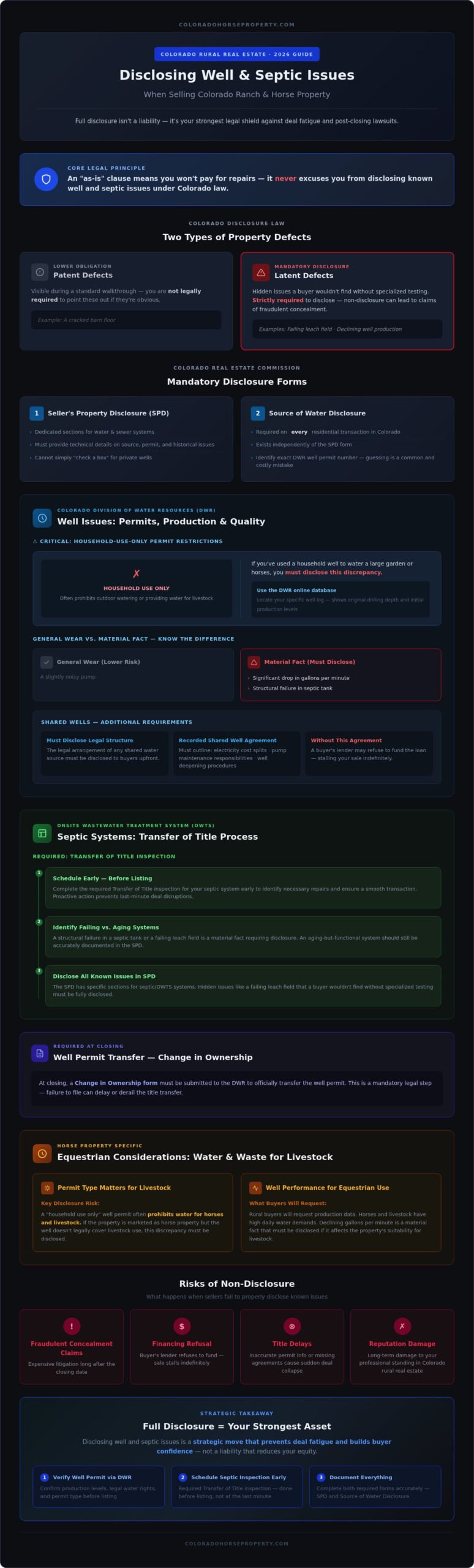
Selling a ranch or equestrian estate in Colorado requires more than just standard disclosures; it requires a deep dive into the specialized infrastructure that powers the property. The Seller’s Property Disclosure (SPD) form contains specific sections dedicated to water and sewer systems. If you’re using a private well, you cannot simply check a box. You must provide technical details on the source, the permit, and any historical issues you’ve encountered. Failing to be thorough regarding disclosing well and septic issues when selling in Colorado can lead to claims of fraudulent concealment. This legal pitfall often results in expensive litigation and damage to your professional reputation long after the closing date.
Colorado law distinguishes between patent defects and latent defects. Patent defects are visible during a standard walkthrough, such as a cracked barn floor. You aren’t legally required to point these out if they’re obvious. However, you’re strictly required to disclose latent material defects. These are hidden issues, like a failing leach field or a well with declining production, that a buyer wouldn’t find without specialized testing. Transparency here isn’t just about ethics; it’s a legal shield that prevents buyers from coming back for damages once they discover a buried problem.
The Source of Water Disclosure Requirement
Every residential transaction in the state requires a specific Source of Water Disclosure form. This document is a mandatory requirement from the Colorado Real Estate Commission and exists independently of the standard SPD. You must accurately identify whether your water comes from a municipal provider, a water hauler, or a private well. For rural sellers, this means locating your specific well permit number from the Colorado Division of Water Resources (DWR). A common mistake is guessing the permit type or failing to disclose that the well is shared with a neighbor. Accuracy is vital to prevent title delays or the sudden withdrawal of a buyer’s financing.
Material Facts vs. General Wear
Distinguishing between an aging system and a failing one is crucial for your disclosure strategy. While a slightly noisy pump might be considered general wear, a significant drop in gallons per minute or a structural failure in your septic tank systems is a material fact. In Colorado real estate law, a material defect is any hidden condition that significantly reduces the property’s value or would cause a reasonable buyer to reconsider the transaction. Many sellers believe an “as-is” clause protects them from these revelations. It doesn’t. An “as-is” contract means you won’t pay for repairs, but it never excuses you from disclosing well and septic issues when selling in Colorado that you already know exist.
Well Issues: Permits, Production, and Quality
In Colorado, a well is the lifeblood of any rural property. When you’re disclosing well and septic issues when selling in Colorado, the well permit is your primary document. The Colorado Division of Water Resources (DWR) regulates every drop of groundwater. If your permit doesn’t match your actual daily use, you have a significant disclosure obligation. Buyers are increasingly savvy about water rights, so providing a clear history of your well’s performance is the best way to build trust and protect your equity.
Shared wells add another layer of complexity. If your property shares a water source with a neighbor, you must disclose the legal structure of that arrangement. Buyers will want to see a recorded Shared Well Agreement that outlines how electricity costs are split, who handles pump maintenance, and what happens if the well requires deepening. Without these details, a buyer’s lender may refuse to fund the loan, stalling your sale indefinitely.
Well Permit Verification and Transfer
Start by using the DWR online database to locate your specific well log. This record shows the original drilling depth and the initial production levels. A common hurdle in Colorado is the “household use only” permit. This designation often prohibits outdoor watering or providing water for livestock. If you’ve been using a household well to water a large garden or several horses, you must disclose this discrepancy. At closing, a Change in Ownership form must be submitted to the DWR to officially transfer the permit. Our transaction management services can help coordinate these technical filings to ensure the title transfer remains on schedule.
Production and Quality Disclosures
Most rural buyers will request a four-hour drawdown test during the inspection period. This test is the gold standard in Colorado for measuring sustained gallons per minute (GPM). If your well’s production has dropped significantly since it was first drilled, this is a material fact that requires disclosure. You should also mention seasonal fluctuations. If the water table drops in late summer and affects your pressure, being transparent prevents a “surprise” for the buyer after they move in.
Water quality is equally critical. Standard tests typically check for coliform bacteria, nitrates, and heavy metals like lead or arsenic. If a recent test shows elevated levels, disclose the results along with any remediation steps you’ve taken. Most potability issues are easily solved with a UV light system or a basic chlorination treatment. By disclosing these fixes early, you reassure the buyer and the lender that the water is safe and the infrastructure is sound.
Septic Systems (OWTS): The Transfer of Title Process
Septic systems, or On-site Wastewater Treatment Systems (OWTS), are governed by county health departments rather than state agencies. Your specific obligations for disclosing well and septic issues when selling in Colorado will vary depending on your zip code. Most counties now require a Transfer of Title inspection before the property changes hands. This process ensures the system functions as intended and does not pose a public health risk. If you have a history of frequent pumping or past repairs, these must be documented in your disclosure to avoid future liability.
Navigating County-Specific Requirements
Regulations in Boulder County are notoriously strict; they often require higher standards for older systems than you might find in El Paso or Weld County. Schedule your septic pumping and inspection at least 30 days before your listing date. This timeline gives you room to address repairs without delaying the closing. If your system is functional but only rated for three bedrooms while your house has four, you must disclose this as an undersized system. This detail significantly impacts Horse Real Estate for Sale valuations, as buyers need to know if the infrastructure supports their intended household size.
The Septic Inspection Checklist
A certified inspector examines the structural integrity of the tank, the condition of the inlet and outlet baffles, and the health of the leach field. They look for signs of ponding, root intrusion, or backflow. If the inspector issues a conditional pass, it usually means the system works but requires a specific repair, such as a new riser or a baffle replacement, before the final permit is issued. Provide the buyer with the full inspection report and any pumping receipts from the last few years to demonstrate consistent maintenance.
Negotiating these repairs is a standard part of rural real estate. While sellers often pay for the initial inspection and pumping, the cost of major leach field failures is a frequent point of contention. Some sellers choose to escrow funds for the repair, while others drop the price to let the buyer handle the upgrade after closing. Regardless of who pays, full transparency regarding disclosing well and septic issues when selling in Colorado keeps the transaction moving forward. It prevents the last-minute panic that occurs when a county health department refuses to issue the necessary transfer permit.
Strategic Remediation: Fixing Issues Before Listing
Proactive remediation is the most effective way to protect your equity when preparing a rural property for the market. Many sellers hesitate to inspect their own systems, fearing they’ll find “skeletons in the closet” that require expensive fixes. However, finding these issues early allows you to control the narrative and the cost of repairs. When you’re disclosing well and septic issues when selling in Colorado, showing that a problem was identified and professionally corrected turns a potential liability into a verified selling point. It demonstrates that the property has been meticulously maintained, which is a significant psychological win for cautious buyers.
The choice between upgrading a system or offering a buyer credit often comes down to the type of buyer you’re targeting. Equestrian and ranch buyers typically look for turnkey infrastructure so they can move livestock in immediately. A failing well pump or a cracked septic baffle can be a deal-breaker for someone with a trailer full of horses arriving on closing day. Investing in a new pump or clearing a leach field root intrusion before you list often yields a higher return than a generic price reduction, as it keeps the pool of interested buyers much larger.
The Value of Pre-Listing Inspections
Knowing your well’s GPM (gallons per minute) before the first showing prevents sudden, mid-contract price drops. If a buyer’s inspector discovers low production, they’ll likely assume the worst and demand a massive credit or walk away entirely. By testing early, you can address minor issues like a clogged screen or a faulty pressure tank. A clean, pre-certified septic report also serves as a powerful marketing asset in your listing. At Colorado Horse Property, our experts advise sellers to prioritize these infrastructure reports to ensure the property stands out as a reliable and secure investment.
Disclosure as a Negotiation Shield
Early disclosure prevents buyers from using the “inspection objection” as a weapon to chip away at your price. When you provide a “Fixed and Documented” disclosure, you’ve already neutralized the issue. The buyer cannot legally object to a condition they were fully aware of when they made their offer. Providing a complete paper trail, including invoices from licensed well technicians and septic pumpers, builds immediate trust and signals that you’re a transparent seller. Proactive disclosure paired with professional remediation ensures you retain your asking price by eliminating the risk of late-stage deal fatigue. If you’re ready to position your ranch for a successful sale, our team provides the expert Real Estate Listing Services you need to navigate these complex infrastructure requirements.
Equestrian Considerations: Water and Waste for Livestock
For the equestrian seller, the stakes of disclosure reach beyond the kitchen sink. When you’re disclosing well and septic issues when selling in Colorado, you must view your property through the lens of animal husbandry. A system that supports a family of four might fail under the added pressure of a commercial barn operation or a multi-horse hobby farm. Transparency regarding the legal limits of your water source is essential for protecting yourself from future claims that the property was unfit for its advertised purpose. Buyers in this niche are looking for more than a home; they’re looking for a sustainable environment for their animals.
Water Rights and Livestock Watering
The most critical distinction in Colorado water law for horse owners is the difference between a “Household Use Only” permit and a “Domestic” permit. A household-only permit generally restricts water use to inside the home. This means watering even a single horse from that well is technically a violation of state law. If you’ve been using a household well for your livestock, you must disclose this discrepancy to avoid legal blowback after the sale. Sellers often confuse well permits with Water Rights in Colorado, which are separate legal interests that dictate ownership of the water itself. You must clearly state the number of livestock your permit legally allows, as this directly affects the property’s utility and long-term market value.
Barn Drainage and Septic Health
Barn infrastructure often creates hidden septic challenges that residential inspectors might miss. If your wash racks or barn bathrooms are tied into your residential septic system, you have a material fact that requires disclosure. Horse hair, mud, and heavy sediment from wash racks can quickly clog a standard residential leach field. Buyers need to know if the system was designed to handle this extra load or if it’s an unofficial connection that might fail under heavy use. Properly disclosing well and septic issues when selling in Colorado ensures the buyer understands the maintenance requirements of a shared system.
Additionally, you should disclose the location of your manure storage in relation to your well head. Runoff from paddocks or arenas can lead to nitrate contamination in your groundwater, which often shows up on potability tests. Consulting with Mark and Alison Eibner on these equestrian-specific land disclosures ensures you’re covering every technical detail that a generalist agent might overlook. Documenting your manure management plan and drainage systems builds confidence that the land is healthy and the water is safe for both humans and horses. This level of detail transforms a standard disclosure into a professional record of responsible land management.
Secure Your Sale with Transparent Disclosures
Disclosing well and septic issues when selling in Colorado is the most effective way to eliminate closing delays and protect your equity. By verifying your water permit status and completing the required county septic transfers early, you position your ranch as a reliable, turnkey investment. Transparency doesn’t just satisfy legal requirements; it builds the trust necessary to attract high-intent buyers who value well-maintained rural infrastructure. Handling these details upfront ensures that your transaction remains on track from the first showing to the final signature.
Navigating these technical details requires a seasoned partner who understands the unique needs of land and livestock owners. With 40 years of Colorado real estate experience and a proven track record with complex ranch transactions, we provide the specialized expertise you need. We use AI-powered search to connect your property with serious buyers who appreciate the value of a properly documented estate. Ready to sell your equestrian estate? Get an expert valuation from Colorado Horse Property today. Your property’s legacy deserves a seamless transition, and with the right preparation, you can move toward your next chapter with complete confidence.
Frequently Asked Questions
Do I have to disclose a well issue if I fixed it five years ago?
You must disclose any past material defects, even if they were professionally repaired years ago. Providing the maintenance records and invoices for the fix demonstrates that you’ve been a responsible steward of the property. This transparency protects you from future liability if the issue recurs. It’s better to show a documented fix than to let a buyer discover a history of repairs through neighbor reports or old permits.
What happens if my septic system fails the Transfer of Title inspection?
A failed inspection means the county health department won’t issue the required Transfer of Title permit. You’ll need to repair the system, which might involve replacing a cracked tank or a failing leach field. In some cases, you can negotiate an escrow agreement where funds for repairs are held back from your proceeds at closing. This allows the buyer to complete the work after they move in, keeping the sale on schedule.
Can a buyer back out if the well production is lower than disclosed?
Buyers can terminate the contract during the inspection contingency if the well’s performance is significantly lower than what you stated. Disclosing well and septic issues when selling in Colorado accurately from the beginning is the best way to prevent this scenario. If a four-hour drawdown test reveals a drop in gallons per minute, the buyer may ask for a price reduction or walk away entirely. Accurate disclosure ensures both parties have realistic expectations.
Does a ‘Household Only’ well permit allow me to water my horses?
A “Household Use Only” permit generally prohibits outdoor watering and livestock use. If you use the well for horses, you are technically in violation of state water law. You must disclose this limitation to potential buyers. They will need to understand that the property infrastructure might not legally support their animals without a permit change or alternative water source. Being clear about permit restrictions prevents legal disputes regarding property utility after the closing.
Who is responsible for the cost of the septic inspection in Colorado?
Septic inspection costs are negotiable and determined by the terms of your real estate contract. Traditionally, Colorado sellers pay for the pumping and the initial inspection to secure the Transfer of Title permit. If the inspection reveals major failures, the buyer and seller must negotiate the cost of repairs. Some sellers offer a credit at closing, while others choose to complete the work themselves to maintain the full listing price of the property.
How do I find my Colorado well permit number if I lost the paperwork?
You can retrieve your permit information through the Colorado Division of Water Resources online database. Search tools allow you to find records by address, owner name, or the subdivision name. If you cannot find the record online, the DWR office can provide a copy of the original well log. This document is vital for completing your disclosures and ensuring the buyer’s lender can verify the legal water source for the property.
Is a shared well agreement something that must be disclosed to buyers?
You are legally required to disclose a shared well arrangement to any prospective buyer. A shared well is a material fact because it involves shared costs, maintenance responsibilities, and legal easements. You should provide a copy of the recorded Shared Well Agreement during the disclosure period. Without a formal agreement, many lenders will refuse to finance the property, making it difficult to close the sale with a buyer who requires a mortgage.
What is the ‘Source of Water Disclosure’ and is it mandatory?
The Source of Water Disclosure is a mandatory form required for every Colorado residential real estate transaction. It requires the seller to identify the specific provider or well permit powering the home. When disclosing well and septic issues when selling in Colorado, this form serves as a primary legal record. It ensures the buyer is fully informed about where their water comes from and whether the source is a public utility or a private well.