
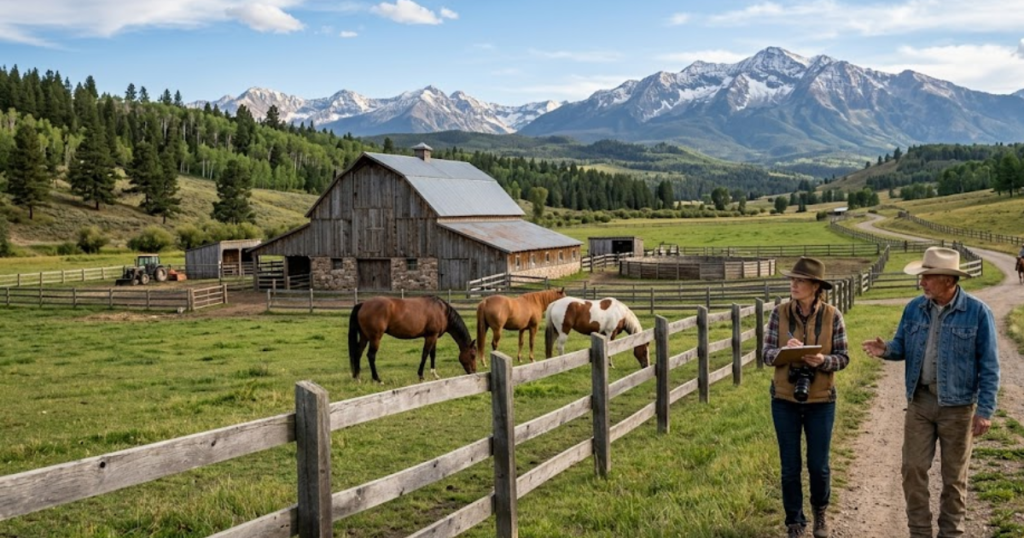
You find a spectacular 20-acre equestrian estate in Douglas County. The main house is a beautiful, updated 4-bedroom home. Out back sits a sprawling, 6-stall barn with an attached, fully lit indoor riding arena. The seller is asking $2.5 million. You run the numbers: the house on raw land would be worth $1.5 million, and you know building that indoor arena today would easily cost $1 million. The math makes sense, so you offer the full asking price and apply for a mortgage.
Three weeks later, the bank sends out a standard residential appraiser. The appraiser struggles to find other properties with indoor arenas that sold recently, so they compare your dream farm to a regular house down the road that happens to have a 3-car garage and a small metal storage shed.
The appraisal comes back at $1.8 million, a staggering $700,000 short. The bank refuses to fund the loan, you don’t have the cash to cover the massive appraisal gap, and the deal completely falls apart.
When buyers and sellers look at Colorado horse ranches for sale, they often try to price them like standard suburban homes. But an equestrian property is a hybrid asset: part residential home, part specialized agricultural facility.
Here is how you actually determine the fair market value of a horse property and protect your transaction from a bad appraisal.
Determining the Fair Market Value of a Colorado Horse Property
Quick Summary: The Appraisal Disconnect
- The “Cost to Build” Fallacy: A seller who spent $300,000 building a custom indoor arena rarely gets a dollar-for-dollar return on that investment. Market value is dictated by what the local buyer pool is willing to pay, not what the contractor charged ten years ago.
- The Wrong Appraiser Trap: Standard residential bank appraisers frequently destroy equestrian real estate deals. If the appraiser does not understand the difference between a dirt-floor pole barn and a heated, insulated Morton building, they will use incorrect comparable sales and drastically undervalue the farm.
- The Dirt and Water Premium: The baseline value of an equestrian estate is heavily anchored by the dirt. Flat, usable acreage with senior water rights or legal domestic livestock well permits will always command a massive premium over rocky, dry land, regardless of how nice the house is.
- Hobby Farm vs. Commercial Income: A private 5-acre estate is valued using comparable residential sales. A 40-stall commercial boarding and training facility may be valued using an income approach based on its profit-and-loss statements and capitalization rate.
Replacement cost and market value are not the same. Specialized infrastructure only contributes the amount that qualified buyers in that particular market are willing and able to pay.
1. The ROI of Equestrian Infrastructure
The most difficult pill for a seller to swallow, and a critical point for a buyer to understand, is infrastructure depreciation.
- The Over-Improvement Penalty: If a property sits in a neighborhood where the average horse setup is a simple 3-sided shelter and an outdoor riding ring, building a massive, heated indoor arena is an “over-improvement.” The local market will not support the price of that upgrade, and the value of the arena will be heavily discounted in an appraisal.
- The Contributory Value: Appraisers use “contributory value” for outbuildings. A custom barn might cost $150,000 to build today, but its contributory value to the overall real estate might only be appraised at $60,000. Buyers must evaluate the functionality of the facilities, not just the replacement cost.
- Aesthetics vs. Utility: A barn with custom imported European stall fronts and a chandelier in the aisle looks amazing, but it does not inherently make a horse any better than a heavy-duty powder-coated steel stall. Buyers should not overpay for extreme cosmetic upgrades in agricultural buildings.
Evaluate the age, condition, dimensions, permits, replacement life, functionality, and local demand for each barn, arena, paddock, fence line, storage building, and agricultural improvement.
2. Guarding Against the Inexperienced Appraiser
In the mortgage world, you are at the mercy of the appraiser. You must proactively manage this process.
- The Geographic Competency Rule: Under appraisal guidelines, an appraiser must have geographic and property-type competency. If your lender hires an appraiser who exclusively values suburban tract homes in Denver to appraise your 35-acre horse farm in Elbert County, your real estate agent must immediately challenge the assignment before the appraiser ever sets foot on the property.
- Providing the “Comps”: A premier equestrian real estate agent will not just cross their fingers and wait for the appraisal. They will meet the appraiser at the property with a meticulously prepared packet of comparable sales, highlighting why a specific property with a 100x200 outdoor arena is a valid comp, while a property with a steep, unusable backyard is not.
Include relevant closed sales, infrastructure specifications, permitted uses, well and water documentation, usable-acreage calculations, maps, renovation records, and a clear explanation of why each comparable property is or is not truly similar.
3. Evaluating the Dirt and the Water
You can always build a new barn, but you cannot change the topography or the legal zoning.
- Usable vs. Total Acreage: Ten acres of flat, well-draining pasture is worth significantly more than 35 acres of steep, heavily timbered mountain cliffs. Value is derived from how many horses the land can legally and safely sustain.
- The Irrigation Multiplier: In Colorado, water is gold. A property with historic ditch rights, surface water, that can flood-irrigate its pastures to produce summer grass is fundamentally worth a massive premium over a dryland property that requires the owner to purchase and truck in baled hay year-round.
Review usable pasture acreage, drainage, soil, slope, legal horse capacity, water rights, well permits, irrigation infrastructure, floodplain exposure, road access, easements, fencing, and room for future equestrian expansion.
4. Is It a Home or a Business?
The valuation method changes entirely depending on the legal and functional use of the property.
- The Private Estate, Sales Comparison Approach: If the property is designed for personal use, for example 5 acres, a house, and a 4-stall barn, the value is determined by looking at what similar private estates have sold for in the last 6 to 12 months.
- The Commercial Facility, Income Approach: If you are buying a massive 60-horse boarding, training, and show facility, the residential home on the property is an afterthought. The value is calculated based on the business's gross revenue, including stall board and arena haul-in fees, minus operating expenses, applying a Capitalization rate to determine the asset's investment value.
A commercial equestrian purchase may include real estate, equipment, livestock, contracts, customer relationships, branding, websites, and business goodwill. These components should not automatically be treated as one undivided value.
We Run the True Numbers Before You Buy
We do not just look at the asking price; we reverse-engineer the valuation.
When Mark Eibner and Belinda Seville represent you in buying or selling a rural estate, we bring deep, specialized knowledge of agricultural and equestrian valuation. We know how to price specialized infrastructure, challenge inaccurate bank appraisals, and identify if a property is vastly overpriced based on its actual usable utility.
Contact Us Today to find premium horse properties Colorado buyers trust for accurate pricing, sound investments, and functional layouts.
Browse Active Colorado Horse Properties: Browse active Colorado horse ranches for sale or ask our team about finding a functional horse property for rent in Colorado while you search for an estate priced at its true market value
Frequently Asked Questions (FAQ) About Horse Property Valuation
Does having an indoor arena add a lot of value to a property?
Yes, an indoor arena is the most highly sought-after equestrian amenity in Colorado due to the harsh winters. It will absolutely increase the marketability and value of the property. However, the value added is rarely equal to the cost of construction; it is heavily dependent on the quality of the footing, the size, dressage versus hunter-jumper dimensions, and local market demand.
Can I challenge a low bank appraisal on a horse property?
Yes. Your real estate agent can file a Reconsideration of Value with the lender. To win a Reconsideration of Value, you cannot simply say the price is too low. You must provide better alternative comparable sales that the appraiser missed or prove that the appraiser made factual errors regarding the property's infrastructure or zoning.
Should I separate the value of the business from the real estate if I am buying a commercial boarding barn?
Yes, absolutely. You are buying two different assets: the physical real estate, the dirt and buildings, and the business blue sky, including the existing client list, brand name, and website. These should often be valued and negotiated separately, as banks will typically only loan money against the physical real estate, not the business goodwill.