
You don’t need a thousand acres to live the Western dream; in fact, buying too much land is the fastest way to turn a passion project into a full-time burden. Searching for colorado hobby farms for sale often feels like a frustrating choice between a suburban lot and a massive cattle operation. It’s overwhelming to navigate massive listings when you simply want a manageable space for your horses. You’re likely wondering if five acres can truly support your livestock or how to decode Colorado’s complex water rights and 2026 agricultural tax definitions.
We believe a successful hobby farm is defined by utility per acre and infrastructure quality, not just total acreage. This guide will show you how to define, find, and evaluate the perfect ranchette using 40 years of Front Range expertise and AI-powered search tools. We’ll provide a clear distinction between a ranch and a ranchette, a checklist for evaluating equestrian infrastructure, and a strategy to find horse-ready properties. You’ll gain the technical knowledge to move forward with confidence and secure a property that fits your specific vision for the Colorado landscape.
Key Takeaways
- Define the difference between a production-focused hobby farm and a lifestyle ranchette to ensure your land matches your daily routine.
- Identify essential equestrian infrastructure by evaluating outbuildings and fencing types that provide the most utility on small acreage.
- Navigate Colorado’s strict water rights and zoning regulations to confirm exactly how many animal units are permitted on your specific lot.
- Streamline your search for colorado hobby farms for sale by using AI-powered tools that filter for niche features like cross-fencing and loafing sheds.
- Apply the Eibner Advantage to your buying strategy, utilizing 40 years of local expertise to manage complex land transactions and title coordination.
What is a Ranchette? Defining the Perfect Colorado Hobby Farm
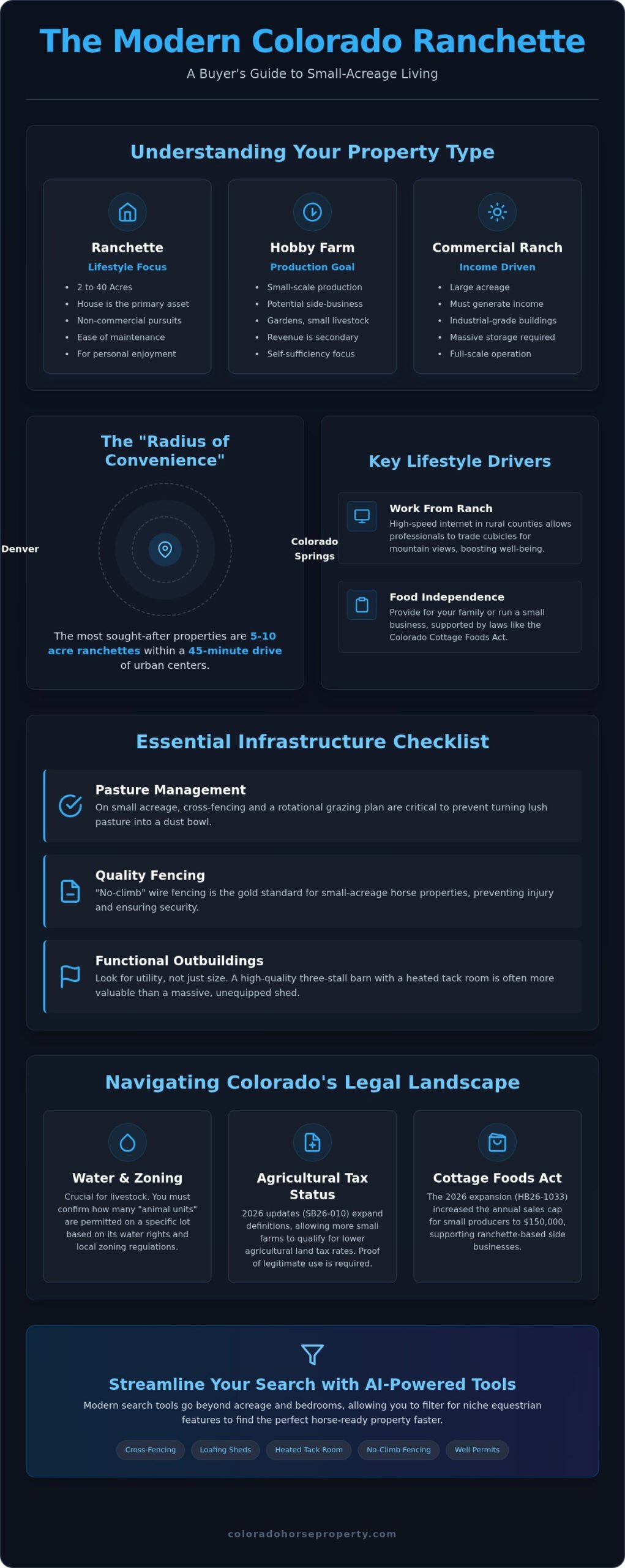
Searching for colorado hobby farms for sale often leads to a specific type of property known as a ranchette. These parcels typically range from 2 to 40 acres and are designed for buyers who want the rural lifestyle without the burden of a full-scale commercial operation. While many people ask, What is a Hobby Farm?, the answer usually involves a small-scale production goal. In contrast, a ranchette is a residential estate that supports non-commercial agricultural pursuits. It’s a space where the house is the primary asset, and the land serves as a backdrop for horses, small livestock, or private gardens.
In 2026, we see a distinct shift toward manageable acreage near Colorado’s urban corridors. Buyers no longer want to spend their entire weekend on a tractor. They want enough space for three horses and a vegetable garden, all within a 45-minute drive of Denver or Colorado Springs. This “radius of convenience” has made the 5-to-10-acre ranchette the most sought-after property type in the Front Range market.
To better understand how these properties look in practice, watch this helpful video showing a manageable 4-acre hobby farm:
Ranchette vs. Commercial Ranch: Knowing the Difference
The primary difference lies in your revenue requirements. A commercial ranch must generate income to sustain itself, often requiring industrial-grade outbuildings and massive hay storage. A ranchette focuses on lifestyle goals. Instead of a 20-stall boarding barn, you might find a high-quality three-stall barn with a heated tack room. The infrastructure is built for personal enjoyment and ease of maintenance.
Tax implications also play a role in how you classify your property. As of March 2026, Colorado bill SB26-010 broadened the definitions of “farm” and “ranch” for property tax purposes. This allows more small-scale and pasture-based operations to qualify for agricultural land classification. This classification is vital because agricultural land is valued lower than residential land, significantly reducing your annual tax bill. However, you must prove the land is used for a legitimate agricultural purpose, even if it isn’t your primary source of income.
The Rise of the 2026 Colorado Hobby Farm Lifestyle
The “work from ranch” trend has solidified its place in the Front Range. With high-speed satellite internet now available in even the most remote pockets of Elbert and Douglas counties, professionals are trading cubicles for mountain views. This lifestyle offers significant mental health benefits, providing immediate access to green space and a direct connection to the regional landscape.
Food independence is another major driver for those looking at colorado hobby farms for sale. Recent legislative support, such as the 2026 expansion of the Colorado Cottage Foods Act (HB26-1033), has increased the annual sales cap for small producers to $150,000. This allows ranchette owners to sell refrigerated items, tamales, or burritos directly from their land. Whether you want to provide for your family or run a small side business, the modern Colorado hobby farm offers a level of self-sufficiency that suburban lots simply cannot match.
Essential Features to Evaluate in a Hobby Farm for Sale
When browsing colorado hobby farms for sale, it’s easy to get distracted by mountain views or aesthetic charm. However, the true value of a ranchette lies in its functional infrastructure. You must evaluate how the land and buildings work together to support your specific goals. For instance, pasture rotation is more critical on a 5-acre ranchette than on a 500-acre ranch because small parcels are highly susceptible to overgrazing and soil compaction. Without a plan for cross-fencing and rotational grazing, your lush green space can quickly turn into a dust bowl, requiring expensive supplemental feeding.
High-quality fencing is the first line of defense for your livestock and your investment. On small acreage, “no-climb” wire fencing is the gold standard because it prevents horses from getting hooves caught while keeping smaller predators out. Supplementing this with electric tape or wire encourages animals to stay off the fence lines, preserving the life of the materials and preventing “fence leaning” that can destroy a perimeter in a single season. This is a non-negotiable feature for anyone prioritizing safety and long-term maintenance.
Infrastructure: Barns, Arenas, and Shops
A horse-ready property should feature stalls that are at least 12×12 feet with rubber matting and proper ventilation. Colorado winters require barns that can stay closed against the wind without trapping ammonia or moisture. If you are looking at properties with existing structures, check the footing in the arenas. Improper drainage or the wrong sand-to-clay ratio can lead to mud pits in the spring or hard-packed surfaces in the summer. If the current setup isn’t ideal, you might consider horse barns for sale to see if building a custom structure is more cost-effective than retrofitting an old, poorly designed barn.
Understanding your water access is equally vital for maintaining these features. Colorado follows the Prior Appropriation System, meaning your ability to irrigate pastures or fill troughs depends on the seniority and type of your water right. As you filter through colorado hobby farms for sale, check the well permit type carefully. In 2026, the cost for a combined well and septic system in the Colorado Springs area can range from $6,000 to $20,000, making existing, high-functioning systems a major value-add. To ensure you aren’t buying a property with restricted usage, you can use our AI-powered property search to find parcels with confirmed water rights and livestock utility.
The Main Residence: Modern Ranch House Design
The “Equestrian House” concept prioritizes durability and flow. Look for residences with large mudrooms, durable flooring like stained concrete or luxury vinyl plank, and windows that offer clear sightlines to the barn and pastures. Modern 2026 builds should feature high snow-load ratings and superior insulation to handle Front Range temperature swings. Outside, the property must accommodate a trailer turnaround. If you can’t comfortably drive a 30-foot gooseneck trailer in and out of the driveway without a 20-point turn, the property’s utility is severely limited. This practical approach ensures your home is a sanctuary rather than a source of logistical stress.
Navigating Colorado Land Laws: Water, Zoning, and Permits
Finding the right colorado hobby farms for sale is only half the battle. The other half is ensuring the land actually allows you to do what you want. Colorado’s land laws are some of the most complex in the nation, particularly regarding water and animal density. If you buy a property without verifying the “animal units” or the well permit type, you might find yourself with five acres but zero legal right to keep a single horse or water a small garden.
The Colorado Right to Farm act is a crucial piece of legislation for anyone buying a suburban-adjacent ranchette. This act protects agricultural operations from nuisance lawsuits filed by neighbors who might object to the sounds, smells, or dust associated with farm life. However, this protection doesn’t override local zoning. For more detailed analysis on how specific counties handle these regulations, see our guide on land for sale in colorado. Understanding the intersection of state law and county code is essential for a stress-free purchase.
Understanding Well Permits and Ditch Rights
Domestic wells are the “gold standard” for hobby farms because they typically allow for household use, fire protection, and the watering of livestock and up to one acre of garden or lawn. In contrast, a “household-use-only” permit is a common trap in small-acreage subdivisions. This permit strictly forbids watering animals or outdoor plants. Before making an offer, you must verify the well production. While 5 gallons per minute (GPM) is the minimum for many lenders, a functional ranchette ideally needs 10 to 15 GPM to support multiple troughs and irrigation needs. Shared wells are another 2026 reality in high-density rural areas. These require a recorded shared-well agreement that clearly outlines maintenance costs and electricity usage for the pump.
Zoning Setbacks and Outbuilding Permits
Zoning dictates more than just the number of horses you can keep. It also determines where you can build your infrastructure. In Douglas County, zoning often requires significant setbacks from property lines for any structure housing animals. If you plan to build a 100×200 indoor arena, you must ensure the footprint doesn’t encroach on utility easements or septic leach fields. For 2026, many counties like Elbert have streamlined the process for Accessory Dwelling Units (ADUs). This is a major advantage for owners who need a guest house or a residence for a ranch hand. Always confirm the specific “Animal Unit” math for your county. Douglas and Elbert have different formulas for how many “units” a horse or a goat represents per acre.
How to Search for Ranchettes for Sale Near You Effectively
Finding the right property requires more than a map and a dream. Most general real estate sites fail because they mix small-scale lifestyle properties with massive commercial operations. When you search for colorado hobby farms for sale, you need to apply a “Radius of Convenience.” This represents the maximum distance you are willing to commute to urban hubs like Denver, Englewood, or Colorado Springs. For many professionals, a 45 to 60 minute drive is the sweet spot that balances rural privacy with career accessibility.
Don’t assume a perfectly flat lot is the ideal choice. While flat ground is easier for building arenas, it often suffers from poor drainage during the spring thaw. A gentle 2% to 3% slope ensures that snowmelt moves away from your barn and paddocks. Additionally, verify winter access before falling in love with a secluded ridge. In Colorado, a private road means you are the one hiring a plow or operating the tractor at 5:00 AM. Always ask if the access road is county-maintained or part of a private homeowners association.
Stop sifting through thousands of irrelevant listings on national sites and use our specialized property search to filter for the exact equestrian features your lifestyle requires.
Colorado’s Premier Ranchette Regions
Colorado offers several distinct regions for the ranchette lifestyle, each with its own climate and soil profile. The Front Range, including Parker, Elizabeth, and Castle Rock, remains the premier choice for those needing proximity to the city. These areas feature high-value properties with established equestrian communities. Northern Colorado offers a more traditional agricultural feel near Fort Collins, where the soil is often better suited for hay production. If you prefer a milder climate and want to grow fruit or grapes, the Western Slope towns of Paonia and Hotchkiss provide a unique alternative to the high plains, featuring orchards and vineyards against a mountain backdrop.
The 2026 Site Visit Checklist
During a site visit, look past the house and focus on the health of the land. Evaluate the soil for noxious weeds like leafy spurge or field bindweed. These invasive species can take years to eradicate and will destroy your pasture’s nutritional value for livestock. You should also perform a real-time internet speed test. The “Starlink reality” has made remote work possible for rural professionals in 2026, but physical obstructions like heavy timber or steep ridges can still impact your connection. For a deeper dive into the logistics of purchasing, review our horse property for sale in colorado guide. It’s better to discover a connectivity or weed issue during the inspection period than after you’ve moved in your horses.
The AI Advantage: Finding Your Dream Ranchette with Colorado Horse Property
Finding the right colorado hobby farms for sale requires more than a standard search bar. Most national platforms rely on generic tags that miss the essential details of a functional ranchette. Our proprietary AI-Powered Horse Property Search goes deeper by identifying hidden features like cross-fencing, loafing sheds, and specific arena footings. This technology allows you to filter for the utility you need without wasting time on properties that lack basic equestrian infrastructure. Instead of sifting through thousands of irrelevant listings, you receive data tailored to your specific livestock and land management goals.
Technology is only as good as the expertise behind it. The Eibner legacy represents 40 years of Front Range experience in transaction management and title coordination. Mark and Alison Eibner have spent decades navigating the unique challenges of Colorado land ownership. This history ensures that every property found through our AI search is vetted for the zoning and water rights discussed earlier in this guide. For a deeper look at specific county requirements, our guide to equestrian real estate Colorado provides regional expert insights that generalists often overlook.
Beyond the MLS: Finding Off-Market Hobby Farms
Many of the best properties never reach the public MLS. We leverage the Realty Oasis network to identify pre-market listings before they are visible to the general public. Our AI tools even predict which properties are “horse-ready” by analyzing land use patterns and historical data before photos are even uploaded. This proactive approach gives you a significant advantage in a competitive market. Specialized buyer representation is typically free for the buyer, yet it saves thousands in potential “hidden” land costs, such as unanticipated well repairs or zoning violations. We act as your lead generation source for finding the right specialized agent who understands the nuances of rural property utility.
Closing with Confidence: Title, Escrow, and Beyond
Securing the property is just the first step. Our partnership with Meridian Title & Escrow ensures a seamless closing process, handling the complex title work required for rural parcels with multiple easements or shared well agreements. We also help you manage the post-closing transition. This includes connecting you with local hay suppliers, specialized veterinarians, and fencing contractors. We don’t just help you find a house; we help you establish a sustainable lifestyle on the Front Range. Start your AI-powered ranchette search today to find a property that meets your exact specifications and supports your long-term goals.
Take the Next Step Toward Your Colorado Ranchette
Transitioning to a rural lifestyle requires a balance of passion and technical due diligence. You now understand how to distinguish a manageable ranchette from a high-maintenance commercial operation and why evaluating infrastructure like “no-climb” fencing is critical for small acreage. Navigating the 2026 regulatory environment, from water well permits to “animal unit” zoning, ensures your investment remains a sanctuary rather than a legal burden. Finding the right colorado hobby farms for sale is no longer a matter of luck but a result of using the right specialized tools and local expertise.
We bring 40 years of Front Range expertise to your search, combining proprietary AI property matching with specialized equestrian transaction management. Our team understands the unique requirements of land and livestock owners; we provide a supportive partnership from the first search to the final title exchange. We focus on the data and zoning details so you can focus on the lifestyle you’ve worked hard to achieve, which includes finding the best care for all your animals—to discover premier boarding and grooming services, visit Noah’s Pet Hotel & Spa.
Find Your Perfect Colorado Hobby Farm with Our AI Search Tool
The expansive space and freedom of the Colorado landscape are waiting for you. It’s time to turn your vision of a Front Range ranchette into a reality.
Frequently Asked Questions
How many acres do I need for a hobby farm in Colorado?
Most functional hobby farms in the Front Range require between 2 and 40 acres to maintain livestock without overgrazing. While a 5-acre lot is often the minimum for horses, larger parcels provide more flexibility for colorado hobby farms for sale that aim for self-sufficiency or small-scale hay production. The ideal size depends on your specific goals for animal units and the quality of the native grass on the property.
What is the legal difference between a ranch and a ranchette?
A ranchette is primarily a residential estate used for lifestyle agriculture, while a ranch is a commercial business focused on revenue. Legally, the 2026 Colorado bill SB26-010 narrowed this gap by allowing more small, pasture-based operations to qualify for agricultural property tax status. This means a 10-acre ranchette can now receive the same tax benefits as a large cattle ranch if it meets specific livestock usage requirements.
Can I have horses on a 5-acre property in Douglas County?
Yes, but the number of horses is strictly limited by the county’s zoning and animal unit calculations. In most Douglas County residential-agricultural districts, you are permitted to keep horses as long as you don’t exceed the designated animal units per acre. It’s vital to check the specific plot’s zoning overlay, as some subdivisions have even stricter private covenants that override county minimums.
How do water rights affect the price of a Colorado hobby farm?
Water rights are the single most significant factor in property valuation. A parcel with a domestic well permit, which allows for livestock watering and large gardens, can command a significant premium over a property with a household-use-only permit. With the 2026 drought conditions, properties with senior water rights or high-producing wells are the most stable real estate investments in the Front Range market.
What are ‘animal units’ and how are they calculated?
An animal unit (AU) is a standard of measurement used by counties to regulate land density and prevent overgrazing. Typically, one 1,000-pound horse or cow equals one AU, while smaller livestock like goats or sheep represent a fraction of a unit. Each county has a specific formula that determines how many total AUs are allowed on your acreage to ensure the land’s long-term health and drainage are preserved.
Is a ranchette a good real estate investment in 2026?
The demand for colorado hobby farms for sale remains strong as buyers prioritize food independence and remote-work capabilities. These assets are considered stable investments because land with domestic water rights and established agricultural zoning is increasingly rare near major urban centers. These properties often hold their value better than standard residential lots because the inventory of functional land is finite.
What are the hidden costs of owning a small ranch in Colorado?
New well drilling in 2026 typically ranges from $10,000 to $50,000 depending on depth. Other costs include noxious weed management, which is a state-mandated responsibility, and private snow plowing for non-county-maintained access roads. You should also factor in the cost of periodic septic system pumping and the maintenance of specialized equestrian infrastructure like heated waterers or arena footings.
How do I find hobby farms for sale near me that aren’t on national real estate portals?
General residential apps often categorize these as standard residential listings, missing the equestrian specifics. You can find more targeted listings by using specialized search tools that filter for features like loafing sheds or water rights seniority, often uncovering off-market opportunities through the Realty Oasis network. These specialized platforms provide technical data that generic sites often ignore or mislabel.