
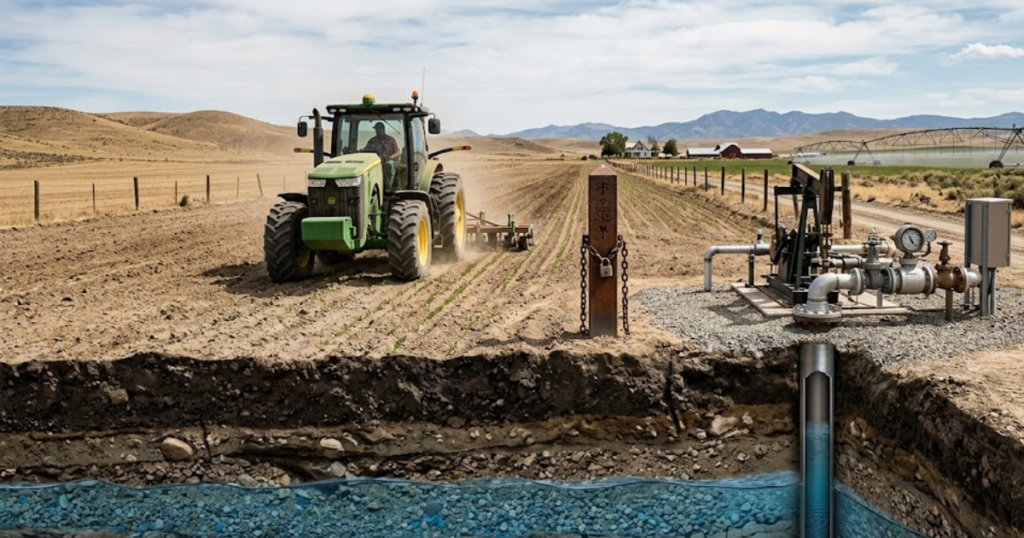
You find a pristine 35-acre parcel in a new equestrian subdivision. The listing agent assures you that you can easily pull an exempt well permit for your house, your barn, and your herd. You build your dream property, drill a 600-foot well, and the water flows beautifully.
Ten years later, your well starts sputtering, pulling up sediment, and eventually runs completely dry. You find out that a neighboring municipality just installed a massive, high-capacity commercial pumpstation nearby. When you call the state to complain, you discover a horrifying truth: the developer who sold you the land had quietly severed and sold the deep aquifer rights to the city years before you even bought the dirt.
You own the well, but they own the water.
In Colorado, water law is notoriously complex. While most buyers know to ask about surface irrigation rights, very few know to ask about the deep aquifers. Here is how to evaluate the security of a property’s sub-surface water rights before you make an offer.
Are There "Sub-surface" Water Rights That Have Been Severed From the Land?
Quick Summary: The Invisible Drought
- The Underground Split: Just like mineral rights, the rights to the deep groundwater aquifers beneath your property can be legally severed and sold off entirely separate from the surface land.
- The Developer's Playbook: It is a common practice for land developers to buy a large ranch, legally strip and keep the deep sub-surface water rights, and then subdivide the surface dirt into 35-acre horse properties to sell to unwary buyers.
- The Depletion Risk: If a municipality or commercial entity owns the sub-surface water beneath your farm, they can legally pump millions of gallons out of the aquifer to supply distant subdivisions, directly threatening your local water table.
- The Exempt Well Illusion: Even if the deep water rights are severed, the state may still allow you to drill a basic exempt domestic well for your horses. However, you are now pulling from an aquifer controlled and actively depleted by someone else.
Owning a well does not always mean controlling the long-term water source beneath your property. Sub-surface water rights can shape future usability, value, and water security.
1. Understanding the Severed Aquifer
Water in Colorado is treated as a separate, highly valuable commodity, entirely distinct from the surface real estate.
- The Legal Severance: A property owner has the legal right to deed the surface land to one buyer while explicitly reserving the sub-surface groundwater rights for themselves or selling them to a third party.
- The Basin Hotspots: This is incredibly common along the Front Range and the eastern plains, particularly within the massive underground Denver Basin, which includes the Dawson, Denver, Arapahoe, and Laramie-Fox Hills aquifers.
- The Silent Threat: A severed water estate is invisible. There are no pipelines or drilling rigs required on your surface land. The true owner of the water can sink a commercial well on an adjacent property and legally siphon the water out from directly beneath your pastures.
2. The Illusion of the "Exempt Domestic Well"
The most dangerous trap for buyers is misunderstanding what a well permit actually guarantees.
- The State Allowance: Even if the bulk sub-surface water rights have been severed, Colorado law typically still allows the surface owner of a 35-acre parcel to drill one exempt domestic well.
- The Limited Right: This permit legally allows you to pump up to 15 gallons per minute to water your home, your personal livestock, and up to one acre of lawn. It feels like you own the water, but you only own a tiny, highly restricted straw.
- The Depletion Reality: While you are allowed to pump your 15 gallons a minute, the commercial entity that owns the actual severed aquifer rights might be pumping 500 gallons a minute nearby. As the aquifer level inevitably drops, your shallow domestic well will be the first to go dry, forcing you to pay tens of thousands of dollars to drill deeper.
A domestic well permit can give you access to water without giving you meaningful control over the long-term condition of the aquifer feeding that well.
3. The Future Resale Value
A severed water estate acts as a ticking time bomb for your property's value.
- The Educated Buyer: As water scarcity becomes the dominant issue in the West, future buyers are becoming hyper-educated. If you try to sell a premium equestrian estate in ten years, a savvy buyer will walk away the moment they discover the sub-surface water rights do not transfer with the deed.
- The Lending Risk: Banks are beginning to scrutinize rural loans more closely regarding water sustainability. If an appraiser determines the local aquifer is being rapidly depleted by commercial pumping, the bank may refuse to underwrite the mortgage for your buyer.
4. The Title Search Imperative
You cannot rely on the seller's word or a standard property deed to protect you.
- Standard Title Exclusions: A standard title insurance policy specifically excludes water rights. The title company is guaranteeing you own the dirt, but they are not guaranteeing you own the water beneath it.
- The Deep Deed Search: To find out if the sub-surface water has been severed, you must hire a specialized water rights attorney or a specialized title examiner to pull the historical deeds and chain of title going back decades to see if a previous owner legally stripped the rights away.
We Secure the Source Before You Buy
We do not just ensure you have a well; we verify you own the water feeding it.
When Mark Eibner and Belinda Seville represent you in buying a Colorado horse property, we prioritize water security above all else. We help coordinate the specialized research required to verify the chain of title on sub-surface water rights. We want to ensure that the water your horses rely on today will still be there decades from now.
Contact Us Today to find a property with intact, fully deeded water rights.
Browse Active Colorado Horse Properties: Browse Active Colorado Horse Properties that offer long-term agricultural and water security
Frequently Asked Questions (FAQ) About Sub-surface Water
If the sub-surface water is severed, can the owner come onto my land to drill a well?
Unlike mineral rights, which are dominant and allow the owner to force their way onto your surface land to drill for oil, groundwater rights usually do not grant automatic surface access. The owner of the water rights typically must drill their commercial well on land they own or lease nearby, drawing the water horizontally from beneath your property.
How do I know which aquifer my well is tapping into?
The Colorado Division of Water Resources maintains a public online database of all registered well permits. By looking up the well permit number or the property address, you can access the original driller's log, which details the exact depth of the well and the specific aquifer formation it was drilled into.
Can I buy the severed water rights back?
Technically, yes, if the current owner is willing to sell them. However, if they have been sold to a municipality, a water district, or a large-scale housing developer, they are considered extremely valuable and are almost never sold back to private citizens.