
A 20-acre horse property has several distinct upkeep budgets rather than one fixed annual total. The annual maintenance cost for a 20-acre horse property also depends on hay needs, road and trail conditions, and how much work the land and facilities require.
It’s easy to focus on the acreage and overlook the costs of keeping barns, fences, equipment, and access roads usable. Hay can add another significant expense, especially when pasture doesn’t provide enough forage for the horses.
This article breaks down the main annual costs of maintaining a 20-acre horse property, including equipment, fencing, barns, roads, and hay. You’ll see which expenses recur, what drives them, and how the number of horses and the property’s layout shape the overall budget.
Key Takeaways
- Separate property upkeep from horse-care expenses to build a budget that reflects both the land and the herd.
- Assess equipment by its condition and the work it needs to handle, not acreage alone.
- Review fence lines, gates, and pasture layout together to identify where repairs and daily chores may add up.
- Road and trail upkeep depends on surface condition, drainage, and how often the routes are used.
- Estimate hay needs around pasture availability and each horse’s feeding routine to plan for seasonal shortfalls.
Equipment maintenance
The budget depends on equipment condition, hours of use, and the work each machine performs across the property.
A tractor used for mowing, hauling, and pasture work faces different demands from equipment used occasionally. Pasture acreage and terrain also shape the workload. In 2025, U.S. pastureland values rose 4.9% after adjustment for inflation, according to USDA National Agricultural Statistics Service. That land-value change is separate from equipment upkeep.
This video discusses horse-property carrying costs and facility upkeep across several property sizes.
Pasture Mowing and Weed Control
Pasture mowing, weed control, and reseeding help keep grazing areas usable and manage unwanted growth. Annual costs per acre depend on the land maintained, pasture condition, work frequency, and whether the owner hires help or does the work. Soil testing, overseeding, fertilizing, mowing, and weed control are separate tasks that can add to the total. More managed acreage generally means more work and equipment use.
Horse numbers affect grazing pressure and the upkeep plan, while regional climate influences the growing season and the timing of mowing or reseeding. Local labor rates shape hired-work expenses. Owners who do the work themselves still need to account for equipment use, fuel, and time.
Water System Upkeep
Water-system upkeep may involve wells, pumps, supply lines, and troughs. Annual costs depend on the system’s condition and design, as well as any needed repairs, so one figure will not suit every property. A trough in a distant pasture, for example, may require more line and equipment maintenance than one near the barn. Track leaks, pump performance, and trough condition to spot recurring maintenance needs.
More horses can increase demand on water systems, and the size and layout of the pasture affect how water reaches turnout areas. Climate and local labor rates influence repair schedules and hired-service costs. Routine checks take an owner’s time, while pump or well repairs may require specialized work.
Separate routine equipment servicing from repairs and replacement when estimating costs. List the machines used for mowing, hauling, and water-system tasks, then note their condition and how often they are used. This gives the annual budget a practical basis and shows how the property layout, horse numbers, and owner-performed work affect ongoing upkeep.
For qualifying equipment purchases, the Internal Revenue Service sets the 2025 Section 179 deduction limit at $2.5 million, which may affect replacement planning.
Fencing, gates, and property layout
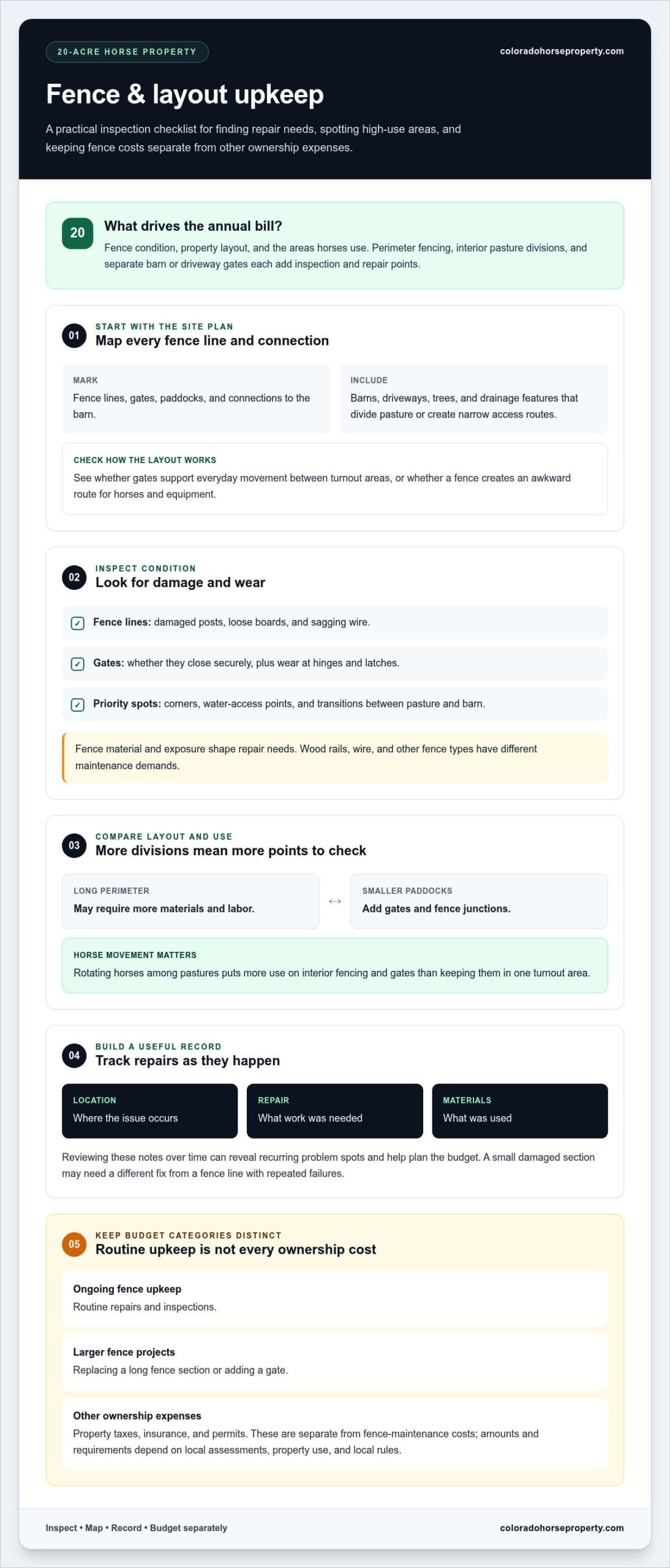
For owners, the annual bill depends on fence condition, layout, and the areas horses use. A 20-acre parcel may have perimeter fencing, interior pasture divisions, and separate barn or driveway gates. Each adds inspection and repair points.
Map the fence lines before estimating maintenance. Note damaged posts, loose boards, sagging wire, and gates that no longer close securely. Distinguish boundary fencing from interior divisions: a long perimeter may require more materials and labor, while several smaller paddocks add gates and junctions. The layout affects repair work and how easily horses move between turnout areas.
Fence material and exposure shape repair needs. Wood rails, wire, and other fence types each have different maintenance demands. Gates can wear at the hinges and latches, especially where horses pass through often. Inspect corners, water-access points, and transitions between pasture and barn. These spots often combine heavy use with multiple fence connections, making them practical priorities for regular checks.
Repair needs also reflect how the property is managed. Rotating horses among pastures puts more use on interior fencing and gates than keeping them in one turnout area. A small damaged section may need a different fix from a fence line with repeated failures. Record the location, repair type, and materials used. Reviewing those notes over time helps identify recurring problem spots and plan the budget.
Property layout affects more than fencing. Barns, driveways, trees, and drainage features can divide usable pasture or create narrow access routes. On a site plan, mark each fence line, gate, paddock, and connection to the barn. This makes it easier to see whether a gate supports everyday movement or a fence creates an awkward route for horses and equipment.
Property taxes, insurance, and permits also affect annual ownership costs. Property taxes depend on local assessments and applicable tax rules; insurance costs reflect the property and how it is used. Permit requirements and fees depend on local rules and planned work, such as building a new structure or making a major site change.
Keep these factors separate in the yearly budget. Routine repairs are ongoing upkeep, while replacing a long fence section or adding a gate can be a larger project. Property taxes and insurance are ownership expenses, not fence-maintenance costs. A property-specific program or tax classification may affect the tax bill, subject to local eligibility rules.
For buyers comparing acreage and layout, horse property listings can help identify properties with fencing and pasture features that match their plans.
Gravel, roads, trails, and access upkeep
On a 20-acre horse property, road and trail upkeep depends on the routes connecting the entrance, barn, paddocks, and hay storage. Gravel costs change with material quantity, hauling distance, grading, and surface condition. A driveway used for daily horse care and deliveries faces different demands from a lightly used trail crossing the acreage.
This is a reference for material costs, not the full installed cost. The total budget also depends on the distance gravel must be hauled and the preparation the road needs before it is spread.
Start by identifying the surfaces that need attention. Mark the entrance, barn approach, parking area, and trails leading to pasture or water. Note ruts, loose gravel, and places where runoff crosses a route. Reviewing each location helps distinguish a small repair from work affecting several connected sections.
Drainage affects how well gravel routes hold up. Water crossing a driveway can carry material downhill, while standing water can soften the surface. After rain, observe where runoff travels and whether it moves across or along the route. Grading and drainage work add to material costs, so a quarry estimate alone does not capture the full maintenance task.
Traffic patterns matter, too. A route used by a tractor, hay deliveries, and regular vehicles may wear differently from a trail used occasionally. Turns near a barn entrance, for example, can concentrate traffic and disturb the surface. Consider how each path supports feeding, horse care, and equipment movement when deciding which sections need regular attention.
When buying, review access routes alongside the acreage. A long internal driveway, steep approach, or connection to a county road can affect the work required to maintain access. Note the surface and drainage condition of each route, then consider whether it provides practical access to the barn, pasture, and storage areas.
Separate routine gravel touch-ups from larger improvement projects in the annual budget. Adding material to one worn section is different from rebuilding a driveway or correcting drainage across multiple routes. The work depends on surface condition, material volume, hauling, and grading. Recording the same locations over time helps identify recurring upkeep and plan access around daily horse care.
Barn maintenance
The amount depends on the building’s condition, materials, and intensity of use. A barn used daily for turnout, feeding, and equipment storage has different upkeep needs from a structure used mainly for shelter. Include routine repairs and utilities in the property budget.
Lighting, water systems, and other equipment contribute to utility use, so usage patterns matter. Track utility bills separately from repairs. This helps show whether annual changes come from greater activity in the barn or building work.
Manure management is another recurring expense. On-site composting or spreading has no single cost across properties: the workload depends on manure volume, available storage, equipment, and the distance material must be moved. Pasture use and grazing routines also affect where manure accumulates.
Plan barn inspections around the systems and surfaces exposed to daily use. Look for roof-seam leaks, damaged doors, loose hardware, and worn flooring. Check water fixtures and electrical equipment for visible problems. Keep repair records to distinguish recurring maintenance from a larger improvement, such as replacing a damaged section instead of repeatedly patching it.
For a practical annual estimate, group expenses into building repairs, utilities, and manure handling. Keep the categories separate to avoid counting costs twice in the overall property budget.
Use and layout shape the workload. A barn with several stalls, feed storage, and frequent horse movement may need more cleaning and attention than a simpler shelter. Manure-storage location matters, too. If it is far from the barn or grazing areas, moving manure requires more labor and equipment use.
Property condition shapes the maintenance plan more than acreage alone. During a barn inspection, note the roof, siding, doors, floors, water access, electrical systems, and manure-storage area. List urgent repairs separately from routine upkeep. This gives owners a clear basis for comparing the barn’s needs with the property’s broader annual expenses.
When budgeting, consider how feeding and turnout schedules affect barn use. More time indoors can increase cleaning and utility demands, while a grazing-focused routine shifts attention toward pasture and manure distribution. The right cost categories keep those different operating patterns visible without treating every 20-acre property as identical.
Hay consumption and prices
Hay spending depends on horse count, pasture access, feeding routine, and local supply. A single nationwide price would not reflect differences in bale size, delivery, or forage availability. Build the estimate around the amount your horses actually consume and the share of their forage supplied by grazing. That makes the budget more useful than applying one price to every 20-acre property.
A 1,000-pound horse without pasture access needs about 20-25 pounds of hay each day. This daily requirement gives owners a practical starting point for estimating feed volume. Horses with pasture access may rely on a different balance of grazing and stored hay. Record the feeding routine for each horse, since turnout and forage conditions affect how much hay the property must provide.
Hay prices depend on local availability, bale type and weight, and delivery arrangements. Compare the quantity supplied by each bale or load, not just its listed price. A smaller bale may be easier to handle, while larger deliveries may require suitable unloading and storage access. These details affect the purchasing plan even when acreage stays the same.
To estimate hay needs, list the horses, their feeding routines, and the periods when pasture provides forage. Track purchases by bale or ton, and note delivery needs separately. A riding horse turned out for part of the day may have a different routine from one kept in a barn longer. Keep those patterns visible in the feed budget rather than applying one assumption to the whole herd.
Growing hay on the property changes the expense categories, but it does not eliminate the work. Account for the acreage used for hay, harvest arrangements, and whether the crop meets feeding needs. Harvesting and purchased hay are separate budget items. Track them separately so the annual plan includes both production and any hay bought to supplement the crop.
Storage and access also affect how hay fits into daily operations. Identify a dry storage area and consider whether deliveries can reach it easily. A tractor or delivery vehicle may need a clear route to storage. Keep purchased-feed costs separate from equipment, pasture, and harvest expenses, then compare planned amounts with actual purchases throughout the year.
As you compare properties, use horse property listings to find acreage and facilities suited to your feeding and turnout plans.
Colorado Horse Property: AI-Powered Horse Property Search
Colorado Horse Property helps buyers find horse properties that match their land, facility, and upkeep priorities. Its AI-Powered Horse Property Search can narrow options by features such as barns, arenas, water rights, and pasture sizes. This is useful when considering how a property’s layout may affect future maintenance and hay needs.
Use Buyer Representation when comparing properties and seeking support in evaluating how their equestrian features fit your plans. Real Estate Listing Services help sellers present a horse property to prospective buyers, while Transaction Management supports the purchase or sale process.
To explore horse-property options or discuss your next step, visit coloradohorseproperty.com.
Plan Your Next Move With Confidence
Use your maintenance estimate as a decision-making tool, not just a yearly total. It can help you identify which property features support your routine and which compromises may create ongoing work. Consider how you plan to use the land, how much time you can devote to upkeep, and which facilities matter most to your plans.
An estimate of the annual maintenance cost for a 20-acre horse property is most useful when it reflects your intended use. A property suited to one owner’s turnout and feeding routine may not fit another’s. Think beyond the purchase itself: the right match should support how you expect to care for horses and manage the land over time.
As you compare options, keep your priorities clear and use them to guide your search. Colorado Horse Property can help you take that next step. Contact Colorado Horse Property to discuss your horse-property search and move toward a property that fits your goals.
A well-matched property can bring your plans for land and horses within reach.
Frequently Asked Questions
What Are Your Costs?
Annual ownership costs depend on the property’s condition, horse numbers, and how you use the land. Separate routine upkeep from horse care, property taxes, insurance, and larger repairs. A property with worn infrastructure, for example, may need a different first-year budget from one with well-maintained facilities. Track expenses by category to see which costs recur and which relate to a specific repair or improvement.
What is the average annual maintenance cost for a 20-acre horse property in the United States?
There isn’t one useful annual average for every 20-acre horse property in the United States. A property’s total depends on the number of horses, pasture and facility condition, hay needs, and the amount of work hired out. Build an estimate from the systems and land you’ll maintain, then adjust it for your horse-care routine. This gives a more practical figure than treating acreage as the only cost driver.
What are typical annual costs for fencing maintenance on a horse property?
Where a property falls within that range depends on fence condition, material, and how much interior fencing divides turnout areas. For a useful review, record repairs by location, such as a damaged gate near the barn or worn sections around a busy paddock. These notes help distinguish recurring repairs from a larger replacement project.
How much does it cost to maintain a horse barn, stalls, and run-in sheds each year?
The amount depends on the structure’s condition and use, including wear to stalls, doors, roofing, and other components. Keep building maintenance separate from utilities and manure handling, which are distinct expenses. A run-in shed may have different upkeep needs from a barn with stalls and storage, so include each structure in the property maintenance plan.
What are typical costs for maintaining horse-property driveways, gates, and drainage?
There is no single annual figure for driveway, gate, and drainage upkeep. Costs depend on route length, surface condition, traffic, material needs, hauling, and grading. A worn entrance used for hay deliveries may need different work from a lightly used trail. Record drainage trouble spots as well, since runoff can move gravel and cause repeated maintenance in the same area.
How much does pasture mowing, weed control, and reseeding cost per acre annually?
Expenses vary widely depending on weed pressure, fertilizer requirements, seed selection, and whether you manage the land yourself or hire a professional. At Colorado Horse Property, owners typically budget per acre based on local agricultural rates and seasonal agronomy needs to keep pastures productive and safe for grazing.
How much do water systems, wells, pumps, and troughs cost to maintain annually?
There is no single annual estimate: costs depend on the system’s condition and design, and on any repairs required. Track leaks, pump performance, and trough condition to identify recurring maintenance needs.