
A standard property listing can show a home and acreage but leave out interior upgrades and details that determine whether the land suits horses. That’s why relying on general real estate sites is bad for finding horse properties when you use listing data alone: key features may not appear in assessor records, and a listing doesn’t establish what local zoning allows. Use these platforms to discover properties, not as the final word on condition or permitted use.
It’s easy to see why a broad property search feels like a useful starting point, whether exploring residential markets through resources like zakksellshomes.com or scouting larger parcels. But a horse property needs to work beyond the front door: interior improvements, barns, pasture, access, and land-use rules can all affect whether it fits your plans.
At Colorado Horse Property, we know that finding the right setup takes specialized insight. This article explains two gaps to watch for: unreported interior upgrades and missing or unclear equestrian zoning details. You’ll learn what listing information may leave out, what to investigate as you assess a property, and how to move from a promising search result toward a more informed decision.
Key Takeaways
- Treat listing details as a starting point, and look beyond assessor records for interior upgrades that may affect a property’s fit.
- Assess zoning and local equestrian context alongside the land itself to understand whether your intended horse use is supported.
- Compare acreage, fencing, barns, and other facilities with your practical requirements rather than relying on a listing description alone.
- Look for signs that a listing is outdated, duplicated, or missing details before using it to guide your search.
- Account for the condition and needs of fencing, wells, septic systems, and barns when evaluating the property’s overall suitability.
1. Unreported upgrades and interior features
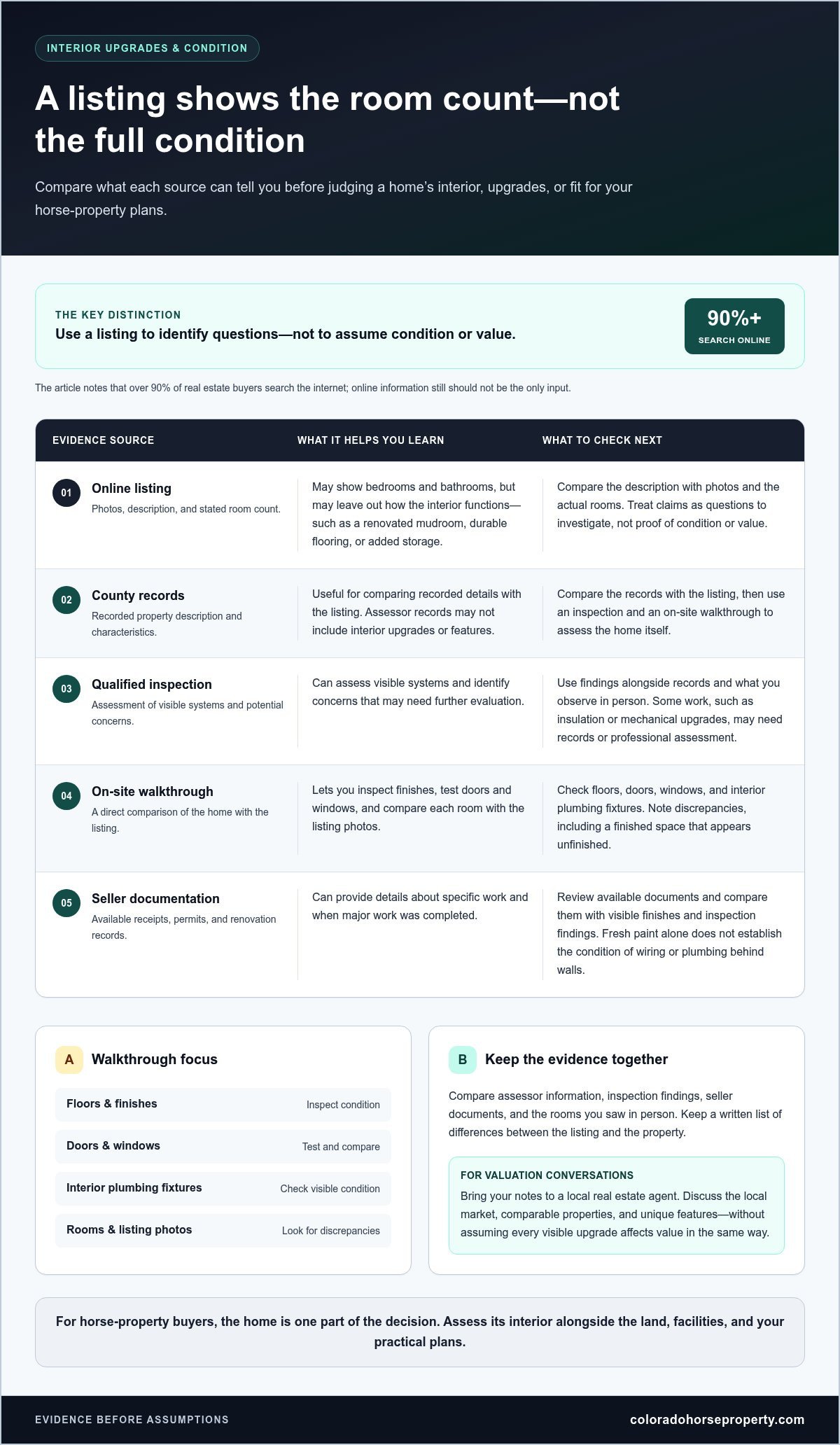
County assessor records, inspection findings, and an on-site walkthrough reveal different aspects of a property. Zillow can’t account for upgrades or interior features absent from assessor records, one reason Zillow is bad for finding horse properties when used alone. Compare the listing with county records, then inspect the home before judging its condition or value.
A listing may show the number of bedrooms and bathrooms without explaining how the interior functions. For example, a renovated mudroom, durable flooring, or added storage can matter to horse owners bringing gear inside. Look for these details in listing photos and descriptions, then note what needs closer inspection.
For a closer look at rural valuation blind spots, watch this video:
For example, a finished room or updated kitchen may shape your renovation plans, but an online estimate can’t describe the workmanship. A mortgage valuation and a buyer’s evaluation also serve different purposes. Use the listing to identify questions, not to assume an upgrade adds a particular amount of value.
During an on-site visit, compare visible finishes with the listing’s claims. Check the condition of floors, doors, windows, and interior plumbing fixtures. Ask when major work was completed and review available permits or receipts. A fresh coat of paint, for instance, doesn’t establish the condition of wiring or plumbing behind the walls.
Use three sources for a clearer picture:
- County records: Compare the property description and recorded characteristics with the listing.
- Inspection: Have a qualified inspector assess visible systems and identify concerns requiring further evaluation.
- On-site walkthrough: Test doors and windows, inspect finishes, and compare each room with listing photos.
- Seller documentation: Review available receipts, permits, and renovation records for specific work.
These steps help distinguish cosmetic changes from substantial improvements. A remodeled kitchen may be easy to see, while insulation or mechanical upgrades require records or professional assessment. Keep a written list of discrepancies, such as a finished space described in the listing that appears unfinished during your visit.
For horse-property buyers, the home is only one part of the decision, but its interior condition still affects daily use and future work. Compare assessor information, inspection findings, and the actual rooms before deciding how the property fits your plans. That evidence gives you a firmer basis for evaluating the real estate than a listing summary alone.
Over 90% of real estate buyers search the internet when looking for property, but online information should not be the only input when considering a home’s interior or its overall fit. Just as residential buyers in other regions rely on specialized teams like Team239 to verify property conditions and navigate local market nuances, equestrian buyers benefit from local expertise. To refine a property valuation, consult a knowledgeable agent who can evaluate comparable properties and unique features rather than assuming every visible upgrade affects value in the same way.
Bring notes on the interior condition and questions raised by the listing or walkthrough to that conversation. A local agent can consider those details alongside comparable properties and the property’s unique features when refining the valuation. Ground your assessment in what you observed and what records or an inspection can support, and treat online information as a starting point, not a final judgment.
2. Zoning and equestrian communities
Horsekeeping requirements and property prices vary across the United States, including between Colorado communities. Local land-use rules, property size, terrain, access, and existing equestrian facilities all shape what a parcel can support and how buyers compare its value. A broad listing can’t capture every local distinction.
A Zillow listing can show a property’s location without explaining whether its zoning fits your plans. A rural or agricultural description doesn’t establish that you can keep horses, build a barn, or operate an arena. Treat the listing as a starting point, then investigate the specific parcel and intended use.
Begin with the property’s county and local jurisdiction. Find the parcel’s zoning designation and review the relevant land-use information. Rules can differ between neighboring communities, so a general description of Colorado won’t tell you what applies to one address. Keep the parcel details handy as you research.
Match the rules to your plans. Keeping horses for personal use may raise different questions than running an equestrian business. Barn placement, arena construction, fencing, and the number of animals may also affect whether a property suits your needs. Focus on your intended use, not only the listing’s equestrian language.
Use this practical review before getting attached to a property:
- Locate the parcel: Record its county, town, and parcel identification from the listing or property records.
- Find the zoning designation: Identify the local zoning category that applies to the parcel.
- Compare intended uses: Review local information about horsekeeping, barns, arenas, fencing, and business activity.
- Assess the site: Consider terrain, access, usable pasture, and nearby agricultural resources.
- Define your plans: Note whether you intend private horsekeeping or an equestrian operation.
Most real estate websites begin with a city, town, or ZIP-code search. A location search can surface listings, but it doesn’t explain local land-use details or community support. For example, two nearby Colorado properties may have different zoning designations or site conditions. Assess each address individually rather than assuming one listing represents the whole area.
Location also shapes property value through practical features. Usable pasture, suitable terrain, water access, and existing horse facilities affect how a property compares with nearby listings. Compare properties by the land and infrastructure that fit your plans, not acreage alone. Local demand and property features also influence how buyers assess value.
For Colorado searches, explore horse-property listings alongside parcel-specific land-use research. Listing details can help narrow your search, while understanding the local context helps you evaluate whether a property aligns with your horsekeeping plans.
Requirements can differ between neighboring communities, so check horsekeeping, barns, arenas, fencing, and business activity against the parcel’s local zoning and intended use. Prices also vary with property size, terrain, access, usable pasture, water access, and existing equestrian facilities.
3. How accurate are Zillow listings for acreage, fencing, barns, and horse facilities?
Acreage figures and facility descriptions are useful starting points, but they don’t show how land functions for horses. A Colorado parcel’s stated acreage doesn’t tell you how much is open pasture, steep ground, wooded area, or accessible year-round. Compare the listing with parcel maps, then assess the usable land on site. Total area alone can’t establish whether the layout supports your plans.
Fencing needs a closer look than a listing label can provide. “Fenced” doesn’t describe the material, condition, paddock layout, or whether gates work well for moving horses. Walk the visible fence lines and note leaning posts, loose wire, damaged rails, and gaps. Aerial images may help show paddock divisions, but can’t reveal whether the fence is secure or needs repairs.
Descriptions of barns and shelters also leave important questions unanswered. A listing may mention a barn without explaining its layout, access, or visible condition. Check whether the structure has usable doors, enough clear space for your intended activities, and practical access from the pasture. Photos can show its placement, but an on-site visit helps reveal drainage problems, wear, or obstacles around the building.
For each property, compare the listing with what you can observe and document:
- Acreage: Compare the stated area with parcel boundaries, slopes, wooded sections, and grazing ground.
- Fencing: Walk the perimeter and paddock divisions; note damaged sections, gates, and access to water or shelter.
- Barns and sheds: Match each described structure to the site, then assess its layout, access, and visible condition.
- Arenas and other facilities: Review available photos, then assess footing, drainage, and connections to the rest of the property.
Use listing details to guide specific questions during a visit. If a description mentions a barn, identify which structure it means and consider whether its layout suits your intended use. If the property has open pasture, observe how slopes, drainage, and access affect its practical use. Take notes by feature and photograph relevant conditions for comparison.
A Colorado property’s acreage and equestrian features need to be evaluated together. A large parcel may include terrain that limits access, while a smaller property may have a layout that better fits your horsekeeping needs. Compare the listing description, parcel map, photos, and site conditions before deciding whether the land and facilities work for your plans.
Examples show why feature labels and acreage should be checked separately. A listing in Larkspur, Colorado, notes run-in sheds, but that wording alone does not establish their condition, placement, or access from grazing areas. Confirm which structures are present and inspect their doors, flooring, drainage, and surrounding ground rather than treating the label as proof of suitability.
A multi-acre equestrian lot in Elbert, Colorado, was listed with a specific total acreage figure. That figure gives a stated area, not a breakdown of usable pasture, terrain, or access. Compare the mapped boundaries with what you can walk, and record how the land and any visible horse facilities work together. These examples are prompts for verification, not substitutes for checking the property in person.
4. How often are Zillow horse-property listings outdated, duplicated, or missing key details?
There’s no reliable frequency for outdated, duplicated, or incomplete horse-property listings. Accuracy depends on the listing source, update timing, and how fully its features are described. A status change, revised price, or new property detail can make an earlier view stale. Treat each page as a snapshot, not a live record of every transaction detail.
Updates can happen between the time you save a property and your next review. For example, a listing may show one price during your first search and a different amount later. A saved screenshot won’t reflect that change. Record the date you viewed each listing and compare its current details before arranging a visit or making decisions.
Duplicate results can complicate a search, too. The same property may appear with different photos, wording, or feature descriptions. Compare the street address, parcel details, image set, and property description before counting two results as separate opportunities. If an address appears more than once with conflicting information, note the discrepancy and keep the clearest current version.
Missing details can make a listing hard to assess even when it appears current. A description might omit a barn’s condition, fence layout, water access, or offer status. For example, “horse property” doesn’t tell you whether pasture divisions or shelter fit your plans. Record each unanswered detail rather than assuming it’s present or absent.
Use a consistent review process for every property you save:
- Record the address: Save the street address and parcel information with the listing.
- Note the status and price: Write down what the page displays and the date you viewed it.
- Compare repeated results: Check addresses, photos, descriptions, and property features for overlap.
- Track missing details: List questions about barns, fencing, acreage, and horsekeeping infrastructure.
- Revisit saved pages: Look for changed status, revised descriptions, or price adjustments before relying on earlier notes.
For a practical comparison, imagine saving two results with the same street address but different acreage descriptions. Keep both observations in your notes, then compare the parcel details with the current listing information. Dated records make it easier to spot changes and avoid treating an old price or feature description as current.
Listing information is deemed reliable but not guaranteed. Keep a dated shortlist so you can separate current details from earlier observations. This is especially useful when comparing properties with different acreage and equestrian features. Mark unknowns clearly, then use the listing’s address and parcel information to keep each property’s notes together.
5. What hidden costs come with buying horse property, including fencing, wells, septic systems, and barn repairs?
A listing price doesn’t describe the work needed to make a horse property function. A fence may need repairs, a well may need equipment attention, or a barn may require maintenance. Zillow photos and descriptions rarely show the full condition of these systems. Assess each property specifically before comparing homes by price alone.
Start with fencing. Walk the perimeter and each visible paddock, noting damaged rails, loose wire, leaning posts, and gates that don’t close securely. A listing may say “fenced,” but that doesn’t explain the material, layout, or repair needs. Record which areas need work and whether the current divisions support your planned horsekeeping routine.
Water deserves its own review. For a property with a well, identify the pump, pressure tank, visible piping, and water access points around the land. Note whether troughs and barn fixtures receive water, and ask for available well records. A listing photo can show a trough, but it can’t demonstrate water flow or reveal the condition of buried lines.
Septic systems also affect how a property works day to day. Locate the system and available records, then consider its age, maintenance history, and relationship to the home’s occupancy. For example, a house with additional living space may place different demands on the system than the listing suggests. A qualified inspection can help identify needed maintenance or further evaluation.
A barn can look sound from the driveway while needing attention in less visible areas. Inspect the roof, foundation, drainage, doors, and interior surfaces. Look for signs of water entry, wood damage, poor ventilation, or electrical work that needs closer assessment. A run-in shed and a full barn serve different purposes, so match each structure’s condition and layout to your intended use.
Keep a written property review with separate notes for each system:
- Fencing: Mark damaged sections, gates, and paddock boundaries.
- Well: Note equipment, water access, and available service records.
- Septic: Record the system location, maintenance information, and inspection findings.
- Barn: List visible concerns involving structure, drainage, roofing, and utilities.
Repair needs depend on the extent of the work, materials, site access, and local labor. Compare written estimates for specific tasks rather than relying on a broad allowance. That turns a vague concern into a property-specific budget item and helps you weigh improvements against the purchase price.
Build your shortlist around land and facilities that fit your plans, then find horse property listings to compare potential options.
Colorado Horse Property: AI-Powered Horse Property Search
Colorado Horse Property helps buyers search for equestrian real estate with its AI-Powered Horse Property Search. Search by features such as barns, arenas, water rights, and pasture sizes to focus on properties that better match your horsekeeping priorities. Use listing details to build a shortlist, then assess each property’s condition, land use, and fit for your plans.
When you’re ready to compare options or move toward a purchase, Buyer Representation can support your search, while Transaction Management helps coordinate the transaction. These services offer a practical next step after identifying gaps in broad real estate listings.
Explore Colorado horse properties at coloradohorseproperty.com.
Turn your search into a property plan
Understanding why Zillow is bad for finding horse properties can help you use broad listings more deliberately. The next step is to turn your priorities into a search plan: decide which equestrian features are essential, which improvements you could take on, and what kind of setting suits your day-to-day needs. That gives every property you consider a practical purpose beyond looking attractive online.
For a Colorado search, Colorado Horse Property’s AI-Powered Horse Property Search helps narrow options by equestrian features. Its Real Estate Listing Services and Buyer Representation can support the move from browsing toward evaluating properties and pursuing a purchase. Bring your priorities into the process to keep your search focused on the property and lifestyle you’re working toward.
Ready to take the next step? Contact Colorado Horse Property to begin your Colorado horse-property search. A clear plan can bring your goals and the right property closer together.
Frequently Asked Questions
How can buyers check whether a property allows horses and how many horses are permitted?
Check the parcel’s zoning designation and local land-use rules, then ask the local planning or zoning office how they apply to your intended use. Provide the property address or parcel number and the number of horses you plan to keep. Ask whether acreage, property use, shelters, or other site conditions affect the permitted count. Keep the response with your property notes, since a listing’s “horse property” label doesn’t establish permission or horse limits.