
Building a single loafing shed in Colorado today often costs more in permit delays and material surcharges than the structure’s physical value. For horse owners, the dream of a Front Range ranch often stalls when faced with the logistical hurdle of constructing safe, weather-resistant shelters from scratch. It’s a common frustration to browse standard real estate sites only to find they lack the specific filters required to find properties with loafing sheds for sale efficiently. You shouldn’t have to guess if a listing has the infrastructure your livestock needs to survive a sudden April blizzard or the scorching summer sun.
We agree that your time is better spent in the saddle than at a county zoning office. This guide will show you how to secure a turnkey equestrian estate by leveraging our 40 years of local experience and specialized AI-powered search tools. You’ll discover why these structures are essential for Colorado’s unique climate, how they impact long-term property value, and the exact steps to navigate the 2026 market with precision. From understanding regional weather impacts to identifying high-utility acreage, we’ll help you find a home that’s ready for your horses on day one.
Key Takeaways
- Learn why existing loafing sheds are the gold standard for pasture-boarded horses in Colorado’s unpredictable climate, saving you significant time and construction costs.
- Understand the critical structural requirements for shelters, including specific snow load engineering and optimal south-facing orientation for maximum wind protection.
- Navigate complex county zoning laws and “Use by Right” regulations to ensure your agricultural structures are fully compliant with local land-use codes.
- Discover how to use specialized AI-powered tools to quickly find properties with loafing sheds for sale without the frustration of manual filtering on generic sites.
- Leverage 40 years of Front Range real estate expertise to evaluate the true utility and long-term value of ranch infrastructure before you make an offer.
Why Properties with Loafing Sheds are the Gold Standard for Colorado Horse Owners
A loafing shed, frequently called a run-in shed, is a permanent three-sided structure designed to provide livestock with immediate shelter from the Front Range’s volatile weather. Unlike a traditional closed barn, these structures allow horses to enter and exit freely, offering 24/7 protection from wind, snow, and sun without restricting their movement. For owners who prioritize natural husbandry, these structures are non-negotiable. When you look to find properties with loafing sheds for sale, you’re searching for a specific type of land utility that supports pasture-boarding. This management style keeps horses moving, reduces the risk of digestive issues, and mimics their natural herd environment.
The Value of Move-In-Ready Equestrian Infrastructure
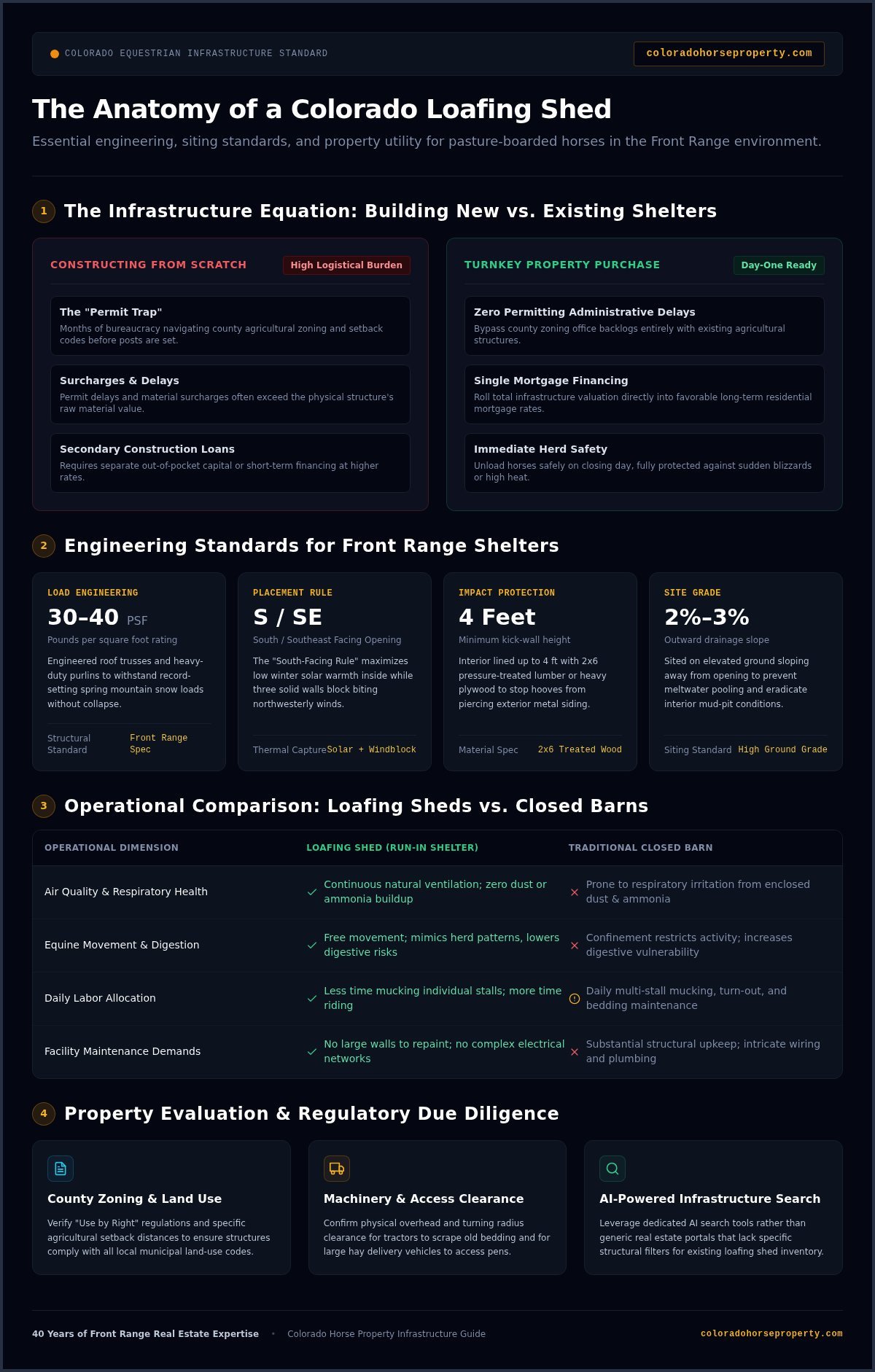
Building a new structure in 2026 isn’t just about the current cost of lumber or steel. It’s about avoiding the “permit trap.” Many Colorado counties have specific agricultural codes and setback requirements that can take months of bureaucracy to navigate before a single post is set. Buying a horse property for sale in colorado with existing sheds lets you skip this administrative headache entirely. Financing is also significantly more efficient. Rolling the cost of infrastructure into a single mortgage often results in better long-term rates than securing separate construction loans later. You can unload your trailer the day you close escrow, confident that your horses have a safe place to weather a sudden mountain storm.
Loafing Sheds vs. Traditional Barns: A Buyer’s Perspective
While large barns are often seen as prestigious, they come with higher maintenance demands and specific health risks. Stalled horses are frequently prone to respiratory issues caused by dust and ammonia buildup. Loafing sheds solve this by providing constant, natural ventilation. Owners often find these properties more manageable for several reasons:
- Lower maintenance: There’s no need to paint large exterior walls or manage complex electrical systems found in full-scale barns.
- Horse health: Constant access to the outdoors improves hoof quality and mental well-being.
- Operational efficiency: You’ll spend less time mucking stalls and more time in the saddle.
When you find properties with loafing sheds for sale, you’re investing in a lifestyle focused on horse health and owner efficiency. These properties represent the gold standard because they offer the most practical balance of protection and freedom for the high plains environment.
Essential Features of a High-Quality Loafing Shed on a Colorado Ranch
Identifying high-quality features is the next step once you decide to find properties with loafing sheds for sale. In the Colorado Front Range, a shed isn’t just a basic three-sided box; it’s a piece of engineered infrastructure that must withstand extreme environmental stress. Structural integrity is the primary concern. Local snow loads can vary significantly between the plains and the foothills, often requiring roofs engineered to handle 30 to 40 pounds per square foot. A shed that lacks proper truss bracing or heavy-duty purlins won’t survive a record-setting spring blizzard.
Orientation is equally critical for animal welfare. The “South-Facing Rule” is the industry standard for a reason. By positioning the open side of the shed toward the south or southeast, the structure captures maximum winter sun while the back wall blocks the biting northwesterly winds. Proper kick-wall construction is another non-negotiable safety feature. The interior should be lined with 2×6 pressure-treated lumber or heavy-duty plywood up to at least four feet high. This prevents a horse from kicking through the exterior metal siding, which can cause devastating injuries to their legs.
Site Placement and Drainage Considerations
A poorly placed shed quickly becomes a covered mud pit. When evaluating a property, look for structures situated on high ground with a 2% to 3% slope away from the opening. This ensures that meltwater and rain don’t pool inside the shelter. You also need to consider operational access. Is there enough clearance for a tractor to scrape out old bedding? Can a hay delivery vehicle reach the area during a muddy thaw? Properties that already have power and water lines run to the shed site for heated waterers offer a massive advantage in the 2026 market.
Durability and Material Standards in 2026
Modern buyers are increasingly prioritizing fire resistance and longevity. Steel-framed loafing sheds have become the preferred choice over traditional wood-pole construction because they don’t rot and offer superior protection in wildfire-prone areas. If you’re inspecting a wood-framed structure, check the ground-contact points. The posts must be pressure-treated and show no signs of “heaving” from the freeze-thaw cycle. During your walkthrough, look for high-gauge metal roofing with reinforced trim. Our AI-powered search can help you zoom in on these structural details in listing photos, saving you hours of wasted travel to substandard sites.
Navigating Zoning and Land Use for Equestrian Shelters
Finding the right acreage is only half the battle. You must also understand the legal framework governing agricultural structures. In many Colorado counties, loafing sheds fall under “Use by Right.” This means they’re permitted without a public hearing as long as they meet specific size and use criteria. However, setback requirements are a common pitfall. A shed placed too close to a property line can lead to code violations or forced removal. When you find properties with loafing sheds for sale, always verify that the existing structures comply with these boundary rules before closing.
Tax assessments also vary based on construction methods. Structures built on skids are often classified as “temporary” and might not increase your property tax basis. Conversely, sheds anchored to permanent concrete piers are usually considered permanent improvements. While permanent sheds offer better stability against high plains winds, they’ll impact your annual tax bill. These shelters are also vital for meeting “adequate shelter” standards. In counties like Douglas or Elbert, having proper structures can be a prerequisite for maintaining your legal horse-to-acreage ratio.
County-Specific Regulations: Douglas, Elbert, and Beyond
Zoning isn’t uniform across the Front Range. Elbert County is known for open-space rules that favor agricultural utility. This makes it a prime location for those who need multiple shelters across large pastures. Douglas County is often more restrictive, especially in areas zoned as “Rural Residential.” If you’re evaluating colorado land, you’ll need to verify the specific zoning sub-classification. A mountain property in Jefferson County will face different wind-load and setback codes than a ranch on the eastern plains.
Water Rights and Livestock Management
Shelter placement isn’t just about the structure. It’s about the resources surrounding it. Your well-water permit often dictates how many head of livestock you can legally support. If a loafing shed is positioned far from your permitted water source, you’ll face the logistical challenge of hauling water or installing expensive new lines. Smaller equestrian estates may also require a formal manure management plan. This ensures that runoff from high-traffic areas around the shed doesn’t contaminate local watersheds or violate grazing regulations. When you find properties with loafing sheds for sale, we help you navigate these specific legal hurdles to ensure your ranch remains compliant.
Using AI-Powered Search to Find Horse-Ready Acreage Faster
Most real estate platforms are built for suburban homebuyers. They focus on bedroom counts and kitchen finishes. For a rancher, those details are secondary to the land’s utility. Trying to find properties with loafing sheds for sale on a standard MLS portal is often an exercise in frustration because these specific outbuildings aren’t indexed as searchable features. You’re typically forced to manually scroll through dozens of photos, hoping to catch a glimpse of a shelter in the background of a pasture shot. This manual process is slow and often leads to missing the best listings in a competitive market.
Our proprietary AI-powered search technology changes this dynamic. By processing natural language in listing descriptions and using computer vision to analyze property images, our system identifies specific equestrian infrastructure that others miss. It recognizes the difference between a small garden shed and a functional run-in shelter. This allows you to find properties with loafing sheds for sale by setting high-precision alerts for terms like “loafing shed,” “animal shelter,” or “equestrian outbuilding.” You’ll only spend time reviewing listings that meet your livestock’s immediate requirements, effectively filtering out properties that lack the necessary infrastructure.
Filtering for Specific Equestrian Needs
Precision is the key to a successful search in the 2026 market. You can customize your parameters to include acreage minimums, specific fencing types, and the presence of move-in-ready shelters. This “turnkey” approach is essential for buyers who need to relocate animals immediately without waiting months for construction permits. To explore the current market with these advanced tools, you can browse equestrian real estate Colorado to see how our data-driven approach simplifies the selection process.
The Role of High-Resolution Imagery and Virtual Tours
Digital tools now allow for a deeper level of remote due diligence. AI-enhanced photo analysis helps verify the condition of a shed’s roof and kick-walls before you even schedule a showing. You can assess pasture quality and identify potential drainage issues through high-resolution satellite overlays integrated into our search platform. For out-of-state buyers, virtual walkthroughs provide a realistic sense of the layout between the main residence and the livestock areas. This technology filters out substandard properties, saving you thousands in unnecessary travel costs. Start your specialized search today with our AI-powered horse property tool to see the difference professional technology makes.
Expert Representation for Your Colorado Horse Property Purchase
Buying a ranch isn’t the same as purchasing a suburban bungalow. You need a representative who knows the difference between a decorative garden shed and a structure engineered to survive a 40 pound snow load. Specialized agents understand that the value of a property is inextricably linked to its infrastructure. Mark and Alison Eibner bring 40 years of Front Range experience to every transaction. They don’t just look at the house; they evaluate the grazing potential, the water rights, and the structural integrity of every outbuilding on the land.
When you find properties with loafing sheds for sale, the negotiation phase requires a specific set of skills. A generalist might not know how to accurately price a repair for a heaved post or a damaged kick-wall. We advocate for credits or repairs based on actual agricultural construction costs. Our strategic partnership with Meridian Title & Escrow ensures that complex land titles and agricultural easements are handled with precision. This specialized transaction management prevents the administrative delays that frequently plague rural real estate deals.
The Realty Oasis Advantage
We offer more than just a search tool. Our deep roots in the Colorado equestrian community provide access to off-market listings and pocket ranches that never hit the public MLS. We provide expert guidance on horse real estate for sale valuations, ensuring you don’t overpay for poorly maintained infrastructure. We speak your language because we’re horse owners ourselves. We understand the urgency of a “must-have” list that includes safe fencing, reliable shelters, and proper site drainage.
Next Steps: Your Search Starts Here
Your search begins with a focused consultation where we define your specific operational needs. We’ll help you prepare a comprehensive list of requirements, including acreage minimums, water access permits, and shelter counts. Once your criteria are set, we’ll deploy our advanced technology to help you find properties with loafing sheds for sale that match your vision. Don’t waste time on generic sites that don’t understand your lifestyle. Start your AI-powered search for Colorado horse properties today!
Secure Your Turnkey Equestrian Estate Today
Securing a Colorado ranch that’s ready for your horses from day one requires more than a simple property search. You’ve learned that existing loafing sheds offer immediate ROI by bypassing the lengthy permitting and construction cycles of the Front Range. By prioritizing structures with proper snow load engineering and south-facing orientation, you ensure your livestock remains safe through every season. Navigating these technical details is essential for any long-term investment in rural acreage.
Our 40 years of specialized Colorado real estate experience combined with our exclusive AI-powered search technology makes it easy to find properties with loafing sheds for sale that meet your exact standards. We provide expert buyer and seller representation to manage every detail of the transaction, from zoning verification to title coordination. You don’t have to navigate the complexities of the 2026 market alone. Find Your Perfect Colorado Horse Property with Our AI Search and take the first step toward fulfilling your rural lifestyle goals. Your ideal equestrian estate is waiting for you.
Frequently Asked Questions
What is a loafing shed and why do horses need them?
A loafing shed is a three-sided, open-front structure that provides horses with immediate shelter from Colorado’s volatile climate. These structures are essential because they allow livestock to escape the wind, snow, and sun at will while maintaining natural movement. Unlike a closed barn, a run-in shed promotes better respiratory health by providing constant ventilation. It’s the standard for managed pasture boarding on any functional Front Range ranch.
Does a loafing shed increase the property value of a Colorado ranch?
Yes, existing infrastructure significantly increases marketability and value. Buyers are often willing to pay a premium to avoid the logistical headache of securing permits and hiring contractors for new builds. When you find properties with loafing sheds for sale, you’re looking at a turnkey asset. This pre-existing utility allows for immediate livestock placement and often rolls the infrastructure costs into a single, manageable mortgage for the new owner.
Can I build a loafing shed on any Colorado land I buy?
Building rights depend entirely on local zoning and land-use regulations. While many agricultural zones allow these structures “by right,” you must still comply with specific setback requirements and acreage-to-horse ratios. Counties like Douglas and Elbert have different standards regarding temporary versus permanent buildings. It’s vital to consult with a specialized real estate agent to verify the specific building codes for any parcel of Colorado land before you commit to a purchase.
How many horses can fit in a standard 12×24 loafing shed?
A standard 12×24 loafing shed typically accommodates two to three horses comfortably. Most equestrian experts recommend providing at least 100 to 120 square feet per horse to prevent dominant animals from cornering others. If you have a larger herd, you’ll need multiple structures or a wider opening to ensure safe entry and exit. Proper sizing is critical for maintaining herd harmony and preventing injuries within the shelter during a storm.
What are the zoning requirements for horse shelters in Douglas County?
Douglas County has specific regulations regarding “Rural Residential” and “Agricultural” zoning. Most shelters require a minimum setback from property lines, usually between 25 and 50 feet depending on the specific sub-zone. You must also ensure your property meets the minimum acreage requirements for the number of horses you plan to keep. We recommend reviewing the Douglas County Zoning Resolution or working with our team to verify current compliance for any listing.
Is it better to buy a property with a barn or just loafing sheds?
The choice depends on your management style and the specific needs of your horses. Loafing sheds are often superior for respiratory health and involve much lower maintenance costs than traditional barns. However, a barn provides a controlled environment for grooming, medical care, and extreme weather protection. Many buyers prefer properties that offer a combination of both to maximize flexibility for rotational grazing and professional year-round horse care.
How do I filter real estate listings for specific horse structures?
Standard real estate sites rarely offer filters for specific outbuildings. To find properties with loafing sheds for sale efficiently, you should use our proprietary AI-powered search tool. Our technology analyzes listing descriptions and high-resolution photos to identify equestrian infrastructure that generic platforms miss. This saves you hours of manual scrolling and ensures you only visit properties that already have the essential shelters and fencing your horses require to stay safe.
Do loafing sheds require a permanent foundation in Colorado?
In Colorado, the requirement for a foundation often depends on the structure’s classification. Portable loafing sheds built on heavy-duty steel or wood skids typically don’t require a permanent concrete foundation. However, permanent structures meant to withstand high-velocity Front Range winds usually need to be anchored with concrete piers or heavy-duty earth anchors. Always check your local building department’s requirements for wind-load engineering to ensure the structure stays put during a severe mountain storm.