
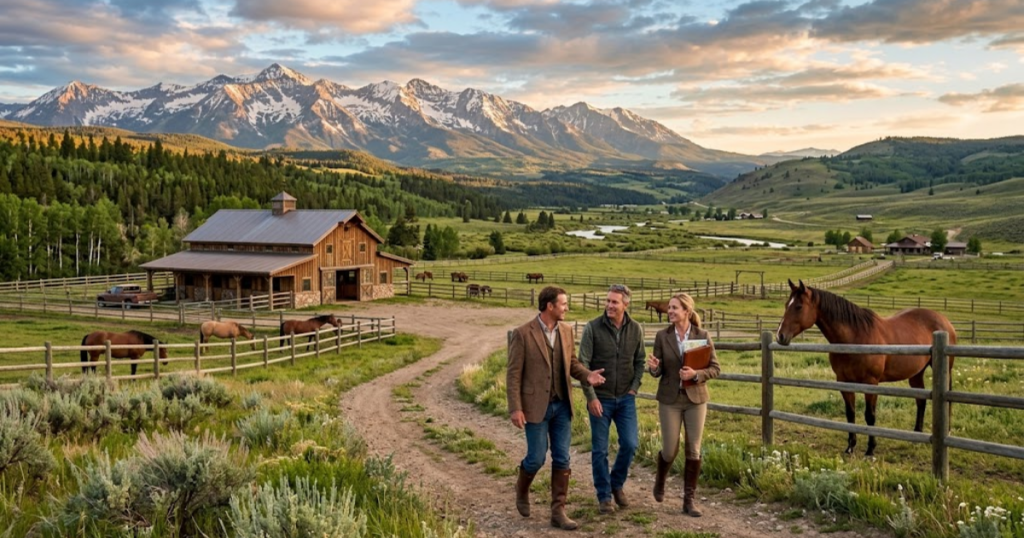
You find a pristine 20-acre parcel in the Colorado foothills. The listing describes it as the ultimate blank canvas for your dream equestrian estate. You write an offer with a residential agent, close on the property, and hire an excavator to break ground on a barn and riding arena.
That is when the problems start.
The county building department informs you that the soil contains heavy swelling clay and sits in a protected drainage basin, meaning you cannot build an arena without hundreds of thousands of dollars in engineered earthwork. Worse, the local well permit office reveals that the parcel is restricted to household use only, meaning you cannot legally draw water for a single horse or irrigate your grazing fields.
When searching for horse properties in Colorado, buying land without specialized guidance is one of the most expensive mistakes an equestrian buyer can make.
Navigating the Colorado rural land market requires an agent who understands agricultural infrastructure, environmental overlays, and state water law. Here is what separates the top equestrian property agents in Colorado from standard real estate brokers, and how the right specialist protects your investment when buying land.
Top Equestrian Property Agents in Colorado for Buying Land
Quick Summary: Finding the Right Representation
- The Agricultural Expertise Gap: Buying raw land or rural acreage for horses is fundamentally different from purchasing a residential lot. A top equestrian agent understands well permits, soil drainage, and agricultural zoning codes.
- The Water Law Requirement: In Colorado, water dictates what you can do with land. An expert knows how to verify if a parcel allows for livestock watering or pasture irrigation before you make an offer.
- Zoning and Animal Density: The best rural agents work backward from county land use regulations, ensuring that the specific acreage you buy legally supports your target herd size.
- Sourcing Off-Market Parcels: Premier equestrian land specialists maintain deep connections with local farmers, ranchers, and breeders, giving you access to private land opportunities before they hit public listings.
1. Unmatched Mastery of Colorado Water Rights and Well Permitting
In Colorado, land without legal water is practically unusable for livestock. A generalist broker might point out an existing well head or mention nearby stream access, but an equestrian specialist dives straight into the state records.
Decoding Permit Classifications
Top equestrian land agents pull the actual permit records from the Colorado Division of Water Resources. They immediately distinguish between a restricted "Household Use Only" permit, which prohibits outside watering, and a "Domestic and Livestock" permit, which legally allows you to water your herd.
Surface Rights and Ditch Companies
If you intend to irrigate pastures for grazing or hay production, a premier agent verifies deeded surface water rights and ditch company shares, ensuring those rights are valid and will properly convey with the deed at closing.
2. Navigating County Zoning and Animal Density Codes
Acreage does not automatically mean you can keep livestock. Local county regulations and environmental overlays dictate exactly what you can build and how many animals you can keep.
Calculating Animal Units
Every Colorado county, from Douglas and Elbert to Larimer and Weld, applies distinct formulas for allowable animal units per acre. A knowledgeable equestrian agent calculates the legal carrying capacity of the land before you spend money on inspections.
Building Setbacks and Arena Permits
Constructing a large outbuilding or covered riding arena requires compliance with county height limits, property line setbacks, and grading permits. Top agents work with local planning departments to confirm your building plans are feasible under existing zoning.
Covenant and HOA Reviews
Even in rural areas, deed restrictions or hidden HOA covenants can ban livestock, restrict trailer parking, or dictate specific fencing materials. An expert reviews the title commitment early to spot these limitations.
3. Evaluating Land Usability, Topography, and Soil Quality
Not all acreage is created equal. An experienced equestrian land agent evaluates a parcel through the lens of horse health and daily farm management.
Usable Acreage vs. Raw Acreage
A 35-acre parcel on a steep, rocky ridge might only offer three acres of flat, usable ground. A dedicated agent helps you determine if the topography supports safe pastures, turnouts, and barn construction.
Soil Drainage and Forage Potential
Top agents assess whether the soil is sandy loam, productive native grass, or heavy clay that turns into an unmanageable mud pit during the spring thaw. They help you evaluate if the land can sustain rotational grazing or if you will need to import all of your forage.
Site Access and Road Infrastructure
Moving heavy horse trailers, hay delivery trucks, and construction equipment requires wide gates and manageable road grades. An equestrian agent identifies access bottlenecks before you buy.
4. Accurately Forecasting Rural Development Costs
Developing raw equestrian land involves significant capital expenditures beyond the initial purchase price of the dirt.
Site Preparation and Utilities
A top specialist helps you estimate the true cost of bringing in electrical power, drilling a high-yield well, installing an engineered septic system, and grading a flat base for an arena.
Safe Equine Fencing
Standard cattle fencing like barbed wire is hazardous for horses. An experienced agent calculates the investment needed to install perimeter and cross-fencing using pipe rail, no-climb wire, or three-rail vinyl.
5. Sourcing Off-Market Land and Equestrian Networks
The most desirable parcels of horse-friendly land often trade hands privately through word of mouth.
The Equestrian Community Pipeline
Top agents spend time in local barns, veterinary clinics, feed stores, and equine events. They build relationships with multigenerational landowners, trainers, and breeders, allowing them to uncover land opportunities before they appear on public search portals.
Tailored Property Matchmaking
Because specialized agents maintain active buyer pools, they can connect you directly with land sellers, helping you avoid competitive bidding wars on high-demand rural parcels.
We Know How to Buy Colorado Equestrian Land
We do not treat a horse property like a suburban house with a big yard. We evaluate the dirt, the water, and the zoning from day one.
When Mark Eibner's team represents you, you get specialized guidance backed by decades of local experience. We pull the state well permits, verify county animal density regulations, review soil and drainage maps, and ensure that the land you buy is safe, legal, and ready for your herd.
Contact us today at coloradohorseproperty.com to find premium horse properties Colorado buyers trust.
Browse active Colorado horse ranches for sale or ask our team about finding a functional horse property for rent in Colorado while you plan your custom build.
Frequently Asked Questions (FAQ) About Hiring an Equestrian Land Agent
Why shouldn't I use my neighborhood residential agent to buy horse land?
Standard residential agents are trained to evaluate home interiors, neighborhood comps, and subdivision rules. They rarely have the training to evaluate livestock well permits, ditch company water rights, agricultural soil drainage, or animal density zoning codes. Working with an equestrian specialist protects you from costly land-use mistakes.
How do I know if raw land can legally support horses in Colorado?
You must check the specific county zoning classification (such as Agricultural, A-1, or Large Rural Residential) and review any subdivision covenants. An equestrian agent will verify the animal units allowed per acre and check for any local restrictions before you place an offer.
What is the biggest mistake buyers make when purchasing rural horse land?
Assuming that any well on the property can be used to water livestock. Many rural wells are legally permitted for household use only, which restricts water usage strictly to the inside of the home and bans outdoor livestock watering or pasture irrigation.
Does an equestrian real estate agent cost more to hire?
No. In typical real estate transactions, sellers pay brokerage commissions. You gain access to specialized agricultural knowledge, water rights verification, and zoning expertise without paying higher commission rates.