
You find a pristine equestrian property with a flawless center-aisle barn. You move your horses in, and it is time to bed the stalls. You order a delivery of bulk pine shavings to save money, and a massive dump truck arrives.
The driver looks around and asks, “Where do you want it?”
You suddenly realize the barn has no dedicated storage bay. The driver dumps a massive mountain of loose sawdust in your gravel driveway. That night, a 40-mph Colorado windstorm rolls through, and by morning, half of your expensive bedding has blown into the neighboring county, and the rest is soaked from a passing rain shower.
Managing stall bedding is a constant, weekly logistical challenge. How a property is designed to receive and store that bedding directly dictates how much money you will spend and how much physical labor you will endure.
Here is how to evaluate the bedding storage infrastructure of a horse property before you buy.
What Type of "Bedding Storage" Is Available (Bulk Shavings vs. Bagged)?
Quick Summary: The Sawdust Strategy
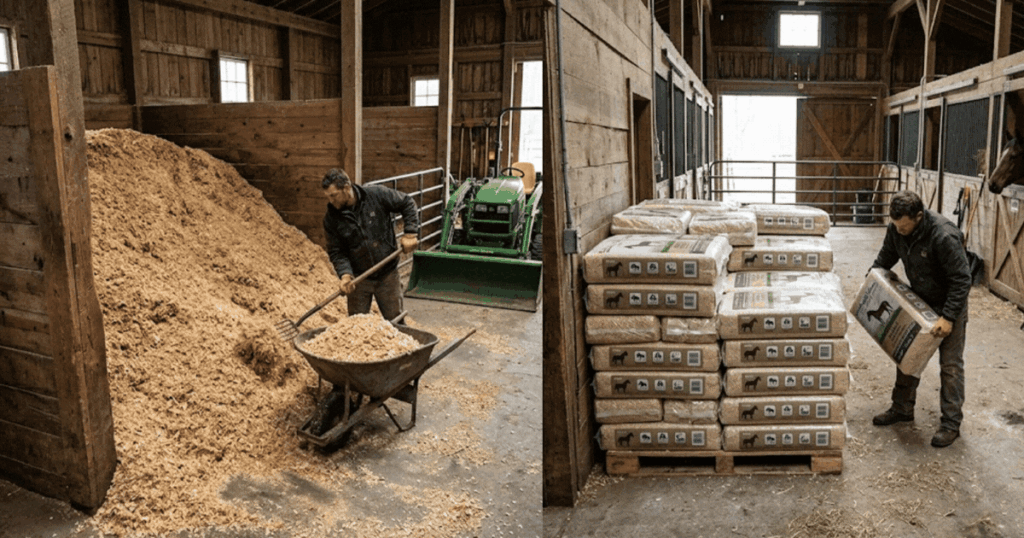
- The Cost vs. Convenience Trade-off: Buying loose, bulk shavings by the dump-truck load is drastically cheaper per yard, but bagged shavings are significantly easier to handle, stack, and transport.
- The Bulk Bin Requirement: You cannot just dump bulk shavings in a pasture. True bulk storage requires a dedicated, three-sided concrete or heavy wood shavings bay with a roof to protect the investment from wind and snow.
- The Bagged Footprint: Bagged bedding requires a completely dry, enclosed space like an empty stall or a dedicated storage room. If left exposed to the weather, the plastic bags will degrade, and moisture will ruin the compressed wood.
- The Tractor Factor: If a property is set up for bulk shavings, you absolutely must own a tractor with a front-end loader to move the heavy sawdust from the bin into your wheelbarrows or stalls.
Bedding storage directly affects labor, weekly operating cost, delivery options, and whether the barn can be run efficiently through changing weather and seasons.
1. The Economics of Bulk vs. Bagged
Your storage capabilities dictate your purchasing power.
- The Bulk Discount: Purchasing loose shavings directly from a local sawmill or agricultural supplier is vastly more economical. You are buying by the cubic yard, cutting out the packaging and processing costs. For a barn with four or more horses, bulk is usually the most financially sustainable route.
- The Bagged Premium: Bagged shavings are ultra-compressed and wrapped in plastic. You are paying a premium for the convenience of the packaging. While expensive for a large facility, bagged shavings are often the best choice for a two-horse backyard setup where a massive dump-truck delivery is not feasible.
2. The Anatomy of a Bulk Shavings Bay
If you plan to use bulk shavings, the property must have specialized, permanent infrastructure.
- The Wind and Weather Shield: A proper shavings bay is a three-sided structure. It must have high, solid walls to block the relentless Colorado wind. It absolutely must have a roof or a heavy-duty, tie-down tarp system to prevent snowmelt and rain from turning your bedding into a useless, moldy sponge.
- The Concrete Floor: You cannot dump bulk shavings on bare dirt. Ground moisture will immediately wick up into the sawdust, rotting the bottom layer. Furthermore, when you scoop the shavings with a tractor, you will inevitably scoop up native dirt and rocks, dumping them directly into your horse's stall. A reinforced concrete pad is mandatory.
- The Dump Clearance: The roof of the shavings bay must be exceptionally high. A commercial delivery truck has to fully elevate its dump bed to release the load. If the roof overhang is too low, the truck cannot back in, and you will be forced to shovel the pile into the bay by hand.
A bulk bedding setup only works if the storage bay is dry, accessible, and built to receive truck deliveries and loader traffic without losing material to weather or contamination.
3. The Enclosed Reality of Bagged Storage
Do not assume you can just stack pallets of bagged shavings outside under a tarp.
- UV Degradation: The plastic bags used for compressed shavings are highly susceptible to UV damage. If left in the direct Colorado sun, the plastic will quickly become brittle and shatter when you try to lift them, leaving you with an unmanageable mess.
- The Dedicated Room: Bagged shavings need to be stored inside. This usually means sacrificing a 12x12 stall or building a dedicated, weatherproof storage room attached to the barn. You must calculate if the property has enough square footage to house your horses, your hay, and your bedding without feeling cramped.
4. Alternative Bedding Logistics
If a property has limited storage space, you must evaluate if it can support alternative bedding options.
- Wood Pellets: Pelletized bedding is an incredible space-saver. A single pallet of highly compressed wood pellets takes up a fraction of the space of bagged shavings and expands massively when activated with a small amount of water.
- Straw Storage: If you prefer straw, often used for foaling stalls, it must be treated exactly like hay. It requires a dry, highly ventilated, and fire-resistant storage area, completely separate from the main electrical panels or heat sources.
We Evaluate the Logistics Before You Buy
We do not just look at the stalls; we look at the supply chain that keeps them clean.
When Mark Eibner and Belinda Seville represent you in a purchase, we meticulously evaluate the daily operations of the farm. We look for existing shavings bays, calculate the turning radius for delivery trucks, and ensure you have the necessary storage infrastructure so your daily barn chores remain efficient and cost-effective.
Contact Us Today to find a property engineered for the realities of daily horse care.
Browse Active Colorado Horse Properties: Browse Active Colorado Horse Properties featuring professional-grade barn and storage amenities
Frequently Asked Questions (FAQ) About Bedding Storage
Can I store my hay and my bulk shavings in the same bay?
It is highly discouraged. Loose shavings are incredibly dusty. The fine sawdust will settle on your hay bales, increasing the respiratory dust load for your horses when they eat. Shavings and hay should always be stored in completely separate, partitioned areas.
How many bags of shavings equal a cubic yard of bulk shavings?
While it varies based on the compression of the bag, it generally takes about 4 to 5 standard bags of compressed pine shavings to equal the loose, fluffed volume of one cubic yard of bulk sawdust.
Will a standard pickup truck hold enough bulk shavings for my barn?
A standard 8-foot pickup bed can comfortably hold about 2 to 3 cubic yards of loose shavings if tarped securely. For a single horse, this might last a few weeks. For a larger herd, you will be making an exhausting, time-consuming trip to the sawmill every few days, making commercial delivery the only viable option.