
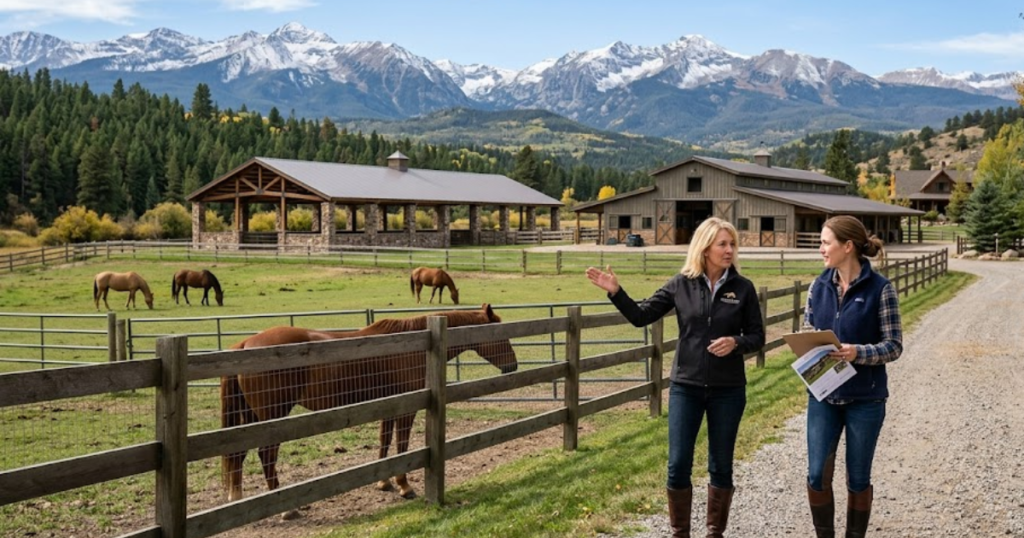
You find a stunning 10-acre property online. The house is completely updated, and there is a gorgeous four-stall barn out back. Your current real estate agent, a family friend who usually sells suburban homes, helps you write a competitive offer, and you close the deal.
Three weeks after moving in, you hook up a hose to fill the water troughs for your four horses. A month later, you receive a cease-and-desist letter from the Colorado Division of Water Resources. Your agent never checked the well permit, and it turns out the property has a “Household Use Only” well. It is legally restricted to indoor domestic use, meaning you cannot use a single drop to water your horses or irrigate your pastures. Simultaneously, the county code enforcement officer stops by to inform you that your residential zoning allows only two horses in total.
You now own a property that is functionally useless for your herd.
When searching for horse properties in Colorado, the agent you hire is just as important as the property you buy. Equestrian real estate is essentially a commercial agricultural transaction disguised as a residential home purchase. You cannot afford to work with a generalist.
Here is exactly what you need to look for when hiring a real estate agent to represent your equestrian purchase.
What Should I Look for When Hiring an Equestrian Real Estate Agent in Colorado?
Quick Summary: The Specialist Advantage
- The Residential Trap: Hiring an agent who only sells suburban homes is a massive financial risk. They might know granite countertops, but they rarely know animal density zoning, well permits, or soil drainage.
- The Water Rights Reality: In Colorado, water is heavily regulated. An equine specialist knows how to verify if a property's well permit actually allows for watering livestock.
- The Zoning Decoder: Just because a property has acreage does not mean horses are legally allowed. An expert will cross-reference county agricultural zoning, HOA covenants, and commercial use-by-right codes.
- The Infrastructure Eye: A true equestrian agent evaluates the land before the house, looking at pasture fencing, arena drainage, barn safety, and trailer access.
1. Mastery of Colorado Water Law and Well Permits
In the arid West, water dictates property value and usability. If your agent doesn't understand the Division of Water Resources, find a new agent.
- Decoding Well Permits: Most rural properties rely on exempt wells. A standard residential agent might see a functioning well and check the box. An equestrian specialist knows they must pull the actual permit to see if it is classified as "Household Use Only," no outside watering allowed, or "Domestic and Livestock," which legally allows watering animals.
- Irrigation and Ditch Shares: If the property features irrigated pasture, the agent must know how to verify water rights, whether they are deeded surface rights or shares in a mutual ditch company, and ensure they properly transfer at closing.
2. Fluency in Zoning, Animal Density, and Covenants
Acreage does not equal permission. Your agent must act as a zoning investigator.
- Animal Units Per Acre: Every Colorado county dictates how many horses are allowed based on zoning districts, such as A-1 or LRR. An expert will calculate the legal carrying capacity of the land before you even schedule a showing.
- Commercial vs. Private Use: If your goal is to host clinics, offer riding lessons, or run a boarding facility, your agent must know how to check for "Use by Right" zoning or the feasibility of obtaining a Special Use Permit.
- The HOA Threat: Many rural subdivisions have hidden covenants that restrict trailer parking, ban certain types of fencing, or mandate the removal of manure. Your agent should pull the HOA documents immediately to spot livestock bans.
3. An Eye for Equine Infrastructure and Safety
An equestrian agent evaluates a property from the horse's perspective first and the human's perspective second.
- Land and Drainage: A specialist will walk the pastures to look for toxic weeds, evaluate the soil type, avoiding properties that turn into clay mud pits, and check the grading around the barn and arena.
- Barn and Fencing Mechanics: They will spot safety hazards that residential agents miss, such as inadequate stall ceiling height, lack of ventilation, dangerous wire fencing, or insufficient turnaround space for a 4-horse gooseneck trailer.
- Septic Spacing: They know that heavy hooves cannot be kept over a septic leach field, ensuring the pasture layout doesn't interfere with the home's critical infrastructure.
4. Accurate Valuation of Agricultural Assets
Standard appraisers often struggle to value equestrian properties, which can kill your financing.
- The Appraisal Gap: A brand-new $150,000 indoor arena rarely adds $150,000 to a home's appraised value. An equestrian agent knows how to pull niche agricultural comparable sales and aggressively defend the value of outbuildings, fencing, and infrastructure to the bank's appraiser.
We Know Colorado Equestrian Real Estate
We don't just sell homes with land; we sell operational horse farms.
When our team represents you, we pull the well permits, map out the zoning, and evaluate the pasture infrastructure before we even write the offer. We protect you from the hidden legal and agricultural traps that generalist agents miss, ensuring your next farm is a safe, legal, and functional home for your herd.
Contact Us Today to find premium horse properties Colorado buyers trust for verified water rights and zoning.
Browse Active Colorado Horse Properties: Browse active Colorado horse ranches for sale or ask our team about finding a functional horse property for rent in Colorado with the right infrastructure.
Frequently Asked Questions (FAQ) About Hiring an Equestrian Real Estate Agent
Can I use my regular residential real estate agent to buy a horse property?
You can, but it carries immense risk. Standard residential contracts and inspection periods are not designed to cover agricultural well testing, soil quality, barn permitting, or ditch rider agreements. An equine specialist protects you from catastrophic agricultural oversights.
What is a "Household Use Only" well permit?
Issued by the Colorado Division of Water Resources, this permit restricts well water solely to indoor domestic use. It is illegal to use this water for livestock, gardens, or pastures. An equestrian agent will verify that a property has a "Domestic and Livestock" well permit instead.
How do I know if the arena or barn on the property was built legally?
Your equestrian agent should pull the county permit history. If the previous owner built a massive barn or riding arena without pulling the proper agricultural or structural permits, the county could force you, the new owner, to tear it down or face heavy fines.