
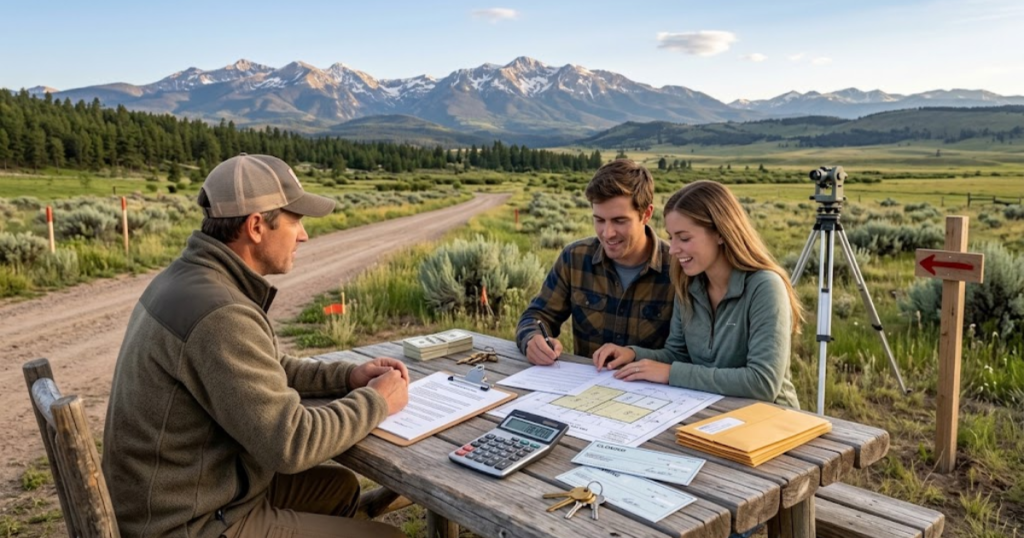
You have finally found the perfect 20-acre parcel in the foothills. The purchase price fits your budget perfectly, and your lender has approved the down payment. But as closing day approaches, you receive your settlement statement and experience severe sticker shock. The final cash needed to close is thousands of dollars higher than you anticipated.
When searching for horse properties in Colorado or raw acreage across the mountain West, buyers often focus entirely on the sticker price of the land. They forget that finalizing a rural real estate transaction requires an entire team of specialists. Unlike a standard residential subdivision, rural land requires deep legal and environmental vetting before the deed can safely transfer hands.
Here is a detailed breakdown of the average closing costs for rural land purchases and what you can expect to pay at the closing table.
What Are the Average Closing Costs for Rural Land Purchases in Mountain States?
Quick Summary: The Rural Cost Breakdown
- The Baseline Rule: Buyers in mountain states like Colorado generally pay between 2% and 5% of the purchase price in closing costs, covering standard lender fees, title insurance, and recording taxes.
- The Rural Upcharge: Buying acreage involves unique expenses that suburban buyers avoid, including extensive land surveys, water rights transfer fees, and specialized environmental inspections.
- The Appraisal Premium: Valuing a 40-acre parcel with equestrian infrastructure is far more complex than valuing a suburban home. Expect to pay significantly more for a specialized agricultural appraisal.
- Who Pays What: While negotiations vary, sellers traditionally cover the agent commissions and standard title policies, while buyers absorb the loan origination fees, survey costs, and extensive rural inspection fees.
1. Standard Transaction and Financing Fees
Whether you are buying a condo in Denver or a cattle ranch in Wyoming, certain closing costs are unavoidable. If you are financing the land, your lender will charge origination fees to underwrite the loan, which typically account for 1% of the total loan amount.
You will also pay for standard title services. Title insurance protects you from hidden liens or past ownership disputes. In Colorado, the seller often pays a standard owner's title policy, but buyers are responsible for their lender's title policy, escrow setup fees, and county recording fees. Combined, these standard financing and administrative costs usually represent that baseline 2% to 5% of your purchase price.
2. The Hidden Costs of Rural Inspections
This is where rural land purchases diverge dramatically from standard residential transactions. To protect your investment, you must verify the land is actually usable.
- Land Surveys: If recent pins do not clearly mark the property lines, you will need a professional surveyor. An Improvement Location Certificate (ILC) might cost $300, but a full boundary survey for a 35-acre parcel in rugged mountain terrain can easily exceed $1,500.
- Water and Septic: If the property has an existing well, you must pay for flow testing, water quality analysis, and septic system pumping and certification. These specialized inspections often add $500 to $1,000 to your closing costs.
- Water Rights Transfers: Transferring deeded surface water rights or ditch company shares is a specialized legal process. You may need to hire a water attorney to draft the conveyance documents, which will add legal fees to your final bill.
3. The Specialized Agricultural Appraisal
If you are using a bank to finance the land, they will require an appraisal. Valuing a suburban home takes a few hours. Valuing a rural property with equestrian facilities, varied topography, and agricultural zoning takes days.
Standard home appraisals typically cost between $400 and $600. However, a complex agricultural appraisal for a horse farm or working ranch can cost anywhere from $800 to over $2,000. Lenders require appraisers with specialized rural certifications, and those experts charge a premium for their extensive travel time and niche market knowledge.
4. Negotiating the Closing Costs
Closing costs are not always carved in stone. Depending on the local market conditions, buyers and sellers can negotiate who covers specific fees.
In a competitive seller's market, buyers often have to absorb almost all of their own financing, surveying, and inspection costs to make their offer attractive. In a slower market, a buyer can ask for "seller concessions," where the seller agrees to credit a certain percentage of the purchase price back to the buyer at closing to help offset the expensive rural surveys and loan fees.
We Protect Your Capital Before You Buy
We do not want you to be surprised at the closing table.
When Mark Eibner's team represents you, we help you forecast the true cost of buying rural land. We connect you with our network of trusted rural appraisers, well inspectors, and surveyors to ensure you get accurate estimates upfront. We aggressively negotiate concessions when possible, protecting your capital for what matters most, like building your barn and fencing your pastures.
Contact us today at coloradohorseproperty.com to find premium horse properties Colorado buyers trust.
Browse active Colorado horse ranches for sale or ask our team about finding a functional horse property for rent in Colorado while you search for the perfect plot of land.
Frequently Asked Questions (FAQ) About Rural Closing Costs
Can I roll my closing costs into my land loan?
Sometimes. Depending on the lender and the specific type of loan you secure, you can finance a portion of the closing costs. However, this increases your principal balance and means you will pay interest on those fees for the life of the loan.
Why do I have to pay for a new survey if the seller already has one?
If the seller has a highly detailed, recently recorded boundary survey, your lender and title company might accept it. However, if the survey is decades old, or if fences have been moved since it was drawn, the title company will require a new survey to issue a clean title policy.
Do I have to pay property taxes at closing?
Yes. Property taxes are prorated. The seller pays for the days they owned the property during the current tax year, and you will be responsible for funding an escrow account to cover the remaining months and future tax bills.