
A cattle operation alone doesn’t make a dude ranch. A dude ranch turns ranch life into a guest experience, and ranches suitable for dude ranch conversion need more than open land: they need the setting, facilities, and riding opportunities to welcome guests. The best fit depends on how the property’s existing use and infrastructure can support the experience you plan to offer.
It’s easy to picture horseback rides and Western traditions as the whole experience. They matter, but the ranch’s operating style shapes how guests take part, from hands-on ranch work to a more resort-style stay. Accommodations, terrain, horse facilities, and spaces for shared meals and activities all influence what the property can offer.
This guide explains what defines a dude ranch, how working, guest, and resort categories differ, and how horseback riding and Western traditions shape guest appeal. You’ll also see which property characteristics can support a conversion, helping you assess whether a ranch’s land and infrastructure align with the experience you want to create.
Key Takeaways
- Assess a ranch by how its land, facilities, and existing operation can support a guest experience, not acreage alone.
- Working, guest, and resort ranches offer different levels of guest participation and hospitality. Match the model to the experience you want to create.
- Horseback riding and Western traditions shape guest appeal, but the property’s terrain and facilities influence which activities it can support.
- See how specialized property search and buyer representation can help identify Colorado ranches aligned with your conversion goals.
Western hospitality, outdoor activities, and ranch traditions
Guest appeal comes from outdoor activities and the hospitality around them. A dude ranch can offer horseback riding, hiking, fishing, swimming, rodeos, or cattle drives. These options appeal to solo travelers, multigenerational families, and corporate groups with different interests. For ranches suitable for dude ranch conversion, the activity mix helps define the guest experience and the facilities it requires. A quiet trail ride and hands-on cattle work call for different schedules and ways of welcoming visitors.
Time outdoors connects guests with the surrounding landscape. Riding, fishing, or hiking lets visitors experience the terrain beyond the main gathering spaces. Seasonal programming can reflect local conditions: Greenhorn Ranch says its offerings may include snowshoe tours and fall foliage hikes. Northern-state ranches are busiest during summer, while southern-state ranches offer warm-weather riding during winter. This seasonal contrast can shape activity planning and the kind of getaway a ranch provides.
Ranch traditions also create shared moments. At Greenhorn Ranch, families gather in the Chuckhouse for all three meals. Activities include stargazing, chuckwagon cookouts, line dancing, fishing derbies, bullfrog races, rodeo games, and water balloon fights. These examples range from outdoor pursuits to group entertainment, giving guests ways to connect beyond horseback riding. For ranches suitable for dude ranch conversion, gathering areas and varied programming can help bring those traditions to life.
Family stays benefit from options that let people spend time together without following one schedule. Some guests might ride while others choose fishing or horseshoes, then meet for a cookout or stargazing. Luxury ranches may pair four-to-five-star accommodations and amenities with Western traditions. The property’s spaces, landscape, and facilities determine which experiences it can support, helping owners shape a cohesive stay for guests.
Dude ranch vacations cater to solo travelers, multigenerational families, and corporate groups. Activities can include horseback riding, hiking, fishing, swimming, zip-lining, white water rafting, rodeos, cattle drives, Western dancing, and fine dining. This range brings outdoor pursuits and shared social experiences into the same hospitality setting. Ranches can use different activities to balance time in the landscape with opportunities to gather.
What Does “Dude Ranch” Mean?
A dude ranch turns a cattle ranch into a vacation resort where guests experience Western life. The concept began in the Dakota Badlands in the 1880s, when Howard Eaton and his brothers established Custer Trail Ranch. Today, a dude ranch vacation gives visitors an opportunity to ride, explore, and spend time in a ranch setting. Guests choose this kind of ranch vacation for outdoor activities and a change of pace with friends or family. Ranches offer different combinations of lodging, dining, recreation, and ranch traditions.
Licensing, insurance, and safety rules depend on the state, county, and activities offered. Operating a riding program, lodging, or dining service can involve different requirements. There’s no single typical purchase price for a ranch: location, acreage, water rights, and existing improvements shape its value. Conversion costs depend on the work needed for lodging, dining, horse facilities, utilities, and guest areas.
A suitable property combines usable land with infrastructure for its intended guest experience. Dude ranches often occupy hundreds or thousands of acres, but acreage alone doesn’t determine suitability. Water access, existing buildings, access routes, and riding terrain affect how the land can be used. Guests may look for comfortable lodging, shared dining, horseback riding, and outdoor recreation. An all-inclusive resort experience can bundle several activities and services into one vacation, while other ranches offer a more focused stay.
In the United States, ranch regions suit different seasons and landscapes. Northern-state ranches are busiest during summer, while southern-state ranches offer warm-weather riding during winter. Arizona is known for sunny weather year-round. Buying risks include unclear title, water-rights questions, access limitations, land-use constraints, and costly infrastructure needs. Real estate professionals handle due diligence by examining property records, land features, and transaction details. For a Colorado search, Colorado ranch property listings can help connect property features with a planned guest experience.
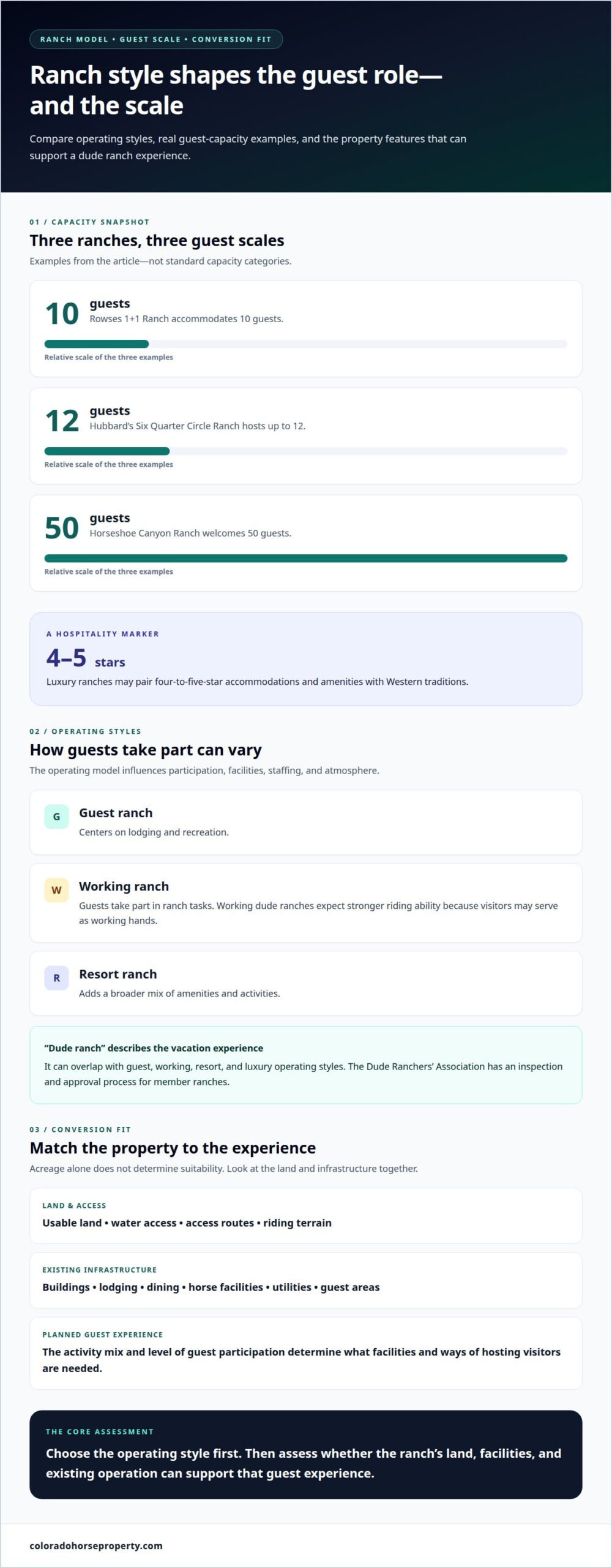
Guest, working, resort, luxury, and dude ranch categories
Ranch categories describe how much guests participate and what kind of hospitality shapes their stay. The operating style also affects staffing, facilities, and the atmosphere visitors experience.
Ranch Categories and Operating Styles
A guest ranch centers on lodging and recreation, while a working ranch involves guests in ranch tasks. Working dude ranches expect stronger riding ability because visitors may serve as working hands. Resort ranches add a broader mix of amenities and activities, while luxury properties may offer four-to-five-star accommodations. “Dude ranch” describes the vacation experience and can overlap with these operating styles. The Dude Ranchers’ Association has an inspection and approval process for member ranches, offering one distinction within the market.
Guest Capacity and Ranch Atmosphere
Capacity influences whether a stay feels intimate or supports a larger group experience. Rowses 1+1 Ranch accommodates 10 guests, while Hubbard’s Six Quarter Circle Ranch hosts up to 12. Horseshoe Canyon Ranch welcomes 50 guests. These examples show how lodging scale can vary considerably. A smaller guest ranch may suit visitors seeking close-knit interaction; a larger operation can accommodate more guests and group activities. Capacity should align with the intended atmosphere and available guest facilities.
Schedules shape the daily dude ranch experience. At some ranches, breakfast is scheduled for 7am, followed by riding, fishing, or other adventure activities. A traditional stay typically lasts a week, though ranch stays can range from a long weekend to as many days as guests want. That flexibility lets operators build a western tradition around structured group activities or a more open itinerary.
Profitability depends on revenue, seasonal occupancy, staffing, upkeep, and the mix of guest services. Operating costs include maintaining lodging, horses, facilities, and activities; occupancy affects how consistently those expenses are covered. A ranch’s category matters because a resort or luxury model may require different facilities and operating resources than a simpler guest ranch.
Horseback riding and guest experience
Horseback riding gives guests a direct way to experience ranch country, but the ride’s format shapes the stay. By the early 20th century, visitors arrived by rail and automobile for riding, fishing, and hunting. Today, a ranch may offer guided trail rides, longer range trips, or riding tied to daily ranch work. Each option calls for appropriate terrain, usable trails, and facilities that support horses and riders.
A short trail ride can introduce beginners to the landscape without defining the whole getaway. Greenhorn Ranch offers a two-hour mountain trail ride, while some ranches let guests spend two or three days riding the range and sleeping outdoors. Those experiences demand different levels of time and preparation. Some ranches set minimum riding ages between 6 and 8 years old, which can shape plans for families with young children.
Working ranch experiences differ from recreational riding. Guests at a working ranch help operate the property as working hands, and this format requires stronger riding ability. Other ranch stays focus on guided rides and outdoor activities such as fishing, hiking, or swimming. The distinction matters: a property designed for authentic ranch work must support that activity, while a leisure-focused operation needs varied guest experiences and suitable accommodations.
Modern luxury can complement, rather than replace, horseback traditions. Some luxury dude ranches offer four-to-five-star accommodations and amenities alongside Western activities. The right balance depends on the intended guests, from visitors seeking a rugged range getaway to those expecting elevated comfort. Dining, lodging, and recreation should reinforce one clear experience rather than pull the ranch in competing directions.
For a Colorado property search, explore horse properties suited to guest riding and compare features relevant to your planned experience.
Greenhorn Ranch offers horseback riding, fishing, golf, and horseshoes among its guest activities, giving visitors choices around time in the saddle. Guests can also join a 2-hour trail ride in the mountains. Families should check childcare arrangements before booking: some dude ranches may offer babysitting or childcare options, while others may require an adult to skip horseback riding to stay with young children. Clarifying this in advance can help families choose an itinerary that works for every rider and caregiver.
Colorado Horse Property
Colorado Horse Property helps buyers find properties suited to equestrian use for their dude ranch plans. Use its AI-Powered Horse Property Search to find land with features such as barns, arenas, water rights, or varied pasture. Buyer Representation supports the purchase process, while Transaction Management helps coordinate the transaction from offer through closing.
For owners preparing to bring a ranch to market, Real Estate Listing Services provide a way to present the property to prospective buyers. The right fit depends on your intended guest experience and the land and improvements that support it. Contact Colorado Horse Property to discuss your ranch property goals.
Turn Your Ranch Vision Into a Property Search
Choosing ranches suitable for dude ranch conversion is ultimately about matching a real property to the experience you want to create. Treat the purchase as a long-term operating decision, not simply a search for scenic acreage. The right fit should support your vision for guests while making practical sense for the land, existing improvements, and the work needed to bring the concept to life.
Before moving forward, define the experience you want to build and the property characteristics that matter most. A clear direction keeps the search focused and gives each opportunity useful context. From there, you can evaluate how a candidate property fits your goals and plan a path toward ownership.
Contact Colorado Horse Property to discuss your ranch property goals and take the next step toward finding a property that fits your vision.
Frequently Asked Questions
What acreage, water rights, and infrastructure should a prospective dude ranch property have?
Assess usable land alongside water access, existing buildings, access routes, and riding terrain. Dude ranches often occupy hundreds or thousands of acres, but acreage alone does not determine suitability; review water-rights questions and infrastructure needs.
Which states and regions are best for buying and operating a dude ranch?
The best fit depends on the seasons and guest experience you want to offer. Northern-state ranches are busiest in summer, southern-state ranches offer warm-weather riding in winter, and Arizona is known for sunny weather year-round.