
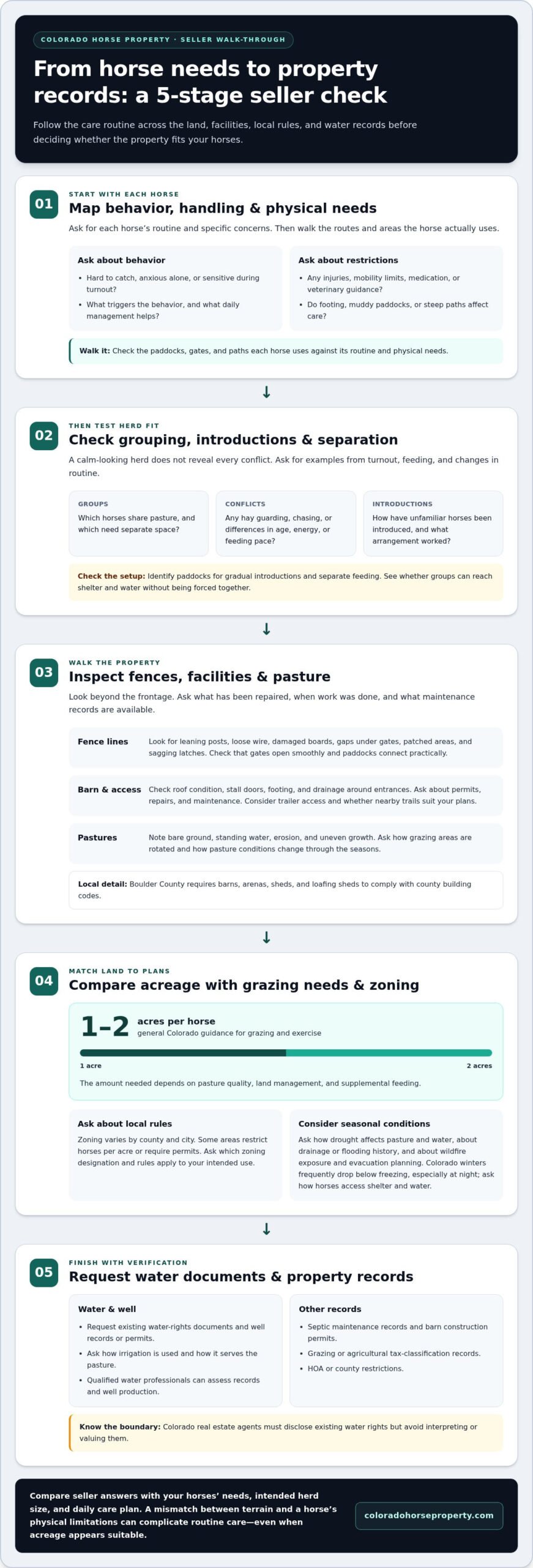
A horse-ready property is more than acreage and a barn. Colorado horse properties generally need 1-2 acres per horse for grazing and exercise, depending on pasture quality, land management, and supplemental feeding. The most useful questions to ask the seller of a Colorado horse property cover each horse’s behavior and restrictions, herd compatibility, fencing, water and other infrastructure, and hay supply and costs.
It’s easy to focus on the views or barn during a showing, but day-to-day horse care depends on the land and its facilities. A thoughtful conversation with the seller can clarify how the property suits your horses, what may need attention, and which costs to plan for. Use these questions to ask the seller of a Colorado horse property about turnout, herd dynamics, fencing, water, and hay before deciding whether the property fits your plans.
Key Takeaways
- Ask about each horse’s behavior, physical limitations, and daily management needs to assess whether the property suits your animals.
- Learn how horses are introduced and grouped, and whether the existing herd’s routines fit your plans.
- Inspect fencing, water access, barns, and other infrastructure, and ask what maintenance they’ve needed.
- Discuss hay sources, quality, storage, and seasonal availability to understand the property’s ongoing feeding needs.
1. Behavior concerns and physical restrictions
Ask the seller to describe each horse’s routine, handling needs, and known behavioral concerns. Find out whether a horse is difficult to catch, anxious when left alone, or sensitive during turnout. Ask what triggers the behavior and what daily management helps. The answers can show whether the property’s layout and facilities suit the horses you plan to keep.
Physical restrictions matter, too. Ask about injuries, mobility limitations, medications, or veterinary guidance that affects turnout, footing, or barn access. A horse that needs dry footing may struggle in a muddy paddock, while limited mobility can make steep paths difficult. Ask the seller to explain how each horse uses the property, then walk those routes during your visit.
The questions to ask the seller of a Colorado horse property should also address intended use and local zoning. Colorado zoning varies by county and city; some areas restrict horses per acre or require permits. Colorado horse properties generally need 1-2 acres per horse for grazing and exercise, depending on pasture quality, land management, and supplemental feeding. Ask which zoning designation applies to your plans.
How can buyers verify Colorado water rights, well production, and irrigation use? Request existing water-rights documents and well records, and ask how irrigation is used. Colorado real estate agents must disclose existing water rights but avoid interpreting or valuing them. Qualified water professionals can assess the records and well production.
Use these questions to ask the seller of a Colorado horse property for concrete examples:
- What behavior or physical limitation requires a specific routine?
- Which paddocks, gates, or paths does each horse use?
- How does pasture condition affect the property’s grazing capacity?
- What records describe the well, water rights, and irrigation use?
Compare the answers with your horses’ needs, intended herd size, and daily care plan. A mismatch between a horse’s physical limitations and the property’s terrain can complicate routine care, even when the acreage appears suitable.
Boulder County horse-property sellers should gather well permits, water-rights documents, septic maintenance records, barn construction permits, grazing or agricultural tax-classification records, and HOA or county restrictions.
2. Compatibility with other horses
Ask how the seller’s horses interact during turnout, feeding, and changes in routine. Find out which animals share a pasture, which need separate space, and what happens when a new horse joins. A horse that guards hay or chases others may need a different grouping plan. Ask whether the seller has introduced unfamiliar horses on the property and what arrangement worked.
Look beyond whether the current herd appears calm. Ask about age, energy, feeding pace, and known conflicts between individual horses. A quiet older horse, for example, may struggle when paired with a younger, active herd. Identify pens or paddocks for gradual introductions and separate feeding. Consider whether gates and water access let you manage groups without forcing horses together.
Ask how fencing and turnout arrangements support herd separation. Note which areas can be divided and whether each group can reach shelter and water. If you plan to bring several horses, compare their needs with the existing herd’s routine before assuming they can share a pasture.
What questions should buyers ask about water rights and well permits? Request the property’s water-rights documents and well permits, and ask how irrigation serves the pasture. Colorado real estate agents must disclose existing water rights but avoid interpreting or valuing them.
How many horses are allowed per acre under Colorado county zoning rules? There’s no single statewide allowance: zoning varies by county and city, and some areas restrict horses per acre or require permits. Ask which local zoning rules apply to your intended horse use.
What Colorado disclosures, inspections, and title checks matter? Review water-rights documents, well permits, septic records, barn permits, agricultural tax-classification records, and HOA or county restrictions. These can reveal infrastructure and use conditions that may affect turnout.
What wildfire, flood, drought, and winter risks should buyers check? Ask about local wildfire exposure and evacuation planning, drainage or flooding history, and how drought affects pasture and water. Colorado winters frequently drop below freezing, especially at night, so ask how horses access shelter and water.
- Ask for specific examples of herd conflicts and successful introductions.
- Match your horses’ temperaments and routines to the available paddocks.
- Review zoning, permits, and property records alongside herd plans.
As you compare properties, explore Colorado horse property options with your herd’s needs in mind.
3. Fencing and property infrastructure
Walk every fence line and gate, not just the frontage. Look for leaning posts, loose wire, damaged boards, and gaps beneath gates. Ask which sections the seller has repaired and when. A patched corner or sagging latch can affect daily turnout and safe separation. Check that gates open smoothly and connect paddocks in a practical sequence.
Inspect barns, arenas, sheds, and loafing sheds for visible wear and practical access. Boulder County requires these structures to comply with county building codes. Ask about construction permits, past repairs, and maintenance records. Check roof condition, stall doors, footing, and drainage around barn entrances. Ask whether a trailer can reach the barn and whether nearby trails suit your riding plans.
How can buyers inspect a Colorado horse property’s pasture, soil, drainage, and grazing capacity? Walk each pasture and note bare ground, standing water, erosion, and uneven growth. Ask how grazing areas are rotated and how conditions change through the seasons. These observations help you assess usable forage and identify areas that may need attention.
Ask how runoff moves across the property after rain or snowmelt. Check low spots, gates, and paths horses use, since persistent mud can affect access and footing. Ask the seller to point out areas that stay wet or dry quickly. Compare those locations with pasture use, barn access, and routes to water and shelter.
What should buyers ask about septic systems, utilities, and access on a Colorado rural property? Properties outside Boulder County city limits typically rely on septic systems. Ask for maintenance records, inspection reports, and transfer permits. Also ask which utilities serve the buildings, how access roads are maintained, and whether a horse trailer can reach barns and turnout areas.
- Match fence condition and gate layout to the way you’ll manage turnout.
- Review barn permits and maintenance history alongside a physical inspection.
- Assess pasture condition, drainage, septic records, utilities, and trailer access together.
Ask whether the property has trailer access and nearby trails, and what maintenance has been done on fencing and barns. Clarify which areas the access serves and what fencing or barn work the seller can describe. Use the answers to guide follow-up questions during your walk-through and property review.
4. Hay availability and cost
Ask what hay the horses eat, where it comes from, and how supply changes through the year. Confirm whether they buy grass hay, alfalfa, or a mix. Ask about bale weight, storage conditions, delivery arrangements, and how much hay remains on hand during winter. Dry, protected storage helps preserve hay quality and reduce waste.
Prices vary by hay type, quality, and location. Ask the seller for recent purchase details and compare bales of similar size before using those figures for your budget.
What are typical costs for horse-property maintenance, hay, fencing, and water in Colorado? Fencing, water, and general maintenance costs depend on materials, system condition, acreage, and repair needs.
Ask how the seller manages pasture alongside stored hay. Find out which fields are rested, what forage is available, and when supplemental feeding usually begins. This helps you understand how pasture condition and seasonal supply affect hay use. Ask whether the seller has had difficulty consistently sourcing the same hay type or quality.
- What hay type and bale weight do the horses currently receive?
- Where is hay stored, and how is it protected from moisture?
- Which fencing or water-system repairs recur during property maintenance?
- How does pasture availability change the feeding routine?
Use the seller’s answers to build a property-specific feeding and maintenance plan. Compare hay quality and bale size, then account for storage, delivery, pasture management, and the condition of existing systems. Limited storage may mean more frequent deliveries, while damaged fencing or aging water infrastructure can add upkeep.
Ready to compare properties with practical horse-keeping features? Explore Colorado horse property listings and assess hay storage, pasture, fencing, and water access.
Colorado Horse Property: AI-Powered Horse Property Search
Colorado Horse Property can turn your horse-care priorities into a focused property search. Its AI-Powered Horse Property Search helps identify Colorado properties by equestrian features, including barns, arenas, water rights, and pasture sizes.
Use those requirements to compare listings with your horses’ needs, planned herd, and daily routines. If you’re assessing a property or preparing to make an offer, Buyer Representation can support your purchase, while Transaction Management helps coordinate the transaction. Real Estate Listing Services are available to owners preparing to sell.
Bring your priorities together before moving forward: the right acreage, usable infrastructure, and a setup that fits your plans. Contact Colorado Horse Property to discuss your search.
Make Your Next Move With a Clear Plan
Before moving toward an offer, turn your priorities into a practical decision framework. Separate essentials from preferences: what your horses need every day, what changes you can take on, and what would make a property unsuitable. This helps keep a striking view from outweighing the realities of your plans for the land.
Questions to ask the seller of a Colorado horse property are most useful when the answers guide a specific decision. Record the seller’s responses beside your requirements, note trade-offs, and use the same criteria to compare properties. That gives you a clearer basis for deciding which opportunity deserves a closer look.
If you’re ready to put your priorities into action, connect with Colorado Horse Property and take the next step toward a property that fits your plans.
Frequently Asked Questions
What should buyers ask about barns, arenas, fencing, and other equestrian facilities?
Ask how each facility is used and what upkeep it needs. For a barn, ask about stall layout, ventilation, drainage, and repairs; for an arena, ask about footing materials, grading, and maintenance. Have the seller identify fence sections needing attention and explain how gates work in daily routines. Consider whether the layout supports your equipment, horse handling, and planned use.