
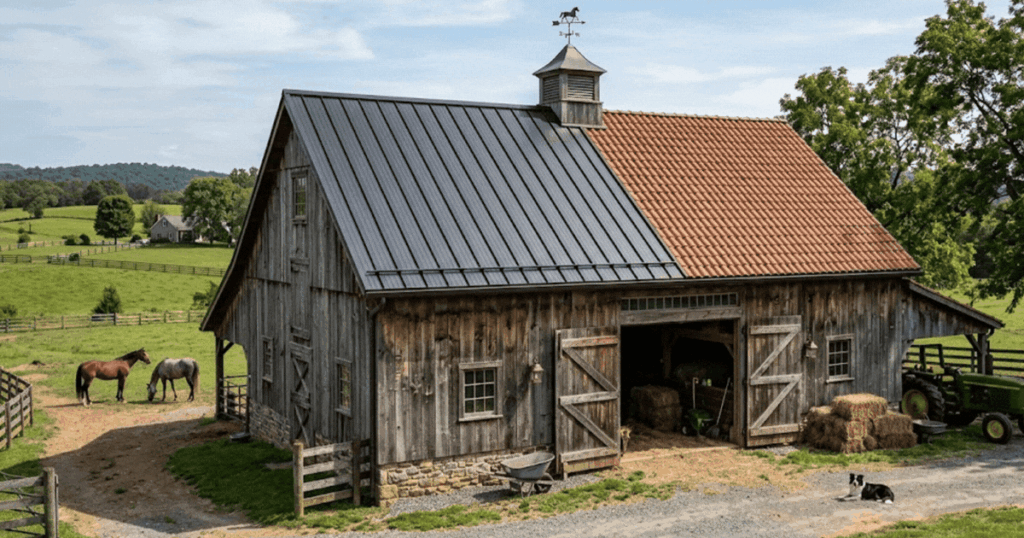
It is late August in the Colorado foothills. A dry thunderstorm rolls through, and a lightning strike starts a wildfire three miles away from your new equestrian property. The winds pick up, and the evacuation order comes in. You load your horses, drive to safety, and watch the news in a panic.
The next day, the fire chief reports that the main fire line was stopped a full mile from your neighborhood. You breathe a sigh of relief. But when you are allowed to return home, you find your house untouched, while your massive custom barn has burned to the foundation.
How does a barn burn down when the fire never reached the property?
When buying a horse property in the rural West, you have to look at the roof not just to see if it stops the rain, but to see if it can stop an ember. A non-rated or aging roof is the ultimate Achilles heel of a rural property. Here is how to evaluate the fire readiness of a barn’s roof before you buy.
Is the Barn Roof "Class A" Fire-Rated (Metal or Tile)?
Quick Summary: The Ember Defense
- The Airborne Threat: Wildfires rarely destroy barns through a direct wall of flame. The vast majority of structures are lost to ember blizzards, thousands of burning cinders blown miles ahead of the actual fire line that land on vulnerable roofs.
- The Class A Standard: A Class A fire rating is the highest possible resistance level. Materials like standing seam metal, concrete, and clay tile are proven to withstand severe fire exposure without igniting.
- The Aging Asphalt Risk: Standard asphalt shingles are often rated Class A when brand new. However, as they bake in the Colorado sun, they blister, curl, and lose their protective granules, creating perfect little pockets for burning embers to lodge and ignite the roof decking.
- The Insurance Ultimatum: In Colorado’s high-risk wildfire zones, insurance carriers are aggressively dropping coverage. A true Class A metal roof is no longer just a luxury upgrade; it is often a hard requirement to secure a hazard insurance policy.
On rural horse property, the roof is not just weather protection. In wildfire country, it can determine whether the barn survives an ember storm or becomes the first structure lost.
1. The Anatomy of a Wildfire (The Ember Blizzard)
To protect your property, you must understand how it is most likely to burn.
- The Miles-Long Reach: Wildfires create their own massive weather systems. They generate intense updrafts that suck up burning pinecones, twigs, and bark, shooting them high into the jet stream.
- The Ember Shower: These burning projectiles can travel over a mile ahead of the actual fire line. They fall like glowing rain onto your property.
- The Ignition Point: If a glowing ember lands on a fire-resistant surface, it simply burns itself out. But if it lands on a flammable roof, or gets wedged into the gaps of curled, aging shingles, it will ignite the underlying plywood decking. Once the roof deck catches fire, the entire barn will be lost within minutes.
2. Decoding the "Class A" Rating
Building codes use rigorous testing to classify roofing materials. You want the highest tier available.
- The UL 790 Test: To achieve a Class A rating, a roofing material must prove it can withstand severe exposure to a burning wood crib, resist the spread of surface flames, and prevent burning debris from falling through the roof deck.
- The Metal Gold Standard: For equestrian properties, metal roofing, specifically hidden-fastener standing seam metal, is the ultimate Class A defense. Embers simply slide off the slick surface, there are no exposed nails to rust or pop out, and it requires zero maintenance.
- Tile and Slate: Clay tile and natural slate are also naturally Class A rated and highly fire-resistant, but their extreme weight makes them incredibly rare and dangerously heavy for standard agricultural pole barns.
A fire-safe roof is about the actual material system and condition, not just whether the listing casually says the barn has a metal or upgraded roof.
3. The Danger of Wood and Aging Asphalt
If a property has the wrong roof, you are inheriting a massive liability.
- The Wood Shake Ban: Cedar shake roofs are essentially beautifully arranged kindling. They are universally classified as a severe fire hazard. In many Colorado mountain counties, wood shake roofs have been legally banned for decades, and insurance companies will flat-out refuse to underwrite a property that still has one.
- The Asphalt Illusion: Most standard architectural asphalt shingles claim a Class A rating out of the box. However, the extreme UV radiation and violent hailstorms in Colorado degrade asphalt rapidly. After 10 to 15 years, the shingles dry out and lift at the edges. These lifted edges act like catching mitts for windblown embers, completely voiding their real-world fire resistance.
4. The Insurance and Mitigation Reality
The roof dictates the financial viability of the farm.
- The Wildfire Score: Insurance carriers use aerial satellite mapping to assign your property a wildfire risk score. They can see what material your roof is made of from space. If your barn is surrounded by pine trees and has an older asphalt roof, your premium will skyrocket, or you will be denied coverage entirely.
- The Core of Defensible Space: Fire mitigation starts from the structure and works outward. You can spend thousands of dollars clearing brush and cutting down trees to create a 100-foot defensible space perimeter, but if the barn itself has a flammable roof, that entire effort is wasted.
We Evaluate the Defense Before You Buy
We do not just look at the aesthetics; we look at the survivability.
When Mark Eibner and Belinda Seville represent you in a purchase, we actively evaluate the property's wildfire readiness. We look closely at the age and material of the barn roof, assess the surrounding defensible space, and help you determine if you will need to budget for a costly roof replacement to satisfy your insurance underwriter.
Contact Us Today to find a property engineered to withstand the realities of the Western environment.
Browse Active Colorado Horse Properties: Browse Active Colorado Horse Properties that feature premium, fire-resistant infrastructure
Frequently Asked Questions (FAQ) About Barn Roofs
Does a metal roof make the barn dangerously hot for the horses in the summer?
No, that is a common myth. Modern agricultural metal roofs are coated with highly reflective, UV-resistant paint that bounces the sun's radiant heat away from the building. When paired with proper ridge vents and internal roof insulation, a metal roof actually keeps a barn significantly cooler than heat-absorbing dark asphalt shingles.
Are metal roofs too loud during a hailstorm and will they spook the horses?
A metal roof installed directly over open wooden purlins can be quite loud during heavy rain or hail. However, if the metal is installed over a solid plywood roof deck with a layer of insulating underlayment, the sound is drastically muffled. Furthermore, horses are highly adaptable and quickly become desensitized to environmental noise in a secure barn.
Can I just spray a fire-retardant chemical coating on an older wood or asphalt roof?
While there are fire-retardant sprays on the market, insurance companies and local county fire marshals rarely recognize them as a valid substitute for a true Class A structural material. These sprays wash off over time and do not repair the structural vulnerabilities of curling shingles or rotting wood.