
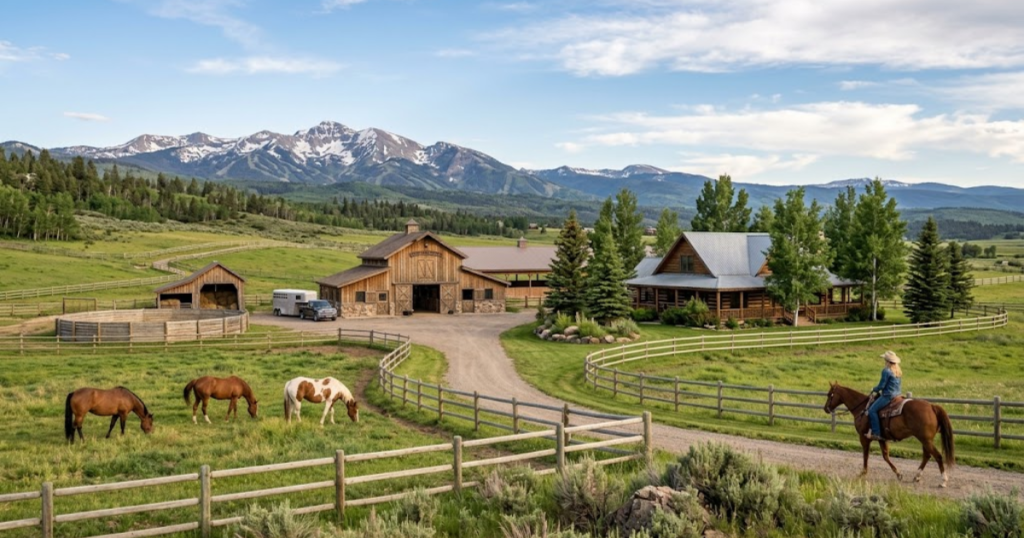
You want to wake up, step onto your back porch, and watch your horses grazing with the snow-capped Rocky Mountains serving as the ultimate backdrop. It is the defining dream for thousands of buyers relocating from the East Coast, the Midwest, and California.
However, before you pack your trailers and haul your herd across the country, you must ask a critical question. Is the state actually a good place to keep horses?
The answer is an overwhelming yes, but with a massive condition. Colorado is one of the world’s premier equestrian destinations, provided you buy the right land and know how to manage it. The environment here is stunning, but it is also unforgiving. The climate, complex water laws, and rugged topography demand a completely different approach to farm management than what you might be used to in wetter, lower-altitude states.
When searching for horse properties in Cin Colorado, buyers often assume that any property with acreage and a barn will work perfectly. In reality, thriving in this state requires proactive due diligence, specialized infrastructure, and a deep respect for the natural environment.
Here is the comprehensive guide to exactly what makes Colorado an incredible place for horses, and the brutal realities you must understand before buying your dream property.
Is Colorado Good for Horse Properties? What to Know Before Buying
Quick Summary: The Realities of Rocky Mountain Horse Ownership
- The Geographic Advantage: Colorado offers world-class veterinary care, millions of acres of public riding land, and a vibrant equestrian culture across multiple disciplines.
- The Water Rights Law: Water operates entirely separately from land ownership. You must verify well permits and irrigation ditch shares before assuming you can water a herd.
- The Altitude and Climate: The dry, high-altitude environment is excellent for respiratory health and hoof integrity, but it demands heavily insulated infrastructure and specialized winter management.
- The Acreage Illusion: You cannot use standard grazing formulas here. The arid climate requires significant acreage and strict rotational grazing to prevent native grasses from being destroyed.
1. The Climate Advantage: Equine Health at High Altitude
Many buyers worry about bringing their horses into a region known for intense winter weather. While winters require preparation, Colorado's overall climate is incredibly beneficial for equine health.
The Dry Air Benefit
Colorado is a high-altitude, semi-arid desert environment. While that makes growing grass difficult, the lack of humidity is a massive advantage for your horses.
In humid southern and eastern states, horse owners constantly battle moisture-driven skin conditions like rain rot, sweet itch, and severe thrush. In the dry Colorado air, these bacterial and fungal infections are remarkably rare.
Furthermore, the crisp, dry air is excellent for horses with respiratory issues or seasonal allergies, as mold spores and heavy pollen counts are significantly lower than in wetter climates.
Cardiovascular Conditioning
When you move a horse from sea level to elevations ranging from five thousand to eight thousand feet, they will need time to acclimate. For the first few weeks, they will breathe heavier during light exercise as their bodies adjust to the thinner air.
However, once they acclimate, their cardiovascular systems become incredibly efficient. Horses trained at high altitude develop massive lung capacity and stamina, making them highly competitive athletes when traveling to lower elevations for shows.
Winter Management Strategies
Winters are undeniably harsh, with sub-zero temperature drops, heavy snowfall, and intense wind gusts. However, horses tolerate dry, cold snow far better than they tolerate freezing, wet rain.
A healthy horse with a thick winter coat can comfortably weather a Colorado winter, provided they have access to a three-sided run-in shed to block the prevailing winds.
To manage winter successfully, ensure your property has frost-free hydrants, automatic heated waterers, and a barn roof engineered to withstand massive structural snow loads.
2. The Ultimate Dealbreaker: Colorado Water Law
If there is one absolute truth in Colorado real estate, water dictates everything. Water is the primary reason buyers walk away from deals, and it is the most complex hurdle you will face during your property search.
Prior Appropriation and Severed Rights
Colorado follows the Prior Appropriation Doctrine, which allocates water rights based on seniority and historical use. More importantly, water rights are entirely separate from land ownership.
You can buy fifty acres with a beautiful creek running right through the middle of your pasture, but if a previous owner severed and sold the water rights, you cannot legally pump a single drop of that water for your horses.
The Well Permit Distinction
If you are buying a dryland property, you will rely entirely on groundwater from a private well. Never assume a well can be used for livestock.
You must pull the permit from the Colorado Division of Water Resources and check the exact classification. If the well is designated for Household Use Only, it is illegal to use that water outside the home.
You must find a property with a Domestic and Livestock well permit to ensure you can legally hydrate your herd.
Irrigation and Ditch Shares
If your goal is to grow your own hay or maintain lush, green summer pastures, you must buy a property with adjudicated surface water rights or mutual ditch company shares.
These shares entitle you to a specific portion of water flowing through the local canal systems during the summer months. However, in drought years, junior ditch shares may be restricted, meaning you must always have a backup plan for imported hay.
3. Grazing Realities and Pasture Management
The hardest adjustment for out-of-state buyers is letting go of the one-horse-per-acre rule. In Colorado, keeping a horse on a single acre of natural grass will destroy the land within weeks.
The Dryland Grazing Formula
Because of the low annual rainfall and intense ultraviolet sunlight, the native grasses on the high plains and foothills are fragile. They grow slowly and require significant time to recover from grazing.
To support a horse on dryland pasture without relying entirely on imported feed, you typically need two to three acres of usable grazing land per horse.
If a listing advertises a five-acre lot, you should assume you can support only two horses, and even then, you will need to implement aggressive rotational grazing.
The Necessity of the Sacrifice Lot
Every functional Colorado horse property requires a sacrifice lot. This is a small, heavily fenced dirt paddock where you confine your horses when the main pastures cannot handle foot traffic.
You will use the sacrifice lot constantly. When the spring snow melts and the ground turns to deep mud, keeping the horses off the pastures prevents their heavy hooves from destroying the root systems.
During a late summer drought, when the grass stops growing entirely, the horses must return to the sacrifice lot to eat hay.
Hay Storage Infrastructure
Because you cannot rely on year-round grazing, you will feed significant amounts of hay. A premium horse property must feature a dry, rodent-resistant, fully enclosed hay storage building.
Buying hay in massive bulk quantities during the summer harvest is the only way to protect yourself from the massive price spikes that occur during winter shortages.
4. Topography and the Usable Acreage Trap
A real estate flyer might boldly advertise forty acres in the mountains, but the total lot size rarely reflects the property's actual equestrian usability.
The Mountain Terrain Challenge
If you look at properties in the foothills of Jefferson County or the deep mountains of Archuleta County, you must evaluate the terrain's grade. Horses need relatively flat, well-draining ground to move safely.
If thirty-five acres of a forty-acre parcel consist of steep, rocky canyons covered in dense pine trees, that land holds zero grazing value. You are paying a premium for mountain views, but you are effectively operating a five-acre farm.
Furthermore, building a riding arena in the mountains requires blasting rock, building massive retaining walls, and importing thousands of tons of level base material, which can easily cost over $100,000.
Fencing Against the Elements
The Colorado environment is incredibly hard on infrastructure. The soil's freeze-thaw cycle causes severe ground heaving, which can push improperly set fence posts right out of the earth.
When buying a property or building new fences, drive posts deep below the frost line. Additionally, the Front Range experiences hurricane-force winter wind gusts.
Solid vinyl fencing panels often shatter or blow out during these storms, making highly porous materials like pipe rail or rigid wire mesh much safer, more durable options.
5. Zoning Codes and Animal Density Limits
Acreage alone does not guarantee permission. Colorado counties are incredibly strict regarding agricultural land use and animal density limits.
Calculating Animal Units
Counties like Douglas, Weld, El Paso, and Larimer all have specific zoning categories. The county planning department will dictate your carrying capacity using an Animal Unit formula.
For example, a rural residential zone might allow one animal unit per contiguous half-acre, but only after you meet a strict two-acre minimum lot size.
Work backward from the county zoning codes to ensure the parcel you are buying can legally support your current herd, plus any horses you plan to acquire in the future.
Hidden Restrictive Covenants
As historic ranches were sold and subdivided over the last fifty years, developers attached restrictive Homeowners Association covenants to the deeds.
You can find beautiful five-acre lots with pristine barns that strictly prohibit parking horse trailers in the driveway, limit you to two horses regardless of land size, or completely ban commercial activities like teaching riding lessons or boarding outside horses.
An exhaustive review of the title commitment is mandatory before closing on any rural property.
6. The Vibrant Equestrian Community and Economy
Despite the environmental challenges, Colorado remains a premier destination because the community infrastructure supporting the lifestyle is second to none.
Unrivaled Veterinary Access
The state is anchored by the Colorado State University Veterinary Teaching Hospital in Fort Collins, globally recognized as one of the world's elite equine medical centers.
Across the Front Range, you have access to a massive network of specialized mobile equine veterinarians, board-certified surgeons, and elite farriers with deep experience managing high-performance athletes and backyard companions alike.
Endless Riding Opportunities
Colorado offers unparalleled access to public lands. Millions of acres of National Forest and Bureau of Land Management property provide virtually limitless trail riding opportunities through pristine alpine meadows and rugged canyons.
For competitive riders, facilities like the Colorado Horse Park host elite national competitions across dressage, show jumping, and eventing, creating a thriving local economy for feed suppliers, tack retailers, and professional trainers.
We Navigate Colorado Equestrian Real Estate
Colorado is an incredible place to own horses, as long as you buy a property that is legally protected, structurally sound, and environmentally sustainable.
When Mark Eibner's team represents you, we handle the complex due diligence that standard residential agents completely overlook. We pull well permits, translate county animal density codes, evaluate soil drainage, and inspect fencing before you ever submit an offer.
We ensure that the farm you buy is a safe, functional, and legal home for your herd.
Contact us today at coloradohorseproperty.com to find the premium horse properties Colorado buyers trust for exceptional rural living.
Browse active Colorado horse ranches for sale or ask our team about finding a functional horse property for rent in Colorado while you plan your relocation to the Rocky Mountains.
Frequently Asked Questions (FAQ) About Buying in Colorado
Do horses need special shoes in Colorado?
The dry climate makes hooves incredibly hard and durable, meaning many horses can comfortably go barefoot. However, if you plan to trail ride in the mountains, the rocky, abrasive terrain requires protective shoes or high-quality hoof boots to prevent severe bruising and excessive wear.
Is it cheaper to buy land on the eastern plains or in the mountains?
The eastern plains, encompassing counties like Elbert, Lincoln, and eastern Weld County, offer significantly cheaper land per acre than the mountain foothills. The plains also offer flat, usable terrain that is ideal for building massive arenas and managing large rotational grazing pastures.
What is the biggest danger to horses in Colorado pastures?
Toxic weeds and lightning strikes are two major concerns. Overgrazed pastures quickly fill with opportunistic, toxic plants that horses will eat if no healthy grass is available. Additionally, the state experiences intense summer thunderstorms, making safe, grounded shelters a necessity in open pasture land.
Does owning a horse property lower my property taxes?
Not automatically. To qualify for agricultural property tax valuation in Colorado, the land must be used primarily to obtain a monetary profit through agricultural activities, such as commercial livestock breeding, grazing cattle, or harvesting hay. Simply keeping horses for personal pleasure does not qualify you for the tax break.