
Near Pikes Peak, the right retirement property means more than a mountain view. If you’re deciding where to retire with horses in Colorado, focus on acreage and equine features that suit your horses, as well as the trail access you want nearby.
Open space and a connection to Colorado’s landscape may be part of the appeal, but a workable horse property also needs to support your daily routine. Pasture, fencing, water, and barn or arena features all affect how well a property meets your horses’ needs.
This guide explains what to look for in horse retirement property near Pikes Peak and how to weigh trail access as part of your search. You’ll learn which property features matter, what trade-offs to consider, and how specialized real estate support can help narrow the options to homes and land suited to your goals.
Key Takeaways
- Compare areas near Pikes Peak by the acreage, pasture, water, and equine facilities that fit your horses’ needs.
- Assess nearby trail access alongside the property itself, including how riding routes fit your preferred routine.
- Weigh Colorado towns by their setting and the practical features you want in a horse property.
- Understand which property and regional factors shape costs before narrowing your search.
Ranch location near Pikes Peak
Near Pikes Peak, compare the land, local rules, and services that shape daily horse care. A suitable ranch balances usable pasture with access to the people and facilities you rely on.
Zoning and Horse-Keeping Rules
Zoning is specific to each parcel. County and municipal rules can differ, so permitted uses and horse-keeping conditions depend on the property’s location. Review the applicable land-use rules and recorded property restrictions before making a purchase decision.
Colorado has no single acreage or fencing requirement that applies to every property. Local rules and property restrictions may affect both. Consider whether the land offers practical pasture and space for your horses, and whether the existing fencing suits your intended use.
Property Costs and Retiree Living Costs
Property costs near Pikes Peak depend on the parcel and its equine features, including acreage, pasture, barns, arenas, and water access. Compare the facilities you’ll use with the land you need. More acreage can also mean more land to manage.
Property taxes and everyday living costs also vary by location and property. Budget for ongoing land upkeep, utilities, feed, and routine horse care. These costs matter alongside the purchase price when you assess long-term affordability.
Town Choice, Climate, and Service Access
Winter conditions and pasture suitability vary with elevation, exposure, soil, and water availability. Assess the parcel itself rather than relying on a broad regional label. Consider whether its pasture supports your intended grazing and how seasonal conditions may affect turnout.
Wildfire and drought can affect land management, while water rights and grazing arrangements shape how you use a property. Weigh these considerations alongside access to healthcare, airports, and everyday services. A rural setting may mean longer trips, so compare the location with the services you expect to use.
Equine Care and Local Facilities
Access to equine veterinarians, farriers, feed stores, and boarding facilities depends on the town and the property’s distance from local services. Map the regular care and supply stops that matter to your routine, then consider how travel time fits your plans.
Nearby facilities can offer options for care or temporary horse arrangements. Their locations and services vary, so consider local access alongside pasture, fencing, and barn features. This helps you weigh the setting against the practical demands of horse ownership.
Trail riding nearby
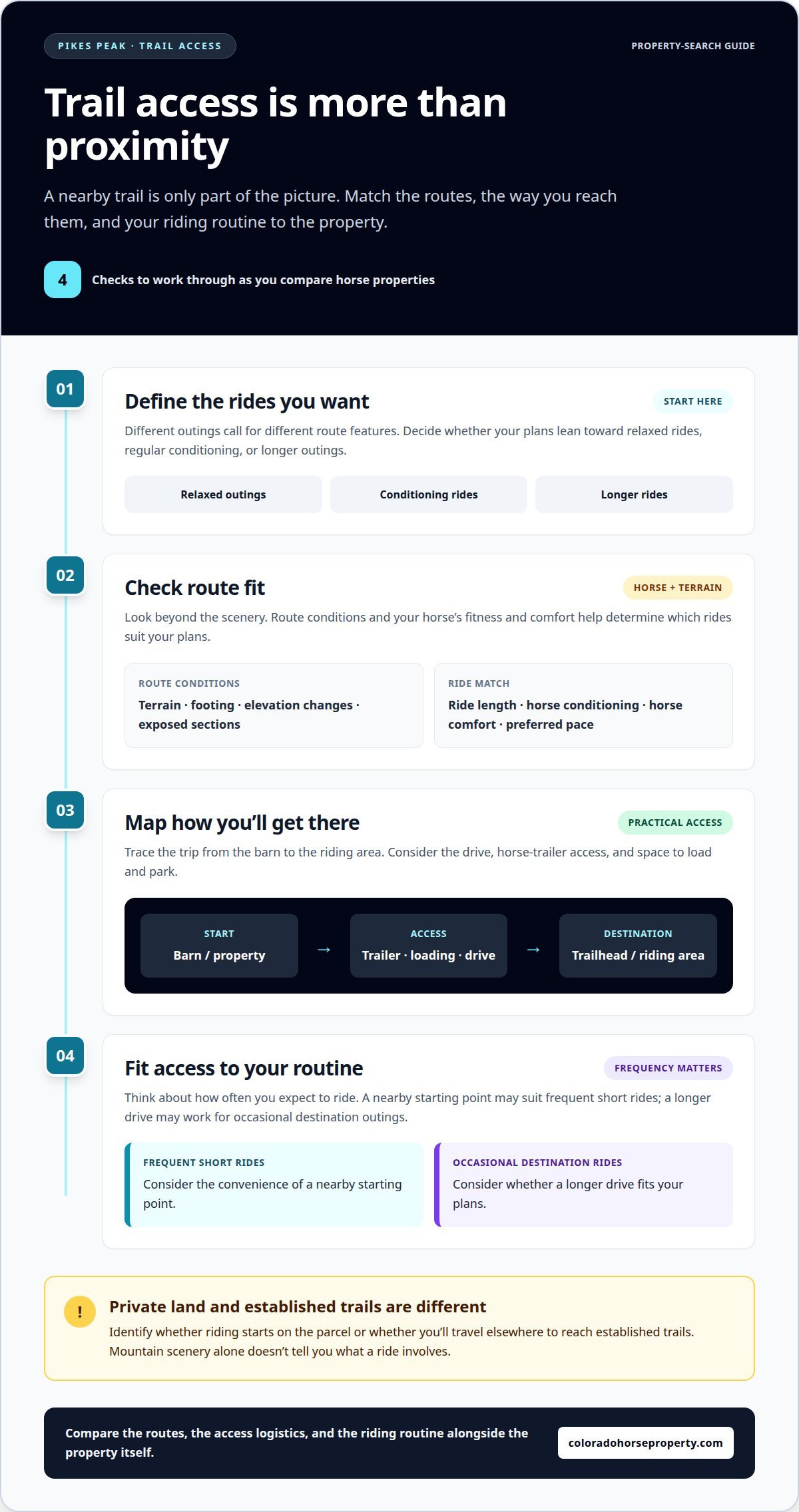
Near Pikes Peak, trail access can shape how often you ride and how a property fits your routine. If you’re deciding where to retire with horses in Colorado, don’t stop at asking whether trails are nearby. Consider which routes suit your horse, how you’ll reach them, and whether the trip fits your preferred riding schedule.
Start by defining the rides you want to take. Relaxed outings, regular conditioning, and longer rides call for different route features. Consider terrain, footing, elevation changes, and distance from the property to the trailhead. A nearby starting point may suit frequent short rides, while a longer drive may work for occasional destination outings.
As you compare properties around Pikes Peak, map the route from the barn to the riding area. Consider horse-trailer access, loading space, and the drive to the trailhead. Distinguish riding on private land from access to established trails, since these are different property features. The best location for someone deciding where to retire with horses in Colorado depends on which kind of access suits their riding plans.
- Route fit: Match terrain and ride length to your horse’s conditioning and your preferred pace.
- Getting there: Consider trailer access, parking, and the practical drive from the property.
- Property use: Identify whether riding starts on the parcel or requires a trip elsewhere.
- Routine: Decide how often you expect to ride, then weigh convenience against other property priorities.
Mountain scenery alone doesn’t tell you what a ride involves. Footing, elevation, and exposed sections shape the route, while your horse’s fitness and comfort affect which outings suit your plans. Consider these factors as part of the location decision, not as a bonus to think about later.
For a focused search, compare listings by location and equine features. Browse horse property listings as you assess access near Pikes Peak.
Local equine resources can also inform a broader horse-centered location search. The Colorado Therapeutic Riding Center established its Retired Horse Sanctuary in 2010, and the sanctuary has been awarded accredited status by the Global Federation of Animal Sanctuaries (GFAS). These details offer a point of reference when considering horse-related organizations alongside practical questions about routes, access, and the riding routine a property can support.
Which Colorado towns are best for retiring with horses?
No single Colorado town suits every horse owner. Start with the area you want to live in, then compare individual properties by usable acreage, equine facilities, local services, and access for your preferred riding routine. Near Pikes Peak, assess each parcel on its own merits rather than assuming nearby towns offer the same conditions.
Strasburg offers one concrete eastern Colorado reference point: Mountain State Retired Racehorse Rehoming operates a 40-acre farm there, 35 minutes east of Denver. Those details give buyers a way to orient a search, not a guarantee that every Strasburg property has similar acreage or horse facilities. Compare the actual land, pasture, fencing, and buildings available in each listing.
Elbert is another place to include in a regional comparison. Gratitude Ranch, located there, has an indoor arena that a boarder describes as useful in winter. This example points to a practical question for prospective buyers: would an arena or another facility support the riding and horse-care routine you want? Town names alone cannot answer that. The property’s features matter.
- Strasburg: Use the farm’s location east of Denver as a geographic reference while comparing available parcels.
- Elbert: Consider whether an indoor arena and other equine facilities fit your priorities.
- Pikes Peak area: Compare each property’s usable land, horse infrastructure, and access to the services you rely on.
Before comparing areas, rank your priorities. A buyer focused on an indoor riding space may weigh Elbert differently from someone prioritizing a particular parcel layout. Someone who wants to stay near Denver may assess Strasburg against other locations by travel needs and property features. For a broader search, compare towns and properties across Colorado, then narrow the options to a setting that supports your horse-care plans and retirement goals.
What is the cost of horse property in Colorado by region?
Horse property costs in Colorado vary with location and parcel features. A reliable regional price ranking requires comparable listings for specific areas. Compare properties by the land and equine infrastructure they offer, then consider the ongoing costs of maintaining them.
Near Pikes Peak, for example, a buyer might weigh acreage, pasture, barns, arenas, fencing, and water access together. A property with facilities that match your needs may compare differently from vacant land or a home with limited horse infrastructure. Regional comparisons are most useful when the properties serve similar purposes.
Build a like-for-like comparison around these factors:
- Land: Consider usable acreage, pasture layout, and the upkeep the parcel requires.
- Facilities: Note whether barns, arenas, fencing, and water features match your intended use.
- Location: Compare access to services and the travel involved in your regular routine.
- Ownership costs: Include property taxes, utilities, land maintenance, feed, and routine horse care in your planning.
Assess property taxes and living expenses alongside the purchase decision. The parcel’s location and characteristics affect its ownership profile, while feed, utilities, and upkeep depend on the property and your horses’ needs. A smaller parcel with suitable facilities may suit one buyer better than a larger property that requires more ongoing management.
For a useful regional comparison, group listings by location and features such as acreage, water access, and barns. Compare the entire package, not just land size or asking price. A property’s price depends on its location, land, and improvements; the specific amount is shown in its listing. Comparing properties with similar features gives a more useful picture than relying on a general figure.
Explore Colorado horse property listings to compare available properties by region and equine features.
Costs vary by location, acreage, and equine improvements, so compare similar properties by their features and ongoing ownership costs. The price depends on the individual listing.
Colorado Horse Property
Colorado Horse Property can help turn your retirement priorities into a focused horse-property search. If you’re weighing location, usable acreage, pasture, water access, or equine facilities, its AI-powered search helps identify listings using those criteria. Buyer representation can support you as you evaluate properties and move toward a purchase.
This is a natural next step once you’ve narrowed down the Colorado areas and property features that fit your plans. Search listings for equestrian estates, ranches, and acreage, with transaction management supporting the purchase process. Your priorities guide the search, from a particular setting near Pikes Peak to the land and facilities your horses need.
Ready to discuss your horse-property goals? Contact Colorado Horse Property.
Turn Your Retirement Priorities Into a Property Search
Deciding where to retire with horses in Colorado is also a decision about the daily life you want to build. Before moving forward, write a brief that separates essentials from preferences. Note the features that would make a property workable for your horses, the setting you want to wake up in, and the trade-offs you’re willing to make.
That brief gives your search direction without locking you into one town or property type. As you consider options, focus on how each fits your plans over time, not just how it looks on a listing page. The right match should support both your retirement goals and the responsibilities of owning horses.
If you’re ready to put your priorities into motion, contact Colorado Horse Property to discuss your horse-property search. Your next chapter can start with a clear plan and a place that feels like home.
Frequently Asked Questions
Which Colorado towns offer nearby trails, public lands, and equestrian facilities?
Strasburg and Elbert are useful starting points for comparing horse-property locations, but trail and public-land access depends on the specific parcel. Treat nearby trails, public access, and on-site equestrian facilities as separate search criteria. For example, a property may have a riding arena without being close to public riding land. Compare each listing’s location and facilities with the riding access you want.
Which Colorado areas have mild winters and suitable horse pasture?
Winter conditions and pasture suitability vary with elevation, exposure, soil, and water availability. Assess each parcel’s pasture and seasonal conditions rather than relying on a regional label.