
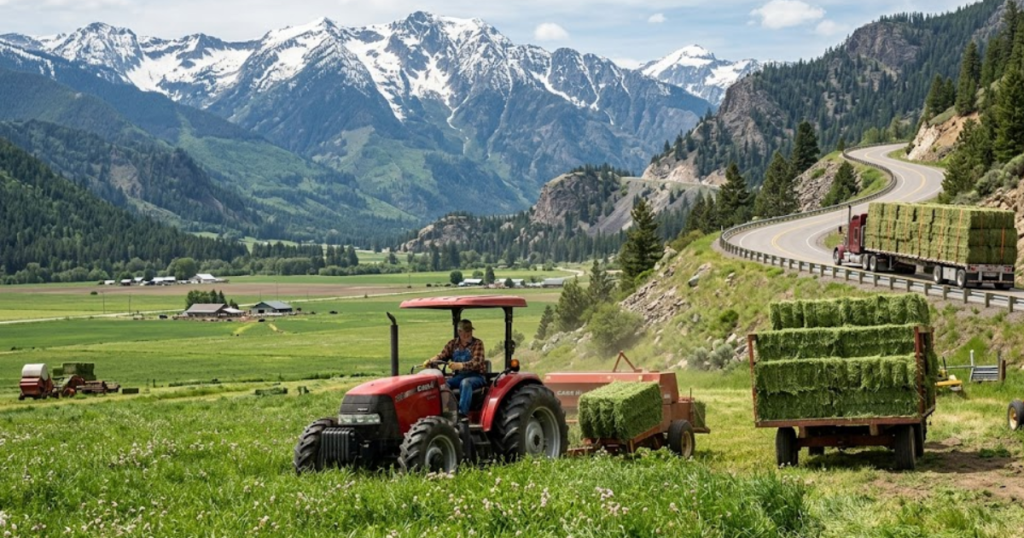
You find your dream mountain valley ranch. The pastures are emerald green in July, the barn has a beautiful loft, and the setting is postcard-perfect. You move your horses in, and come August, you call a local agricultural supplier to order your winter supply of premium orchard grass.
The supplier delivers the bad news: because of the short, high-altitude growing season, the local valley only produces a coarse, single cutting of native mountain meadow grass that your picky Warmbloods refuse to eat. If you want high-quality, soft second-cutting orchard grass, it has to be trucked over the mountain passes from the Western Slope or brought in from out of state.
The price? An extra $8 to $10 per bale just to cover the freight and diesel over the Continental Divide. Your carefully planned winter budget is completely wiped out before the first snow even falls.
When exploring the market for a new equestrian estate, looking at the layout of the barn is only half the battle. You must evaluate the regional agricultural supply chain. Knowing exactly where your hay is grown and what it takes to get it to your feed room is a massive factor in the long-term financial viability of your farm.
Does the Local Area Produce High-Quality First- or Second-Cutting Orchard Grass, or Must Hay Be Trucked Over the Mountain Passes?
Quick Summary: The Forage Frontier
- The Cutting Conflict: First-cutting orchard grass is fibrous, excellent for easy keepers, and keeps horses chewing longer. Second-cutting is richer, softer, higher in protein, and ideal for performance horses, hard keepers, or senior horses.
- The Over the Pass Premium: Many high-altitude mountain valleys cannot sustain multi-cutting hay operations due to short growing seasons. If your property relies on hay trucked over the Continental Divide or from neighboring states, your annual feed budget can easily double due to freight costs.
- The Local Microclimate Factor: Colorado’s agricultural regions vary wildly. The Western Slope and lower river valleys produce spectacular irrigated orchard grass, while high-altitude Front Range properties often look to the eastern plains or interstate imports to fill their barns for winter.
- The Sourcing Strategy: When managing a working horse property, securing a contract with a reliable local hay producer before the summer harvest is just as critical as checking the well's flow rate.
Feed economics are part of property economics. A beautiful location can become much more expensive to operate if the hay your horses actually need must be hauled long distances every season.
1. First vs. Second Cutting: Breaking Down the Nutrition
Not all grass is created equal, and understanding the difference between cuttings is essential for herd management.
- First-Cutting Orchard Grass: Harvested in late spring or early summer, first-cutting grows rapidly. It features thicker stems, more seed heads, and a higher percentage of crude fiber. It is fantastic for easy keepers or horses prone to metabolic issues, as it takes longer to chew and keeps their digestive systems moving without packing on excess fat.
- Second-Cutting Orchard Grass: Cut later in the summer after the initial growth surge, second-cutting is leafy, soft, and dark green. It has virtually no seed heads, is significantly higher in protein and digestible nutrients, and is highly palatable. It is the gold standard for performance horses, growing foals, and senior horses who struggle to chew coarse forage.
- The Yield Dilemma: Because orchard grass thrives in cooler weather, a second cutting requires consistent late-summer moisture or premium water rights for irrigation. If a local area suffers from late-summer droughts, second-cutting becomes scarce and incredibly expensive.
2. The Logistics of the Mountain Pass Premium
Geography dictates your feed bill. If you buy a property in a high-mountain valley or an arid Front Range pocket, you are at the mercy of the transport grid.
- The Continental Divide Tax: Trucking semi-loads of heavy hay bales over treacherous mountain passes like Berthoud, Loveland, or Monarch is an expensive logistical feat. Trucking companies face strict weight limits, steep grades that burn massive amounts of fuel, and sudden winter pass closures that can cut off your supply chain for days.
- The Fuel and Freight Add-On: When hay has to travel hundreds of miles, you are not just paying for the grass, you are paying for the diesel, the driver's time, and the wear-and-tear on the commercial rig. This freight markup can easily turn a reasonable $12 bale at the farm source into a $22 bale by the time it is stacked in your barn.
- The Interstate Variable: In dry years, local production drops significantly, forcing suppliers to bring in orchard grass from states like Idaho, Utah, or Wyoming. Buying a property located near major transportation corridors or lower agricultural valleys insulates you from these extreme out-of-state shipping spikes.
The quality of local hay supply matters, but so does haul distance. Freight can turn a manageable feed plan into a major annual cost increase.
3. Sourcing and the Power of the Harvest Contract
In the West, securing your winter feed is a high-stakes game of timing and relationships.
- The Summer Scramble: The smartest barn managers do not buy hay month-to-month in the winter. They establish a relationship with a trusted producer in June, purchasing their entire winter supply straight out of the field during harvest.
- The Cash-Up-Front Reality: This requires paying for 500 to 1,000 bales all at once in July or August, locking in the lowest price of the year before the winter supply chain tightens and prices skyrocket.
- The Proximal Advantage: If your property is located within a 20-to-30-minute drive of a major hay-producing valley, you can handle the transport yourself using a heavy-duty flatbed trailer, completely bypassing commercial delivery fees and taking control of your own supply chain.
4. Storage Infrastructure Requirements
If you must buy your hay in bulk during the summer to avoid winter transport premiums, your property’s storage capacity becomes paramount.
- The Footprint Calculus: A single horse consumes roughly 2.5% of its body weight in forage daily. For a 1,200-pound horse, that is 30 pounds of hay a day, or roughly 5.5 tons of hay over a standard 365-day year. If you have four horses, you need to store at least 22 tons of hay to get through the year comfortably.
- The Hay Shed Necessity: To hold that volume safely without risking mold or fire, you need a dedicated, well-ventilated hay barn or equipment shed. If a property only has room to store 50 bales at a time, you will be forced to buy hay continuously throughout the winter, subjecting yourself to peak seasonal pricing and delivery bottlenecks.
We Analyze the Supply Chain Before You Buy
We do not just look at the quality of the arena footing; we investigate the regional agricultural grid.
When our team helps you evaluate potential estates, we look closely at the local agricultural ecosystem. We help you identify local hay producers, analyze the regional growing season, and calculate the true operational cost of feeding your herd based on the property’s geographic location. We want to ensure your farm is as economically sustainable as it is beautiful.
Contact Us Today to find premium horse properties Colorado buyers choose for excellent agricultural access and secure supply chains.
Browse Active Colorado Horse Properties: Browse active Colorado horse ranches for sale or ask our team about finding a functional horse property for rent Colorado featuring ample hay storage and convenient proximity to local producers
Frequently Asked Questions (FAQ) About Orchard Grass Sourcing
Can I substitute orchard grass with local alfalfa if grass hay is too hard to source?
While alfalfa is widely grown in Colorado and easier to source locally in many regions, it is not a direct 1-to-1 substitute for orchard grass. Alfalfa is incredibly rich, packed with protein and calcium, and can cause easy keepers or stagnant horses to gain dangerous amounts of weight or develop digestive issues if fed as a 100% ration. It is best used as a supplemental calorie source alongside a base of grass hay.
How do I test the quality of the local orchard grass before buying a large batch?
You should request a core sample and have it sent to an agricultural testing laboratory, like Dairy One or Equi-Analytical. The lab report will provide an exact breakdown of the crude protein, Acid Detergent Fiber (ADF), Neutral Detergent Fiber (NDF), and Non-Structural Carbohydrates (NSC), ensuring the sugar and protein levels align with your specific horses' metabolic needs.
Does high-altitude grown hay have any specific nutritional benefits?
Yes. Hay grown in high-altitude valleys with cool nights and intense alpine sun often boasts exceptional sugar-to-structural-fiber ratios. The cool nights slow down the plant's respiration, allowing it to retain highly digestible nutrients, making true mountain-grown orchard grass highly sought after by performance horse trainers, provided you can source it locally without the extreme shipping premium.