
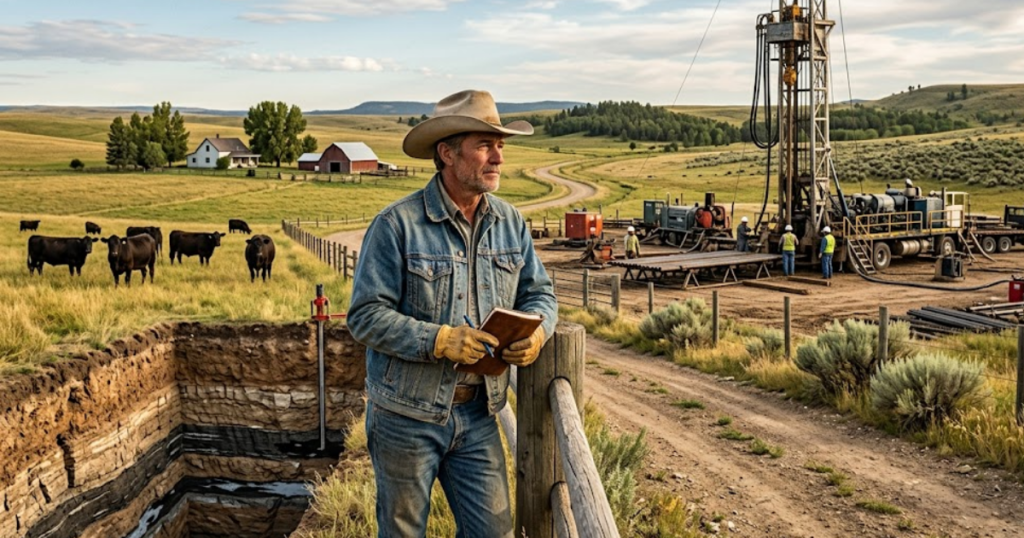
You finally find the perfect 40-acre horse property on the Western Slope. You close on the deal, build your dream barn, and start settling into the quiet, rural lifestyle.
Two years later, heavy trucks roll down your driveway. A representative from an energy company informs you that they are preparing to build an oil pad in your back pasture. When you threaten to call the police and tell them to get off your land, they hand you a legal document proving they have the absolute right to be there.
This is the harsh reality of Colorado real estate. Buying the physical dirt under your boots does not automatically mean you own what is buried beneath it.
If you are buying agricultural land in the West, understanding the difference between surface rights and mineral rights is critical to protecting your peace, your horses, and your investment. Here is how to navigate the complexities of a split estate.
Does the Land Have "Mineral Rights" or is it a "Split Estate"?
Quick Summary: The Underground Threat
- The Split Estate: In Colorado, you can own the surface dirt without owning what is underneath it. A split estate or severed estate means someone else, or the government, owns the mineral rights below your farm.
- The Dominant Estate: By Colorado law, the mineral estate is dominant. The mineral rights holder has a legal right to use a reasonable amount of your surface land to explore, drill, and extract those minerals.
- The Infrastructure Risk: If you do not own the minerals or have a protective agreement in place, a drilling company could potentially bulldoze your pasture or set up a rig near your barn.
- The Title Search: A standard property deed does not always tell the whole story. You need a specialized mineral rights title search to verify exactly what you are buying.
On rural horse property, what lies beneath the land can directly affect barns, pastures, riding safety, noise levels, and long-term property value.
1. Understanding the "Split Estate"
Property ownership is often described as a bundle of sticks. You can sell one stick while keeping the rest.
- The Surface Rights: Surface rights give you ownership and control of everything visible and tangible above ground. You can build a house, put up fences, and graze your horses.
- The Mineral Rights: Mineral rights are a completely separate stick. They dictate who owns the oil, natural gas, coal, and valuable metals beneath the topsoil.
- The Severance: A split estate occurs when those two ownership rights have been severed. A previous owner, or the original federal land grant, may have sold the surface land but permanently retained the mineral rights. Today, millions of acres in Colorado operate as split estates.
2. The Rule of the "Dominant Estate"
This is where the law catches out-of-state buyers off guard.
- The Right of Access: In Colorado, the mineral estate is legally considered the dominant estate. The surface estate is subservient to it.
- Reasonable Use: The courts have established that a mineral rights owner has an implied easement to access their property. They are legally allowed to use as much of your surface land as is reasonably necessary to explore, drill for, and extract their minerals.
- The Reality: While they cannot act maliciously or destroy your home, they can build access roads across your land, lay pipelines, and clear native grass to build a drilling pad, even if you object to it.
Owning the land surface does not automatically give you the final say if the mineral estate has been severed and active development rights remain below your property.
3. The Danger to Equestrian Infrastructure
A split estate poses unique, devastating risks to a working horse property.
- The Disruption: Horses are flight animals. The constant noise, heavy truck traffic, and industrial lighting of an active drilling operation can make a once-peaceful property incredibly dangerous or completely unusable for riding and training.
- Pasture Loss: If an energy company decides your best grazing pasture is the ideal location for a well pad, you will instantly lose acreage that you rely on to feed your herd.
- The Due Regard Doctrine: While mineral operators must show due regard for your surface use, they are only legally required to compensate you for damage to commercial crops and specific agricultural improvements, not for the loss of your scenic view or your property value.
4. How to Protect Your Farm
If you fall in love with a property that happens to be a split estate, all is not lost, but you must negotiate aggressively.
- The Deep Title Search: Standard title insurance usually excludes mineral rights. You must request a specific, comprehensive mineral title search at the county clerk's office to find out exactly who holds the subsurface rights.
- Surface Use Agreements (SUA): If an energy company already holds a lease on the minerals beneath your land, you must negotiate a strict Surface Use Agreement. This legally dictates exactly where they can put roads, how far they must stay from your barns, and how much they will pay you for surface damages.
- No Surface Occupancy (NSO): The absolute best protection on a split estate is securing a No Surface Occupancy agreement from the mineral owner. This guarantees that while they own the minerals, they can only extract them by directionally drilling from a neighboring property, permanently protecting your surface land from any industrial disruption.
We Dig Deeper Before You Buy
We do not just look at the grass; we look at what is buried beneath it.
When Mark Eibner and Belinda Seville help you evaluate a rural property, we ask the hard questions about severed estates. We help coordinate the specialized title searches required to identify who holds the mineral rights, ensuring your horses and your infrastructure will not be displaced by an unexpected drilling rig.
Contact Us Today to find a property where your investment is fully protected, from the sky to the bedrock.
Browse Active Colorado Horse Properties: Browse Active Colorado Horse Properties that offer secure, uninterrupted rural living
Frequently Asked Questions (FAQ) About Mineral Rights
If I own the surface, do I automatically own the sand and gravel?
Usually, yes. In Colorado, common surface materials like sand, gravel, and limestone are typically considered part of the surface estate, not the mineral estate, unless the deed explicitly states otherwise.
Can I stop a mineral owner from drilling if I do not sign a Surface Use Agreement?
Not indefinitely. The state encourages both parties to act in good faith to reach an agreement. However, if an agreement cannot be reached, the mineral owner can ultimately post a bond with the Colorado Energy & Carbon Management Commission to cover surface damages and proceed with drilling anyway.
Do I get a cut of the oil money if a well is drilled on my land?
No. If you only own the surface rights, you do not receive any royalty payments from the production of the oil or gas. The only money you are entitled to receive is compensation for the physical surface damages outlined in your Surface Use Agreement.