
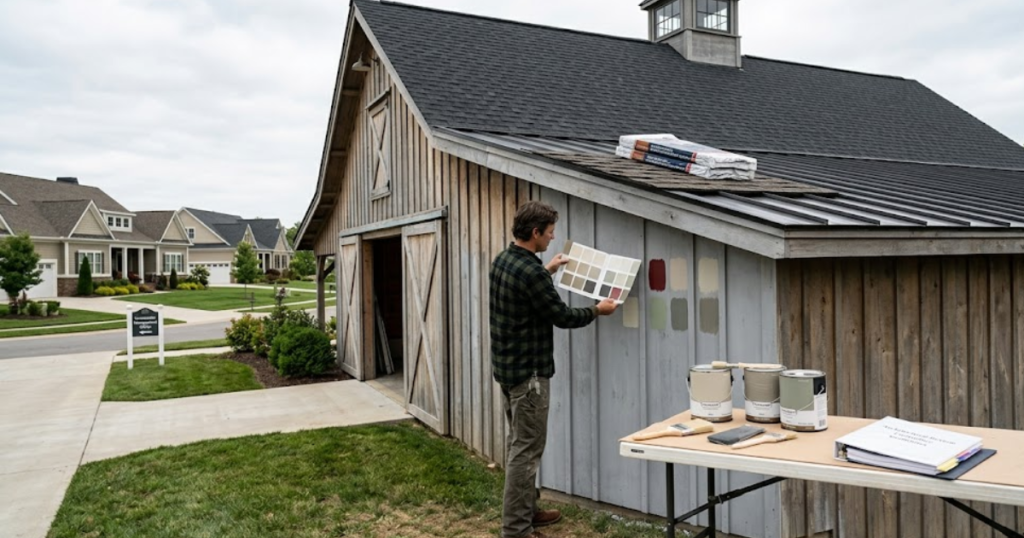
You buy a stunning 5-acre lot in a premier equestrian community. You order a custom steel barn, and wanting a classic country look, you select a vibrant barn-red with a bright white roof. Halfway through construction, the HOA president leaves a cease-and-desist letter taped to your gate.
The community covenants strictly mandate earth tones and non-reflective roofing. You now have to pay the builders to stop, order all-new siding, and eat thousands of dollars in change-order fees.
Buying a horse property within a Homeowners Association (HOA) offers great amenities and protected property values, but it comes with a massive loss of absolute control. While you might own the land, the HOA often owns the aesthetic.
Here is how to navigate HOA aesthetic rules and color palettes before you buy or build.
Does the HOA Have "Color Palette" Restrictions on Barn Paint or Roofing?
Quick Summary: The Aesthetic Rulebook
- The Matching Mandate: Most equestrian HOAs strictly require your barn and outbuildings to architecturally match the primary residence in both color and material.
- The Glare Factor: Unpainted, highly reflective galvanized metal roofs are frequently banned to protect the scenic views of neighboring properties.
- The ARC Process: You cannot just start painting. You must submit your color swatches, roofing samples, and blueprints to the Architectural Review Committee for official approval.
- The Cost of Defiance: Ignoring the HOA color palette can result in massive daily fines or a legal injunction forcing you to repaint or reroof the entire barn at your own expense.
Within an HOA, your barn design is not just a personal choice. Exterior colors, roofing materials, and outbuilding appearance can all be controlled by legally enforceable covenant rules.
1. The "Primary Matching" Mandate
Most upscale HOAs do not want the neighborhood to look like a patchwork of industrial farm buildings.
- The Seamless Estate: The covenants often state that any outbuilding, whether it is a massive commercial horse barn or a small run-in shed, must visually tie into the main house.
- The Exact Match: This usually means you are required to use the exact same exterior paint colors, the same trim colors, and sometimes even the exact same wainscoting or stone accents used on your home.
- The Earth Tone Standard: Even if matching the house is not strictly required, almost all rural HOAs enforce an earth tone palette. They will explicitly ban high-contrast colors like bright reds, blues, or stark whites that stand out aggressively against the natural Colorado landscape.
2. The Roof Reflection Rule
In Colorado, the sun is intense, and the mountain views are everything.
- The Glare Ban: Unfinished, shiny galvanized steel roofs act like massive mirrors in the midday sun. Because this intense glare can blind neighbors living up the hill, HOAs frequently ban unpainted metal roofs entirely.
- Approved Materials: You will likely be required to use matte-finished, factory-painted metal in approved dark colors like forest green, dark brown, or charcoal, or you may be forced to use expensive architectural asphalt shingles that identically match the roof of the main house.
Roof material is often controlled just as tightly as paint color, especially where scenic view preservation and reflected light are major HOA priorities.
3. The Architectural Review Committee (ARC)
In an HOA, you cannot rely on forgiveness. You must legally ask for permission.
- The Submission Process: Before you pour a single yard of concrete or buy a bucket of paint, you must submit a formal application to the HOA's Architectural Review Committee.
- The Burden of Proof: You will be required to provide physical paint swatches, roofing material samples, and detailed architectural elevations showing exactly how the finished barn will look.
- The Timeline: The ARC often meets only once a month and has up to 30 or 60 days to approve or deny your request. You must factor this major administrative delay into your construction timeline.
4. The Cost of Defiance
HOA covenants are not friendly neighborhood suggestions. They are legally binding contracts attached to your property deed.
- The Fines: If you paint your barn an unapproved color or use the wrong roofing material, the HOA can instantly levy compounding daily fines against your property until the violation is corrected.
- The Injunction: If you refuse to comply, the HOA has the legal power to file a lawsuit, obtain a court order forcing you to repaint or tear down the building, and place a lien on your home to cover their attorney fees.
We Read the Fine Print Before You Buy
We do not just look at the community riding trails; we read the covenants.
When Mark Eibner and Belinda Seville represent you, we pull the HOA documents before you ever make an offer. We review the architectural guidelines and the color palette restrictions to ensure your specific vision for the property is actually legally permissible in that neighborhood.
Contact Us Today to find a horse property with covenants you can comfortably live with.
Browse Active Colorado Horse Properties: Browse Active Colorado Horse Properties that offer the freedom to build your dream barn
Frequently Asked Questions (FAQ) About HOA Restrictions
Can the HOA dictate the color of my portable horse shelters or run-ins?
Yes, frequently. Even though a portable run-in shed on metal skids is not a permanent structure, many strict HOAs still classify it as an accessory building and require it to be painted to match the house or blend seamlessly into the landscape.
What if the existing barn on the property I want to buy is an illegal color?
If the previous owner painted the barn an unapproved color without ARC permission, that violation transfers directly to you when you buy the house. You could be legally forced to repaint it immediately after closing. We always request an official status letter from the HOA during escrow to verify there are no outstanding violations.
Are there any equestrian neighborhoods without an HOA in Colorado?
Yes, there are many rural areas and older subdivisions with no HOAs or very loose, inactive covenants. However, these properties are in exceptionally high demand and often come without shared neighborhood amenities like community riding arenas or maintained private trail systems.