
The most expensive renovation you make inside your house might be the least important factor to a serious equestrian buyer in 2026. While a fresh interior is nice, Colorado buyers are currently prioritizing the safety of their livestock and the security of their water rights over cosmetic finishes. Understanding the most common repairs before selling a horse property allows you to focus your budget where it actually impacts your bottom line. In a market where inventory for high-quality ranch land remains tight, showing a well-maintained facility is your best strategy for a smooth transaction.
It’s understandable to feel overwhelmed by the sheer scale of ranch maintenance or to fear what a professional inspector might find in the barn. You need to know which upgrades protect your equity and which ones are a waste of time. This guide outlines the essential repairs and technical checks that attract serious buyers and support a higher valuation. We’ll preview the critical infrastructure tasks, from fencing and well inspections to the documentation of your water rights, ensuring you’re prepared for a successful sale in the current Colorado market.
Key Takeaways
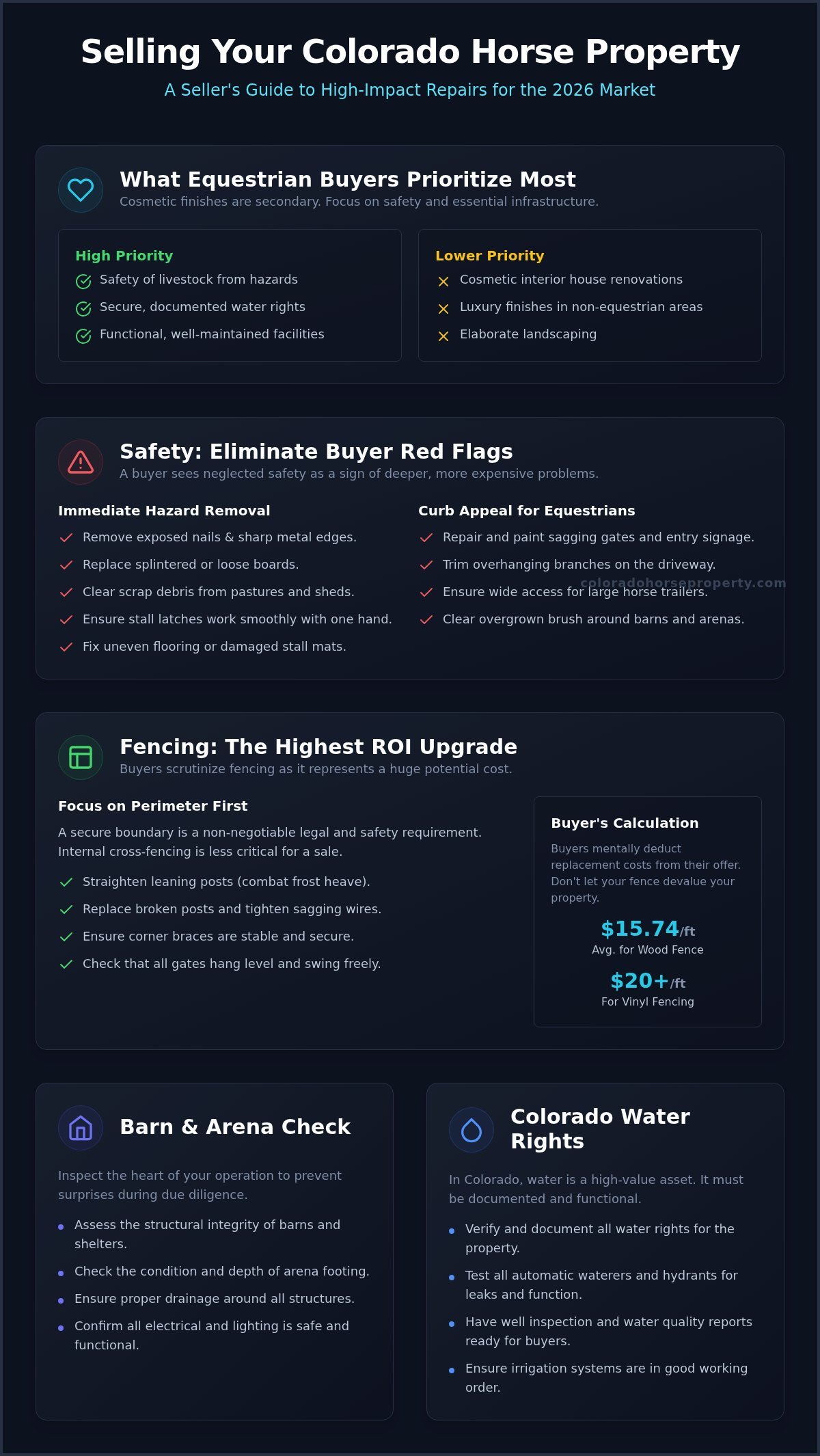
- Identify the common repairs before selling a horse property that eliminate psychological red flags for buyers, starting with immediate safety hazards like exposed nails and loose boards.
- Focus your fencing budget on perimeter security to provide the highest return on investment and reassure buyers about livestock safety.
- Assess the structural integrity of barns and the condition of arena footing to prevent expensive surprises during the due diligence period.
- Verify all Colorado water rights and test automatic waterers to ensure these high-value assets are fully documented and functional for the next owner.
- Utilize professional photography to showcase your upgrades, ensuring your property stands out in AI-powered searches that prioritize specific equestrian features.
Prioritizing Safety Repairs for First Impressions
Safety is the primary psychological driver for equestrian buyers. While a standard homeowner might overlook a loose floorboard in a pantry, a horse owner sees a protruding nail in a fence post as a catastrophic injury waiting to happen. High-value equestrian transactions in the Colorado Front Range often hinge on the perceived safety of the facility. If a buyer feels the property is “horse-poor” due to neglected maintenance, they’ll either walk away or aggressively discount their offer to cover the perceived risk. You aren’t just selling land; you’re selling a secure environment for their animals.
Addressing common repairs before selling a horse property starts with a thorough walk-through to identify immediate red flags. You should look for loose boards, exposed nails, and piles of scrap debris that often accumulate in the corners of pastures or equipment sheds. These aren’t just cosmetic issues; they are liability risks that could lead to accidents during a showing. Performing a “Drive-By” test by evaluating your property from the road allows you to see what a buyer sees before they even step out of their truck. Clear sightlines and secure perimeters signal that the property has been managed by a seasoned expert.
Removing Hazards from Stables and Stalls
The barn is the heart of the property. Check every stall divider for splintered wood or rusted metal edges that could catch a horse’s flank. Following horse management best practices means ensuring the living environment is free of sharp protrusions and structural weaknesses. Buyers will test the functionality of your infrastructure immediately. Ensure every stall latch and gate operates smoothly with one hand, as handlers often have their other hand on a lead rope. Inspect the flooring for holes or uneven mats that could cause a horse or handler to trip. Replacing a few damaged mats is a small investment that prevents a major red flag during the inspection phase.
Curb Appeal for the Colorado Equestrian Estate
First impressions are cemented at the entrance. A sagging gate or faded ranch signage suggests the rest of the infrastructure might be failing too. Freshening up the entrance with a new coat of paint or stain can significantly change the tone of a showing. Driveway access is another critical factor. Ensure the path is clear of overhanging branches and wide enough for large, four-horse trailers to navigate and turn around comfortably. In regions like Steamboat Springs or the Colorado Springs metro area, trailer accessibility is a non-negotiable requirement. Trimming overgrown brush near the main barn and arena also helps highlight the property’s layout and the quality of your specialized improvements. For sellers who are also managing traditional residential listings, Robert Caicedo Real Estate offers the expert representation needed to ensure every property in your portfolio makes a lasting impression.
Fencing and Pasture Maintenance for Maximum ROI
Fencing is often the most scrutinized asset on a ranch because it represents a massive capital expenditure for the next owner. In the 2026 Colorado market, wood fence installation averages approximately $15.74 per linear foot, while vinyl can exceed $20.00. Buyers know these costs and will quickly calculate the price of replacing a failing perimeter. Prioritizing fencing as one of your common repairs before selling a horse property ensures that buyers focus on the lifestyle your land offers rather than the immediate debt they’ll incur to make it safe.
Perimeter fencing must take precedence over internal cross-fencing. A secure boundary is a legal and safety requirement that protects the owner from liability. Colorado’s unique environmental factors, specifically the freeze-thaw cycle, often lead to frost heave where fence posts are literally pushed out of the ground. Straightening leaning posts and clearing debris from the fence line shows a level of equine facility management that builds immediate trust with sophisticated buyers. If you’re unsure how your infrastructure compares to current market standards, our specialized listing services can help you identify which repairs will yield the highest return.
Perimeter Fence Integrity
Walk your entire boundary to replace broken posts and tighten sagging high-tensile or woven wire. Buyers will check the tension of your lines and the stability of your corner braces. Gates are another critical touchpoint; they must hang level and swing freely without dragging through the dirt. In the dry, high-altitude climate of Colorado, a standard cedar post typically has a functional life of 15 to 20 years before ground-line rot necessitates replacement. Addressing these structural issues before listing prevents them from becoming “inspection surprises” that could derail a closing.
Pasture Management and Soil Health
A well-managed pasture is more than just a pretty view. Mowing your acreage before showings suppresses invasive weeds and highlights the actual usable space of the property. You should also take the time to fill in “horse-sized” holes and address any drainage issues that create standing water or deep mud in high-traffic areas. A clean, green pasture significantly boosts horse real estate for sale values by demonstrating that the soil has been cared for and is ready for immediate grazing. This proactive approach to land stewardship signals to the buyer that they are moving into a turnkey operation rather than a reclamation project.
Barn and Arena Infrastructure Upgrades
The barn and arena are the crown jewels of any equestrian listing. While safety and fencing provide the foundation, these structures are where buyers visualize their daily training routines and the lifestyle they’re purchasing. Identifying the right common repairs before selling a horse property within these high-use areas can distinguish a standard property from a premium estate. Sophisticated buyers in the 2026 Colorado market look for signs of structural neglect that could lead to costly future renovations, so addressing these issues early is vital for protecting your equity.
Sophisticated buyers will walk every inch of your outbuildings. They’re looking for evidence of long-term stewardship. A barn that feels bright, airy, and structurally sound commands a higher price because it removes the “project” aspect from the buyer’s mind. Small investments in lighting and organization often provide a much higher return than major structural overhauls that the next owner might want to customize anyway.
Structural Integrity of Outbuildings
Colorado’s weather is notoriously hard on outbuildings. High-altitude winds in the Rockies and heavy snow loads on the Front Range can loosen metal roofing panels or damage shingles over time. You should inspect every roof for signs of leaks or wind-lifted materials before your first showing. Ensure that all sliding barn doors are properly on track and lubricated for effortless operation. If a buyer has to struggle with a heavy door, they’ll immediately wonder if the building’s foundation is shifting. Additionally, repair any damaged siding or gaps near the base of the barn to prevent pests like rodents or raccoons from nesting in your feed room or hay loft.
Maximizing Riding Arena Value
An arena’s value lies entirely in its footing and drainage. If your arena holds water after a typical Colorado afternoon storm, it’s a major red flag for year-round usability. You should evaluate the base and ensure the grade allows for proper runoff. If the footing has become thin or pulverized into dust, adding a fresh top layer of sand can transform the space’s appearance and performance. For those weighing the cost of major renovations versus minor fixes, our horse barns for sale guide provides a detailed comparison of buying versus building to help you decide if a repair is worth the investment.
Don’t overlook the impact of interior lighting and organization. Replacing dim, yellowed bulbs with bright LED fixtures makes the barn feel larger and cleaner in professional photographs. The tack room should be the most organized space on the property. Clear out old blankets, dust the saddle racks, and remove cobwebs to sell the equestrian dream. A clean, well-lit tack room suggests a level of care that extends to the entire property, giving buyers the confidence they need to submit a competitive offer.
Colorado-Specific Considerations: Water and Utilities
Water is the lifeblood of any Colorado ranch. While physical structures like barns and arenas catch a buyer’s eye, the underlying utility infrastructure determines the property’s long-term viability. Addressing these technical common repairs before selling a horse property prevents the deal from collapsing during the rigorous due diligence period. In our semi-arid climate, a failure in water delivery or an outdated electrical system isn’t just a minor inconvenience; it’s a deal-breaker for serious equestrian buyers.
You must ensure that every mechanical component of your water system is in top condition. Automatic waterers are a major selling point, but they must be functional and completely leak-free. A small leak in a frost-free hydrant can create a dangerous ice patch in winter or a muddy mess in summer, both of which signal neglect. Getting ahead of the curve with professional inspections allows you to present a “clean bill of health” to prospective buyers before they even ask.
Verifying Water Rights and Delivery
Colorado operates under the Doctrine of Prior Appropriation, meaning water rights are separate from land ownership. You need to gather all documentation for adjudicated water rights and diversion records to prove historical use. Buyers will likely hire an attorney to review these, so having your paperwork in order is essential. Well permits do not automatically transfer with the sale; the new owner must file a “Change of Owner Name” form with the Colorado Division of Water Resources (DWR). Testing well flow rates ensures the supply is adequate for both the household and livestock. A comprehensive well inspection with laboratory water testing typically costs between $400 and $800. In Colorado, water rights can be more valuable than the land itself.
Barn Electrical and Fire Prevention
Barns are inherently high-risk environments for fire due to hay dust and dry timber. You should verify that all wiring is protected in metal or PVC conduit to prevent rodent damage, which is a leading cause of barn fires. Replace old, flickering fluorescent tubes with dust-proof LED fixtures that run cooler and provide better visibility. It’s also critical to verify that all outlets near wash racks or water sources are GFCI protected. If your property uses a septic system, consider bundling a septic and well inspection, which usually costs between $400 and $650, to provide a complete utility report to the buyer. For expert guidance on managing these complex technical assets during a sale, consult our transaction management specialists.
Positioning Your Property for the 2026 Colorado Market
Professional photography is your most powerful tool once the physical work is finished. High-resolution images of your clean stalls, level fences, and functional waterers prove to the buyer that the property has been maintained with a seasoned, no-nonsense approach. These visuals act as the first digital walkthrough, building the trust necessary to move a prospect from an online search to an in-person showing. In a market where inventory for high-quality equestrian estates remains limited, your visual presentation must reflect the premium nature of your improvements.
Leveraging AI Search for Your Listing
Modern buyers use our AI-powered search technology to find highly specific equestrian features. When a buyer searches for an “indoor arena” or “senior water rights,” our tool identifies properties that meet those exact criteria. If you haven’t highlighted your recent infrastructure upgrades, you risk being invisible to the most qualified leads. Positioning your property as move-in ready for the 2026 season requires ensuring your listing is optimized for the algorithms that drive high-value transactions. For a deeper look at what buyers are currently prioritizing in the Rockies, check our horse property for sale in colorado guide.
The Value of Specialized Brokerage
A generalist real estate agent often lacks the specialized vocabulary to sell a ranch effectively. They might miss the value of a well-engineered drainage system or fail to explain the nuances of a well permit transfer to a nervous buyer. Mark and Alison Eibner bring 40 years of experience in the Colorado Front Range to every listing. We understand how to justify your asking price by highlighting the technical integrity of your land and improvements. From managing complex title and escrow processes to coordinating agricultural zoning requirements, our expertise ensures a smooth closing. We help you conduct a final walkthrough to see your property through a buyer’s eyes, identifying the small details that maximize your valuation.
Ready to list? Get a professional valuation of your horse property today.
Securing Your Equestrian Investment for a Successful Sale
Preparing your ranch for the 2026 market requires a strategic focus on the infrastructure that matters most to livestock owners. By prioritizing safety hazards, verifying your Colorado water rights, and ensuring your fencing is secure, you eliminate the hurdles that often stall high-value transactions. Addressing these common repairs before selling a horse property doesn’t just attract more buyers; it protects your hard-earned equity and ensures a faster closing time. When your facility is move-in ready, you shift the conversation from potential problems to the expansive lifestyle your property offers.
Success in this specialized market depends on having an expert who understands the unique requirements of rural land and livestock management. Colorado Horse Property provides the seasoned, no-nonsense representation you need to navigate complex ranch sales. With over 40 years of experience in the Colorado Front Range and our proprietary AI-powered property search, we ensure your listing reaches the most qualified equestrian buyers. Contact Colorado Horse Property to list your equestrian estate and take the first step toward a profitable sale. Your dream of a smooth transaction starts with the right partnership.
Frequently Asked Questions
Do I need to paint my barn before selling?
You don’t always need a full paint job, but you must address peeling or flaking surfaces. Buyers interpret neglected paint as a sign of underlying wood rot or structural decay in the Rockies’ harsh climate. If your budget is tight, focus on painting the trim and the main entrance to create a strong first impression. A clean, well-maintained exterior suggests that the interior infrastructure has been equally cared for by a responsible owner.
How much do water rights affect my property value in Colorado?
Water rights are often the most significant factor in a Colorado property’s valuation. Because these rights are separate from land ownership, senior adjudicated rights can add hundreds of thousands of dollars to the listing price. Buyers specifically look for documented proof of historical use and diversion records. Properties without secured water rights often face steep discounts or struggle to close in our semi-arid climate where livestock hydration is a non-negotiable requirement.
Is it worth installing a new riding arena before I list?
It’s rarely profitable to install a brand-new arena just before listing. Most buyers prefer to customize the footing and dimensions to their specific discipline, whether it’s reining, jumping, or dressage. Instead, focus on common repairs before selling a horse property by grading your existing space and ensuring proper drainage. A functional, well-drained area with a fresh layer of sand shows potential without forcing the buyer into a layout they might not want.
What are the most common deal-breakers in a horse property inspection?
Structural failures in the barn and failing well or septic systems are the most frequent deal-breakers. Inspectors look for rot in load-bearing posts, evidence of significant pest infestations, and hazardous electrical wiring in outbuildings. Unsafe fencing or poor drainage that leads to deep mud in high-traffic areas also raises red flags. Addressing these high-priority common repairs before selling a horse property prevents buyers from walking away during the critical due diligence period.
Should I repair or replace my old perimeter fencing?
You should prioritize repairing the perimeter fencing to ensure it’s secure and functional for the next owner. Replacing an entire fence line is a massive capital expense, with wood installation averaging approximately $15.74 per linear foot in 2026. If the posts are sturdy but the wire is sagging, tightening and replacing individual boards is more cost-effective. However, if the fence is hazardous or structurally failing, a full replacement of the boundary line is necessary.
How many acres do buyers typically look for in a Colorado horse property?
Buyer preferences vary significantly by region, but most seek at least 5 to 35 acres for a private equestrian estate. In the Colorado Springs metro area, properties between 5 and 100 acres are common for hobbyists. Larger working ranches in the San Luis Valley or Yampa Valley often exceed 500 acres. The key isn’t just the total acreage, but the amount of usable, grazable pasture and the availability of water rights.
What documents should I have ready regarding my barn and outbuildings?
You should have all original building permits, blueprints, and recent maintenance logs ready for review. Buyers want to see proof that structures were built to code and that the electrical systems are safe for livestock. If you’ve recently upgraded the roofing or added specialized ventilation, keep those receipts and warranty information organized. Providing a clear paper trail for your outbuildings builds trust and justifies a higher valuation during the transaction management phase.
Can I sell my horse property without a specialized agent?
While it’s possible to list with a generalist, you risk losing money on complex agricultural nuances. A specialized agent understands the intricacies of Colorado water rights, grazing leases, and equine liability laws. We use AI-powered search technology to target buyers looking for specific features like indoor arenas or specialized stall layouts. Specialized representation ensures your property’s technical assets are marketed correctly, leading to faster closing times and a higher final sale price.