
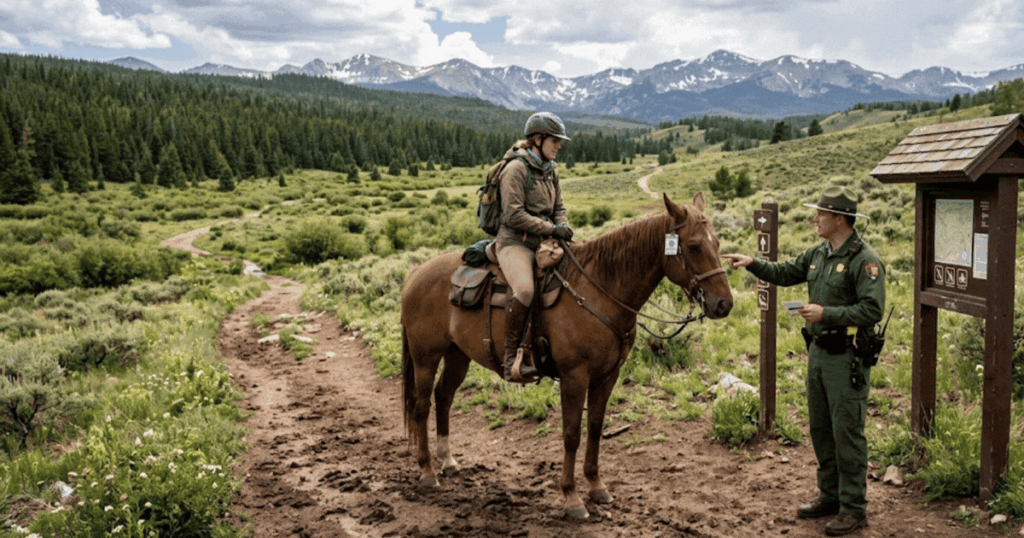
You buy a property bordering thousands of acres of pristine open space. You saddle up your horse on your first weekend, ride out your back gate, and are immediately stopped by a park ranger who hands you a hefty fine for trespassing.
Assuming that all vacant land is public and free to ride on is a massive mistake. In Colorado, “open space” is a highly regulated patchwork of federal, state, and county land. Knowing exactly who owns the dirt behind your property, and what permits are required to ride on it, is critical before you buy.
Here is how to navigate trail access and permit requirements for equestrian properties.
Are There "Open Space" Riding Trails That Require a Permit?
Quick Summary: The Public Land Myth
- The Ownership Trap: Not all open land is free to use. State Trust Lands and specific county open spaces often require paid permits for equestrian access.
- The Trailhead Bottleneck: Having a trail nearby is useless if you cannot park. Many trailheads require specialized parking passes for oversized horse trailers.
- Seasonal Restrictions: Public lands frequently enforce strict seasonal closures to protect wintering wildlife and prevent severe trail damage during the spring mud season.
- The Weed-Free Rule: If you ride on federal or state land in Colorado, you are legally required to feed certified weed-free hay to prevent the spread of invasive species.
On horse property, nearby open space only adds real riding value if you can legally access it, trailer to it, and use it during the seasons that matter most to your riding routine.
1. Decoding Public Land Ownership
Just because there are no houses built on it does not mean it is a public park.
- Federal Land: Bureau of Land Management and National Forest lands are generally open to equestrian use without a daily riding permit. However, there are strict exceptions for specific designated wilderness areas where group sizes are limited and permits are required.
- State Trust Lands: This is the biggest trap for new buyers. Colorado State Trust Lands are working lands meant to generate revenue for public schools. They are not public parks. You must purchase an annual recreational permit to legally ride horses on these parcels.
- County Open Space: Local counties purchase open space to preserve views and wildlife corridors. Many of these parks require daily or annual passes. Some prohibit horses entirely to reduce trail erosion and minimize conflicts with mountain bikers.
2. The Parking and Access Problem
Even if the trail itself is free to ride, accessing it can cost you money.
- The Trailhead Pass: Many state parks and county trailheads require a paid vehicle pass. If you do not have the proper permit displayed on the windshield of your truck, you will be ticketed while you are out riding.
- Trailer Restrictions: Some permitted open spaces have dedicated equestrian parking, but they require a specialized oversize vehicle permit. Others simply do not allow horse trailers on weekends due to severe overcrowding from hikers and casual tourists.
A trail can look close on a map and still be impractical if there is no legal horse-trailer parking or if the permit structure makes regular use difficult.
3. Seasonal Closures and Mud Rules
Your trail access is heavily dictated by the weather and the local wildlife.
- Wildlife Protection: Colorado takes its wildlife seriously. Many permitted trails are entirely closed to all access from December through April. This closure protects wintering elk and deer herds from being stressed by humans and domestic animals during the harshest months of the year.
- The Mud Season Ban: During the spring thaw, riding a 1,200-pound horse on a wet trail causes deep, permanent damage to the terrain. Rangers will strictly close trails and issue fines to anyone caught riding during the muddy season.
4. The Certified Weed-Free Forage Law
Protecting the ecosystem is a legal requirement for equestrians in the West.
- The Ecological Threat: Noxious weeds destroy native grazing land and crowd out the plants that wildlife rely on. If you take your horse onto permitted public land, you are a potential carrier for invasive seeds through your horse's manure.
- The Legal Requirement: To ride or camp on BLM, National Forest, or Colorado State Parks land, you are legally required to use certified weed-free hay or pelleted feed for your horses for at least 48 hours before your ride. You must carry the certification tags with you, or you face severe fines and immediate eviction from the trail.
We Map the Trails Before You Buy
We do not just look at the property lines. We look at the trail access.
When Mark Eibner and Belinda Seville represent you in buying an equestrian property, we verify the land ownership surrounding your farm. We help you understand the specific permit requirements, seasonal closures, and trail regulations so you know exactly where you can legally ride the day you move in.
Contact Us Today to find a property with true, accessible riding trails.
Browse Active Colorado Horse Properties: Browse Active Colorado Horse Properties that offer direct access to premium public land
Frequently Asked Questions (FAQ) About Trail Permits
Can I cut a gate in my fence to directly access the public land behind my house?
It depends entirely on the agency. You usually cannot build a private gate opening onto State Parks or heavily regulated county open space without written permission. BLM land is generally more lenient, but you still cannot alter a shared boundary fence without official authorization.
Do I need a permit to ride on a county dirt road?
No. Public county roads are open rights-of-way. However, riding on the shoulder of a rural road with high-speed vehicle traffic is incredibly dangerous and is not a safe substitute for dedicated equestrian trails.
How much does a State Trust Land riding permit cost?
In Colorado, accessing State Trust Lands for horseback riding typically requires purchasing a valid state hunting or fishing license, or a specific annual recreation access permit through Colorado Parks and Wildlife.